What Is the Package Sewage Treatment Plant Working Principle?
A package sewage treatment plant working principle combines screening, primary settling, aerobic biological degradation, and tertiary disinfection inside one factory-built train sized from 10–1,000 m³/day. Holding whole-plant hydraulic retention at 18–36 hours with dissolved oxygen and sludge age in design range typically delivers 92–98% COD removal and 95%+ TSS reduction on domestic-strength sewage.
A septic tank only holds and partially digests solids, while a package STP integrates primary, secondary, and often tertiary steps in a single compact footprint. Most plants we size for hospitals, camps, and small municipalities run at the lower end of that flow band. There, PLC control and limited operator hours matter more than civil volume.
US EPA sets the compliance anchor for these discharges. According to the US EPA, secondary treatment standards are minimum, technology-based requirements for publicly owned treatment works, and many package-plant permits mirror the same numbers. That matters because a package unit usually discharges under a permit written around those limits.
Under 40 CFR 133.102, the 30-day average for BOD5 and for suspended solids shall not exceed 30 mg/L. The 7-day average shall not exceed 45 mg/L, and the 30-day average percent removal shall not be less than 85 percent. Where a permit allows the CBOD5 substitution, the 30-day average is 25 mg/L and the 7-day average is 40 mg/L. Effluent pH must stay within 6.0 to 9.0.
Footprint and labor drive most buying decisions. A 100 m³/day train often occupies about 50 m² instead of roughly 250 m² for a conventional layout, about 60–80% less area. Automated systems commonly cut routine labor demand by 40–60% when alarms and dosing stay calibrated.
Effluent targets of COD ≤50 mg/L and turbidity ≤3 mg/L are realistic when screening, settling, and aeration stay on-spec. Readers comparing language variants of package sewage treatment plant คือระบบอะไร still need the same stage-by-stage checks below.
Package STP Process Flow Diagram: How Each Treatment Stage Works
A package STP process flow diagram chains preliminary, primary, biological, and tertiary stages in series, and each stage has one measurable job. Preliminary treatment removes debris first; rotary mechanical bar screens such as the GX Series Bar Screen can remove over 90% of particles larger than 3 mm and protect downstream pumps. Primary treatment then settles solids in tanks often fitted with inclined plates at a surface loading rate of 20–40 m/h, cutting TSS by 50–70% before biology. For the lamella clarifier working principle behind those plates, the dedicated engineering page breaks out plate spacing and settling area.
Biological treatment is the core of the train. MBBR systems use a media fill ratio of 30–60% for biofilm area. SBR trains run timed cycles of 4–8 hours. Conventional activated sludge holds an F/M ratio of 0.05–0.15 kg BOD/kg MLSS·day, and oxygen transfer efficiency in the 10–25% band keeps aerobes active when blowers and diffusers are clean.
Tertiary polishing finishes the train: multi-media filters can drive turbidity toward an SDI of ≤3. On-site disinfection with a Chlorine Dioxide Generator is often specified for a 99.9% pathogen kill target under correct CT. Settled sludge from the primary clarifier or secondary settler returns at a 50–100 percent recycle ratio to hold MLSS in range. For the clarifier hardware itself, see the High-Efficiency Sedimentation Tank.
| Stage | Primary Mechanism | Key Equipment Example | Typical Efficiency | Link |
|---|---|---|---|---|
| Preliminary Treatment | Physical removal of large solids and grit | Rotary Mechanical Bar Screen (GX Series) | 90%+ for particles >3 mm | GX Series Bar Screen |
| Primary Treatment | Settling of suspended solids | Lamella Clarifier Sedimentation Tank | 50-70% TSS reduction | High-Efficiency Sedimentation Tank |
| Biological Treatment | Microbial degradation of organic pollutants | MBBR, SBR, Activated Sludge Systems | 92-98% COD removal | N/A (Process dependent) |
| Tertiary Treatment | Fine filtration and disinfection | Multi-media Filter, Chlorine Dioxide Generator | SDI ≤3, 99.9% pathogen kill rate | Chlorine Dioxide Generator |
What Does an MBBR Process Flow for Package STP Look Like?
An MBBR process flow for package STP applications is linear: screen, optional primary settler, aerated tank with floating carriers, secondary clarifier, then filter and disinfection. Carriers circulate under coarse-bubble or medium-bubble aeration while the biofilm oxidizes soluble COD. For a seasonal food plant at about 500 mg/L influent COD, a 30–60% media fill often supports up to about 95% COD removal when DO stays near 2–4 mg/L.
Sludge yield runs lower than many high-rate suspended-growth trains, so wasting rates stay modest. Peak-hour spikes still need equalization upstream. Biofilm systems forgive load swings better than thin activated-sludge inventories, but they do not erase FOG shocks. If grease exceeds biological tolerance, place a DAF unit ahead of the carriers.
Key Package STP Biological Stage Design Parameters
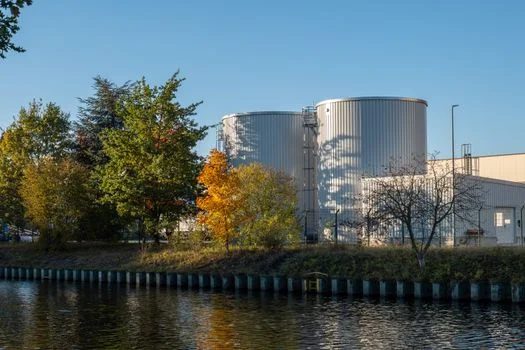
Biological performance tracks a short list of measurable setpoints. Mixed liquor suspended solids usually sit between 3,000–6,000 mg/L for balanced COD uptake. An F/M of 0.05–0.15 keeps floc healthy without chronic underload. Oxygen transfer efficiency of 10–25% signals usable diffuser condition, and whole-plant HRT of 18–36 hours is common for package STPs treating domestic-strength sewage.
Solids capture upstream protects those setpoints. Primary settling HRT of 1.5–3 hours and clarifier surface loading of 20–40 m/h govern solids capture before biology. Solids retention time of 15–25 days protects slow-growing nitrifiers in temperate service. Drop MLSS below about 2,000 mg/L and COD removal can fall under 85%; push surface loading above 40 m/h and effluent TSS rises fast.
| Stage | Parameter | Typical Range | Impact on Performance | Measurement Method |
|---|---|---|---|---|
| Preliminary/Primary | Hydraulic Retention Time (HRT) | 1.5 - 3 hours (Primary Settling) | Inadequate settling of solids, increased TSS in effluent | Flow Rate / Tank Volume |
| Preliminary/Primary | Surface Loading Rate (SLR) | 20 - 40 m/h (Clarifiers) | Poor solids separation, carryover to biological stage | Flow Rate / Surface Area |
| Biological | Mixed Liquor Suspended Solids (MLSS) | 3,000 - 6,000 mg/L | Low MLSS reduces COD removal; High MLSS can lead to oxygen limitations | Gravimetric analysis (VSS/TSS) |
| Biological | Food-to-Microorganism Ratio (F/M) | 0.05 - 0.15 kg BOD/kg MLSS.day | High F/M causes bulking/foaming; Low F/M reduces treatment rate | Calculated: Influent BOD / MLSS * HRT |
| Biological | Oxygen Transfer Efficiency (OTE) | 10 - 25% | Low OTE results in anoxic conditions, poor nitrification, and reduced COD removal | Oxygen uptake rate tests, DO probes |
| Biological | Sludge Age (Solids Retention Time, SRT) | 15 - 25 days | Low sludge age leads to loss of nitrifiers and slow-growing organisms; High sludge age can lead to floc disintegration | Calculated: Mass of Solids in Reactor / Mass of Solids Wasted per Day |
| Tertiary | Backwash Frequency (Filters) | Varies (e.g., daily to weekly) | Infrequent backwashing clogs filters; Overly frequent backwashing wastes water and energy | Differential pressure, turbidity |
SBR vs MBBR for a Package Wastewater Plant: Which Biology Fits?
Choosing between SBR and MBBR for a package wastewater plant sets footprint, energy, and operator skill for the next two decades. MBBR suits variable industrial loads—food plants with weekend shutdowns are a common case—and can hold about 90–97% COD removal across 10–1,000+ m³/day when media fill is 30–60%. SBR fits batch or intermittent sites such as hospitals and schools on 4–8 hour cycles, but energy often lands at 0.8–1.2 kWh/m³.
Conventional activated sludge usually shows the lowest CAPEX band cited for package builds, about $1,200–$1,800 per m³/day of capacity, yet it needs tighter F/M control. For a remote mining camp at 200 m³/day with sharp load swings, MBBR is usually the safer pick. For a steady 50 m³/day hospital, SBR flexibility can outweigh its higher kWh. Where reuse turbidity limits are strict, membrane options belong on the shortlist.
| Process | Typical Flow Range (m³/day) | COD Removal (%) | TSS Removal (%) | Footprint (m²/100 m³/day) | Energy Use (kWh/m³) | Operator Skill Required |
|---|---|---|---|---|---|---|
| MBBR | 10 - 1,000+ | 90 - 97% | 95%+ | 15 - 25 | 0.4 - 0.8 | Moderate |
| SBR | 10 - 500 | 95 - 98% | 95%+ | 20 - 30 | 0.8 - 1.2 | Moderate to High |
| Activated Sludge (Conventional) | 50 - 1,000+ | 90 - 95% | 90%+ | 25 - 35 | 0.5 - 1.0 | High |
| MBR (Membrane Bioreactor) | 10 - 500 | 98%+ | 99%+ | 10 - 15 | 1.0 - 1.5 | Moderate |
How Do Membrane Bioreactors Differ From Conventional Package STP Biology?
Membrane bioreactors replace secondary clarification with microfiltration or ultrafiltration membranes that retain biomass at high MLSS. Package MBR trains commonly report 98%+ COD removal and 99%+ TSS removal at footprints of about 10–15 m² per 100 m³/day, with energy often 1.0–1.5 kWh/m³. Scour air at roughly 10–15 L/m²/min and periodic citric-acid cleans keep permeability stable when MLSS stays below about 10,000 mg/L.
Choose MBR when reuse turbidity near ≤2 NTU or very tight solids limits drive the permit. Choose MBBR or SBR when energy and membrane OPEX dominate the business case. For a deeper treatment of the MBR systems behind those numbers, the dedicated MBR page walks through process flow and sizing data. The separate mbr working principle page covers membrane module internals for readers who need that layer.
Package Sewage Treatment Plant Troubleshooting Guide: Foaming, Bulking, and High TSS
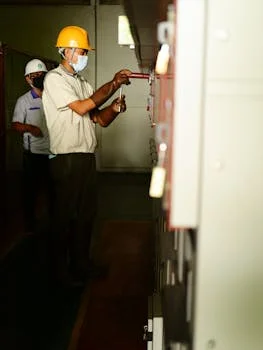
Foaming usually tracks F/M above about 0.2, surfactant spikes, or filament growth. Bring F/M back to 0.05–0.15, dose antifoam at 0.5–1 mg/L if needed, and lengthen sludge age toward 15–25 days so floc formers recover. Sludge bulking often pairs with DO below 1 mg/L or a nitrogen-to-phosphorus ratio under 5:1. Raise aeration to hold 2–4 mg/L DO and correct nutrients before chasing polymers.
High effluent TSS points to clarifier overload (SLR above 40 m/h) or weak floc. Cut peak flow, add polymer at 0.5–2 mg/L, or raise the return-sludge ratio toward 100 percent. On MBR packages, fouling follows high MLSS or weak scour; increase scour air and clean with about 2% citric acid on the vendor schedule. Automatic chemical dosing prevents many of these drifts when sensors stay calibrated.
How to Select the Right Package STP for Your Project
Apply the package sewage treatment plant working principle to measured influent, not brochure capacity. Log average and peak flow, COD, BOD, TSS, pH, temperature, and FOG. A food plant example might show COD 1,500 mg/L, TSS 800 mg/L, pH 5–9, and strong diurnal swings. Set effluent limits next: many US discharge permits still mirror EPA secondary numbers of BOD ≤30 mg/L and TSS ≤30 mg/L, while irrigation reuse may need turbidity ≤2 NTU.
Match the process to those envelopes. High COD or unstable load favors MBBR or MBR, intermittent institutional flow favors SBR, and low steady municipal-strength flow can still use conventional activated sludge where skilled operators exist. Budget both CAPEX and OPEX; one MBBR reference band is about $2,500/m³/day CAPEX and $0.50/m³ OPEX for energy and chemicals under stated design assumptions.
Support terms decide long-term performance as much as process choice. The EPA handbook for managing onsite and clustered wastewater systems is built around the elements essential for the sound management of decentralized wastewater systems, and buyers can apply the same logic to vendor terms. Through its Decentralized Wastewater Management MOU Partnership, the US EPA works to improve the overall performance and management of decentralized systems. Confirm remote monitoring, spare-parts lead time, PLC support language, and operator training before award.
Selection checklist:
- Influent COD, BOD, TSS, FOG, and peak/average flow ratio
- Permit or reuse limits (BOD, TSS, turbidity, pathogens)
- Available footprint and whether burial or above-grade tanks are allowed
- Operator skill level and remote-alarm response time
- Energy tariff and sludge haul distance
- Pretreatment need for grit, FOG, or toxic shock loads
- Vendor spare-parts stock and PLC support language
| Step | Action | Key Considerations | Example |
|---|---|---|---|
| 1 | Define Influent Characteristics | Flow rate (average/peak), COD, BOD, TSS, pH, temperature, nutrient levels, specific contaminants | Food processing: COD 1500 mg/L, TSS 800 mg/L, pH 5-9, variable flow |
| 2 | Determine Effluent Requirements | Local discharge permits, reuse standards (irrigation, industrial), specific pollutant limits | EPA limits: BOD ≤30 mg/L, TSS ≤30 mg/L; Reuse: Turbidity ≤2 NTU |
| 3 | Select Treatment Process | Match influent/effluent needs to process capabilities (MBBR, SBR, Activated Sludge, MBR) | High COD/TSS -> MBBR/MBR; Variable flow -> MBBR/SBR; Low flow/consistent -> Activated Sludge/SBR |
| 4 | Calculate CAPEX & OPEX | System cost, installation, energy, chemicals, maintenance, sludge disposal | MBBR: CAPEX $2,500/m³/day, OPEX $0.50/m³ (HydropureWater data, 2025) |
| 5 | Evaluate Vendor Support | Service, training, spare parts, remote monitoring, warranties | 24/7 technical support, readily available spare parts |
Who This Is For and Next Step
This guide is for plant engineers, EPC contractors, and procurement managers sizing package STPs for sites without reliable sewer access. Look elsewhere if you need a multi-MLD municipal works with dedicated primary digesters, or if your waste is dominated by solvents that belong in chemical oxidation first. For buried compact trains, review the Underground Package Sewage Treatment Plant (WSZ Series) against your flow and permit sheet, then send duty data through our request-quote form for a process match.
Frequently Asked Questions
What Is the Typical Lifespan of a Package Sewage Treatment Plant?
Package STPs built in coated carbon steel or fiberglass commonly carry a 20–30 year design life when coatings, anodes, and mechanical seals are maintained on schedule. Underground tanks gain thermal buffering that slows freeze–thaw stress. Lifespan shortens when FOG, grit, or corrosive industrial streams bypass pretreatment. Plan annual coating inspection and diffuser replacement intervals into the OPEX model from day one.
How Much Maintenance Does a Package STP Need?
Expect daily instrument and DO checks, weekly screen cleaning, monthly pump and blower inspection, and quarterly sensor calibration on most PLC packages. Sites with remote telemetry cut walk-around hours but still need sludge wasting discipline. Neglecting screens is the fastest path to pump failure. Keep a spare blower motor and critical seals on the shelf for plants more than a day from service yards.
Can Package STPs Treat High-FOG Industrial Wastewater?
Biological stages can digest modest FOG loads, but high grease usually needs pretreatment before aeration. A Dissolved Air Flotation unit such as HydropureWater's can remove 95%+ of TSS and FOG before the aeration tank. Skipping DAF on poultry or kitchen waste often causes chronic foaming and clarifier washout. Measure FOG on the peak shift, not only on a quiet morning composite.
What Energy Use Should I Budget for a Package STP?
Energy typically falls between 0.4–1.5 kWh/m³ depending on process and blower efficiency. MBBR packages often land at 0.4–0.8 kWh/m³, SBR at 0.8–1.2 kWh/m³, and MBR at 1.0–1.5 kWh/m³ under the comparison ranges in this article. Diffuser fouling can erase those advantages within months. Trend specific energy monthly against flow so dirty diffusers show up early.
Are Package STPs Suitable for Cold Climates?
Yes, package STPs run through cold climates when tanks are insulated or buried and aeration keeps mixed liquor warm enough for the design SRT. Underground installations such as the WSZ Series use soil cover as natural insulation. Nitrification slows sharply in cold water, so extend sludge age before winter. Heat tracing on exposed sludge lines prevents the failures that outdoor plants see first.
What Discharge Limits Must a Package Sewage Treatment Plant Meet?
Most US permits anchor package STP discharges to the EPA secondary numbers: 30-day average BOD5 and TSS of 30 mg/L, with 7-day averages at 45 mg/L. Under 40 CFR 133.102, 30-day percent removal must also stay at or above 85 percent, and effluent pH must remain within 6.0 to 9.0. CBOD5 permits substitute 25 mg/L on the 30-day average and 40 mg/L on the 7-day average. Reuse permits add turbidity targets near ≤2 NTU.
How Much Does a Package STP Cost to Build and Operate?
Package STP costs span roughly $1,200–$1,800 per m³/day of capacity for conventional activated sludge builds, while one MBBR reference band sits near $2,500/m³/day CAPEX. Energy and chemicals commonly add about $0.50/m³ OPEX under stated design assumptions, before sludge hauling. Biological process choice moves both numbers more than tank material does. Ask vendors to quote against your measured load sheet, not nominal capacity.