What Is a Coarse Screen in Wastewater Treatment?
A coarse screen is the first solids barrier at a plant inlet. It removes rags, plastics, and large debris by surface interception before pumps, grit units, and membranes. Typical bar openings start at 6 mm or larger, with approach velocity held near 0.6–1.0 m/s on mechanically cleaned racks so solids stay suspended without being forced through the bars.
Coarse screen inlet works specs for mechanical racks usually set 6–100 mm bar spacing and 0.6–1.0 m/s approach velocity so large solids are intercepted before pumps and membranes. Plants that undersize this step often face $50K–$200K per year in pump repairs from ragging and clogging. Mechanical rakes—chain-driven, cable-operated, or hydraulic—lift debris to a discharge chute, cut influent TSS by about 30–50%, and reduce fibrous “ragging” on impellers and heat exchangers.
A Guangzhou textile plant recorded about 12 pump failures per year from synthetic fibers, roughly $180,000 in annual repair cost plus about $95,000 in lost production. Fiber wrap raised motor amperage by about 28% before failure. After the plant moved from 10 mm manual bars to 3 mm mechanical bars, influent TSS fell from 420 mg/L to 180 mg/L. MBR fouling dropped about 40%, and membrane life extended from about 3 years to 5 years (plant case data).
How Surface Interception Captures Debris Without Channel Clogging
Coarse screens capture objects on the bar face rather than inside a filter bed. Water passes the clear openings; oversized solids stop at the bars and are raked to a discharge chute. That differs from depth filtration, where particles lodge throughout a porous media volume. A fishing-net analogy still holds: mesh size, not media depth, sets what is retained.
Approach velocity controls whether solids stay suspended long enough for the rake to remove them. Design practice widely cited in EPA screening guidance keeps mechanically cleaned bar-screen approach velocity in the 0.6–1.0 m/s band. Many common suspended solids have settling velocities near that window, so keeping flow above settling speed limits floor deposits while the rake clears the face. Below about 0.6 m/s, grit and fibrous solids settle on the channel floor upstream of the screen. Above about 1.2 m/s, head loss and bar wear rise sharply and debris can be forced through openings.
Missouri DNR wastewater design guidance (2021) states average-flow approach velocity should stay between 1.25 and 3.0 ft/s (0.38–0.91 m/s) to limit settling while avoiding pass-through. Earlier vendor and textbook ranges often quoted 0.6–1.0 m/s for mechanical racks; the Missouri band is a state design check that still sits near that hydraulic window. Screen inclination relative to flow is commonly 55°–90° and can create a mild hydraulic jump that helps move debris toward the chute. Steeper frames shrink footprint but need stronger rakes. Cutting bar spacing in half can raise head loss by about 20–40% at the same flow (Water Science & Technology, 2023), so hydraulic capacity and pumping energy must be checked together.
To further aid debris removal and limit mat buildup on the screen face, many mechanical coarse screens use an inclined frame relative to flow. The localized turbulence at the bars helps wash solids toward the collection chute instead of pinning them flat against the openings. Designers still treat bar spacing as a direct trade-off: a 3 mm clear opening captures more solids and protects membranes better, while a 10–20 mm opening keeps head loss and cleaning frequency lower for municipal-only debris loads.
Coarse Screen Inlet Works Specs: Velocity, Angle, and Head Loss
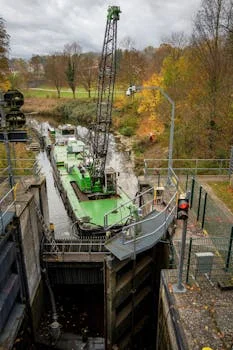
Hydraulic channel design sets approach velocity, bar angle, and allowable head loss before peak-flow flooding becomes likely. Approach velocity is the mean velocity as flow reaches the bars. EPA fact sheet criteria for mechanically cleaned bar screens list 0.6–1.0 m/s approach velocity and about 150 mm allowable head loss under controlled cleaning. Clean-screen head loss often sits near 5–20 cm; at roughly 50% blinding it can reach 50 cm or more. That rise in head loss increases pumping energy and upstream flood risk if the channel freeboard is tight. Head loss on a clean rack is commonly estimated as hL = K*(v²/2g), where v is approach velocity and K depends on bar geometry and open area.
Manufacturer manuals such as Sismat commonly show screen angles from 55° to 90°. Frames at 75°–90° save floor space but can raise mechanical CapEx by up to about 20% because the rake must lift heavier loads against gravity. Channel slope of 0.5–1.0% helps keep solids moving toward the screen face. For 1 m³/s in a 1.2 m wide by 0.8 m deep channel, a 0.5% slope drops 0.5 cm per meter, or 5 cm over 10 m of approach channel, which is usually enough to limit deposition under design flow.
When comparing options, keep units consistent: report flow as m³/d (or US gpd) beside channel velocity in m/s. For most municipal headworks near ambient wastewater temperature around 20 °C, the 0.6–1.0 m/s mechanical-rack band remains the first hydraulic check before detailed vendor software is run. Record both clean-screen and blinded-screen head-loss cases in the design basis so operators know when differential sensors should start the rake.
| Bar Spacing (mm) | Approach Velocity (m/s) | Approximate Head Loss (cm) |
|---|---|---|
| 3 | 0.6 | 8 - 15 |
| 3 | 0.8 | 12 - 22 |
| 3 | 1.0 | 18 - 30 |
| 3 | 1.2 | 25 - 40 |
| 6 | 0.6 | 5 - 10 |
| 6 | 0.8 | 8 - 15 |
| 6 | 1.0 | 12 - 20 |
| 6 | 1.2 | 18 - 30 |
| 10 | 0.6 | 3 - 7 |
| 10 | 0.8 | 5 - 10 |
| 10 | 1.0 | 8 - 15 |
| 10 | 1.2 | 12 - 20 |
| 20 | 0.6 | 1 - 4 |
| 20 | 0.8 | 2 - 6 |
| 20 | 1.0 | 4 - 9 |
| 20 | 1.2 | 6 - 12 |
How Do You Select a Coarse Bar Screen Material?
Coarse bar screen metallurgy must match chloride level, pH swing, and abrasion risk in the influent. For municipal wastewater near pH 6–9 and chlorides below 200 mg/L, Stainless Steel 304 is often adequate and priced around $3.50/kg in 2025 market estimates. Industrial streams with wider pH or higher chlorides usually need 316L, which adds molybdenum for pitting resistance up to about 1,000 mg/L chloride at about $4.20/kg. That upgrade is often justified where industrial wastewater swings outside the municipal envelope.
Duplex 2205 suits brine and petrochemical service with chlorides up to about 3,000 mg/L, at roughly $6.80/kg, because of higher strength and stress-corrosion resistance. Epoxy coatings add abrasion protection for grit-heavy mining or construction flows. Ceramic coatings suit extreme sand or chemical attack and can add 15–25% to material cost, yet have extended service life by two to three times in abrasive pulp-mill duty. ASTM A240 covers plate chemistry for these grades; alloy choice still belongs in the process data sheet, not only in the purchase order.
| Stainless Steel Grade | Typical Applications | Chloride Resistance (mg/L) | Cost/kg (USD, 2025 Est.) | Key Benefits |
|---|---|---|---|---|
| 304 | Municipal wastewater, general industrial | < 200 | $3.50 | Cost-effective, good general corrosion resistance |
| 316L | Industrial wastewater, moderate chlorides, wider pH | < 1,000 | $4.20 | Enhanced pitting and crevice corrosion resistance |
| Duplex 2205 | Petrochemical, brine, high-chloride industrial | < 3,000 | $6.80 | High strength, excellent stress corrosion cracking resistance |
Rake Mechanisms Compared: Chain, Cable, and Hydraulic
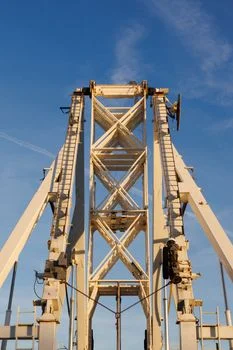
Chain-driven rakes remain the most common mechanical option, about 60% of installations, with typical CapEx of $12,000–$25,000. They need weekly lubrication and can jam on heavy fiber loads, often about one jam-related failure per year in textile service. Common failure modes include link breakage and sprocket wear. Cable-operated rakes cut energy use by about 30% versus chain drives and handle rags more cleanly, at $20,000–$40,000 CapEx, with cable replacement every 3–5 years as stretch and fraying develop.
Hydraulic rakes suit flows above about 2 m³/s and critical uptime duty at $30,000–$50,000 CapEx. They avoid chain and cable wear but need backup power so the rake can still clear the face during an outage. Seal leaks, hose bursts, and hydraulic pump faults are the usual maintenance drivers. Textile plants often specify a GX Series rotary mechanical bar screen with dual overload protection and a cable-style cleaning path for fibrous debris.
Each rake type needs a written failure response. Chain drives need spare links and sprockets on the shelf. Cable systems need measured tension logs and replacement spools. Hydraulic packages need spare seals, fluid, and a documented manual-raise procedure under blackout conditions so the screen does not become the plant bottleneck.
| Mechanism | Typical Cost (USD) | Energy Use | Maintenance Frequency | Best Suited For | Common Failure Modes |
|---|---|---|---|---|---|
| Chain-Driven | $12,000 – $25,000 | Standard | Weekly lubrication, monthly inspection | Moderate flow, general debris | Link breakage, sprocket wear, jamming |
| Cable-Operated | $20,000 – $40,000 | 30% Lower | Quarterly inspection, annual cable check | Fibrous debris, moderate flow | Cable fraying, pulley wear, stretching |
| Hydraulic | $30,000 – $50,000 | Highest (if pump runs continuously) | Annual seal inspection, fluid check | High flow, critical applications, minimal downtime | Seal leaks, hose bursts, pump failure |
What Role Do Inlet Works Play at a Treatment Plant?
Inlet works at a wastewater treatment plant combine screening, grit removal, and flow control so downstream biology and membranes see a manageable solids load. Manual screens cost about $5,000–$15,000 CapEx but need 2–4 hours of cleaning labor per week. At 1 m³/s that labor alone can reach about $25,000 per year. Mechanical screens cost about $25,000–$80,000 CapEx yet cut labor to roughly 1 hour per week, or about $6,000 per year. That OPEX gap, plus fewer downstream upsets, usually drives the life-cycle comparison.
For flows above about 0.5 m³/s, mechanical payback often falls in 2–4 years when labor savings and avoided pump repairs are counted together. A 1 m³/s textile example investing about $45,000 with about $19,000 annual OPEX reduction yields roughly 2.4 years payback. Continuous mechanical cleaning also tracks better with solids-control expectations under EPA 40 CFR Part 503 biosolids rules and the EU Urban Wastewater Directive 91/271/EEC during peak storms, when manual raking may lag. Final equipment lists should still reconcile coarse screen inlet works specs with peak instantaneous flow and standby channel capacity.
Manual screens remain useful as standby or bypass channels when a duty mechanical unit is isolated for service. Missouri DNR guidance expects dual channels for mechanical installations and an auxiliary manual screen where only one mechanical unit is provided, so peak instantaneous flow still has a screened path. That redundancy rule matters as much as bar spacing when the plant cannot divert raw sewage.
| Parameter | Manual Screens | Mechanical Screens | Considerations |
|---|---|---|---|
| CapEx | $5,000 – $15,000 | $25,000 – $80,000 | Mechanical screens have higher initial cost. |
| OPEX (Labor) | $25,000/year (for 1 m³/s system) | $6,000/year (for 1 m³/s system) | Significant annual savings with mechanical screens. |
| Maintenance | Manual cleaning, frequent labor | Automated cleaning, periodic checks | Mechanical screens reduce direct labor involvement. |
| Reliability | Variable, dependent on operator diligence | High, consistent performance | Mechanical screens ensure continuous operation. |
| Compliance | May struggle during peak flows | Consistently meets standards | Mechanical screens are essential for regulatory adherence. |
Robust pretreatment also protects MBR membrane bioreactor systems from ragging and early membrane replacement. Compact plants that combine headworks with package biology can pair screening with an Underground Package Sewage Treatment Plant (WSZ Series) when site footprint is tight. Where flocculation follows screening, coordinate setpoints with automated chemical dosing systems for pH adjustment and flocculation so chemical dose tracks actual solids load.
Selection Checklist and Who This Is For
Use this checklist before freezing bar spacing and rake type:
- Peak and average flow (m³/s or m³/d) and minimum overnight velocity
- Debris profile: rags, plastics, grit, or fiber-heavy industrial waste
- Target clear opening (mm) versus allowable head loss (cm) at peak
- Alloy and coating for chloride (mg/L) and pH range
- Rake duty: chain, cable, or hydraulic, plus backup power needs
- Labor budget versus CapEx for manual bypass versus duty mechanical screen
- Downstream units: grit, primary, or membrane train sensitivity to pass-through
This guide is for plant engineers, EPC designers, and procurement teams sizing headworks screens. Look elsewhere if you only need fine screening below 1 mm or dissolved-solids treatment without a bar rack. Cost drivers to price early include channel civil works, alloy surcharge, rake type, screenings handling, and standby power. For packaged trains that include screening plus biological treatment in one footprint, review the Underground Package Sewage Treatment Plant (WSZ Series) against your flow and effluent limits, then Request a free quote with flow rate and solids data.
Frequently Asked Questions
What’s the difference between a coarse screen and a fine screen?
Coarse screens use openings of 6 mm or larger to stop rags, branches, and bulky debris at the inlet. Fine screens typically use 1–6 mm openings downstream and catch smaller plastics, hair, and grit before biological stages. Many plants run both in series so membranes and aerators see fewer wrapping solids.
How do I calculate the required screen area for my plant?
Screen area can be estimated as Screen Area (m²) = (Flow Rate (m³/s) × 1.2) / (Approach Velocity (m/s) × Cos(θ)), with θ as screen angle. For 1 m³/s, 0.8 m/s approach velocity, and 75° inclination, area is about (1 × 1.2) / (0.8 × Cos(75°)) = 1.55 m². Always confirm open-area ratio with the vendor drawing.
What’s the best screen type for a textile plant?
Textile plants usually need mechanical cable-operated screens with about 3 mm bar spacing and 316L construction for fiber and chloride exposure. That setup targets synthetic fiber capture that drives ragging. A Guangdong plant case reported about a 92% drop in pump clogs after such an upgrade.
How often should I clean a mechanical coarse screen?
Cleaning intervals commonly fall between every 1 and 4 hours and should follow debris load, not a fixed calendar alone. A differential head sensor set near 10–15 cm head loss can start the rake before blinding reaches flooding risk. Inspect rake teeth and drives on the vendor’s weekly-to-monthly schedule.
What are the signs my coarse screen is failing?
Watch for pump amperage rising 15% or more above baseline, recurring ragging on downstream equipment, or head loss stuck above about 30 cm. Those signs often mean more than half the open area is blocked or the rake is missing cycles. Isolate the channel and inspect bars, seals, and drive torque before the next peak flow.