Why Ashgabat’s Sewage Treatment Market is Unique: Regulatory, Water Quality, and Cost Challenges
Ashgabat’s sewage treatment equipment market is dominated by suppliers offering high-tech systems, such as MBR and DAF, compliant with Turkmenistan’s GOST 31860-2012 effluent standards, which require BOD ≤ 15 mg/L and TSS ≤ 20 mg/L. However, only 30% of local suppliers provide Ashgabat-specific case studies or transparent CAPEX benchmarks, ranging from $80K to $2.5M for 50–1,000 m³/day systems. This guide provides Turkmen regulatory data, technology comparisons, and a zero-risk supplier selection framework to avoid compliance penalties and cost overruns.
Turkmenistan’s GOST 31860-2012 effluent standards are more stringent than many international WHO guidelines, requiring tertiary treatment for most industrial and large-scale municipal discharges. For example, while some regional standards permit Chemical Oxygen Demand (COD) levels up to 125 mg/L, Turkmen law mandates ≤ 80 mg/L. Failure to meet these metrics results in severe financial exposure. In 2023, a textile factory in Ashgabat’s industrial zone was fined $250,000 after its legacy primary treatment system failed to remove synthetic dyes and organic loads, exceeding COD limits by 300%. The facility eventually achieved compliance by integrating DAF systems for Ashgabat’s high-FOG industrial wastewater combined with an A/O biological stage, illustrating the necessity of multi-stage engineering.
Ashgabat’s influent water quality presents specific challenges that generic equipment often fails to address. Total Dissolved Solids (TDS) in the region typically range from 1,200 to 1,800 mg/L, compared to the 500 mg/L average seen in European municipal systems. High salinity, coupled with industrial contaminants such as textile dyes (50–200 mg/L) and food processing fats (FOG 100–300 mg/L), necessitates robust pre-treatment. Ashgabat’s energy costs are relatively low at $0.08/kWh, which shifts the engineering focus from extreme energy minimization to long-term durability and chemical efficiency. However, aeration-heavy systems like conventional activated sludge can still be 20% more expensive to operate locally if not optimized for the high ambient temperatures of the Ahal region, which affects oxygen transfer efficiency.
| Parameter | Ashgabat Influent (Typical) | GOST 31860-2012 Limit | Required Treatment Level |
|---|---|---|---|
| BOD5 (mg/L) | 250–450 | ≤ 15 | Secondary + Tertiary |
| COD (mg/L) | 450–900 | ≤ 80 | Advanced Oxidation/Biological |
| TSS (mg/L) | 300–600 | ≤ 20 | Filtration/DAF/MBR |
| TDS (mg/L) | 1,200–1,800 | Local Permit Dependent | RO (for reuse) |
| FOG (mg/L) | 100–300 | ≤ 5 | DAF (Pre-treatment) |
Ashgabat’s Top 5 Sewage Treatment Technologies: Engineering Specs, CAPEX, and Use-Case Matching
Dissolved Air Flotation (DAF) systems in Ashgabat achieve TSS removal rates of 92–97% and FOG removal exceeding 95%, making them the standard for the city's expanding food processing and textile sectors. For a system processing 50–500 m³/day, CAPEX ranges from $80,000 to $500,000. These units are essential for protecting downstream biological processes from the high grease loads found in Ashgabat's industrial influent. Engineering teams must ensure that DAF design considerations for Ashgabat’s food processing wastewater account for the high TDS levels, which can influence the solubility of air and the efficiency of microbubble formation.
Membrane Bioreactor (MBR) technology is the preferred choice for urban Ashgabat projects where space is at a premium and effluent quality must be absolute. MBR systems compliant with GOST 31860-2012 for Ashgabat’s urban projects provide effluent with BOD ≤ 5 mg/L and TSS ≤ 1 mg/L, far exceeding regulatory requirements. While CAPEX is higher—ranging from $1.2M to $2.5M for a 500 m³/day plant—the footprint is 60% smaller than conventional Anoxic/Oxic (A/O) systems. High-quality PVDF membranes offer a lifespan of 8–10 years, mitigating the higher initial investment through reduced replacement frequency.
The Anoxic/Oxic (A/O) process remains a staple for municipal sewage treatment in Turkmenistan due to its reliability and moderate CAPEX ($500K–$1.5M for 500 m³/day). It is highly energy-efficient for treating domestic waste but often struggles with the complex dyes used in Ashgabat’s textile mills. Recent data from a 2024 hospital pilot project in Ashgabat demonstrated that while A/O is effective for nitrogen removal, it requires additional disinfection stages, such as ClO₂ generators for Turkmenistan’s hospital and municipal effluent disinfection, to meet sanitary standards. This setup mirrors how hospital wastewater treatment in Ashgabat compares to Manaus’ CONAMA standards, where disinfection is the critical compliance bottleneck.
Reverse Osmosis (RO) is increasingly required for industrial facilities in Ashgabat pursuing Zero-Liquid Discharge (ZLD) or water reuse. Given the city's high TDS (up to 1,800 mg/L), RO systems designed for high-salinity influent are necessary to produce process-grade water. CAPEX for a 100 m³/day RO unit fluctuates between $300,000 and $1M. Finally, Sequencing Batch Reactors (SBR) offer a flexible alternative for Ashgabat’s seasonal tourism or commercial developments, with CAPEX of $400K–$1.2M for 300 m³/day. However, the complexity of SBR cycle programming requires skilled local operators, a factor that must be weighed against the simpler, continuous flow of MBR or A/O systems.
| Technology | Typical CAPEX (500 m³/day) | TSS Removal | Energy Use (kWh/m³) | Best Use Case |
|---|---|---|---|---|
| DAF | $300K – $500K | 92–97% | 0.2 – 0.4 | Textile/Food Pre-treatment |
| MBR | $1.2M – $1.8M | >99% | 0.6 – 1.0 | Urban Municipal/High-Purity Reuse |
| A/O | $500K – $1.0M | 85–90% | 0.3 – 0.5 | Standard Municipal Sewage |
| RO | $800K – $1.2M* | >99.9% | 1.2 – 2.5 | ZLD / TDS Reduction |
*RO CAPEX based on 100-200 m³/day capacity due to higher membrane costs.
Supplier Evaluation Framework: How to Select a Sewage Treatment Equipment Partner in Ashgabat
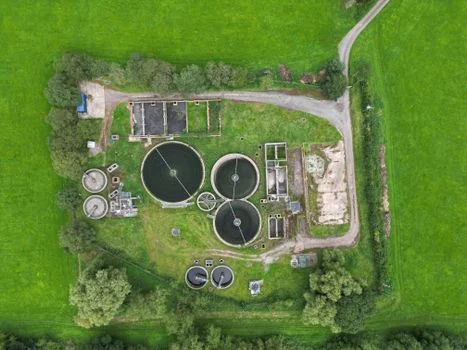
Selecting a sewage treatment equipment supplier in Ashgabat requires verification of GOST 31860-2012 certification. Procurement managers should demand Ashgabat-specific case studies that demonstrate the equipment's performance against high-TDS influent. A common red flag is a supplier citing "global standards" without acknowledging the specific BOD and COD limits of Turkmenistan, which are often 20-30% stricter than those in neighboring markets. Understanding how Muscat’s supplier selection framework compares to Ashgabat’s can help identify regional differences in compliance risk and technical documentation requirements.
Transparency in CAPEX is the second pillar of the evaluation framework. Itemized quotes must include not only the core equipment but also installation, commissioning, and civil works. In the 2025 Ashgabat market, there is a noted 30% variance in quotes for identical treatment capacities. This is often due to the exclusion of long-term maintenance costs. For instance, when evaluating MBR systems, a lower initial price may hide the cost of membrane replacement every three years, whereas a premium supplier like HydropureWater provides 10-year membrane warranties. Buyers should calculate the Total Cost of Ownership (TCO) over a 10-year horizon, factoring in Ashgabat’s energy costs ($0.08/kWh), chemical consumption ($0.50–$2.00/m³), and local labor rates ($15–$30/hour).
Logistical and after-sales support represent the final risk factors. Turkmenistan’s import process is complex; customs duties and taxes can add 15–25% to the equipment cost. Suppliers who lack experience with Turkmen customs often face delays of 4–8 weeks, which can derail project timelines. It is critical to select a partner that either maintains local spare parts inventory or has a proven track record of navigating the Ashgabat customs landscape. Verify the proximity of technical support. While local firms offer immediate response times, international manufacturers often provide superior technical depth. A hybrid approach—international equipment with a local maintenance agreement—is frequently the most reliable strategy for large-scale Ashgabat projects.
Cost Breakdown: Sewage Treatment Plant CAPEX and OPEX for Ashgabat Projects (2025 Data)
Capital expenditure (CAPEX) for a 500 m³/day MBR system in Ashgabat typically ranges from $1.2M to $1.8M, excluding civil works which add an average of 20-30% to the total project cost. For industrial applications like textile pre-treatment, a DAF system is significantly more affordable, costing between $300,000 and $500,000 for the same capacity. However, the choice of technology should not be based on CAPEX alone. A 2024 textile factory in Ashgabat saved $200,000 in its first year by opting for a hybrid DAF+A/O system instead of a full MBR plant, as the hybrid system met the GOST standards for their specific discharge permit while requiring lower chemical inputs for their unique influent profile.
Operating expenditure (OPEX) in Ashgabat is heavily influenced by chemical requirements and maintenance cycles rather than energy, thanks to the country's subsidized electricity rates. For MBR systems, OPEX averages $0.30–$0.50 per m³ treated. In contrast, A/O systems are cheaper to operate at $0.20–$0.40 per m³, but they may require more frequent sludge handling and disposal. Industrial RO systems carry the highest OPEX at $0.40–$0.70 per m³ due to the high pressure required to overcome Ashgabat’s high TDS and the cost of anti-scalant chemicals. Procurement teams must ensure that their OPEX models account for the 15-25% import tax on specialized chemicals not manufactured within Turkmenistan.
| Cost Component | <
|---|