Why Milan’s Wastewater Treatment Costs Are Higher Than Other Italian Cities
The average wastewater treatment plant in Milan costs €1.2–2.8 million for a 500–2,000 m³/day industrial facility, with equipment (45%), civil works (30%), and permitting (15%) as the largest cost drivers. Milan’s stringent EU Urban Waste Water Directive 91/271/EEC compliance adds 20–30% to capital costs compared to other Italian regions, but reduces long-term fines and operational risks. This guide provides a 2025 engineering breakdown and ROI calculator to help buyers budget accurately.
Compliance with the EU Urban Waste Water Directive 91/271/EEC adds 20–30% to capital costs for Milan-based facilities compared to those in southern Italy, according to a 2024 ISPRA report. This discrepancy stems primarily from Lombardy’s classification as a "sensitive area," necessitating advanced nutrient removal (nitrogen and phosphorus) that requires more sophisticated filtration and biological stages. While a facility in Puglia might meet standards with secondary treatment, a Milanese plant often requires tertiary treatment or advanced membrane technologies to satisfy ARPA Lombardia’s discharge limits into the Olona or Lambro river basins.
Milan’s high labor costs, ranging from €45–60 per hour for skilled WWTP technicians, increase installation and maintenance expenses by 15–20% over the national average. Finding specialized engineers capable of managing SCADA-integrated systems in the Lombardy region commands a premium, impacting the total cost of ownership (TCO). land scarcity in Milan’s industrial zones—where prices range from €300–500 per square meter—drives a heavy demand for compact MBR systems for Milan’s land-constrained industrial zones. These systems typically cost 30% more in capital expenditure than conventional activated sludge but save significantly on real estate and civil engineering.
A 2023 case study from FederAlimentare highlights this regional gap: a 1,000 m³/day food processing plant in Milan paid €1.8 million for an MBR system, whereas a similar facility in Naples spent only €1.2 million for a conventional system. The Milanese plant, however, achieved a 60% smaller footprint and met the stricter local effluent reuse standards, which are increasingly incentivized in Northern Italy.
| Cost Factor | Milan (Lombardy) | Southern Italy Average | Impact on Budget |
|---|---|---|---|
| Regulatory Compliance | EU Directive 91/271/EEC (Sensitive) | Standard EU Compliance | +25% CAPEX |
| Skilled Labor Rate | €45–60 / hour | €30–40 / hour | +18% OPEX |
| Industrial Land Cost | €300–500 / m² | €80–150 / m² | Favors Compact Tech |
| Permitting Timeline | 12–18 Months | 18–24 Months | Higher Admin Costs |
Wastewater Treatment Plant Cost Breakdown: 2025 Engineering Estimates for Milan
Equipment costs represent 40–45% of total capital expenditure for Milanese industrial facilities, ranging from €500/m³ to €1,800/m³ based on technology selection, according to 2025 HydropureWater catalog data. For a standard 1,000 m³/day facility, equipment procurement includes primary screening, biological reactors, and specialized sludge dewatering units. Conventional systems sit at the lower end of this range, while compact MBR systems for Milan’s land-constrained industrial zones command the higher end due to membrane costs and advanced aeration requirements.
Civil works account for 25–30% of the total budget, with Milan-specific labor and material multipliers significantly affecting the bottom line. Excavation and tank construction for underground systems cost between €200–400 per cubic meter, while above-ground structures range from €150–300 per cubic meter. In Milan's dense industrial outskirts, the complexity of existing utility lines often requires specialized site preparation, adding a 10% contingency buffer to civil engineering estimates.
Permitting and compliance costs are a non-negotiable 10–15% of the investment. Securing approval for EU Directive 91/271/EEC through ARPA Lombardia requires comprehensive environmental impact assessments and technical dossiers, typically costing between €50,000 and €150,000 depending on the effluent complexity. labor for installation and ongoing operation follows the 2025 Milan Chamber of Commerce wage data, where installation technicians earn €45–60/hour and daily operators earn €30–45/hour. To mitigate these costs, many firms are opting for DAF systems for Milan’s high-FOG industrial wastewater, which offer a balanced ratio of equipment cost to installation complexity.
| System Component | 500 m³/day (Small) | 1,000 m³/day (Medium) | 2,000 m³/day (Large) |
|---|---|---|---|
| Equipment (MBR/DAF) | €450,000 - €650,000 | €850,000 - €1,200,000 | €1,600,000 - €2,200,000 |
| Civil Works & Piping | €150,000 - €250,000 | €350,000 - €500,000 | €700,000 - €950,000 |
| Permitting & Engineering | €60,000 - €90,000 | €100,000 - €150,000 | €180,000 - €250,000 |
| Installation Labor | €50,000 - €80,000 | €90,000 - €140,000 | €160,000 - €220,000 |
| Total Estimated Cost | €710,000 - €1.07M | €1.39M - €1.99M | €2.64M - €3.62M |
Milan vs. Other Italian Cities: How Local Factors Impact WWTP Costs
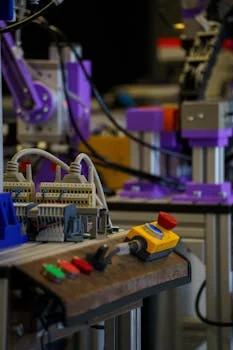
Milan’s stricter pre-treatment requirements add €100,000–300,000 to project budgets compared to comparable industrial installations in Rome or Florence, based on 2024 ARPA Lombardia regulatory data. While national Italian law sets a baseline for industrial discharge, Milanese authorities enforce local "Regolamento Regionale" standards that often require lower thresholds for Chemical Oxygen Demand (COD) and Total Suspended Solids (TSS) before water can enter the municipal sewer system. This necessitates additional stages of treatment, such as precision chemical dosing for Milan’s compliance-driven WWTPs, to ensure consistent effluent quality.
The labor cost delta also plays a significant role; a 2025 Federmeccanica report indicates that Milan’s skilled labor shortage has driven installation costs up by 18% relative to Turin. This is compounded by the high demand for electromechanical engineers in Lombardy’s manufacturing sector. land costs in Milan’s primary industrial zones are roughly 40% more expensive than those in Bologna, creating a financial imperative for high-intensity, low-footprint technologies.
A practical example of this regional variance is found in the textile industry. A 1,500 m³/day textile plant in Prato (Tuscany) paid approximately €1.4 million for a DAF-based treatment system in 2023. According to data from Sistema Moda Italia, an identical system in Milan cost €1.9 million. The €500,000 difference was attributed to Milan's more expensive civil engineering permits, higher seismic reinforcement requirements for tank construction, and the need for more advanced DAF systems for high-FOG applications (relevant to Milan’s food/textile plants) to meet local municipal intake limits.
| City | Avg. Installation Labor (Hourly) | Industrial Land (per m²) | Regulatory Stringency Index |
|---|---|---|---|
| Milan | €58 | €420 | High (Sensitive Area) |
| Turin | €49 | €280 | Medium-High |
| Bologna | €46 | €250 | Medium |
| Rome | €44 | €310 | Medium |
| Naples | €36 | €120 | Standard |
Treatment Technology Comparison: Which System Offers the Best ROI for Milan Buyers?
Conventional activated sludge systems require a footprint of 0.5–1.0 m² per m³/day of treated water, whereas Membrane Bioreactors (MBR) reduce this requirement by 60%, making them the preferred choice for Milan’s compact industrial zones. While conventional systems offer the lowest initial capital cost (€500–800/m³/day), their operational costs are often higher in the Milanese context due to larger sludge volumes. Sludge disposal in Lombardy is highly regulated and expensive, often reaching €150–300 per ton, making technologies that minimize waste more attractive over a 5-year horizon.
MBR technology, despite a 30% higher initial CAPEX (€800–1,800/m³/day), offers a 90% reduction in sludge production compared to conventional methods. For a detailed analysis of these trade-offs, engineers should consult a detailed MBR system guide for Italian industrial buyers. In industries such as food processing or cosmetics, where wastewater contains high levels of Fats, Oils, and Grease (FOG), DAF systems for Milan’s high-FOG industrial wastewater are essential. While DAF systems involve 20% higher chemical costs, their 95% removal efficiency for solids significantly reduces the burden on downstream biological stages, preventing costly membrane fouling or biological upsets.
| Metric (1,000 m³/day) | Conventional Activated Sludge | MBR (Membrane Bioreactor) | DAF + Biological |
|---|---|---|---|
| Capital Cost (CAPEX) | €0.8M - €1.2M | €1.4M - €1.9M | €1.2M - €1.6M |
| Footprint Required | 800 - 1,000 m² | 250 - 350 m² | 500 - 700 m² |
| Annual Sludge Disposal | €180,000 | €55,000 | €110,000 |
| Annual Energy/Chemicals | €60,000 | €95,000 | €120,000 |
| 5-Year TCO | €2.0M - €2.4M | €2.1M - €2.6M | €2.3M - €2.7M |
For Milanese buyers, the "best" ROI often depends on land availability. If the facility has existing space, conventional systems are hard to beat on pure cost. However, if land must be purchased or diverted from production, the MBR system's space-saving characteristics often result in a faster "true" ROI when the opportunity cost of land is factored in.
ROI Calculator: How to Justify Your Wastewater Treatment Plant Investment in Milan
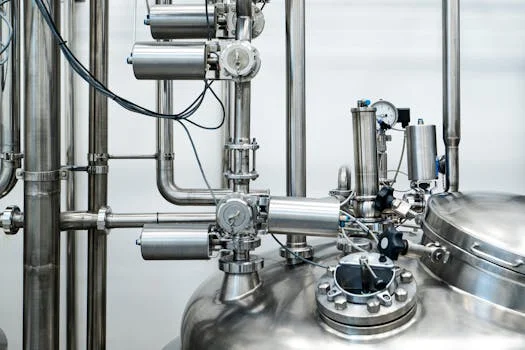
Industrial wastewater treatment systems in Milan typically achieve capital cost recovery within 5–7 years through a combination of sludge reduction, avoided non-compliance penalties, and water reclamation incentives, according to a 2025 EIB wastewater financing report. The primary driver of ROI in the Milanese market is the reduction in sludge disposal costs. Using MBR technology can reduce sludge volume by up to 70%, which, at Milan’s current disposal rates of €150–300/ton, can save a medium-sized facility over €100,000 annually compared to conventional methods.
Compliance savings also form a critical pillar of the financial justification. ARPA Lombardia fines for exceeding nitrogen or phosphorus limits range from €10,000 to €100,000 per violation. By installing a robust system with precision chemical dosing for Milan’s compliance-driven WWTPs, facilities effectively purchase "compliance insurance." Lombardy’s regional incentives for water reuse allow plants to save €0.50–1.00 per cubic meter of treated effluent used for industrial cooling or cleaning, further accelerating the payback period. To build a custom business case, users can adapt this ROI calculator for wastewater treatment plants in strict regulatory environments.
A case study from a Milan-based dairy plant (Assolatte 2024) illustrates these savings: after replacing an aging primary clarifier with a high-efficiency DAF system, the plant saved €250,000 per year in combined sewer surcharges and sludge handling costs. The investment of €1.3 million was fully amortized in just over five years, excluding the additional benefit of improved ESG ratings which facilitated a lower-interest "Green Loan" for further facility upgrades.
Milan ROI Calculation Framework:
- Step 1: Calculate current annual "Penalty + Surcharge" costs (Average Milan industrial: €80k–150k).
- Step 2: Estimate annual Sludge Disposal savings (MBR vs Conv: ~€120k).
- Step 3: Add Water Reuse credits (Volume x €0.75/m³).
- Step 4: Subtract annual OPEX (Energy + Chemicals + Labor).
- Step 5: Divide Total CAPEX by Net Annual Savings to find Payback Years.
Frequently Asked Questions
How much does it cost to set up a sewage treatment plant in Milan?
The cost varies primarily by capacity and technology. For 2025, the following engineering estimates apply to industrial installations in the Milan metropolitan area:
| Plant Capacity | Estimated Cost (Turnkey) |
|---|---|
| 500 m³/day | €700,000 - €1,100,000 |
| 1,000 m³/day | €1,400,000 - €2,000,000 |
| 2,500 m³/day | €3,200,000 - €4,500,000 |
| 5,000 m³/day | €5,500,000 - €8,000,000 |
What are the ongoing costs of a wastewater treatment plant in Milan?
Operational expenses (OPEX) in Milan are driven by high energy prices and strict sludge disposal regulations. On average, expect to pay €0.45–0.85 per m³ of treated water. This is broken down into energy (35%), chemicals (25%), sludge disposal (25%), and labor/maintenance (15%). Plants using precision chemical dosing can often reduce chemical waste by 15-20%.
How long does it take to build a wastewater treatment plant in Milan?
The typical timeline is 12–24 months. Permitting through ARPA Lombardia and local municipal councils usually takes 6–10 months. Engineering and procurement require 4–6 months, while on-site construction and commissioning take an additional 6–8 months. Delays are most common during the environmental impact assessment phase.
What are the most common compliance issues for WWTPs in Milan?
According to ARPA Lombardia’s 2024 violation data, the top three issues are:
- Exceeding total nitrogen and phosphorus limits (often due to inadequate biological stages).
- Improper sludge disposal documentation.
- Inaccurate flow monitoring and discharge reporting.
Can I finance a wastewater treatment plant in Milan?
Yes, several options are available for 2025. These include EU grants via the LIFE Programme for innovative water technologies, Lombardy’s regional "Green Fund" which offers low-interest loans for industrial sustainability, and WPCLP (Water Pollution Control Loan Program) financing for projects that significantly improve local water quality. Most major Italian banks also offer specific "Transition 4.0" credit lines for automated treatment equipment.