Maryland industrial wastewater treatment compliance now hinges on three items: Chesapeake Bay ENR limits of <3 mg/L TN and <0.3 mg/L TP, EPA cybersecurity training due July 1, 2025, and stricter MDE discharge permits. On-site systems cost $150K–$2M+.
Maryland's 2025 Wastewater Deadlines: ENR, Cybersecurity, and MDE Permits
Industrial facilities in Maryland must hold Chesapeake Bay ENR limits of <3 mg/L total nitrogen and <0.3 mg/L total phosphorus, finish EPA cybersecurity training by July 1, 2025, and carry MDE permits with tighter discharge monitoring. On-site DAF, MBR, and RO package plants deploy 30–50% faster than stick-built builds and cost $150K–$2M+.
Maryland's regulatory program mandates significant upgrades for industrial wastewater treatment, with 90% of facilities required to achieve Enhanced Nutrient Removal (ENR) standards for the Chesapeake Bay Total Maximum Daily Load (TMDL) by 2025 (MDE 2023 report). The TMDL itself is federal. EPA issued the TMDL on December 29, 2010. Wikipedia's Chesapeake Bay entry calls it "the largest, most complex TMDL document that EPA had issued to date". The document set limits on nitrogen, phosphorus, and sediment, and "would restrict water pollution from farms, land development, power plants and sewage treatment plants". Failure to hold the strict limits — total nitrogen (TN) at <3 mg/L and total phosphorus (TP) at <0.3 mg/L — risks penalties up to $37,500/day per EPA Clean Water Act violations.
Cybersecurity now sits inside the compliance file. All industrial wastewater operators in Maryland must complete EPA cybersecurity training by July 1, 2025, for certification renewal, as mandated by the Board of Waterworks and Waste System Operators. The training covers ransomware protection, SCADA vulnerabilities, and incident response, all of which bear on automated on-site plants. MDE permits also enforce stricter monitoring and pretreatment for industrial discharges to surface and groundwater, with specific limits for metals, FOG (fats, oils, and grease), and nutrients per MDE's 2024 permit application checklist.
A Baltimore metal finishing plant shows the cost of falling behind. An MDE inspection failure in 2023 traced to copper exceedances — 12 mg/L discharged against a permit limit of 1.3 mg/L — forced a capital-intensive upgrade to a combined Maryland-approved DAF system for FOG and TSS removal and Reverse Osmosis (RO) train. The DAF stage removed suspended solids and heavy metals through coagulation and flocculation, and the RO stage polished the effluent to the discharge limits while enabling reuse. For more on EPA enforcement across states, see our piece on EPA compliance strategies for industrial wastewater.
| Regulatory Mandate | Requirement | Deadline/Impact | Consequence of Non-Compliance |
|---|---|---|---|
| Chesapeake Bay TMDL (ENR) | <3 mg/L Total Nitrogen, <0.3 mg/L Total Phosphorus | 90% of facilities by 2025 | Fines up to $37,500/day (EPA Clean Water Act) |
| EPA Cybersecurity Training | Mandatory for all water/wastewater operators | July 1, 2025 | Certification renewal denied, operational shutdown risk |
| MDE Permit Requirements | Stricter surface/groundwater discharge monitoring, pretreatment for metals, FOG, nutrients | Ongoing; 2024 checklist in effect | Permit revocation, fines, enforcement actions |
Operators with European sister sites will recognize the cadence: statutory deadlines pull treatment investments forward. The EU Urban Wastewater Treatment Directive: Compliance, Deadlines & Tech timeline runs the same way, while the Maryland limits above govern US discharges. Gulf-region plant teams can benchmark their permit structure against the Ajman Industrial Effluent Guide: 2026 Specs and Compliance.
What Are the Maryland MDE Industrial Discharge Permit Requirements?
Maryland MDE industrial discharge permit requirements cover every industrial discharge to surface or groundwater, with effluent limits for metals, FOG, and nutrients written into the permit itself. Applications must include detailed pretreatment plans, monitoring protocols, and emergency response procedures, following MDE's 2024 checklist. Permit fees run $1,000–$10,000 per year depending on waste volume and complexity, and annual compliance monitoring adds $5,000–$20,000 in laboratory testing. Submit complete sludge and pretreatment detail with the first filing — incomplete packages are the most common source of delay.
Documentation to Have Ready Before Filing
Permit review moves at the speed of your paperwork, so assemble the file before you touch the application portal. Every item below belongs in the first submission, because resubmittals restart the queue.
- A complete waste stream characterization, covering metals, FOG, nutrients, and any hazardous constituents.
- A pretreatment plan that names each stage and the limit it controls.
- A monitoring protocol with sampling points, parameters, and reporting frequency matched to the permit annex.
- An emergency response procedure covering power loss, dosing failure, and upset discharges.
- A sludge handling and disposal path with the receiving facility named.
- Credentials showing operator certification and completed cybersecurity training.
On-Site vs. Centralized Treatment: Choosing the Right Configuration
The choice between on-site and centralized treatment turns on waste stream characteristics, operating cost, space, and compliance certainty. Centralized treatment, offered by specialized providers like Clean Harbors, suits hazardous streams — flammables, oxidizers, poisons, and reactives. Off-site facilities often run advanced processes such as liquid/liquid extraction for organics-contaminated wastewater that on-site systems cannot safely or economically manage. Centralized costs run $0.50–$2.00 per gallon (Valicor 2024 data, for comparable services), covering transport, treatment, and disposal.
On-site systems fit non-hazardous industrial wastewater from food processing, textiles, and metalworking, with full control of discharge quality and a reuse path. Dissolved Air Flotation (DAF) systems achieve 92–97% TSS removal and handle high-FOG streams well. MBR systems for Chesapeake Bay TMDL ENR compliance deliver >99% TSS removal and <10 mg/L COD, holding Maryland's nutrient limits through biology plus membrane separation. On-site package plants run $150K–$2M in CAPEX with OPEX of $0.10–$0.50 per gallon — usually cheaper over time for consistent, high-volume, non-hazardous streams.
A three-step decision framework keeps the choice honest. First, if you generate >1,000 gallons/day of oily wastewater with limited space, a DAF system with off-site sludge disposal is the natural fit. Second, if nutrients bind you to ENR limits and reuse is attractive, MBR is usually the strongest option. Third, highly variable hazardous waste or extreme space limits point to a centralized partner.
| Feature | On-Site Treatment Systems | Centralized Treatment Providers |
|---|---|---|
| Best For | Consistent, non-hazardous industrial wastewater (e.g., food processing, textiles, metalworking) | Hazardous waste streams (flammables, oxidizers, poisons), facilities with limited space or variable waste volumes |
| Key Technologies | DAF, MBR, RO, biological treatment | Liquid/liquid extraction, chemical treatment, incineration, secure landfilling |
| TSS Removal | DAF: 92–97%; MBR: >99% | Varies by waste stream and provider, often focuses on specific contaminants |
| Nutrient Removal | MBR can achieve <3 mg/L TN, <0.3 mg/L TP (ENR standards) | Handled if waste stream contains nutrients, but primary focus is hazardous constituents |
| Water Reuse Potential | High, especially with MBR and RO systems | Limited to non-existent for the originating facility |
| CAPEX (Estimated) | $150K–$2M for package plants | Minimal direct CAPEX for facility, indirect costs for storage/transport |
| OPEX (Estimated) | $0.10–$0.50/gallon (labor, chemicals, energy, sludge) | $0.50–$2.00/gallon (transport, treatment, disposal) |
| Deployment Time | 30–50% faster than traditional stick-built plants | Immediate (for waste generation), but contract/logistics setup required |
| Control & Oversight | Full control over treatment process and discharge quality | Relies on third-party provider's expertise and compliance |
Operator Skills Your Plant Needs on Staff
An automated package plant still needs a competent human beside it. Insist on a licensed operator in responsible charge, plus a trained deputy who can cover leave and turnover. Every operator should be able to read SCADA trends, spot a fouling signature before alarms trip, and execute the response plan for a ransomware indicator. Cross-train maintenance staff on pump rebuilds and membrane cleaning so a single absence never stops the train.
Engineering Specs: DAF and RO Systems for Maryland Plants
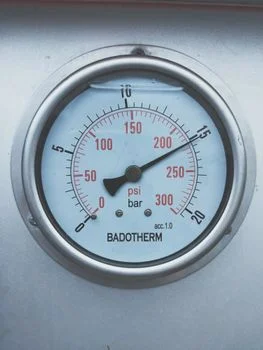
DAF systems built for Maryland duty remove FOG, TSS, and certain heavy metals using micro-bubble flotation and skimming, at over 95% FOG removal and 92–97% TSS removal. Capacities span 4 to 300 m³/h, with effluent COD consistently below 50 mg/L — inside many preliminary discharge standards (per EPA benchmarks). Hydraulics are compact: Wikipedia's dissolved air flotation overview notes circular units need "just 3 minutes" while rectangular units require "20 to 30 minutes" of residence time. DAF is the default first stage for food processing, pulp and paper, and metalworking sites with oily or solids-laden flows.
RO systems serve facilities that need high-purity reuse water or ultra-strict discharge. RO systems for water reuse and high-purity effluent are built for 10 to 200 m³/h, reach up to 95% recovery, and produce permeate with <10 mg/L TDS and <5 mg/L COD. Semiconductor, pharmaceutical, and power generation plants depend on that water quality. For Chesapeake Bay TMDL duty, add chemical dosing for phosphorus or tertiary filtration for nitrogen polishing around the core train to stay inside limits.
Choosing an MBR System for Chesapeake Bay ENR Compliance
An MBR system for Chesapeake Bay ENR compliance pairs biological treatment with submerged membranes — typically PVDF at 0.1 μm pore size — for virtually complete solids and bacteria separation. Industrial units span 10 to 2,000 m³/day and consistently deliver <10 mg/L COD, <3 mg/L TN, and <0.3 mg/L TP, which meets ENR requirements outright. Energy runs 0.6–1.2 kWh/m³ (per MBR manufacturer data). According to Wikipedia's membrane bioreactor overview, COD removal "can be increased to 96 to 99 percent in membrane bioreactors" versus roughly 95 percent for conventional activated sludge, and low-energy side-stream designs reach "sustainable operation at energy usage as low as 0.3 kWh/m3 of product". MBR systems for Chesapeake Bay TMDL ENR compliance serve pharmaceuticals, textiles, and municipal-industrial co-treatment on exactly this duty.
| System Type | Key Function | Capacity Range | Key Performance Specs | Typical Applications | Maryland Compliance Relevance |
|---|---|---|---|---|---|
| DAF | FOG, TSS, heavy metal removal via micro-bubbles | 4–300 m³/h | 95%+ FOG removal, 92–97% TSS removal, <50 mg/L COD effluent (EPA benchmarks) | Food processing, pulp/paper, metalworking, rendering | Pretreatment for FOG and heavy metals to meet MDE discharge limits |
| MBR | Biological treatment with membrane separation; high-quality effluent | 10–2,000 m³/day | >99% TSS removal, <10 mg/L COD, <3 mg/L TN, <0.3 mg/L TP (ENR standards) | Pharmaceutical, textile, chemical, municipal-industrial co-treatment | Direct compliance with Chesapeake Bay TMDL ENR standards; water reuse potential |
| RO | Removal of dissolved solids, salts, organics for water reuse | 10–200 m³/h | 95% recovery rates, <10 mg/L TDS, <5 mg/L COD in permeate | Semiconductor, pharmaceutical, power generation, boiler feed, advanced reuse | Enables high-purity water reuse, meets ultra-strict discharge limits, reduces water costs |
Startup Sequence for a Biological Train
Bring a new biological stage up in a fixed order and resist the urge to jump straight to full load. The sequence below protects the biomass and gives you defensible performance data from the first week.
- Flush and water-test the whole train before seeding, confirming every valve and instrument reads true.
- Seed the biology, then hold a low loading regime while the mixed liquor establishes.
- Ramp load in steps, confirming nutrient removal holds at each step before pushing higher.
- Engage membrane filtration only after solids settle and the biomass is stable.
- Run the acceptance trial across real production swings, with effluent sampled and logged daily.
Cost Breakdown: CAPEX, OPEX, and ROI for Maryland Plants
On-site package plants in Maryland run $150K to $2M in CAPEX (per Hydropure 2025 guide, for comparable systems), set by technology, capacity, and customization. A DAF system costs $80K–$500K, an MBR system $200K–$1.5M, and an RO system $100K–$800K. Installation adds another 20–30% of equipment price for civil works, piping, electrical, and commissioning. Treat those percentages as budget lines, not contingencies — they are the most commonly underestimated item we see in Maryland project files.
OPEX for on-site systems averages $0.10–$0.50 per gallon, covering labor, chemicals (coagulants, flocculants, disinfectants), energy for pumps and aeration, and sludge disposal fees. Centralized treatment shifts cost per gallon up to $0.50–$2.00 (Valicor 2024 data, for comparable services) through transport, handling, and specialized disposal. The ROI case for on-site builds usually rests on water reuse: recycling RO permeate to cooling tower makeup or clean-in-place (CIP) systems cuts a facility's water costs by 40–60%. A Maryland food processor running RO for CIP water reported $250K in annual savings.
Hidden costs round out the model. EPA cybersecurity training runs $500–$2,000 per operator from July 1, 2025. MDE permit fees add $1,000–$10,000 per year, and effluent monitoring with laboratory testing adds $5,000–$20,000 annually. Factoring these into total cost of ownership keeps the financial projection honest.
| Cost Category | On-Site Treatment (Estimated Range) | Centralized Treatment (Estimated Range) |
|---|---|---|
| CAPEX (Equipment) | $150K–$2M (Package plants) | Minimal direct CAPEX for facility |
| DAF System | $80K–$500K | N/A |
| MBR System | $200K–$1.5M | N/A |
| RO System | $100K–$800K | N/A |
| Installation Costs | 20–30% of equipment CAPEX | N/A |
| OPEX (Per Gallon) | $0.10–$0.50 | $0.50–$2.00 |
| Key OPEX Factors | Labor, chemicals, energy, sludge disposal | Transportation, treatment, disposal fees |
| ROI Drivers | Water reuse (40–60% reduction in water costs), reduced discharge fees, avoided penalties | Avoided CAPEX for on-site system, specialized hazardous waste handling |
| Hidden Costs | EPA cybersecurity training ($500–$2,000/operator) | N/A |
| MDE permit fees ($1,000–$10,000/year) | N/A | |
| Compliance monitoring/lab testing ($5,000–$20,000/year) | N/A |
Where the Money Actually Goes
Treat these lines as the levers they are. Energy for aeration and pumping is the largest controllable draw, so instrument it separately and chase savings there first. Chemistry follows influent character — FOG-heavy streams push coagulant and polymer demand, and metals add pH adjustment and polishing media. Sludge haulage recurs whether you watch it or not, so dewatering ahead of transport is the most dependable saver on the sheet.
Monitoring Cadence That Survives an Inspection
Build the monitoring plan around the permit annex, not around habit. Log influent and effluent checks every shift, run the full parameter panel on the frequency the permit states, and keep bench results with chain-of-custody intact. Record chemical doses, sludge pulls, and abnormal events at the moment they happen — reconstructed logs read as reconstructed under questioning. When an inspector arrives, a complete file answers questions before they are asked.
Maryland Industrial Wastewater Treatment Compliance: The 5-Step Checklist
Maryland industrial wastewater treatment compliance is a five-step exercise that aligns operations with MDE and EPA requirements before deadlines land on you. Audit the stream, compare limits, pick the system, train the operators, and file the permit — in that order.
- Step 1: Audit Your Waste Stream. Analyze your industrial wastewater for all contaminants. Test for regulated metals (e.g., Copper, Lead, Zinc), FOG, nutrients (Total Nitrogen, Total Phosphorus), and any hazardous constituents, aligned with MDE permit application requirements. This audit sets the baseline for system design and compliance targets.
- Step 2: Compare Effluent Limits to MDE Standards. Review current discharge quality against specific MDE effluent limits. Metal finishing facilities in Maryland, for example, must meet a copper limit of <1.3 mg/L (per MDE 2024 guidelines). Knowing the thresholds locates your compliance gaps.
- Step 3: Select a Treatment System. Match stream characteristics, space, and budget to the right technology — a DAF system for FOG and TSS removal, an MBR system for Chesapeake Bay TMDL ENR compliance, or a centralized provider for hazardous waste. Use the decision framework from the configuration section above.
- Step 4: Plan for EPA Cybersecurity Training. Have all operators complete the mandatory training by June 2025 so certifications hold beyond July 1, 2025. Fold cybersecurity protocols into the operating plan for every automated treatment system.
- Step 5: Submit the MDE Permit Application. File a complete application with pretreatment plans, monitoring protocols, and emergency response procedures per the MDE 2024 checklist. Complete packages secure discharge authorization faster and demonstrate environmental stewardship.
For reuse-grade effluent, add an RO system for water reuse and high-purity effluent after the biological stage — it is the difference between meeting limits and monetizing effluent.
Reading Drift in an ENR Train
Nutrient drift has a logic you can walk. Rising nitrogen with steady solids usually points to oxygen control or internal recycle, not to the membranes. Phosphorus creep first implicates coagulant dosing and mixing upstream of clarification. Solids carryover that arrives with turbidity spikes belongs to the clarification stage — correct it there before adjusting biology, and re-sample after each change so cause and effect stay linked.
Who This Guide Fits, and the Next Step
This guide fits Maryland industrial facilities weighing on-site treatment against centralized haul-off — food processing, metalworking, textiles, pharmaceuticals, and power. Hazardous-stream generators should engage centralized providers early; everyone else can price a compliant train directly. Send your flow rate, contaminant profile, and permit limits through our quote desk for a budget built against 2025 Maryland benchmarks.
Frequently Asked Questions
What are Maryland's 2025 wastewater treatment requirements for industrial facilities?
Maryland's 2025 requirements center on Chesapeake Bay TMDL ENR standards (<3 mg/L total nitrogen, <0.3 mg/L total phosphorus), EPA cybersecurity training for all operators by July 1, 2025, and MDE permits for surface and groundwater discharges. Pretreatment for metals, FOG, and nutrients is mandatory. Violations risk penalties up to $37,500/day per EPA Clean Water Act.
How much does an industrial wastewater treatment system cost in Maryland?
On-site systems cost $150K–$2M in CAPEX with OPEX of $0.10–$0.50 per gallon; centralized treatment runs $0.50–$2.00 per gallon. A 100 m³/day DAF system typically costs $250K–$400K, and a 500 m³/day MBR system $800K–$1.2M. Budget hidden lines too: cybersecurity training at $500–$2,000 per operator and MDE permit fees at $1,000–$10,000 per year.
What's the difference between DAF and MBR systems for industrial wastewater?
DAF systems remove 92–97% of TSS and excel on high-FOG streams such as food processing and metalworking, using micro-bubbles to float contaminants. MBR systems achieve >99% TSS removal and <10 mg/L COD and meet ENR nutrient limits through biology plus membrane separation. DAF runs $80K–$500K; MBR runs $200K–$1.5M and adds reuse-grade effluent quality.
Do I need a permit for discharging industrial wastewater in Maryland?
Yes. MDE requires permits for all industrial discharges to surface or groundwater, with effluent limits for metals, FOG, nutrients, and other contaminants. Applications need detailed pretreatment plans, monitoring protocols, and emergency response procedures. Permit fees run $1,000–$10,000 per year depending on waste volume and complexity.
How does EPA cybersecurity training affect my wastewater treatment system?
Effective July 1, 2025, all Maryland water and wastewater operators must complete EPA cybersecurity training to renew certifications. The curriculum covers ransomware protection, SCADA vulnerabilities, and incident response. Digitally controlled plants — PLC-driven DAF or MBR units — need their security posture documented, because lapses can stall operator certification and shut systems down.
Further Reading
Explore these in-depth articles on related wastewater treatment topics: