Silicon wafer wastewater treatment equipment for 2027 combines DAF flotation, chemical precipitation, RO, and zero-fouling PVDF MBR polishing to reach 99.8% water recovery and COD below 50 mg/L. CAPEX spans $500K–$15M by fab size, with OPEX driven by membranes and HF neutralization chemicals.
What Silicon Wafer Wastewater Treatment Equipment Must Handle
Silicon wafer wastewater treatment equipment must remove 50–300 nm CMP particles, neutralize hydrofluoric acid, and polish refractory organics to COD below 50 mg/L while recovering 99.8% of the water. Conventional activated sludge fails here: BOD/COD ratios below 0.2 and TDS of 1,000–5,000 mg/L starve and stress the biomass. Hybrid trains solve it.
CMP slurries top the list because of scale, not toxicity. Silica and alumina particles at 50–300 nm are engineered to resist aggregation (vsep.com data), so they clog media filters and overwhelm DAF units sized for larger solids. Throughput drops first; compliance follows.
Hydrofluoric acid attacks the hardware budget as much as the permit. Per ASTM G31-72 immersion data, 316L stainless steel corrodes at 0.1–0.5 mm/year in 1–5% HF solutions, which forces PVDF-lined equipment and Hastelloy into the wetted path. Trace arsenic (0.1–2 mg/L) and gallium (1–10 mg/L) inhibit biology, while IPA at 50–200 mg/L and acetone push COD up and toxicity along with it.
Salinity and biodegradability decide the biology. BOD/COD ratios below 0.2 starve conventional nutrient removal, and TDS of 1,000–5,000 mg/L puts osmotic stress on microorganisms. That combination is why specialized MBR or RO pretreatment is standard for this matrix, and why membrane replacement (3–5 year PVDF lifespan) and HF neutralization chemicals anchor the OPEX line.
The full challenge profile:
| Contaminant/Challenge | Typical Influent Characteristics | Impact on Conventional Systems | Relevant Standard/Data Source |
|---|---|---|---|
| CMP Slurries | Silica/Alumina particles, 50–300 nm, engineered to resist aggregation | Rapid clogging of media filters and DAF systems; reduced throughput | vsep.com data |
| Hydrofluoric Acid (HF) | Concentrations can vary, but typically present in etching processes | Etches glass and corrodes stainless steel (e.g., 316L SS corrodes at rates of 0.1–0.5 mm/year in 1–5% HF solutions); leads to leaks and compliance issues | ASTM G31-72 |
| Trace Heavy Metals | Arsenic (As: 0.1–2 mg/L), Gallium (Ga: 1–10 mg/L) | Inhibits biological treatment; requires specialized removal methods | HydropureWater internal data |
| Organic Solvents | IPA (50–200 mg/L), Acetone | High COD load; can be toxic to conventional biological treatment | HydropureWater internal data |
| BOD/COD Ratio | Low (<0.2) | Inhibits biological nutrient removal; poor biodegradability | Industry benchmark |
| Salinity (TDS) | 1,000–5,000 mg/L | Osmotic stress on microorganisms; requires RO for recovery | Industry benchmark |
How to Specify a DAF RO MBR System for Semiconductor Fab Wastewater
A DAF RO MBR system for semiconductor fab wastewater flows through four stages: flotation, precipitation, reverse osmosis, and membrane bioreaction. A high-efficiency Dissolved Air Flotation (DAF) System initiates the train, removing CMP slurry solids before they reach membranes. Chemical precipitation then neutralizes HF and drops out heavy metals, RO rejects ions and dissolved organics, and a zero-fouling MBR system for semiconductor wastewater finishes with biological polishing and final filtration. Membrane bioreactors replace secondary clarifiers with microfiltration membranes and hold MLSS at 8,000–12,000 mg/L in a smaller tank (Wikipedia, Membrane Bioreactor).
DAF mechanics reward attention at specification time. A recycled side-stream of clarified effluent is saturated with air under pressure and released at the tank, where bubbles nucleate directly on particle surfaces and float them for skimming (Wikipedia, Dissolved Air Flotation). Rectangular tanks allow 20–30 minutes of separation and circular units about 3 minutes; lamella packing raises separation efficiency where floor area is tight. Match the tank style to your sludge volume, not the supplier's standard drawing.
Automation carries the 24/7 duty. Real-time TOC monitoring, automated membrane integrity testing, and programmed clean-in-place (CIP) cycles keep a four-stage train inside its envelope through shift changes and campaign cleans. Fab utility teams should treat these as line items in the control scope, not options.
Stage-by-stage duties and design parameters:
| Treatment Stage | Primary Function | Key Parameters & Performance Metrics | Typical Design Considerations |
|---|---|---|---|
| Dissolved Air Flotation (DAF) | Removes CMP slurry particles (90–95%), FOG | Microbubble Size: 30–50 μm Hydraulic Loading Rate: 5–10 m/h Chemical Dosing (Polymer): 2–5 mg/L |
Optimized for sub-micron particle capture; high solids loading capacity |
| Chemical Precipitation | Neutralizes HF, removes heavy metals | Neutralization Agent: Calcium Hydroxide (Ca(OH)₂) (1.1:1 molar ratio to F⁻) pH Control: 6–9 Fluoride Removal Efficiency: 95–99% Sludge Generation: 0.5–1 kg/m³ |
Precise dosing via PLC-controlled chemical dosing for HF neutralization; optimized for metal hydroxide precipitation |
| Reverse Osmosis (RO) | Rejects ions, dissolved organics, silica, fluoride | Membrane Type: Polyamide thin-film composite Recovery Rate: 75–85% Flux: 15–25 L/m²·h Rejection Rates: Silica (99%), Fluoride (98%), TDS (95%) |
RO system for fluoride and silica rejection in semiconductor fabs designed for high-salinity feed; anti-scalant dosing |
| MBR (Membrane Bioreactor) | Biological treatment and final filtration | Membrane Pore Size: 0.1 μm Flux: 10–20 L/m²·h Aeration Rate: 0.2–0.5 Nm³/m²·h COD Removal: 92–97% MLSS: 8,000–12,000 mg/L |
Zero-fouling PVDF membranes; optimized aeration for biological activity and membrane scouring |
Influent vs. Effluent Specs: What Your System Must Achieve
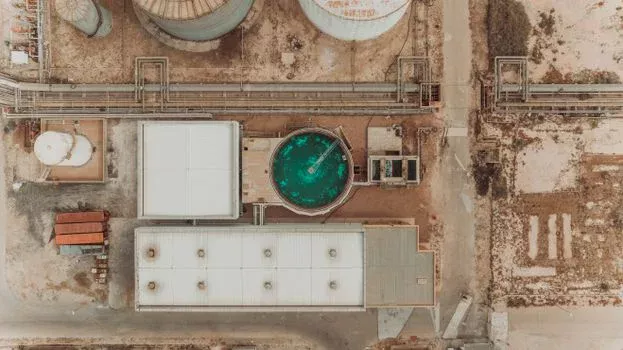
Influent from silicon wafer fabs arrives with high COD, TSS, fluoride, and silica across a pH range of 2–12, plus trace heavy metals. Effluent must land below 50 mg/L COD and below 10 mg/L fluoride and silica to satisfy EPA and China GB 8978-1996 benchmarks. A 2024 Taiwan fab case proves the train: influent COD fell from 850 mg/L to 42 mg/L (95% removal) and fluoride from 120 mg/L to 8 mg/L (93% removal).
On the regulatory layer behind those benchmarks, 40 CFR Part 469 is the US framework for semiconductor discharge.
Verification belongs in the contract, not the brochure. Hold the vendor to the influent-to-effluent deltas above at your sampled loads, witnessed during commissioning. Most commissioning disputes we see trace back to influent data that was averaged into meaninglessness — grab the campaign-clean and maintenance-dump samples before the performance test.
| Parameter | Typical Influent Specs (mg/L, unless noted) | Target Effluent Specs (mg/L, unless noted) | Regulatory Benchmark |
|---|---|---|---|
| Chemical Oxygen Demand (COD) | 300–1,000 | <50 | EPA, China GB 8978-1996 |
| Total Suspended Solids (TSS) | 50–200 | <30 | EPA, China GB 8978-1996 |
| Fluoride (F⁻) | 50–200 | <10 | EPA, China GB 8978-1996 |
| Silica (SiO₂) | 65–150 | <10 | Industry best practice for reuse |
| pH | 2–12 | 6–9 | EPA, China GB 8978-1996 |
| Arsenic (As) | 0.1–2 | <0.1 | EPA |
| Gallium (Ga) | 1–10 | <0.1 | Industry best practice |
Membrane Material Trade-Offs: PVDF vs. Ceramic vs. SiC
Membrane material selection sets a decade of cleaning costs. PVDF is common and affordable per square meter ($50–$150/m²) but susceptible to organic fouling and scaling. Ceramic (alumina/titania) and silicon carbide (SiC) membranes cost more upfront and deliver greater fouling resistance with chemical durability across the full pH 1–14 range. For the deep dive on silicon carbide (SiC) membrane advantages for semiconductor wastewater, our SiC equipment page carries the full spec set, alongside the ceramic membranes water treatment comparisons buyers usually request next.
Silicon Carbide Membrane Semiconductor Wastewater Economics: The 10-Year Math
Silicon carbide membrane semiconductor wastewater duty rewards a 10-year OPEX view. SiC's exceptional hydrophilicity minimizes fouling and extends operational life, cutting cleaning frequency and replacement cost enough to offer roughly 30% lower OPEX over 10 years versus PVDF despite the higher purchase price. SiC also runs the highest flux of the three materials — 20–30 L/m²·h typical — which trims the membrane area a fab must buy.
| Criterion | PVDF (Polyvinylidene Fluoride) | Ceramic (Alumina/Titania) | SiC (Silicon Carbide) |
|---|---|---|---|
| Pore Size | 0.1–0.4 μm | 0.1–0.4 μm | 0.1–0.4 μm |
| Typical Flux | 10–20 L/m²·h | 15–25 L/m²·h | 20–30 L/m²·h |
| Chemical Resistance (pH) | 2–11 | 1–14 | 1–14 |
| Lifespan | 3–5 years | 10+ years | 10+ years |
| Fouling Resistance | Moderate (susceptible to organic fouling, scaling) | High (resistant to biofouling, particle deposition) | Very High (hydrophilic, minimal fouling) |
| Typical Cost (per m²) | $50–$150 | $500–$1,500 | $800–$2,000 |
| Cleaning Protocols | NaOH + NaOCl (1–2%) | Acid + Base (3–5%) | Acid + Base (3–5%) |
CAPEX and OPEX Breakdown: $500K to $15M for Semiconductor Fabs
Budgeting splits cleanly by fab size: $500K–$2M at 50 m³/h, $3M–$8M at 200 m³/h, and $10M–$15M at 500 m³/h for 24/7 mega-fabs. The MBR stage drives 40–60% of equipment CAPEX, followed by RO at 20–25% and DAF at 15–20%. Installation and commissioning add another 15–20% of equipment cost before the first liter is treated.
OPEX runs on three lines: energy at 30–40%, chemicals at 20–30%, and membrane replacement at 15–25%. Zero Liquid Discharge (ZLD) maximizes water recovery and typically pays back in 2–5 years through raw water savings and reduced discharge fees. Fluidized-bed CaF₂ crystallization is also emerging as a way to recover fluoride as a byproduct crystal rather than sludge (Sinharoy et al., 2024, MDPI Water).
Two levers move OPEX fastest after startup. Energy tracks RO pressure and aeration setpoints, so the kWh/m³ question in the supplier list below is worth asking twice. Chemical spend tracks influent fluoride more than anything else — every kilogram of Ca(OH)₂ dosed ends up as CaF₂ sludge at 0.5–1 kg/m³.
| Cost Category | CAPEX Breakdown (as % of Equipment Cost) | OPEX Breakdown (as $ per m³) | Notes |
|---|---|---|---|
| CAPEX Components | |||
| DAF System | 15–20% | ||
| Chemical Dosing System | 5–10% | Includes automatic chemical dosing system | |
| RO System | 20–25% | ||
| MBR System | 40–60% | Includes zero-fouling MBR system | |
| Automation & Control | 10–15% | ||
| Installation & Commissioning | 15–20% (of equipment cost) | ||
| OPEX Components | |||
| Energy | $0.10–$0.30 (30–40%) | Includes pumping, aeration, and RO energy | |
| Chemicals | $0.50–$1.50 (20–30%) | Includes coagulants, flocculants, pH adjustment, CIP chemicals | |
| Membrane Replacement | $0.20–$0.80 (15–25%) | Depends on membrane material and lifespan | |
| Labor | $0.10–$0.20 (10–15%) | Operator and maintenance staff | |
| Maintenance & Spares | $0.05–$0.15 (5–10%) | Preventive maintenance, pump seals, etc. |
Supplier Selection: Seven Questions to Ask Before Procuring
Supplier choice in this niche is an experience question, not a catalog question. Probe their record on CMP slurries, HF, and heavy metals, their membrane material range across PVDF, ceramic, and SiC, and their automation depth for real-time fluoride, silica, and COD monitoring. A supplier who can also explain gallium nitride (GaN) wastewater treatment specs usually brings broad semiconductor depth. For the flotation stage itself, our daf system design explainer lists the engineering specs worth demanding.
Price the offering against its peers before shortlisting. The sibling guide Silicon Wafer Wastewater Treatment Supplier: 2027 Hybrid DAF compares supplier-side specs for this exact duty. Most procurement teams we support pick two of the seven questions below and score every bidder against them.
- Contaminant-Specific Experience: "Show me at least three semiconductor fab projects with similar influent characteristics (e.g., CMP slurries, HF, heavy metals) and effluent requirements."
- Membrane Material Options: "Do you offer PVDF, ceramic, and SiC membranes? Based on our influent silica levels, what material do you recommend and why?"
- Automation and Compliance Monitoring: "Does the system include real-time monitoring for critical parameters like fluoride, silica, and COD? Can it integrate with our existing SCADA system?"
- Footprint and Scalability: "What is the system's footprint per cubic meter per hour of capacity? Can it be easily expanded to accommodate future fab capacity increases?"
- Energy Efficiency: "What is the specific energy consumption (kWh/m³) for the MBR and RO stages under typical operating conditions?"
- After-Sales Support: "What is your contracted response time for critical component failures, such as membrane replacements? Do you have local service technicians available?"
- Warranty and Performance Commitments: "What is the warranty period for key components like membranes and pumps? Do you back effluent quality contractually (e.g., COD <50 mg/L)?"
Who This Equipment Fits, and the Next Step
Silicon wafer wastewater treatment equipment fits fabs from roughly 50 m³/h upward that must hit reuse-grade effluent or strict discharge permits. Buyers optimizing purely for lowest CAPEX on dilute, single-contaminant streams can stop at precipitation plus filtration. Everyone else should scope the hybrid train against the influent table above before shortlisting vendors.
The next step is a scoped budget number. Send your flow rate and influent profile for a quote — capacity, COD, fluoride, silica, and TDS are enough to place you inside the CAPEX tiers above.
Frequently Asked Questions
How does a hydrofluoric acid neutralization wastewater system work?
A hydrofluoric acid neutralization wastewater system works by precipitating fluoride as calcium fluoride in two stages. For HF above 100 mg/L, initial dosing with calcium hydroxide is followed by sodium aluminate conditioning, cutting effluent fluoride to below 10 mg/L. Precise PLC-controlled dosing holds pH in the 6–9 band through the reaction, protecting downstream biology and equipment. Sludge generation runs 0.5–1 kg/m³ treated.
What is the typical lifespan of PVDF membranes in a semiconductor wastewater MBR?
PVDF membranes in semiconductor wastewater MBRs typically last 3 to 5 years. Lifespan extends with optimized operating conditions and effective pretreatment that minimizes fouling — good DAF capture and stable flux do most of the work. Chemical cleaning with NaOH + NaOCl at 1–2% keeps the pores open between replacements.
Can the RO system effectively remove colloidal silica?
Yes — RO systems with polyamide thin-film composite membranes achieve silica rejection above 99%, removing both reactive and colloidal silica to meet effluent targets below 10 mg/L. Antiscalant dosing and feed pH control protect that rejection rate long-term. Fluoride rejection runs about 98% and TDS rejection about 95% on the same membranes.
What goes into a CMP slurry wastewater treatment design?
A CMP slurry wastewater treatment design centers on capturing 50–300 nm particles that resist settling. High-efficiency DAF uses optimized microbubble generation at 30–50 μm plus chemical conditioning with 2–5 mg/L polymer to capture these fines, removing 90–95% of slurry solids. Downstream RO then rejects the dissolved silica the particles leave behind.
How do you justify zero liquid discharge semiconductor fab CAPEX?
Zero liquid discharge semiconductor fab CAPEX justifies itself in 2–5 years for most fabs. The payback comes from raw water savings at high recovery and reduced discharge fees, on top of compliance certainty. Run the case with your actual water price and surcharge schedule — fabs with expensive incoming water clear the hurdle fastest.
What are the primary drivers for OPEX in a hybrid DAF-RO-MBR system?
Energy consumption is the largest OPEX driver at 30–40%, followed by chemical costs at 20–30% and membrane replacement at 15–25%. Optimizing aeration and pumping schedules and selecting durable membranes move total operating cost more than any single vendor discount. Track kWh/m³, chemical dosing logs, and membrane flux decline monthly to catch drift early.
What are the benefits of SiC membranes over PVDF for semiconductor wastewater?
SiC membranes offer stronger fouling resistance through inherent hydrophilicity and high chemical stability, which translates into longer operational cycles, less frequent cleaning, and a longer overall lifespan — lowering OPEX over time, as detailed in SiC wastewater treatment equipment specifications. PVDF remains the lower-CAPEX starting point when chloride levels and pH swings are moderate.