Penang’s Sewage Treatment Challenges: Microplastics, Urbanization, and Compliance Gaps
Penang’s municipal sewage treatment plants (STPs) face unique challenges, including high microplastics concentrations (13.75 MPs/L influent) and variable flow rates due to urbanization. Extended aeration STPs achieve 88.67% microplastics removal but still discharge 2.37–4.74 million MPs/day into local waterways. This guide provides 2025 engineering specs (BOD/COD/TSS removal, energy use), cost models (MYR 5M–200M CAPEX), and compliance strategies to help municipalities select zero-risk systems tailored to Penang’s influent characteristics.
The influent microplastics concentration in Penang’s municipal sewage, averaging 13.75 MPs/L, is significantly higher than the global average of 2–4 MPs/L reported by the International Water Association (IWA) in 2023. This high concentration stems from Penang’s dense urban population and industrial-residential mix, which introduces a variety of polymers into the sewerage network. Research indicates that the primary microplastic shapes detected in Penang's influent are fibers (52.50%), predominantly composed of polyethylene/ethylene vinylacetate blend (PE/EVA), which accounts for 44.44% of the raw influent load. Despite the use of secondary treatment processes, the daily discharge into local streams feeding the Kerian River remains a critical environmental concern, necessitating a shift toward more advanced tertiary filtration or membrane-based technologies.
Rapid urbanization in Penang has led to a 40% increase in sewage flow volumes since 2015, according to the Perbadanan Bekalan Air Pulau Pinang (PBA) 2023 report. This surge has pushed many aging STPs beyond their original design capacity, resulting in "hydraulic short-circuiting" where wastewater passes through the system too quickly for biological treatment to occur effectively. Consequently, the gap between current effluent quality and Malaysia’s Department of Environment (DOE) Class IIA standards—which mandate BOD levels below 20 mg/L and COD below 50 mg/L—is widening. Municipal engineers must now account for these increased loads when designing new facilities or upgrading existing ones to ensure long-term regulatory compliance.
The regulatory environment in Malaysia is becoming increasingly stringent, with proposed 2025 updates to the Environmental Quality (Sewage) Regulations 2009 expected to include specific limits for microplastics and enhanced nutrient removal. Current DOE Class IIA standards are already stricter than World Health Organization (WHO) guidelines for several parameters, requiring municipal STPs to move beyond simple biological treatment. For procurement managers, this means that the selection of technology is no longer just about meeting current limits but about "future-proofing" assets against upcoming 2025-2030 standards.
Engineering Specs for Penang’s Municipal STPs: Removal Efficiencies, Energy Use, and Footprint
Extended aeration sewage treatment plants in Penang currently achieve removal efficiencies of 85–92% for BOD and 75–85% for COD, while achieving an 88.67% removal rate for microplastics. While these figures appear robust, the residual concentrations in the effluent often exceed the ecological carrying capacity of Penang's sensitive river systems. In contrast, Membrane Bioreactor (MBR) systems provide a physical barrier that ensures nearly 100% removal of suspended solids and microplastics, typically yielding effluent with <1 MP/L. When evaluating engineering specs for municipal STPs in other regions, it is evident that Penang's high influent microplastic load requires a more aggressive approach to solids separation than standard biological processes provide.
Energy consumption remains a primary driver of operational expenditure (OPEX) for Penang’s STPs. Conventional extended aeration systems typically consume between 0.4 and 0.6 kWh/m³ of treated water. MBR systems, while providing superior effluent quality, have historically been more energy-intensive, ranging from 0.6 to 0.8 kWh/m³ (per Malaysian Water Association 2024). However, the trade-off is found in the footprint; MBR systems require approximately 60% less land area than conventional activated sludge (CAS) or extended aeration systems for an equivalent Population Equivalent (PE) of 10,000 to 50,000. This is a critical factor in Penang, where land premiums in areas like Bayan Lepas and George Town significantly impact total project viability.
Sludge production also varies significantly between technologies. Extended aeration typically produces 0.2–0.4 kg of Total Suspended Solids (TSS) per kg of BOD removed. MBR systems, by operating at higher Mixed Liquor Suspended Solids (MLSS) concentrations and longer Sludge Retention Times (SRT), can reduce this to 0.1–0.2 kg TSS/kg BOD. This reduction in sludge volume directly lowers the costs associated with dewatering, transport, and disposal—a major bottleneck for municipal operators in Penang who must transport sludge to centralized treatment facilities.
| Parameter | Extended Aeration (EA) | Membrane Bioreactor (MBR) | Dissolved Air Flotation (DAF) + Bio |
|---|---|---|---|
| BOD Removal Efficiency | 85–92% | 98–99% | 90–95% |
| Microplastics Removal | 88.67% | >99.9% | 92–94% |
| Energy Use (kWh/m³) | 0.4–0.6 | 0.6–0.8 | 0.5–0.7 |
| Land Requirement | 100% (Baseline) | 35–45% | 70–80% |
| Sludge Yield (kg TSS/kg BOD) | 0.2–0.4 | 0.1–0.2 | 0.25–0.35 |
Technology Comparison: MBR vs. Extended Aeration vs. DAF for Penang’s STPs
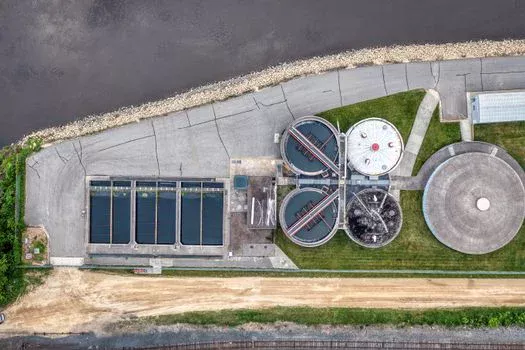
Membrane Bioreactor (MBR) systems achieve <1 MP/L microplastics in effluent, representing a 99%+ removal rate, but they require robust pre-treatment to protect the membranes. In the context of Penang’s influent, which contains high levels of synthetic fibers, the installation of fine rotary screens (0.5–1.0 mm) is mandatory to prevent membrane fouling and "hair-balling" within the bioreactor. Using MBR systems for Penang’s high microplastics removal requirements allows municipalities to meet the most stringent water reuse standards, potentially recycling treated effluent for industrial cooling or non-potable urban use.
Extended aeration remains the most common technology in Penang due to its lower CAPEX, which is typically 20–30% less than MBR. However, to meet the upcoming 2025 DOE standards for microplastics, these plants often require retrofitting with tertiary filtration systems, such as rapid sand filters or disc filters. Without these additions, extended aeration plants continue to discharge PE/EVA and thermoplastic elastomer (TPE) particles into the Kerian River. For rural areas of Penang where land is more available and the budget is constrained, extended aeration paired with a polishing wetland or sand filter remains a viable, though less efficient, alternative.
Dissolved Air Flotation (DAF) is increasingly being utilized as a pre-treatment step in municipal plants that receive a mix of domestic and food-processing wastewater. DAF systems for pre-treatment in Penang’s STPs are highly effective at removing 90–95% of Fats, Oils, and Grease (FOG) and suspended solids, which protects downstream biological processes from inhibition. While DAF is less effective for dissolved BOD/COD removal, its ability to clarify water rapidly makes it an excellent choice for plants facing sudden hydraulic surges or high organic loading from Penang's vibrant commercial sectors.
| Feature | MBR System | Extended Aeration | DAF (as Pre-treatment) |
|---|---|---|---|
| Best Use Case | Land-constrained urban sites | Rural/Suburban low-cost needs | High FOG / Industrial influent |
| Effluent Quality | Ultra-low turbidity, <1 MP/L | Moderate, requires tertiary | High solids removal only |
| Maintenance Level | High (Membrane cleaning) | Low to Moderate | Moderate (Mechanical) |
| Resistance to Shock Loads | High (High MLSS) | Moderate | Low |
| Water Reuse Potential | Excellent (Class A) | Limited (Class B/C) | None (Pre-treatment only) |
Cost Models for Penang’s Municipal STPs: CAPEX, OPEX, and ROI Breakdowns
Capital Expenditure (CAPEX) for Penang STPs ranges from MYR 5M for a 5,000 PE extended aeration plant to over MYR 200M for a 200,000 PE advanced MBR facility. These costs are heavily influenced by the high price of land in Penang and the need for specialized civil engineering in coastal or marshy areas. For a standard 50,000 PE plant, an MBR system typically requires an investment of MYR 70M–100M, whereas an extended aeration plant might cost MYR 50M–80M. However, when land acquisition costs are factored in, the MBR system often becomes the more economically viable choice in urbanized districts like Northeast Penang Island. Similar cost models for wastewater treatment in the Middle East show that as water scarcity increases, the initial CAPEX premium for MBR is offset by the value of the recovered water.
Operational Expenditure (OPEX) in Malaysia typically ranges from MYR 0.80–1.20/m³ for extended aeration and MYR 1.20–1.80/m³ for MBR systems. The higher OPEX for MBR is primarily due to higher aeration requirements for membrane scouring and the periodic cost of membrane replacement (typically every 7–10 years). However, these costs can be mitigated through the use of high-efficiency blowers and automated control systems. MBR systems offer a significantly better Return on Investment (ROI) when water reuse is implemented. By selling treated effluent to industrial zones for process water, municipalities can achieve a payback period of 7–10 years, compared to 10–15 years for conventional systems that simply discharge to the environment.
Financial assistance for these projects is often available through Malaysia’s Green Technology Financing Scheme (GTFS), which can cover up to 60% of the CAPEX for STPs that meet or exceed DOE standards. Additionally, the integration of sludge-to-energy components or solar PV arrays at the STP site can further improve the ROI by reducing the net energy cost. Procurement teams should evaluate the Total Cost of Ownership (TCO) over a 20-year lifecycle rather than focusing solely on the initial tender price.
| Capacity (PE) | Tech Type | Estimated CAPEX (MYR) | Estimated OPEX (MYR/m³) | ROI (Years) |
|---|---|---|---|---|
| 5,000 | Ext. Aeration | 5M – 8M | 0.85 – 1.10 | 12 – 15 |
| 20,000 | MBR | 30M – 45M | 1.30 – 1.70 | 8 – 11 |
| 50,000 | Ext. Aeration | 50M – 80M | 0.80 – 1.05 | 11 – 14 |
| 100,000 | MBR | 120M – 160M | 1.25 – 1.60 | 7 – 10 |
Compliance Checklist: Meeting Malaysia’s DOE and WHO Standards for Penang STPs
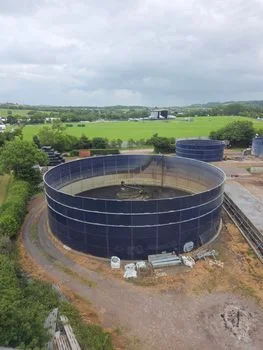
Effluent limits for Penang STPs are governed by the Environmental Quality (Sewage) Regulations, with Class IIA being the standard for discharge into inland waters. This requires BOD <20 mg/L, COD <50 mg/L, and TSS <30 mg/L. To ensure consistent compliance, the use of an automatic chemical dosing for Penang’s STP compliance is essential for phosphorus removal and pH adjustment, particularly during heavy rain events where influent characteristics fluctuate rapidly. a proposed 2025 limit of <1 MP/L for microplastics will likely force many operators to upgrade their tertiary treatment stages.
Monitoring requirements have shifted toward real-time data acquisition. STPs with a capacity greater than 10,000 PE are now required to integrate with the Integrated Geographical Information System (IGIS) used by Indah Water Konsortium (IWK) and the DOE. This system tracks plant performance and enables real-time reporting of parameters such as pH, Dissolved Oxygen (DO), and turbidity. Continuous online sensors are no longer optional; they are a core component of the "zero-risk" compliance strategy, allowing operators to intervene before an effluent breach occurs.
Sludge management is the final pillar of the compliance checklist. All municipal sludge must be dewatered to at least 20% dry solids content before it can be legally transported to a licensed landfill or a secondary processing facility. Implementing high-pressure sludge dewatering solutions for Penang’s STPs, such as plate and frame filter presses, ensures that volume is minimized and transport costs are controlled. Operators must also maintain strict logs of sludge production and disposal routes to satisfy DOE audits.
- Effluent Standards: Verify BOD (<20mg/L), COD (<50mg/L), and TSS (<30mg/L) against monthly lab reports.
- Microplastics: Aim for <1.5 MPs/L (current EA benchmark) or <1 MP/L (MBR benchmark).
- Online Monitoring: Ensure IGIS integration for continuous reporting of pH, DO, and Turbidity.
- Sludge Disposal: Maintain >20% cake dryness and keep licensed disposal manifests for 5 years.
- Chemical Dosing: Calibrate automatic dosing pumps weekly to prevent over-chemicalization or under-treatment.
Frequently Asked Questions
What is the average CAPEX for a 50,000 PE STP in Penang?
For a 50,000 PE facility, the CAPEX typically ranges from MYR 50M to 80M for an extended aeration system and MYR 70M to 100M for an MBR system. These figures include civil works, electromechanical equipment, and initial commissioning, though land costs in Penang can add a significant premium depending on the location (per Malaysian Water Association 2024).
How effective is extended aeration at removing microplastics?
Research conducted on Penang-specific plants shows that extended aeration achieves an average microplastic removal efficiency of 88.67%. However, due to the high influent concentration (13.75 MPs/L), the effluent still contains approximately 1.5 MPs/L, resulting in millions of particles being discharged daily into the Kerian River catchment. To achieve "zero-risk" levels, tertiary filtration is required.
Is IGIS integration mandatory for all STPs in Penang?
According to Universiti Teknologi Malaysia (UTM) 2021 studies and current DOE guidelines, IGIS integration is mandatory for all municipal sewage treatment plants with a capacity exceeding 10,000 PE. This allows for centralized management, spatial mapping of sewage assets, and real-time decision-making for environmental protection.
Which technology offers the best ROI for water reuse in Malaysia?
MBR systems offer the fastest ROI for water reuse applications. While the initial CAPEX and OPEX are higher, the high-quality effluent (Class A) can be sold to industrial consumers at a higher rate than lower-grade effluent from conventional plants. In industrial hubs like Penang, the payback period for an MBR system with reuse can be as low as 7 years.