Hospitals in South Carolina must treat wastewater to meet EPA secondary standards (30 mg/L BOD, 30 mg/L TSS) and South Carolina DHEC’s NPDES permit limits, which often require additional disinfection for antimicrobial resistance mitigation. A 2024 EPA audit found 18% of medical facilities in the Southeast failed to meet chlorine residual targets, driving demand for automated systems like MBR (effluent COD ≤50 mg/L) or chlorine dioxide generators (99.9% pathogen kill rate). CAPEX ranges from $250K for small clinics to $2.5M for large hospitals, with OPEX averaging $0.80–$1.20 per 1,000 gallons treated.
Why South Carolina Hospitals Face Unique Wastewater Treatment Challenges
South Carolina Department of Health and Environmental Control (DHEC) mandates National Pollutant Discharge Elimination System (NPDES) permits for any medical facility discharging treated effluent into state waters, specifically targeting compounds that bypass municipal systems. According to 2024 EPA audit data, 18% of medical facilities in the Southeast failed to maintain consistent chlorine residual targets, with 40% of those violations occurring in South Carolina due to aging infrastructure and inadequate disinfection contact time. Unlike municipal sewage, hospital effluent contains high concentrations of pharmaceuticals, disinfectants, and multi-drug-resistant organisms (MDROs) that require specialized treatment protocols.
The chemical composition of hospital wastewater in South Carolina typically exhibits a Biochemical Oxygen Demand (BOD) that is 2-3 times higher than standard domestic waste, largely due to organic loads from laboratories and food services. the presence of antimicrobial agents like ciprofloxacin and triclosan creates a high "chlorine demand," meaning conventional chlorination often fails to achieve the required pathogen kill rates without producing toxic disinfection byproducts (DBPs). DHEC has recently increased oversight on quarterly sampling for these antimicrobials, forcing facilities to evaluate advanced oxidation or membrane-based solutions.
Operational pressures are particularly acute in the Lowcountry. The Charleston Water System, which manages a 36 MGD capacity at its Plum Island plant, has imposed stricter pretreatment requirements on medical facilities to protect the biological integrity of municipal activated sludge processes. For hospitals near Daniel Island, which saw significant infrastructure upgrades in 1997, any expansion in bed capacity now triggers a mandatory review of wastewater discharge quality to prevent overloading local nutrient-sensitive watersheds. This regulatory environment makes compact medical wastewater treatment systems a necessity for both compliance and operational continuity.
EPA and South Carolina Discharge Limits: What Hospitals Must Achieve
The Environmental Protection Agency (EPA) enforces secondary treatment standards requiring a minimum of 85% removal for Biochemical Oxygen Demand (BOD) and Total Suspended Solids (TSS), but South Carolina DHEC often imposes more stringent local limits. For hospitals discharging into freshwater streams, DHEC typically limits fecal coliform to 200 CFU/100mL and requires a minimum chlorine residual of 0.5 mg/L to ensure public safety. However, meeting these limits is increasingly difficult as DHEC 2024 guidelines now suggest monitoring for ciprofloxacin at levels below 100 ng/L to mitigate the spread of antimicrobial resistance.
South Carolina’s regulatory landscape is slightly more rigorous than some neighboring states regarding specific pathogens. While North Carolina maintains similar fecal coliform limits, South Carolina’s emphasis on antimicrobial resistance (AMR) mitigation requires more sophisticated disinfection than the simple tablet chlorinators used in the past. Facilities must also navigate variations based on size; a hospital with over 500 beds is subject to much more frequent "Priority Pollutant" scans than a 50-bed rural clinic. Coastal hospitals face the additional challenge of meeting Total Maximum Daily Load (TMDL) requirements for nitrogen and phosphorus to prevent algae blooms in sensitive estuaries.
| Parameter | EPA Secondary Standard | SC DHEC NPDES Limit | Georgia EPD Limit (Ref) | NC DEQ Limit (Ref) |
|---|---|---|---|---|
| BOD5 (mg/L) | 30 | 25 - 30 | 23 | 30 |
| TSS (mg/L) | 30 | 30 | 30 | 30 |
| Fecal Coliform (CFU/100mL) | N/A | 200 | 200 | 200 |
| Total Residual Chlorine (mg/L) | N/A | 0.5 - 1.0 | 0.5 | 0.5 |
| Ciprofloxacin (ng/L) | N/A | <100 (Recommended) | N/A | N/A |
Hospital Wastewater Treatment Technologies: How They Work and What They Cost
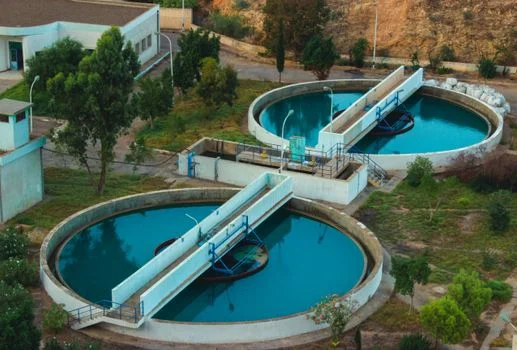
Membrane Bioreactor (MBR) technology achieves a high-quality effluent with Chemical Oxygen Demand (COD) levels typically below 50 mg/L by combining biological treatment with 0.1 μm microfiltration. Systems such as the HydropureWater MBR Series offer a 60% smaller footprint than conventional activated sludge plants, making them ideal for South Carolina hospitals with limited real estate. By utilizing physical barriers, MBR systems for hospital wastewater treatment effectively remove bacteria and most viruses without the need for massive clarification tanks, ensuring that even pharmaceutical-heavy loads meet DHEC standards.
For facilities dealing with high fats, oils, and grease (FOG) from large-scale cafeterias, Dissolved Air Flotation (DAF) is the primary pretreatment choice. The HydropureWater DAF units use micro-bubbles to loft suspended solids and oils to the surface for mechanical skimming, achieving a 92–97% TSS reduction. These units are scalable from 4 to 300 m³/h, with CAPEX ranging from $120,000 to $800,000 depending on the automation level and material (304 vs 316 stainless steel). Implementing DAF systems for FOG and TSS removal significantly reduces the organic load on downstream biological processes, lowering overall energy consumption.
Disinfection is the final and most critical stage for hospital compliance. Traditional chlorine gas or bleach often fails to penetrate biofilms or neutralize resistant pathogens effectively. In contrast, chlorine dioxide generators for hospital effluent disinfection provide a 99.9% pathogen kill rate while producing 70% fewer disinfection byproducts than standard chlorine. These generators are particularly effective at oxidizing pharmaceuticals and breaking down antimicrobial compounds, with CAPEX for 50–20,000 g/h units ranging from $50,000 to $200,000. While the OPEX of MBR is higher due to membrane cleaning and aeration, the superior effluent quality often justifies the cost for facilities looking to future-proof against tightening DHEC regulations.
| Technology | Removal Efficiency (BOD/TSS) | Effluent COD | CAPEX Range | OPEX (per 1k gal) |
|---|---|---|---|---|
| MBR (Membrane Bioreactor) | 98% / 99.9% | ≤50 mg/L | $500K - $2.5M | $1.20 |
| DAF (Dissolved Air Flotation) | 60% / 95% | N/A (Pretreat) | $120K - $800K | $0.60 |
| Chlorine Dioxide Generator | N/A (Disinfection) | N/A | $50K - $200K | $0.40 |
Step-by-Step: Designing a Hospital Wastewater Treatment System for South Carolina Compliance
Engineering a compliant hospital wastewater system begins with a comprehensive influent characterization using EPA Method 1694 to identify pharmaceutical and antimicrobial concentrations. This initial step is vital because the presence of high-strength cleaners and laboratory chemicals can inhibit the microbial populations used in secondary treatment. Engineers must analyze at least seven days of composite samples to account for the fluctuations between high-use surgical days and lower-use weekends. This data provides the baseline for chemical dosing and aeration requirements.
Once the influent profile is established, the system must be sized based on peak flow rather than average flow. According to 2023 EPA data, modern hospitals generate between 150 and 300 gallons per bed per day. A 300-bed hospital would therefore require a system capable of handling a peak hourly flow significantly higher than its 60,000-gallon daily average. Pretreatment is the next priority; installing a rotary bar screen is essential for removing medical debris (syringes, wipes, plastics) that can damage downstream pumps and membranes. If FOG levels exceed 100 mg/L, a DAF unit must be integrated into this stage.
The secondary treatment phase typically employs either MBR or a modified activated sludge process. For South Carolina facilities, MBR is generally preferred due to its ability to handle fluctuating loads and its high pathogen rejection rate. Following biological treatment, the disinfection strategy is selected based on the discharge point. While UV disinfection is popular for its lack of chemical residuals, chlorine dioxide is often required for hospitals discharging into areas where antimicrobial resistance is a primary concern. Finally, the resulting sludge must be dewatered. A plate-and-frame filter press is used to reduce sludge volume by up to 80%, significantly lowering disposal costs at South Carolina landfills.
CAPEX and OPEX Breakdown: What South Carolina Hospitals Should Budget
The total cost of ownership for hospital wastewater treatment in South Carolina is divided between initial CAPEX, which ranges from $150,000 to $2.5 million, and ongoing OPEX. Smaller clinics (50-100 beds) can often achieve compliance with a combination of high-efficiency DAF and chlorine dioxide disinfection for under $500,000. However, large metropolitan hospitals (300-500+ beds) requiring full biological treatment and advanced filtration should budget between $1.5M and $2.5M for a turnkey MBR-based system. These figures include engineering, equipment procurement, and onsite commissioning.
Operating expenses (OPEX) are driven by energy consumption, chemical dosing, and membrane maintenance. MBR systems carry the highest OPEX, averaging $1.20 per 1,000 gallons, primarily due to the electricity required for membrane scouring and the periodic cost of membrane replacement (roughly $0.30 per 1,000 gallons treated). DAF systems are more economical to operate at $0.60 per 1,000 gallons, with costs focused on polymer dosing and mechanical skimming. To assist with these costs, South Carolina hospitals may be eligible for DHEC grants of up to $500,000 or low-interest loans through the EPA Clean Water State Revolving Fund, which often features interest rates as low as 1% for qualifying green infrastructure projects.
| Facility Size | CAPEX Range | Avg. OPEX (Monthly) | Primary Cost Driver |
|---|---|---|---|
| Small Clinic (<100 beds) | $150K - $500K | $2,500 - $5,000 | Chemical Dosing |
| Medium Hospital (100-300 beds) | $800K - $1.5M | $8,000 - $15,000 | Energy/Aeration |
| Large Hospital (>300 beds) | $1.5M - $2.5M | $20,000 - $45,000 | Membrane Maint. |
How to Choose the Right Equipment: A Decision Framework for South Carolina Hospitals
Selecting the appropriate wastewater treatment technology requires a multi-variable analysis of hospital bed capacity, discharge location, and specific South Carolina DHEC total maximum daily load (TMDL) constraints. For facilities located in inland South Carolina, where discharge is often into smaller stream systems, the priority is high BOD and TSS removal to prevent oxygen depletion in the receiving waters. In these cases, an MBR system coupled with chlorine dioxide disinfection provides the most reliable compliance margin. The MBR ensures secondary standards are exceeded, while chlorine dioxide addresses the MDRO concerns prevalent in medical effluent.
Coastal hospitals in the Charleston or Myrtle Beach areas face stricter FOG and nutrient limits due to the sensitivity of saltwater marshes. These facilities should prioritize robust pretreatment, specifically DAF, to meet FOG limits that are often as low as 10 mg/L. For these locations, a "DAF + MBR + UV" configuration is frequently recommended. The UV system serves as the primary disinfectant to avoid toxic residuals in the estuary, while the DAF protects the MBR from grease fouling. This tiered approach ensures compliance with both federal EPA standards and local South Carolina "blue water" protections.
| Hospital Profile | Recommended Setup | Compliance Focus | Est. ROI (Years) |
|---|---|---|---|
| Small / Rural Inland | DAF + Chlorine Dioxide | Pathogens / TSS | 3 - 5 |
| Medium / Urban Inland | MBR + Chlorine Dioxide | BOD / Pharmaceuticals | 5 - 7 |
| Large / Coastal | DAF + MBR + UV | FOG / Nutrients / DBPs | 6 - 8 |
Frequently Asked Questions
What are the specific DHEC requirements for medical wastewater disinfection? South Carolina DHEC typically requires a fecal coliform limit of 200 CFU/100mL and a chlorine residual between 0.5 and 1.0 mg/L. Increasingly, DHEC also monitors for antimicrobial resistance markers, which may necessitate advanced oxidation or chlorine dioxide over standard chlorination.
How does hospital wastewater differ from municipal sewage in South Carolina? Hospital wastewater contains significantly higher levels of pharmaceuticals, heavy metals (from imaging), and disinfectants. These chemicals can inhibit the biological processes in municipal plants, leading to "toxic shock" and subsequent fines for the hospital if pretreatment is not adequate.
Which technology is best for removing pharmaceuticals from hospital effluent? Membrane Bioreactor (MBR) systems are highly effective at removing larger pharmaceutical molecules through physical filtration and long sludge age. For complete mineralization of complex drugs, MBR is often paired with chlorine dioxide or ozone as a tertiary treatment step.
Are there financial incentives for upgrading wastewater systems in South Carolina? Yes, South Carolina hospitals can apply for the EPA Clean Water State Revolving Fund (CWSRF) for low-interest loans. Additionally, DHEC offers specific infrastructure grants for small or rural hospitals to help meet new environmental compliance standards.
What is the typical footprint of an onsite hospital wastewater plant? Using MBR technology, a system for a 300-bed hospital can fit within a 1,500 to 2,500 square foot area. This is approximately 60% smaller than a conventional activated sludge plant of the same capacity, allowing for installation in parking lots or basement mechanical rooms.