An industrial wastewater treatment system Singapore cost decision starts from the outfall and the recycle rate the site must hold. Plants sending trade effluent to public sewers follow PUB's Sewerage and Drainage (Trade Effluent) framework, while direct discharge to watercourses falls under NEA limits. Earlier guidance cited COD ≤ 125 mg/L and TSS ≤ 30 mg/L as typical industrial targets. For controlled watercourses, NEA sets COD ≤ 60 mg/L and TSS ≤ 30 mg/L at pH 6–9.
Penalties under the Sewerage and Drainage Act can reach S$200,000 for non-compliance. Ordinary watercourses allow COD ≤ 100 mg/L and TSS ≤ 50 mg/L. This guide covers DAF, MBR, and ZLD specs, cost ranges, and permit steps used on local industrial sites. According to PUB Trade Effluent Management guidance, a Written Approval is required before trade effluent enters a public sewer.
Industrial Wastewater Treatment System Singapore Cost
Singapore DAF trains often cost S$80,000–S$500,000, MBR trains S$0.5M–S$2M, and ZLD trains S$1.5M–S$5M before permit fees of S$5,000–S$20,000. OPEX is about S$0.10–S$0.30/m³ for DAF, S$0.40–S$0.80/m³ for MBR, and S$0.80–S$2.50/m³ for ZLD when crystallizers draw 5–10 kWh/m³. Quoted cost still moves with flow, salinity, and whether discharge is to a PUB sewer or an NEA watercourse.
Singapore plants typically combine DAF, MBR, or ZLD to meet sewer or watercourse limits and recycle rules. Earlier guidance used COD ≤ 125 mg/L and TSS ≤ 30 mg/L. NEA controlled-watercourse limits are COD ≤ 60 mg/L and TSS ≤ 30 mg/L at pH 6–9. DAF CAPEX often runs S$80,000–S$500,000; MBR often runs S$0.5M–S$2M.
According to PUB (15 April 2025), selected water-intensive industries have faced mandatory recycling rules since January 2024. New large wafer-fabrication users must achieve at least 50% water recycling. Earlier guidance referenced a 30% industrial recycle target by 2030. The sector rules above now set the practical floor for many new fabs.
Most plants we size for food, pharma, and electronics run pretreatment plus biological or membrane polishing rather than a single unit process. Pharmaceutical effluent often swings from pH 2–12 and carries solvents and dissolved organics. Electronics streams add chromium, copper, nickel, and fluorides that need dedicated removal. Food plants concentrate FOG and TSS, so solids capture comes first.
Generic package plants miss these swings and leave plants short of permit limits. Reuse economics now sit beside compliance. PUB's Water Efficiency Fund raised the recycling-project funding cap from S$1 million to S$5 million from 1 July 2023 (PUB, 15 April 2025). On Jurong Island, Sembcorp cut chemical costs by 25% after installing automated dosing systems for pH adjustment and coagulation.
Compact trains such as an Underground Package Sewage Treatment Plant (WSZ Series) fit sites with limited plot area when flows and loads allow. Field crews on Jurong and Tuas plots usually keep that package route for smaller domestic-strength side streams, not the main high-COD process sewer. Equalization still has to cover pH 2–12 swings before biology or membranes see the water.
DAF MBR ZLD System Specifications Singapore
DAF, MBR, and ZLD specifications for Singapore plants are set by the limiting pollutant, not by a catalogue nameplate. Dissolved air flotation reaches 92–97% TSS removal when coagulants and polymer are dosed correctly. The DAF system for high-efficiency TSS and FOG removal suits food processing and pulp/paper trains where FOG removal of 85–90% is the design goal. Typical hydraulic loading is 4–8 m³/m²/h.
PAC at 50–200 mg/L plus polymer at 1–5 mg/L improves floc-bubble attachment on most Singapore food and F&B loads. Most plants we size for those loads run at the lower end of the PAC band unless FOG spikes above the design composite. DAF alone does not remove dissolved organics or heavy metals and needs a second stage. On Jurong and Tuas sites, keep DAF or equalization upstream of membranes when FOG or solvent spikes are routine.
Membrane bioreactor trains polish to <1 μm filtration quality suitable for many reuse duties. The integrated MBR system for near-reuse-quality effluent in space-constrained plants typically reaches 95–98% COD removal on electronics and pharmaceutical wastewater after adequate pretreatment. Design MLSS is usually 8,000–12,000 mg/L, with membrane flux of 15–25 LMH. Membrane cleans every 3–6 months keep flux stable on oily or solvent-bearing feeds.
Zero liquid discharge recovers 95–99% of water by combining pretreatment, RO, and evaporators or crystallizers. High-salinity solar-cell or forced zero-discharge sites are the usual drivers. CAPEX commonly sits at S$1.5M–S$5M, with OPEX of S$0.80–S$2.50/m³ when crystallizers draw 5–10 kWh/m³. For engineering specs for chromium removal in electronics wastewater, ZLD often closes the brine loop after chromium precipitation and RO.
MBR energy exceeds conventional activated sludge and needs disciplined membrane care. ZLD carries the highest CAPEX and OPEX because thermal stages dominate power use. Match the train to the limiting pollutant, not to a single catalogue nameplate. MBR typically needs about 60% less footprint than conventional activated sludge but can use about 2× the energy (0.8–1.2 kWh/m³) for aeration and permeate pumping.
| System Type | Key Performance Metric | Typical Range/Value | Primary Application | Limitations |
|---|---|---|---|---|
| DAF | TSS Removal | 92–97% | Food Processing, Pulp/Paper | Limited dissolved contaminant removal |
| DAF | FOG Removal | 85–90% | Food Processing, Meat Processing | Requires chemical dosing |
| DAF | Hydraulic Loading | 4–8 m³/m²/h | Pretreatment Stage | Footprint dependent on flow |
| MBR (DF Series) | Effluent Quality | <1 μm filtration | Electronics, Pharmaceuticals | Requires frequent membrane cleaning |
| MBR (DF Series) | COD Removal | 95–98% | High-purity water reuse | Higher energy consumption than conventional activated sludge |
| MBR (DF Series) | MLSS Concentration | 8,000–12,000 mg/L | Space-constrained sites | Membrane fouling potential |
| ZLD Systems | Water Recovery | 95–99% | High-salinity wastewater | High CAPEX and OPEX |
| ZLD Systems | Energy Consumption | 5–10 kWh/m³ | Zero-discharge mandates | Complex multi-stage process |
Wafer Fab Water Recycling System Singapore
A wafer fab water recycling system in Singapore must deliver at least 50% water recycling for new large wafer-fabrication users. According to PUB (15 April 2025), that requirement has applied since January 2024. The median recycling rate among existing wafer fabrication plants already stands at 45%, and expected daily savings equal 15 Olympic-sized swimming pools by 2035. Most plants we size for new fabs separate dilute rinse from concentrated chemical waste before the recycle skid.
According to the same PUB feature, at least 60% of industrial-sector companies already run some form of water recycling. Wafer fabrication, semiconductor, and bio-manufacturing recycling rates rose by 2 to 13 percent between 2018 and 2022. Hoya Electronics reached a 75% water recycling rate in mask blank production and cut annual consumption from 190,000 cubic meters to 75,000 cubic meters. Since 2007, PUB has approved more than 380 Water Efficiency Fund applications, saving up to 16 million gallons per day.
Non-domestic use is 55% of Singapore water demand today and is expected to exceed 60% by 2065, while total demand is projected to almost double by 2065 (PUB, 15 April 2025). These industries account for about 17% of non-domestic water demand. Design the recycle train for MBR or RO-quality permeate when the site must hit ≥50% recycle as a new large wafer user. Secondary effluent alone will not hold that recycle ratio on a front-end fab.
Earlier guidance referenced a 30% industrial recycle target by 2030. That older 30% figure is now background for many new fabs, because the January 2024 sector rule sets 50% for new large wafer users. PUB's Water Efficiency Fund cap of S$5 million, raised from S$1 million on 1 July 2023, can offset recycle CAPEX when the project meets PUB criteria. Chemical cost, power, and brine disposal still decide whether the funded project pays back.
Step-by-Step: How to Select the Right Wastewater Treatment System for Your Singapore Plant
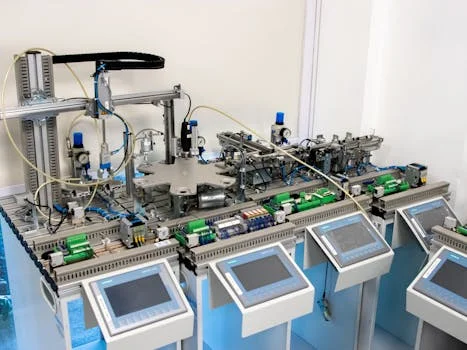
System selection for a Singapore plant starts with measured wastewater data, not a catalogue model. Without lab characterization, CAPEX choices often fail the first compliance audit. Most plants we size for skip a full composite and then miss the FOG or solvent peak that sets tank volume. Grab samples from one shift are not enough.
Step 1: Characterize wastewater. Test pH, COD, TSS, heavy metals (lead, cadmium, chromium), and FOG on representative shifts. Pharmaceutical COD of 5,000–20,000 mg/L with pH 2–12 is common in Eco Special Waste Management data and must drive equalization volume. Electronics plants aiming for sewer discharge still need fluoride control near ≤ 15 mg/L where that limit is written into the permit.
Step 2: Map to discharge limits and reuse targets. Compare results to the sewer or watercourse limit that applies to your outfall. If the site must hit ≥50% recycle as a new large wafer user, design for MBR or RO-quality permeate rather than secondary effluent alone. According to NEA, a controlled watercourse also caps BOD at 20 mg/L (5 days at 20°C), while an ordinary watercourse caps BOD at 50 mg/L.
Step 3: Evaluate site constraints. MBR typically needs about 60% less footprint than conventional activated sludge but can use about 2× the energy (0.8–1.2 kWh/m³) for aeration and permeate pumping. Chemical cost, sludge haul distance, and available power all shift the ranking. Temperature of discharge must stay at or below 45ºC on both NEA watercourse classes.
Step 4: Pilot the top two options. A 3-month trial on a 1 m³/h DAF skid validates TSS and FOG removal on your real FOG spikes before full-scale buy-off. Keep grab and composite samples for the same shifts you will later submit to PUB. Budget membrane replacement every 5–7 years on MBR trains before you freeze the IRR.
Selection checklist:
- High TSS/FOG food effluent → DAF as primary solids and grease capture.
- Tight plot and reuse-quality permeate → MBR after suitable pretreatment.
- High salinity or zero-discharge mandate → ZLD with DAF/RO front end.
- Confirm sludge handling and chemical storage early in the PUB submission.
- Budget membrane replacement every 5–7 years on MBR trains.
- Align recycle % with any sector-specific PUB mandatory target.
The same decision logic appears in our Industrial Wastewater Treatment in Sydney: 2026 Compliance Guide and in the EU Urban Wastewater Treatment Directive: Compliance, Deadlines & Tech, though local limits differ. Use those pages only as process comparisons. Singapore discharge numbers in this article stay on PUB and NEA rules.
Industrial Wastewater CAPEX OPEX Singapore
Industrial wastewater CAPEX and OPEX in Singapore split into equipment, routine operating cost, and permit or disposal items. Procurement teams should model all three before ranking DAF, MBR, and ZLD. A quote that ignores sludge haul will understate lifecycle cash cost. Most plants we size for see sludge and power move the ranking more than the skid price.
DAF systems: CAPEX of S$80,000–S$500,000 covers 4–300 m³/h units with pumps, dosing, and install. OPEX is typically S$0.10–S$0.30/m³ for chemicals, power, and maintenance. ROI of 1–3 years often comes from denser sludge and avoided PUB penalties. One food plant saved S$120,000/year versus sedimentation and cut chemical use 30% (Envirocare 2024 data).
MBR systems: CAPEX of S$500,000–S$2,000,000 covers 10–2,000 m³/day bioreactors and membranes. OPEX of S$0.40–S$0.80/m³ covers aeration, permeate pumping, cleaning chemicals, and membrane replacement every 5–7 years at S$50–S$100/m². ROI of 3–5 years is driven by potable-water offset when permeate is reused. Energy, not the tank steel, is the line item that usually surprises procurement.
ZLD systems: CAPEX of S$1,500,000–S$5,000,000 reflects multi-stage pretreatment, RO, and crystallizers. OPEX of S$0.80–S$2.50/m³ is dominated by thermal energy. ROI of 5–10 years fits high-value processes where raw-water or disposal cost exceeds the energy premium. Crystallizer power at 5–10 kWh/m³ is the term to stress-test in the model.
Hidden costs: PUB permit fees of S$5,000–S$20,000 sit outside the equipment quote. Sludge disposal at S$100–S$300/ton is covered in the sludge dewatering efficiency and cost optimization guide. Mid-life upgrades often move the IRR more than the base equipment quote. Model these three lines before you lock a vendor.
| System Type | CAPEX Range (S$) | OPEX Range (S$/m³) | Typical ROI (Years) | Primary Cost Drivers |
|---|---|---|---|---|
| DAF Systems | 80,000 – 500,000 | 0.10 – 0.30 | 1 – 3 | Chemicals, Power, Sludge Disposal |
| MBR Systems | 500,000 – 2,000,000 | 0.40 – 0.80 | 3 – 5 | Energy, Membrane Replacement, Chemicals |
| ZLD Systems | 1,500,000 – 5,000,000 | 0.80 – 2.50 | 5 – 10 | High Energy (Crystallizers), Specialized Maintenance |
How do you estimate maintenance cost in OPEX?
Maintenance cost in OPEX is planned labour, spare parts, membrane or media replacement, and unplanned repairs divided by annual treated volume (m³/year). Separate equipment items such as membranes at S$50–S$100/m² every 5–7 years from direct costs such as power, chemicals, and sludge haul. Most plants we size for under-budget the membrane line until the replacement year arrives. Put the replacement reserve in the OPEX model, not in a footnote.
What do Singapore PUB wastewater upgrades typically cost?
PUB-linked upgrades on Singapore plants typically span DAF pretreatment at S$80,000–S$500,000, MBR polishing at S$500,000–S$2,000,000, or full ZLD at S$1.5M–S$5M by flow and salinity. Add S$5,000–S$20,000 for permit work and S$100–S$300/ton for sludge disposal. Water Efficiency Fund support up to S$5 million can offset recycling CAPEX when the project meets PUB criteria (PUB, 15 April 2025). Flow and salinity, not the brochure recovery rate, set which band applies.
PUB Trade Effluent Discharge Compliance Singapore
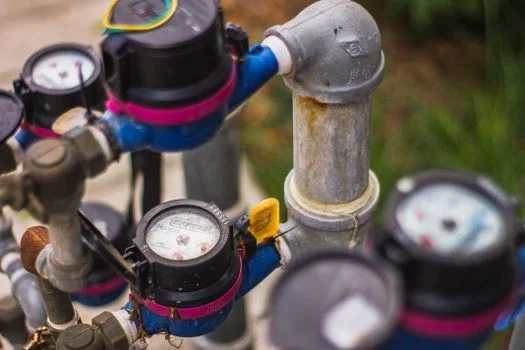
PUB trade effluent discharge compliance in Singapore starts with a Written Approval before any discharge to the public sewer. According to PUB's Trade Effluent Management guidance, the approval sets the conditions, and the effluent must meet the Sewerage and Drainage (Trade Effluent) Regulations at all times. PUB administers that regime under the Sewerage, Drainage and Coastal Protection Act (SDCPA) and the Sewerage and Drainage (Trade Effluent) Regulations. Discharge without approval is an offence under the SDCPA, and a non-compliant effluent can have the Written Approval revoked.
For a regional contrast, see our comparative guide to wastewater treatment permitting in other regions. Keep the Singapore file on PUB and NEA limits only. Samples for the permit must come from the pre-treatment sampling tank or sump, not from a random floor drain. In general, test BOD, COD, and TSS, plus industry parameters such as copper where electroplating is present (PUB Trade Effluent Management).
Step 1: Submit a wastewater characterization report. File pH, COD, TSS, and metals data through PUB's Industrial Water Solutions channel as the permit baseline. Use a laboratory accredited by the Singapore Accreditation Council for the reported results. PUB asks premises to test through third-party accredited laboratories. Most plants we size for lose a month when the first data set misses a production shift.
Step 2: Propose the treatment system. Include PFDs, mass balance, sludge handling, and chemical storage layouts. Reviewers scrutinize sludge and chemical areas first. Weak sludge plans remain a frequent rejection cause. About 30% of applications fail on sludge handling alone.
Step 3: Run a 3-month pilot when flow exceeds 50 m³/day. An MBR pilot must hold TSS ≤ 30 mg/L and COD ≤ 125 mg/L under load swings if those figures are the permit targets used in your application package. Keep the same shifts you will later report. Pilot data that skips a solvent spike will not survive review.
Step 4: Complete a HAZOP for chemical dosing or hazardous generators. Chlorine dioxide and strong-acid/base dosing almost always trigger this study. Record dosing rates next to the mass balance. Missing dosing calculations still stall files. Schedule the study before equipment fabrication, not after.
Step 5: Obtain the Certificate of Statutory Completion (CSC). From first filing to CSC usually takes 6–12 months, so start before production ramps. Drawings and monitoring tie-in should run in parallel. Idle production time is the real cost of a late CSC. Do not wait for civil works to finish before the filing.
Step 6: Install real-time pH, flow, and TSS monitoring tied to PUB's platform. Detected non-compliance can trigger penalties from S$10,000 to S$200,000. Maintain the sensors, because a dead TSS meter is treated as a gap. Tie alarms to the same sampling sump used for lab grabs.
What is the industrial wastewater permit cost Singapore plants should budget?
Industrial wastewater permit cost for a Singapore plant is usually the S$5,000–S$20,000 professional and filing band, plus any pilot the flow triggers. That fee band is not the treatment CAPEX. Flows above 50 m³/day add a 3-month pilot inside the 6–12 month path to CSC. Budget the pilot skid separately from the S$5,000–S$20,000 paper cost, or the permit line will look falsely cheap.
According to NEA, controlled-watercourse chromium is 0.05 mg/L and total metals are 0.5 mg/L, while an ordinary watercourse allows chromium at 1 mg/L and total metals at 1 mg/L. Grease and oil on a controlled watercourse is 1 mg/L total, against 10 mg/L total and 10 mg/L hydrocarbons on an ordinary watercourse. Those metals caps, not the COD number alone, size the precipitation step on electronics lines. Nickel is tighter on a controlled watercourse, at 0.1 mg/L, than the 1 mg/L watercourse cap.
Who this is for / Who should look elsewhere / Next step
This guide is for Singapore plant engineers, EPC leads, and procurement managers sizing DAF, MBR, or ZLD against PUB or NEA limits. Buyers seeking only municipal sewage without industrial FOG, metals, or solvent loads should look at simpler package biology instead. To size a train against your COD, TSS, and recycle target, request a process and cost review with measured effluent data. Bring a week of composite COD, TSS, pH, and flow before that review.
Frequently Asked Questions
What are Singapore's industrial wastewater discharge limits for COD and TSS?
Limits depend on the outfall, and earlier guidance used COD ≤ 125 mg/L and TSS ≤ 30 mg/L as industrial targets. For controlled watercourses, NEA sets COD ≤ 60 mg/L and TSS ≤ 30 mg/L at pH 6–9, with BOD at 20 mg/L. Ordinary watercourses allow COD ≤ 100 mg/L and TSS ≤ 50 mg/L, with BOD at 50 mg/L. Sewer discharges follow PUB's Trade Effluent rules and any permit-specific metals or fluoride caps.
How much does a DAF system cost for a 100 m³/h food processing plant?
A 100 m³/h food-plant DAF typically costs S$250,000–S$400,000 in CAPEX. OPEX is usually S$0.15–S$0.25/m³ for coagulants, polymer, power, and sludge dewatering. Final price moves with FOG peaks, automation level, equalization volume, and whether the polymer make-down sits on the skid. Most plants we size for at this flow sit nearer S$250,000 when the DAF is pretreatment only, not a full reuse train.
Can MBR systems handle pharmaceutical wastewater with high COD?
MBR systems can treat high-COD pharmaceutical wastewater and often reach 95–98% COD removal after proper pretreatment. When influent COD exceeds 10,000 mg/L, DAF or chemical coagulation is normally required first to cut fouling risk. Equalization for pH 2–12 swings is equally important. Design MLSS of 8,000–12,000 mg/L and cleans every 3–6 months keep flux in the 15–25 LMH band on solvent-bearing feeds.
What is the lead time for a PUB wastewater discharge permit?
PUB wastewater discharge permits usually take 6–12 months from first submission to CSC. Flows above 50 m³/day add a mandatory 3-month pilot inside that window. HAZOP, engineering drawings, and monitoring tie-in should be scheduled in parallel to avoid idle production time. A Written Approval is still required before discharge, so the CSC date is not the same as permission to send effluent to the sewer.
Is Zero Liquid Discharge (ZLD) mandatory in Singapore?
ZLD is not a universal Singapore mandate. It is required where high-salinity streams or site-specific zero-discharge conditions apply, such as some solar-cell lines. Many other plants meet sewer or watercourse limits with DAF plus MBR or RO and reserve ZLD for brine that cannot be discharged. ZLD CAPEX of S$1.5M–S$5M and OPEX of S$0.80–S$2.50/m³ are why that reserve is a last step, not a default.