Wastewater treatment plant cost in Kuala Lumpur spans RM500,000 for small package systems (5–50 m³/day) to RM1.2 billion for large municipal plants (50,000+ m³/day). CAPEX runs RM1,000–RM3,000 per m³/day installed; OPEX averages RM0.80–RM2.50/m³, with energy and chemicals at 60–70% of operating cost.
Why Wastewater Treatment Plant Cost in Kuala Lumpur Is Rising in 2026
Kuala Lumpur plant costs are rising on three fronts in 2026: tighter DOE discharge limits push plants toward tertiary treatment, urban land premiums add 20–40% to civil works, and MBR or DAF trains carry 30–50% CAPEX premiums over conventional activated sludge.
Discharge limits are the strongest of those drivers. Malaysia's Department of Environment administers the Environmental Quality (Industrial Effluent) Regulations 2009, cited as P.U.(A) 434/2009 under the Environmental Quality Act 1974 (DOE Malaysia legislation portal). Limits on key parameters — Chemical Oxygen Demand (COD) at ≤80 mg/L, Biochemical Oxygen Demand (BOD) at ≤20 mg/L, and heavy metals such as chromium at ≤0.05 mg/L — push industrial facilities toward advanced tertiary treatment. An earlier version of this guide referenced 2023 amendments; the operative instrument on the DOE portal remains the 2009 regulations. This regulatory pressure directly lifts the wastewater treatment plant cost in Kuala Lumpur and surrounding regions.
Urban land scarcity compounds the effect, raising civil works expenses by 20–40%. The premium is sharpest for compact underground or multi-level plants, such as HydropureWater's WSZ series integrated systems, which exist to maximise space efficiency in dense urban environments. Robust industrial growth across Selangor — especially manufacturing hubs like Shah Alam and Subang Jaya — intensifies demand for high-efficiency systems like Membrane Bioreactors (MBR) and Dissolved Air Flotation (DAF). Those technologies deliver better effluent quality and smaller footprints, and they command 30–50% higher prices than conventional activated sludge.
Non-compliance can cost more than the upgrade. A food processing plant in Puchong accumulated fines totalling RM250,000 in 2024 because its treatment infrastructure was outdated. The penalty, plus the risk of operational shutdown, forced a RM3.2 million investment in a DAF + MBR system engineered for over 95% COD removal. The upgrade also opened a water-reuse path, which is how regulatory pressure converts into CAPEX on advanced industrial treatment.
Wastewater Treatment Plant Cost Breakdown: CAPEX vs. OPEX in Kuala Lumpur
Budgeting a Kuala Lumpur project starts with separating Capital Expenditure (CAPEX) from Operational Expenditure (OPEX). CAPEX covers the initial investment in physical assets; OPEX covers the recurring cost of running the plant. Bidders that quote only CAPEX should be asked for both.
CAPEX components typically include equipment (40–60% of total), civil works (20–30%), installation (10–15%), and permits (5–10%). A 500 m³/day activated sludge plant costs approximately RM2.1 million, with equipment alone around RM1.2 million (per Weilan 2026 data). Civil works cover excavation, concrete tank structures, and buildings — significantly pricier in urban Kuala Lumpur where site access is tight and underground builds are common. Installation covers piping, electrical, automation, and commissioning through to handover.
OPEX drivers include energy (35–45%), chemicals (20–30%), labor (10–15%), and sludge disposal (15–20%). A 1,000 m³/day MBR plant typically consumes 1.8–2.2 kWh/m³; at an average tariff of RM0.40/kWh (TNB 2025 tariffs), energy alone costs RM0.70–RM0.90/m³. Sludge disposal in Kuala Lumpur runs RM150–RM300/ton in landfill tipping fees (SWCorp 2024).
Two OPEX lines are routinely under-quoted. Dewatering with plate and frame filter presses can cut sludge volumes by 70–80%, which is the fastest lever on the disposal line. Maintenance contracts — membrane replacements for MBR, diffusers for activated sludge — add RM50,000–RM200,000/year for larger plants.
| Cost Category | Component | Typical % of Total Cost | Example Cost (for 500 m³/day plant) |
|---|---|---|---|
| CAPEX (Capital Expenditure) | Equipment (tanks, pumps, blowers, membranes) | 40–60% | RM840,000 – RM1,260,000 |
| Civil Works (excavation, concrete structures, buildings) | 20–30% | RM420,000 – RM630,000 | |
| Installation & Commissioning | 10–15% | RM210,000 – RM315,000 | |
| Permits & Engineering Design | 5–10% | RM105,000 – RM210,000 | |
| OPEX (Operational Expenditure) | Energy (electricity for pumps, blowers) | 35–45% | RM0.28 – RM0.45/m³ |
| Chemicals (coagulants, flocculants, disinfectants) | 20–30% | RM0.16 – RM0.30/m³ | |
| Labor & Supervision | 10–15% | RM0.08 – RM0.15/m³ | |
| Sludge Disposal & Maintenance | 15–20% | RM0.12 – RM0.20/m³ |
Technology-Specific Costs: MBR vs. Activated Sludge vs. DAF for Kuala Lumpur Plants
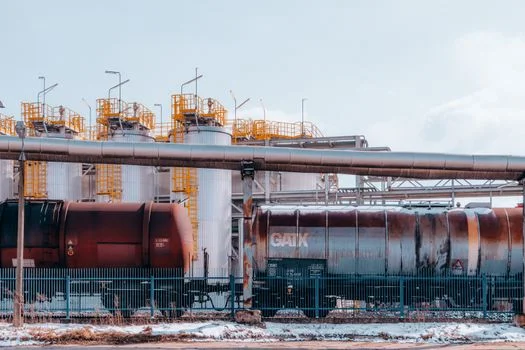
Technology choice moves both the upfront investment and the ten-year operating cost more than any other single decision. Each option trades effluent quality, footprint, and operational complexity differently, so price them against your actual discharge consent, not against brochure figures.
MBR System Cost per Cubic Meter Malaysia: What the Premium Buys
Membrane Bioreactor (MBR) systems typically cost between RM1.2 million and RM3 million per 1,000 m³/day of capacity. Their primary advantage is footprint: up to 90% less than conventional activated sludge, which is decisive on space-constrained urban sites. Effluent quality is consistently strong, with COD below 30 mg/L and Total Suspended Solids (TSS) below 5 mg/L — suitable for direct reuse or stringent discharge. Energy consumption runs higher at 1.8–2.2 kWh/m³, driven by membrane aeration and permeate pumping. Wikipedia's technical review notes submerged MBRs hold mixed liquor at 12,000–20,000 mg/L with typical HRT of 3–10 hours, which is why clarifiers and their land cost drop out of the layout, and puts MBR COD removal at 96 to 99 percent against roughly 95 percent for conventional activated sludge. HydropureWater offers advanced MBR systems for municipal and industrial reuse projects in Malaysia.
Activated Sludge vs MBR Cost Comparison Malaysia Buyers Should Run
Conventional Activated Sludge systems cost less up front, with CAPEX of RM800,000–RM2 million per 1,000 m³/day. They deliver secondary treatment with COD typically between 50–100 mg/L and energy use of 0.6–1.0 kWh/m³, but they need large land areas for aeration tanks and clarifiers. Stricter discharge limits force extra tertiary stages and disinfection — for example chlorine dioxide generators — which add to both CAPEX and OPEX. Run the comparison on 5-year total cost of ownership, not on the equipment invoice, because the tertiary add-ons usually erase the apparent saving.
Dissolved Air Flotation (DAF) systems are the industrial specialist, removing Fats, Oils, and Grease (FOG) and high TSS loads at 92–97% efficiency. A DAF system treating 50–300 m³/day ranges from RM800,000 to RM2.5 million. Chemical consumption of RM0.30–RM0.80/m³ for coagulants and flocculants is the main running cost. Payback for high-efficiency DAF systems for food processing and industrial wastewater in Selangor can be as short as 3–5 years through reduced surcharges and cleaner downstream stages. MBR in municipal reuse typically pays back in 5–7 years, while activated sludge in industrial pre-treatment can take 8–10 years.
Combined trains often win on price. A textile factory in Klang paired DAF (RM1.1M) with activated sludge (RM1.8M), cutting CAPEX by 25% versus a standalone full-scale MBR (RM3.2M) while still meeting its discharge parameters. Hybrid sizing like this works when the FOG load, not dissolved organics, sets the design problem.
| Technology | CAPEX (per 1,000 m³/day) | Footprint | Effluent Quality (COD) | Energy Use (kWh/m³) | Key Advantage |
|---|---|---|---|---|---|
| MBR System | RM1.2M – RM3M | 90% smaller | <30 mg/L (suitable for reuse) | 1.8 – 2.2 | Superior effluent quality, compact design |
| Activated Sludge | RM800,000 – RM2M | Large | 50 – 100 mg/L (secondary treatment) | 0.6 – 1.0 | Lower initial CAPEX, robust |
| DAF System | RM800,000 – RM2.5M (for 50-300 m³/day) | Medium | Target FOG/TSS removal (92-97%) | 0.3 – 0.6 | Effective for specific industrial pollutants |
How Compliance Requirements Impact Wastewater Treatment Plant Costs in Malaysia
Malaysia's Environmental Quality (Sewage) Regulations 2009 set effluent discharge standards that shape design and cost, particularly for industrial operations. Meeting them often requires tertiary treatment, which adds 20–35% to CAPEX. The add-on typically means MBR or advanced oxidation — processes that remove fine particulates, nutrients, and persistent organics beyond secondary treatment.
Disinfection is a separate compliance line, especially for discharge into sensitive receiving waters or reuse schemes. Capital cost for chlorine dioxide generators runs RM150,000–RM500,000, while UV systems cost RM200,000–RM800,000. Disinfection chemicals add an estimated RM0.05–RM0.20/m³ to running costs.
Heavy metals push costs higher again. Meeting limits such as chromium ≤0.05 mg/L usually needs ion exchange or chemical precipitation, adding RM300,000–RM1 million to industrial CAPEX. A semiconductor plant in Kulim invested RM4.5 million in a zero-liquid discharge (ZLD) system to meet the Department of Environment's fluoride limit of ≤15 mg/L — the ceiling case for specialised compliance spending.
The penalty maths justifies the spend. Under the Environmental Quality Act 1974, non-compliance penalties range from RM50,000 to RM500,000 per offense, plus daily fines for ongoing violations. Multinational buyers with European operations also track the EU Urban Wastewater Treatment Directive: Compliance, Deadlines & Tech timeline, since group-wide standards often follow the strictest regime a company faces.
Step-by-Step Guide: Selecting the Right Wastewater Treatment System for Your Kuala Lumpur Project
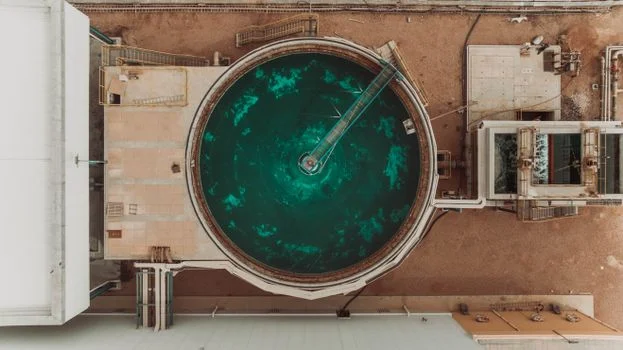
Selecting a treatment system for a Kuala Lumpur project means balancing regulatory compliance, operational efficiency, and budget in a fixed order. The five steps below keep industrial and municipal buyers on that sequence.
- Step 1: Define Effluent Requirements. Set the required effluent quality from the discharge point or intended reuse. Direct discharge to a public sewer may allow COD <100 mg/L with activated sludge. Discharge to surface water, or reuse, pushes the choice toward MBR at COD <30 mg/L.
- Step 2: Calculate Flow Rate and Peak Loads. Determine average and peak flows before anything else. A food plant averaging 200 m³/day with 300 m³/day peaks needs equipment sized for at least 300 m³/day. A 1.5× safety factor prevents overloading during peak production periods.
- Step 3: Assess Site Constraints. Evaluate land area and site conditions early. In dense Kuala Lumpur, compact solutions usually win. HydropureWater's compact underground sewage treatment systems for urban Kuala Lumpur sites save surface space but may add RM200,000–RM500,000 in civil works for excavation and structural reinforcement.
- Step 4: Compare CAPEX vs. OPEX Trade-offs. Analyse total cost of ownership over 5 or 10 years. MBR carries higher CAPEX but often lower OPEX through reduced sludge volumes, minimal clarifier maintenance, and reuse benefits. Activated sludge costs less up front yet can cost more where extensive tertiary treatment or frequent sludge disposal is needed. The 5-year TCO rows in the table below show the trade-offs.
- Step 5: Request Vendor Proposals with Contracted Compliance Commitments. Engage reputable vendors such as HydropureWater for proposals with technology specifications and full cost breakdowns. Require contracted commitments to Malaysia's DOE effluent standards. Insist on DOE-certified effluent testing to validate performance before handover.
| Decision Factor | MBR System | Activated Sludge System | DAF System |
|---|---|---|---|
| Effluent Quality Requirement | High (e.g., reuse, strict discharge) | Moderate (e.g., secondary treatment) | Targeted (e.g., FOG, TSS removal) |
| Site Area Constraint | Very compact (small footprint) | Large footprint required | Medium footprint |
| Initial CAPEX (Relative) | High | Medium | Medium |
| Long-term OPEX (Relative) | Medium (higher energy, lower sludge) | Medium (lower energy, higher sludge) | Medium (chemical intensive) |
| 5-Year TCO Model (Relative) | Often competitive due to reuse/compliance | Potentially higher if upgrades needed | Good for specific industrial streams |
| Key Application | Municipal/Industrial reuse, high-grade discharge | General municipal/industrial secondary treatment | Food processing, oil & gas, pulp & paper pre-treatment |
Vendor Selection Checklist for Kuala Lumpur Buyers
- Demand a full OPEX schedule alongside the CAPEX quote covering energy, chemicals, labor, and sludge, or the comparison is only half a comparison.
- Ask for references from plants of similar flow and industry, and call the operators, not just the owners.
- Check that the offered effluent numbers map to your discharge consent parameter by parameter, including heavy metals where they apply.
- Confirm the scope boundary — what sits inside the vendor's package and what lands on your civil contractor — before signing.
- Require local service coverage with named response times, because membrane and diffuser work waits for no overseas engineer.
- Ask how the design handles peak flow, and make the answer a contractual duty rather than a brochure claim.
- Fix performance validation with independent effluent testing at handover as a payment milestone.
The main cost drivers, in the order they bite, are technology selection, energy tariff, chemical dosing, and sludge disposal. Technology fixes the purchase price and most of the running profile that follows it. Energy and chemicals then compound every operating day, and disposal adds a line many first-time buyers meet only after startup. Treat dosing optimisation and dewatering as the two fastest levers on an existing plant's operating cost.
Choosing between the trains comes down to the stream and the site. Choose MBR when the footprint is fixed and reuse-grade effluent has value; choose DAF when fats, oils, and grease set the design problem ahead of dissolved organics; choose conventional activated sludge when land is available and the consent stops at secondary standards. Where two conditions collide, let the land premium break the tie, because it moves total cost faster than any process choice.
Commissioning should follow a written sequence with hold points. Start with water runs to prove pumping, mixing, and control logic before any process load enters. Ramp biology in steps, holding each step until effluent quality repeats, then bring disinfection online last against the consent's pathogen terms. Keep the sign-off file — it becomes the baseline your operators and any future auditor will work from.
Set the monitoring cadence to the permit and keep it boring. Shift readings of flow, pH, and key process indicators; weekly instrument and dosing-pump calibration; monthly reconciliation of energy, chemical, and disposal costs against the commissioning baseline. Log every exceedance with its cause and corrective action, however minor it looks. DOE inspectors ask for records, and a complete log turns an inspection from an argument into a formality.
Troubleshooting rising operating cost follows a fixed order. Check dosing setpoints first, because drift there inflates both chemical spend and downstream sludge. Compare actual against design flow next, since a plant running far below design still carries its full fixed cost. Only after the log confirms correct operation should you commission a process audit or an equipment change.
Next Step: Matching Equipment to Your Budget
The sludge line is where most Kuala Lumpur plants find unbudgeted ringgit, so start there when trimming OPEX. Review sludge dewatering solutions to reduce disposal costs in Kuala Lumpur — specifications, capacity range, and technical data — against your disposal docket. Need a tailored configuration? Request a free quote with your specific flow rate and pollutant parameters.
Frequently Asked Questions
What is the average cost per m³ for a wastewater treatment plant in Kuala Lumpur?
The average CAPEX for a wastewater treatment plant in Kuala Lumpur ranges from RM1,000–RM3,000/m³/day of installed capacity — for example, RM2 million for a 1,000 m³/day MBR plant. OPEX averages RM0.80–RM2.50/m³, varying with technology, energy tariffs, and chemical consumption. Ask bidders to quote equipment, civil, installation, and permits separately before comparing.
How much does a DAF system cost for a food processing plant in Selangor?
A DAF system for a Selangor food processing plant treating 50–300 m³/day typically costs RM800,000–RM2.5 million including equipment and installation. Recurring chemical costs for coagulants and flocculants add an estimated RM0.30–RM0.80/m³ to operating expenses. Sizing to peak flow rather than average flow is the step that protects both compliance and payback.
What are the hidden costs of wastewater treatment plants in Malaysia?
Hidden costs include permits and licensing fees (RM50,000–RM200,000), fluctuating sludge disposal costs (RM150–RM300/ton), periodic membrane replacements (RM20,000–RM100,000/year for MBR systems), and energy spikes of RM0.10–RM0.30/m³ during peak tariff hours. Each item is budgetable. Audit them into the OPEX model before contract award rather than after the first year.
Can I reuse treated wastewater in Kuala Lumpur, and what are the cost implications?
Treated wastewater can be reused in Kuala Lumpur once it passes tertiary treatment such as MBR or Reverse Osmosis, which adds 30–50% to initial CAPEX. The offset comes from municipal water bills saved at RM2–RM5/m³ (SYABAS 2025 tariffs), with payback typically 3–7 years depending on reused volume. Reuse also trims sewer-discharge exposure.
What financing options are available for wastewater treatment plants in Malaysia?
The Green Technology Financing Scheme (GTFS) by CGC is the main route, with attractive interest rates of 2–4% and government backing of up to 70%. Water and waste sit among its fundable sectors, and GTFS 4.0 runs on a RM1.0 billion allocation until 31 December 2025 (gtfs.my). Leasing options for package systems typically run RM10,000–RM50,000 monthly over 5–10 years.