Wastewater Treatment Plant Cost in Caloocan 2025: Engineering Breakdown with Local Data & ROI Calculator
In Caloocan, wastewater treatment plant costs vary widely by system type and scale. For a 500 m³/day MBR plant, expect ₱12M–₱25M ($220K–$460K) in capital costs, with operating expenses of ₱15–₱30/m³ (2025 data). Large-scale municipal plants like Maynilad’s P10.5B STP serve 1.2M people, while industrial systems (100–500 GPM) range from $200K–$700K. Local compliance (DENR DAO 2016-08) and land costs in Caloocan add 10–20% to budgets. Use this guide’s ROI calculator to compare MBR, SBR, and DAF systems for your project.
Why Caloocan’s Wastewater Treatment Costs Are Unique
Caloocan’s land costs in industrial zones like Bagumbong and Deparo currently range from ₱50,000 to ₱120,000 per square meter, adding a 15–25% premium to civil works budgets compared to industrial hubs in Laguna or Cavite. This high valuation forces engineers to prioritize systems with smaller footprints, often sacrificing lower-cost conventional technology for high-density solutions. because Caloocan sits within the Manila Bay catchment area, the Department of Environment and Natural Resources (DENR) DAO 2016-08 mandates strict tertiary treatment for all discharges. This requirement alone increases capital expenditure (CAPEX) by 30–40% over secondary-only systems as it necessitates nutrient removal and advanced disinfection stages.
Labor dynamics in Metro Manila also inflate operational expenditure (OPEX). Skilled operators in Caloocan command salaries between ₱35,000 and ₱60,000 per month, which is approximately 20% higher than national averages. For complex systems like Membrane Bioreactors (MBR) that require 24/7 monitoring and technical oversight, these labor costs represent a significant portion of the annual budget. (HydropureWater field data, 2025). Civil works are also complicated by Caloocan’s high density; transporting heavy equipment and materials through congested corridors like Samson Road or Quirino Highway adds logistical surcharges that are often overlooked in preliminary quotes.
A 2024 case study of a textile factory in Caloocan illustrates these pressures. The facility invested ₱18M for a 300 m³/day system combining Dissolved Air Flotation (DAF) and Sequencing Batch Reactor (SBR) technologies. Of the total budget, ₱5M was allocated specifically to land leasing and the complex permitting process required by the Caloocan City Environment and Natural Resources Office (CENRO) and the Laguna Lake Development Authority (LLDA). For more context on the regulatory environment, refer to this Philippine industrial wastewater compliance guide.
| Cost Factor | Caloocan Benchmark (2025) | Impact on Total Budget |
|---|---|---|
| Industrial Land Cost | ₱50,000 – ₱120,000/m² | +15% to +25% |
| Skilled Operator Labor | ₱35,000 – ₱60,000/month | +20% vs. Provincial rates |
| Tertiary Compliance (DAO 2016-08) | Mandatory (Nutrient Removal) | +30% to +40% CAPEX |
| Logistics & Mobilization | High-density urban surcharge | +5% to +10% |
Wastewater Treatment Plant Costs by System Type: Caloocan 2025 Benchmarks
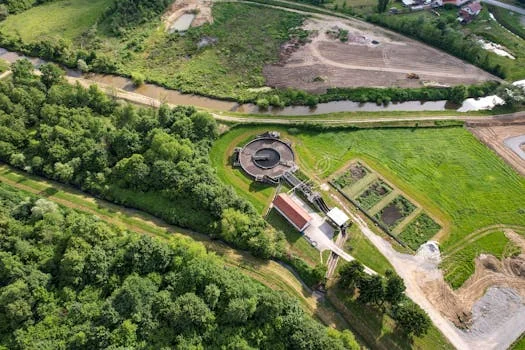
Selecting a treatment technology in Caloocan requires balancing the high cost of land against the long-term efficiency of the system. Membrane Bioreactor (MBR) systems currently command a CAPEX of ₱25,000 to ₱50,000 per m³/day of capacity. For a 500 m³/day plant, this results in a typical price tag of ₱12.5M to ₱25M. While the initial investment is high, compact MBR systems for Caloocan’s space constraints offer the highest effluent quality, often meeting reuse standards for industrial cooling or irrigation. OPEX for MBR stays between ₱20 and ₱35/m³, primarily driven by energy for aeration and membrane replacement cycles every 5 to 8 years.
Sequencing Batch Reactor (SBR) systems offer a middle ground, with CAPEX ranging from ₱15,000 to ₱30,000 per m³/day (approx. ₱7.5M for a 500 m³/day plant). SBRs are favored for their flexibility in handling fluctuating organic loads, common in Caloocan’s food processing sector. However, they require larger footprints than MBRs and involve higher sludge handling costs. Dissolved Air Flotation (DAF) is typically employed as a pre-treatment step for high-strength wastewater (Fats, Oils, and Grease). High-efficiency DAF systems for industrial pre-treatment cost between ₱10,000 and ₱20,000 per m³/day of capacity, with chemical costs (coagulants and flocculants) dominating the OPEX at ₱8–₱18/m³.
Conventional Activated Sludge (CAS) remains the cheapest CAPEX option at ₱8,000 to ₱15,000 per m³/day, but it is increasingly rare in Caloocan due to its massive footprint requirements and inability to meet strict nutrient removal standards without expensive upgrades. When evaluating these options, engineers must account for a 10–20% "Caloocan Compliance Buffer" to cover UV disinfection and online monitoring sensors required for local discharge permits. For a detailed breakdown of pre-treatment options, see the DAF vs. sedimentation cost comparison for pre-treatment.
| System Type | CAPEX (per m³/day) | OPEX (per m³) | Footprint Requirement |
|---|---|---|---|
| MBR (Membrane Bioreactor) | ₱25,000 – ₱50,000 | ₱20 – ₱35 | Minimal (1x) |
| SBR (Sequencing Batch) | ₱15,000 – ₱30,000 | ₱12 – ₱25 | Moderate (2.5x) |
| DAF (Pre-treatment) | ₱10,000 – ₱20,000 | ₱8 – ₱18 | Compact (1.2x) |
| Conventional Sludge | ₱8,000 – ₱15,000 | ₱5 – ₱12 | Large (4x) |
Engineering Specs That Drive Costs: What You Need to Know Before Quoting
Influent quality is the primary technical driver of price variability in Caloocan projects. If the Chemical Oxygen Demand (COD) exceeds 1,000 mg/L—a frequent occurrence in the city’s food and beverage processing zones—standard biological treatment will fail. This requires the addition of equalization tanks and DAF units, which can add ₱2M to ₱5M to the initial budget. footprint constraints in urban Caloocan often mandate the use of underground integrated sewage treatment systems. While these save up to 60% of surface space, they increase civil works costs by 25–40% due to the need for deep excavation and reinforced concrete structures capable of resisting hydrostatic pressure.
Energy consumption is another critical spec. MBR systems consume between 0.8 and 1.2 kWh/m³, significantly higher than the 0.4 to 0.6 kWh/m³ required by SBR systems. For a 500 m³/day plant operating over 10 years, this energy delta can represent ₱3M to ₱6M in additional OPEX. Sludge management also presents a hidden cost. Caloocan’s landfill tipping fees have risen to ₱3,000–₱5,000 per ton. To mitigate this, engineers often specify sludge dewatering to reduce Caloocan landfill costs. While a filter press adds ₱1.5M to ₱3M to CAPEX, it can reduce total sludge volume by 70%, lowering disposal OPEX by 30% annually.
Geotechnical factors also play a role. In many parts of Caloocan, the water table is found at depths of only 1.5 to 3 meters. This high water table necessitates dewatering during construction and specialized waterproofing for any below-grade tanks, adding roughly 10% to the civil works line item. Failure to account for these soil conditions during the quoting phase often leads to significant cost overruns during the implementation stage.
Caloocan Compliance Checklist: Permits, Discharge Limits, and Hidden Costs

Compliance with DENR DAO 2016-08 is non-negotiable for facilities in Caloocan. The regulation sets strict limits: Biological Oxygen Demand (BOD) must be below 30 mg/L, Total Suspended Solids (TSS) below 50 mg/L, and Fecal Coliform counts must not exceed 1,000 MPN/100mL for Class C water bodies. To achieve these coliform limits consistently, a chlorine dioxide generator or UV sterilization system is required, adding ₱500,000 to ₱1.5M to the equipment list. facilities discharging into tributaries leading to Laguna de Bay must secure LLDA permits, a process that can take 6 to 12 months and cost between ₱500,000 and ₱2M in administrative and environmental fees.
Local governance adds another layer of complexity. Caloocan City Ordinance 2023-04 mandates that new industrial and residential developments incorporate rainwater harvesting and detention systems. Integrating these with the wastewater treatment plant (WWTP) for non-potable reuse can add ₱1M to ₱3M for additional storage tanks and dual-piping networks. Additionally, the DENR now frequently requires continuous effluent monitoring systems (CEMS) for large-scale dischargers. These online sensors for pH, TSS, and COD cost between ₱2M and ₱4M upfront but are essential for avoiding the ₱1M-per-day fines associated with severe permit violations.
| Requirement | Limit/Regulation | Estimated Cost Impact |
|---|---|---|
| Effluent BOD | < 30 mg/L (DAO 2016-08) | Requires secondary treatment |
| Fecal Coliform | < 1,000 MPN/100mL | ₱0.5M – ₱1.5M (Disinfection) |
| Rainwater Harvesting | Ordinance 2023-04 | ₱1M – ₱3M (Civil/Storage) |
| LLDA Permitting | Clearance to Operate | ₱0.5M – ₱2M (Fees/Consulting) |
A hotel in Caloocan recently faced the financial consequences of non-compliance. After being cited for exceeding BOD limits, the facility paid ₱1.2M in accumulated daily fines. The subsequent emergency upgrade to an MBR system cost ₱8M—a price that could have been reduced by 20% had the system been designed for compliance from the outset during the construction phase.
ROI Calculator: How to Justify Your Wastewater Treatment Investment
Calculating the Return on Investment (ROI) for a wastewater plant in Caloocan involves more than just comparing CAPEX to OPEX. The primary driver of ROI is often "avoided costs." Maynilad currently charges sewer surcharges ranging from ₱50 to ₱150 per m³ for customers discharging into the municipal sewer without pre-treatment. For a factory producing 500 m³/day, installing an on-site treatment plant can save up to ₱27M annually in surcharges alone. When combined with the avoidance of DENR penalties (which can reach ₱1M per day), the payback period for a ₱20M plant is often less than 18 months.
Water reuse provides a second stream of financial recovery. Treated effluent from MBR systems is suitable for cooling towers, floor washing, and landscape irrigation. With Maynilad potable water rates for industrial users reaching ₱100/m³, reusing 50% of a 500 m³/day discharge saves ₱9M per year. the Board of Investments (BOI) under the Investment Priorities Plan (IPP) offers income tax holidays of 3 to 6 years for water treatment projects exceeding ₱50M in investment, providing a significant fiscal incentive for larger municipal or industrial developers in the city.
| ROI Metric | Estimated Annual Saving | Assumptions (500 m³/day) |
|---|---|---|
| Sewer Surcharge Savings | ₱18M – ₱27M | ₱100/m³ Maynilad charge |
| Avoided Fines/Penalties | ₱2M – ₱10M | Based on historical risk |
| Water Reuse Savings | ₱4.5M – ₱9M | 50% reuse at ₱100/m³ |
| Sludge Disposal Savings | ₱1M – ₱2.5M | Using on-site dewatering |
To calculate your specific payback period, use the following framework: Payback (Years) = [Total CAPEX] / ([Annual Surcharge Savings + Annual Water Reuse Savings] - [Annual OPEX]). In the Caloocan market, industrial systems typically achieve a 1.5 to 3-year payback, while residential/condominium systems range from 4 to 6 years due to lower discharge volumes and fewer reuse opportunities.
Frequently Asked Questions
How much does a 500 m³/day MBR plant cost in Caloocan?
A 500 m³/day MBR plant typically costs between ₱12M and ₱25M ($220K–$460K). This includes high-spec membrane modules, civil works, and the necessary tertiary treatment components to meet DENR standards. OPEX usually ranges from ₱20 to ₱35 per cubic meter treated.
Is a sewage treatment plant required for condominiums in Caloocan?
Yes. Under HLURB Resolution 978 and Caloocan City Ordinance 2023-04, all new residential developments must have an on-site STP. The minimum required capacity is generally 1 m³/day for every 10 units, though specific CENRO requirements may vary based on the total floor area.
What’s the cheapest wastewater treatment system for a small factory?
For a small factory with high-strength waste, a combined DAF and SBR system (₱15K–₱25K per m³/day) is often the most cost-effective. While Conventional Activated Sludge is cheaper initially (₱8K–₱15K), it usually fails to meet Caloocan's footprint and nutrient removal requirements.
How long does it take to build a wastewater treatment plant in Caloocan?
The total timeline is 12–24 months. This breaks down into 3–6 months for engineering design, 6–12 months for securing DENR and LLDA permits, and 6–12 months for actual construction and commissioning.
Can I reuse treated wastewater in Caloocan?
Yes, non-potable reuse for irrigation and cooling is encouraged under DENR DAO 2016-08. However, if you intend to reuse water for high-contact applications or potable purposes, additional Reverse Osmosis (RO) and advanced UV oxidation stages must be added to the treatment train.