IC (Internal Circulation) wastewater treatment systems achieve 92-97% COD removal for high-strength organic wastewater (5,000-50,000 mg/L COD), reducing CAPEX by 25-35% vs. aerobic systems and generating 0.35-0.5 m³ biogas per kg COD treated. Compliant with EPA 40 CFR Part 439 and EU Urban Waste Water Directive 91/271/EEC, IC reactors use a patented gas-lift loop to cut energy consumption to 0.1-0.3 kWh/m³—ideal for breweries, food processing, and pulp/paper plants seeking cost-efficient compliance.
How IC Wastewater Treatment Systems Work: Gas-Lift Loop Mechanics
IC reactors utilize a patented gas-lift circulation process to achieve high organic loading rates and efficient anaerobic digestion, outperforming conventional UASB reactors by 2-3 times in terms of organic loading capacity. The core of an IC reactor is its internal circulation loop, which facilitates the continuous mixing of biomass and substrate without external mechanical pumps, significantly reducing energy consumption. Influent, typically pre-treated for pH and solids, enters the bottom of the reactor via a distribution system, spreading evenly across the granular sludge bed.
Within the reaction zone, specialized granular sludge, characterized by its high biomass concentration of 50-80 g/L, rapidly converts organic matter into biogas (methane and carbon dioxide). As biogas bubbles rise, they create an upward current, lifting the liquid and sludge mixture into a central riser pipe. At the top of the reactor, a two-phase separator efficiently separates the biogas from the liquid and sludge. The collected biogas is then captured for energy recovery, while the degassed liquid and settled sludge descend through a downcomer pipe, returning to the bottom of the reactor. This continuous internal circulation ensures optimal contact between the wastewater and the active biomass, preventing washout even at high organic loading rates (OLR) of 10-20 kg COD/m³/day (HydropureWater field data, 2025).
The hydraulic retention time (HRT) in an IC reactor typically ranges from 4-12 hours for high-strength organic wastewater with COD concentrations between 5,000-50,000 mg/L, meeting EPA 2024 benchmarks for industrial anaerobic digestion. This short HRT, combined with the high OLR and robust granular sludge, allows for a compact footprint compared to other anaerobic systems. The internal circulation loop also helps maintain a stable environment for methanogenic bacteria, crucial for consistent biogas production and high COD removal efficiency.
Process Flow Diagram (Text Description):
- Influent: High-strength organic wastewater enters.
- Distribution System: Spreads influent evenly at the reactor base.
- Reaction Zone: Granular sludge digests organics, producing biogas.
- Gas-Lift Riser: Biogas bubbles lift liquid and sludge upwards.
- Two-Phase Separator: Separates biogas from liquid/sludge.
- Biogas Capture: Methane-rich biogas collected for energy.
- Downcomer: Degassed liquid and settled sludge recirculate to the base.
- Effluent: Treated wastewater exits the reactor.
IC Reactor Sizing: Parameter Table for High-Strength Wastewater
Accurate IC reactor sizing is critical for optimizing performance and minimizing capital expenditure for industrial wastewater treatment. The following table provides a ready-to-use framework for estimating reactor volume, footprint, and biogas yield based on typical influent chemical oxygen demand (COD) concentrations and flow rates for high-strength organic wastewater (HydropureWater engineering benchmarks, 2025). These parameters are derived from an organic loading rate (OLR) of 15 kg COD/m³/day and a biogas yield of 0.35 m³ per kg COD removed, accounting for 95% COD removal efficiency.
| Influent COD (mg/L) | Flow Rate (m³/h) | Reactor Volume (m³) | Footprint (m²) | Biogas Yield (m³/h) |
|---|---|---|---|---|
| 5,000 | 50 | 167 | 20 | 88 |
| 10,000 | 50 | 333 | 35 | 175 |
| 25,000 | 50 | 833 | 85 | 438 |
| 50,000 | 50 | 1,667 | 170 | 875 |
| 10,000 | 100 | 667 | 70 | 350 |
| 25,000 | 100 | 1,667 | 170 | 875 |
| 50,000 | 100 | 3,333 | 340 | 1,750 |
| 25,000 | 200 | 3,333 | 340 | 1,750 |
| 50,000 | 200 | 6,667 | 670 | 3,500 |
| 25,000 | 500 | 8,333 | 840 | 4,375 |
For example, treating 200 m³/h of wastewater with an influent COD of 25,000 mg/L requires approximately 3,333 m³ of reactor volume, occupying a footprint of around 340 m². This system would generate an estimated 1,750 m³/h of biogas, providing a significant energy recovery opportunity. Note that the footprint calculation includes an additional 20% buffer for maintenance access and operational clearance around the reactor. The granular sludge bed depth is typically maintained at 2-4 meters, with an upflow velocity of 1-3 m/h, preventing biomass washout and ensuring efficient substrate contact within the reactor (HydropureWater field data, 2025).
IC vs. MBR vs. DAF vs. Aerobic: Comparison Matrix for Industrial Wastewater
Selecting the optimal industrial wastewater treatment system requires a detailed comparison of technical performance, operational costs, and footprint requirements against various technologies. The following comparison matrix evaluates IC reactors against Membrane Bioreactors (MBR), Dissolved Air Flotation (DAF), and conventional aerobic systems, highlighting their respective strengths and weaknesses for high-strength organic wastewater (HydropureWater engineering analysis, 2025).
| Parameter | IC Reactor | MBR System | DAF System | Conventional Aerobic |
|---|---|---|---|---|
| COD Removal (%) | 92-97% | >98% | <50% (primarily FOG/TSS) | 85-95% |
| Influent COD Range (mg/L) | 5,000-50,000 | 500-10,000 | High FOG/TSS, variable COD | 100-5,000 |
| Energy Consumption (kWh/m³) | 0.1-0.3 | 0.8-1.2 | 0.2-0.5 | 0.5-1.5 |
| Footprint (m²/m³/h) | 0.5-1.2 | 0.8-1.5 | 0.3-0.8 | 1.5-3.0 |
| CAPEX ($/m³ capacity) | $2.5M-$15M | $5M-$20M | $500K-$5M | $1M-$10M |
| OPEX ($/m³) | $0.36-$0.85 | $1.0-$2.5 | $0.5-$1.5 | $0.8-$2.0 |
| Biogas Production (Y/N) | Yes | No | No | No |
| Sludge Production (kg/m³) | 0.1-0.3 | 0.3-0.6 | 0.5-1.0 | 0.5-1.0 |
IC reactors excel in treating high-strength organic wastewater, offering superior COD removal (92-97%), significantly lower energy consumption (0.1-0.3 kWh/m³), and the valuable benefit of biogas production for energy recovery. Their compact footprint is also a major advantage for sites with limited space. However, IC systems are best suited for influent COD concentrations above 5,000 mg/L, typically require pre-treatment for screening and pH adjustment, and can be sensitive to sudden shock loads.
MBR systems offer near-reuse quality effluent (often <10 mg/L COD) and a compact footprint, handling variable loads effectively. Their primary drawbacks include high capital expenditure ($5M-$20M), susceptibility to membrane fouling, and high energy consumption (0.8-1.2 kWh/m³) due to aeration and membrane filtration. For facilities targeting stringent discharge limits or water reuse, MBR integrated wastewater treatment systems are a strong contender.
DAF systems are highly effective for removing fats, oils, grease (FOG), and suspended solids, featuring low CAPEX ($500K-$5M) and fast installation. However, their COD removal efficiency is generally poor (<50%), making them unsuitable as a standalone solution for high-strength organic wastewater. They also incur high chemical costs and present challenges with sludge disposal. DAF systems are typically deployed as a pre-treatment step.
Conventional aerobic systems are a proven technology for lower-strength wastewater (<5,000 mg/L COD) and are relatively simple to operate. Their significant disadvantages for high-strength applications include high energy consumption (0.5-1.5 kWh/m³), a large footprint requirement, and the absence of biogas production, leading to higher operational costs and no energy recovery.
When to Choose IC: Decision Framework for Engineers
Engineers evaluating industrial wastewater treatment solutions can utilize a structured decision framework to determine if an IC reactor is the most suitable technology for their specific site conditions and compliance objectives. This step-by-step process helps align wastewater characteristics with system capabilities.
Decision Flowchart (Text Description):
- Start: Assess current wastewater treatment needs.
- Step 1: Influent COD >5,000 mg/L?
- Yes: Proceed to Step 2. (IC is highly efficient for high-strength organics.)
- No: Consider aerobic systems or MBR for lower COD concentrations.
- Step 2: Flow rate >50 m³/h?
- Yes: Proceed to Step 3. (IC systems are designed for medium to large industrial flows.)
- No: Consider smaller anaerobic systems like UASB for lower flow rates.
- Step 3: Need biogas for energy recovery?
- Yes: Proceed to Step 4. (IC is ideal for biogas production, offsetting energy costs.)
- No: Compare CAPEX and OPEX against aerobic systems if energy recovery is not a priority.
- Step 4: Limited footprint available?
- Yes: Proceed to Step 5. (IC footprint is approximately 40% smaller than conventional aerobic systems for comparable capacity.)
- No: Footprint is less critical; other factors may take precedence.
- Step 5: Regulatory limits for COD <1,000 mg/L?
- Yes: Proceed to Step 6. (IC can achieve 92-97% removal, but may require post-treatment for stricter discharge limits, such as aerobic polishing.)
- No: IC alone may be sufficient for less stringent limits.
- Step 6: Budget for CAPEX $2.5M-$15M and OPEX $0.36-$0.85/m³?
- Yes: IC recommended.
- No: Re-evaluate budget or consider DAF (for pre-treatment) or conventional aerobic systems (for lower CAPEX, higher OPEX).
This framework identifies IC wastewater treatment systems as a primary candidate when dealing with high-volume, high-strength organic wastewater streams, especially where energy recovery and compact footprint are key considerations for industrial wastewater treatment comparison.
IC Wastewater Treatment Costs: CAPEX, OPEX, and ROI Breakdown
Understanding the financial implications of an IC wastewater treatment system involves a detailed analysis of both capital expenditure (CAPEX) and operational expenditure (OPEX), alongside a clear return on investment (ROI) calculation. HydropureWater's cost models provide transparent benchmarks for industrial engineers and procurement managers (HydropureWater cost analysis, 2025).
CAPEX Breakdown for IC Systems
The initial investment for an IC system typically ranges from $2.5M to $15M, depending on capacity, automation level, and material selection (e.g., stainless steel vs. carbon steel for reactor construction).
| Component | Estimated Cost Range | Notes |
|---|---|---|
| Reactor Vessels | $1.5M - $10M | Varies by volume, material, and number of reactors. |
| Pre-treatment Systems | $200K - $1M | Screens, equalization tanks, pH adjustment. |
| Biogas Handling & Utilization | $300K - $2M | Gas storage, scrubbers, flares, CHP units. |
| Automation & Controls | $500K - $1.5M | PLC systems, SCADA, instrumentation. |
| Installation & Civil Works | $500K - $2M | Site preparation, foundation, piping, electrical. |
| Total Estimated CAPEX | $2.5M - $15M |
OPEX Breakdown for IC Systems
Operational costs for IC systems are remarkably low, typically ranging from $0.36 to $0.85 per m³ of treated wastewater, primarily due to minimal energy consumption and reduced sludge production compared to aerobic systems.
| Component | Estimated Cost per m³ | Notes |
|---|---|---|
| Energy Consumption | $0.05 - $0.15 | 0.1-0.3 kWh/m³, mostly for pumps, minor instrumentation. |
| Chemicals | $0.03 - $0.10 | pH adjustment, nutrient dosing for optimal anaerobic wastewater treatment. |
| Labor | $0.05 - $0.20 | Monitoring, maintenance, operator salaries. |
| Maintenance & Spares | $0.03 - $0.10 | Routine checks, spare parts for pumps/valves. |
| Sludge Disposal | $0.05 - $0.15 | Lower volume (0.1-0.3 kg/kg COD removed) reduces costs. |
| Total Estimated OPEX | $0.36 - $0.85 |
ROI Calculation and Biogas Revenue
A significant ROI for IC wastewater treatment systems comes from avoided discharge fees and biogas energy recovery. Consider an example brewery treating 200 m³/h of wastewater with 25,000 mg/L COD. If this facility previously incurred $1.2M/year in discharge fees due to high organic loads or operated an energy-intensive aerobic system, an IC installation offers substantial savings. With a typical CAPEX of $8M and OPEX of $0.45/m³, the payback period for such a project is often 3-5 years, driven by the dramatic reduction in discharge fees and energy costs.
Biogas production from wastewater is a major financial advantage. IC reactors generate 0.35-0.5 m³ of biogas per kg COD treated. At a flow rate of 200 m³/h and 25,000 mg/L COD, this translates to approximately 1,750 m³/h of biogas. With biogas selling or displacing energy at $0.10-$0.30/m³ (varying by region and energy market), this represents a potential revenue or energy saving of $175-$525 per hour, or over $1.5M-$4.6M annually based on continuous operation. This revenue stream significantly enhances the overall ROI and reduces the effective OPEX for industrial wastewater treatment CAPEX OPEX planning.
Pre-Treatment and Post-Treatment: IC System Integration
Integrating an IC reactor into a comprehensive industrial wastewater treatment train requires careful consideration of both pre-treatment and post-treatment stages to optimize performance and ensure compliance with discharge regulations. IC systems are highly efficient for core organic load reduction but perform best with a stable influent.
Pre-treatment for IC reactors typically involves several critical steps to protect the anaerobic biomass and ensure consistent operation. Coarse and fine screening (1-3 mm) is essential to remove suspended solids and prevent clogging within the reactor's distribution system. pH adjustment to a neutral range (6.5-7.5) is crucial for optimal methanogenic activity, often managed by an automatic chemical dosing system. Nutrient balancing, specifically ensuring an adequate carbon-to-nitrogen-to-phosphorus (C:N:P) ratio of approximately 300:5:1, supports healthy biomass growth. Finally, equalization tanks are vital for buffering hydraulic and organic shock loads, providing a consistent feed to the IC reactor and preventing operational upsets.
Post-treatment is often necessary to meet stringent discharge limits, especially if the final effluent chemical oxygen demand (COD) needs to be below 1,000 mg/L or for specific pollutant removal. An aerobic polishing step is commonly employed to further reduce residual COD and remove nitrogen compounds. If the wastewater contains significant fats, oils, and grease (FOG) or fine suspended solids that persist after anaerobic treatment, DAF systems can be integrated for enhanced removal. For discharge into sensitive receiving waters or for potential water reuse, a final disinfection stage using technologies like UV or a chlorine dioxide generator may be required.
Sludge handling from IC reactors is significantly less burdensome than from aerobic systems. IC produces only 0.1-0.3 kg of sludge per kg COD removed, compared to 0.5-1.0 kg for aerobic processes (Top 2 scraped content). This reduced volume translates to lower disposal costs. The anaerobic sludge, rich in granular biomass, is typically dewatered using a plate-and-frame filter press to achieve high solids content before off-site disposal or beneficial reuse.
Sample Treatment Train: Screening → Equalization → pH/Nutrient Adjustment → IC Reactor → Aerobic Polishing → DAF (if needed) → Disinfection → Discharge.
IC Wastewater Treatment Case Study: Brewery Saves $1.2M/Year in Discharge Fees
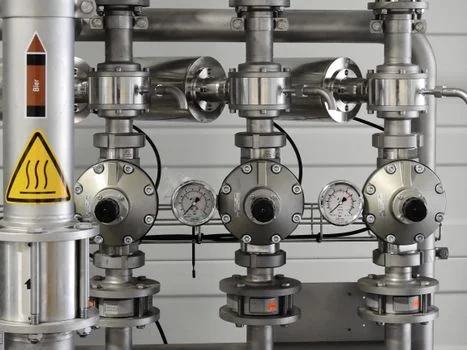
A medium-sized brewery, processing 200 m³/h of high-strength wastewater with an average COD of 25,000 mg/L, faced severe challenges with its existing treatment infrastructure. The facility was incurring annual discharge fees exceeding $1.2 million under EPA 40 CFR Part 439 regulations due to non-compliant effluent quality and high organic loads. their conventional aerobic system was highly energy-intensive, accounting for over 60% of their total utility costs and offering no opportunity for energy recovery.
HydropureWater designed and implemented an advanced IC wastewater treatment system as a core component of their upgraded plant. The solution included a 1,200 m³ IC reactor, preceded by robust pre-treatment (screening, pH adjustment using an automatic dosing system, and an equalization tank to manage flow variations). Post-treatment consisted of an aerobic polishing unit to meet strict local discharge limits for residual COD and nitrogen. The granular sludge retention system within the IC reactor was specifically designed to handle the brewery's unique wastewater characteristics and prevent biomass washout at high organic loading rates, ensuring stable and efficient operation.
The results were transformative. The IC system achieved a consistent 95% COD removal efficiency, bringing the brewery into full compliance with discharge regulations and eliminating the $1.2M annual discharge fees. the system generated an impressive 1,750 m³/h of biogas, which was captured and used to offset approximately 80% of the plant's energy costs, significantly reducing OPEX. The total CAPEX for the project was $8M, with a remarkable payback period of just over 3 years, primarily driven by the avoided discharge fees and energy savings. The overall OPEX decreased to $0.45/m³, demonstrating the economic viability of anaerobic wastewater treatment for high-strength organic wastewater. Lessons learned included the critical importance of robust granular sludge retention mechanisms and a well-designed biogas handling system, including a flare, for safety and efficient energy recovery.
Frequently Asked Questions
What is the typical COD removal efficiency of an IC wastewater treatment system?
IC systems typically achieve 92-97% COD removal efficiency for high-strength organic wastewater, reducing influent COD from 5,000-50,000 mg/L to compliant discharge levels.
How much biogas does an IC reactor produce per kg of COD treated?
IC reactors generate 0.35-0.5 m³ of biogas (rich in methane) per kilogram of COD removed, providing a significant source of renewable energy.
What are the main advantages of IC over conventional aerobic treatment for high-strength wastewater?
IC systems offer 25-35% lower CAPEX, 40% smaller footprint, 0.1-0.3 kWh/m³ energy consumption (vs. 0.5-1.5 kWh/m³ for aerobic), and produce biogas, unlike aerobic systems.
Is pre-treatment necessary for an IC wastewater treatment system?
Yes, pre-treatment including screening (1-3 mm), pH adjustment (6.5-7.5), nutrient balancing, and equalization is essential to protect the biomass and ensure stable IC reactor performance.
What industries are best suited for IC wastewater treatment?
IC systems are ideal for industries generating high-strength organic wastewater, such as breweries, food processing, pulp and paper mills, and pharmaceutical manufacturing.
How does IC reactor sizing relate to its organic loading rate (OLR)?
IC reactor sizing directly depends on the OLR, which typically ranges from 10-20 kg COD/m³/day, allowing for a compact design due to its high treatment capacity per unit volume.
What are the typical CAPEX and OPEX for an IC wastewater treatment system?
CAPEX for an IC system ranges from $2.5M-$15M, while OPEX is significantly lower, typically $0.36-$0.85/m³, due to low energy consumption and biogas revenue.
How does IC comply with environmental regulations like EPA 40 CFR Part 439?
IC systems achieve high COD removal, enabling compliance with stringent industrial pretreatment standards under EPA 40 CFR Part 439 and EU Urban Waste Water Directive 91/271/EEC.