Why Sumatra Hospitals Need Wastewater Treatment Now: Compliance Risks and Cost Pressures
Hospitals in Sumatra face a dual challenge: strict Indonesian Ministry of Health (MoH) effluent standards (COD ≤50 mg/L, BOD ≤30 mg/L, fecal coliform ≤1,000 MPN/100mL per Regulation No. 7/2019) and rising water costs, such as Syamsudin Hospital’s 13% annual increase. Only 2.8% of Indonesia’s 2,889 hospitals have wastewater treatment facilities, leaving most at risk of fines or shutdowns. This guide provides Sumatra-specific engineering specs, cost models (IDR 1.2B–15B CAPEX), and a zero-risk compliance roadmap for MBR, SBR, DAF, and chlorine dioxide systems.
Indonesian MoH Regulation No. 7/2019 sets rigorous limits for hospital effluent, including COD ≤50 mg/L, BOD ≤30 mg/L, and heavy metals such as Lead (Pb) ≤0.1 mg/L. Non-compliance is not merely a regulatory oversight; it carries severe financial penalties up to IDR 5B and the potential revocation of operating licenses under MoH Decree No. 369/2007. For facility managers in provinces like North Sumatra or Riau, the risk of a shutdown during a provincial audit is a primary driver for upgrading legacy systems to modern standards.
Economic pressures are equally urgent. Sumatra’s water scarcity, exemplified by Medan’s 2023 water rationing, has driven commercial water tariffs to IDR 12,000–18,000/m³. Engineering data from Syamsudin Hospital indicates that implementing a 70% water reuse strategy reduced annual water procurement costs by IDR 150M. only 3 of Sumatra’s 127 hospitals currently operate compliant wastewater treatment facilities, representing a significant gap in regional healthcare infrastructure. Provincial governments are scheduled to enforce comprehensive compliance audits through 2025–2026, specifically targeting high-risk facilities such as hemodialysis centers and clinical laboratories.
Hospital wastewater in Sumatra is uniquely complex, containing high concentrations of antibiotics, hormones, and pathogens like E. coli and Vibrio cholerae. Research from Palembang (ResearchGate 2017) highlights that conventional municipal sewer standards are insufficient for treating medical-grade contaminants, necessitating advanced technologies like compact medical wastewater treatment systems for Sumatra clinics to ensure environmental safety and regulatory alignment.
Hospital Wastewater Treatment Technologies Compared: MBR vs SBR vs DAF vs Chlorine Dioxide
Selecting the appropriate treatment technology for a Sumatra hospital depends on effluent quality requirements, available footprint, and the specific contaminant profile of the facility. Membrane Bioreactor (MBR) technology has emerged as the gold standard for urban hospitals in Medan and Palembang due to its compact design and superior pathogen removal. MBR systems utilize submerged PVDF membranes with a 0.1 μm pore size to achieve 99.99% pathogen removal and COD levels well below the MoH limit of 50 mg/L. The footprint for MBR is minimal, ranging from 0.5–1 m²/m³/day, though it requires energy inputs of 0.8–1.2 kWh/m³.
Sequencing Batch Reactor (SBR) systems offer a lower CAPEX alternative for mid-sized hospitals (50–150 beds) where land is more available. SBRs achieve 85–92% COD removal but require secondary clarification and larger footprints (1–2 m²/m³/day). While the initial investment is lower, the OPEX is often higher due to more intensive sludge handling. For coastal hospitals in Padang or Lampung, Dissolved Air Flotation (DAF) is frequently employed as a pretreatment step to remove 90–95% of Total Suspended Solids (TSS) and fats, oils, and grease (FOG) from kitchen and laundry effluent before biological treatment.
Disinfection is the final critical stage. Chlorine dioxide generators for hospital effluent disinfection are preferred over traditional liquid bleach because ClO₂ is a more potent oxidant that does not form harmful trihalomethanes (THMs). ClO₂ systems achieve a 99.99% pathogen kill and are EPA-verified for medical applications. However, they must be integrated into a broader treatment train, as they do not remove organic loads or heavy metals.
| Technology | COD Removal | Footprint (m²/m³/day) | Energy Use (kWh/m³) | Best Use Case |
|---|---|---|---|---|
| MBR | >95% | 0.5 – 1.0 | 0.8 – 1.2 | Urban hospitals with space constraints; water reuse. |
| SBR | 85 – 92% | 1.0 – 2.0 | 0.6 – 1.0 | Mid-sized regional hospitals; moderate land availability. |
| DAF | 60 – 70% (Pre) | 0.3 – 0.5 | 0.3 – 0.5 | Pretreatment for high FOG/TSS; coastal facilities. |
| Chlorine Dioxide | N/A (Disinfection) | <0.2 | <0.1 | Final disinfection for pathogen control. |
Sumatra-specific environmental factors must influence technology selection. High ambient humidity in the region increases the risk of membrane fouling in MBR systems, requiring a 30% increase in automated cleaning frequency. Conversely, the intermittent power supply common in some parts of Sumatra makes SBR systems attractive, as their batch-processing nature is more tolerant of short-term outages compared to continuous-flow MBR processes.
Engineering Specs for Sumatra Hospitals: Effluent Quality, Footprint, and Energy Use
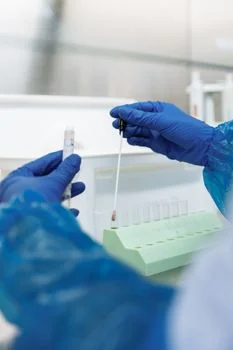
Design parameters for hospital wastewater systems in Sumatra must account for high influent concentrations of pharmaceuticals and organic matter. According to a Palembang-based study (2017), influent COD can range from 300 to 1,200 mg/L, with BOD between 150 and 600 mg/L. These levels are significantly higher than standard domestic sewage, requiring robust secondary and tertiary treatment stages. For instance, MBR systems for hospital wastewater treatment in Sumatra are typically designed with a Hydraulic Retention Time (HRT) of 4–6 hours and a Sludge Retention Time (SRT) of 15–30 days to ensure complete nitrification and pharmaceutical degradation.
Engineering specifications for MBR systems in the region include a membrane flux of 15–25 LMH and an aeration rate of 0.5–0.8 Nm³/m³. These specs ensure that the final effluent meets the MoH 2019 standards: COD ≤50 mg/L, BOD ≤30 mg/L, and TSS ≤5 mg/L. For SBR systems, the HRT is extended to 8–12 hours to account for the fill-react-settle-decant cycles. SBRs also require the installation of an equalization tank to buffer variable flows from hemodialysis units and surgical theaters, which can peak during morning hours.
| Parameter | Influent (Sumatra Avg) | MBR Effluent | SBR Effluent | MoH Reg 7/2019 Limit |
|---|---|---|---|---|
| COD (mg/L) | 300 – 1,200 | <30 | <50 | 50 |
| BOD (mg/L) | 150 – 600 | <10 | <25 | 30 |
| TSS (mg/L) | 100 – 400 | <5 | <30 | 30 |
| Fecal Coliform (MPN/100mL) | 10^6 – 10^8 | <100 | <1,000 | 1,000 |
| pH | 6.5 – 8.5 | 6.5 – 8.5 | 6.5 – 8.5 | 6.0 – 9.0 |
Adjusting for Sumatra’s tropical climate is essential for biological stability. High average temperatures (30°C) reduce oxygen solubility to approximately 7.5 mg/L, compared to 9 mg/L in cooler climates. This requires a 15–20% increase in blower capacity for aeration tanks. Additionally, DAF systems used for pretreatment should be designed with a surface loading rate of 5–10 m/h and an air-to-solids ratio of 0.02–0.06 to effectively manage the high organic loads found in Sumatra’s regional hospitals.
Cost Breakdown for Hospital Wastewater Treatment in Sumatra: CAPEX, OPEX, and ROI
Budgeting for wastewater treatment in Sumatra requires factoring in regional logistics and labor costs that differ from Java-based estimates. CAPEX for a small clinic (10 m³/day) typically ranges from IDR 1.2B to 2.5B, while a large regional hospital (200 m³/day) requiring an integrated MBR and chlorine dioxide system can expect costs between IDR 10B and 15B. These figures include the procurement of equipment, civil engineering works, and the initial commissioning phase (HydropureWater field data, 2025).
Operating expenses (OPEX) are primarily driven by energy consumption and chemical dosing. MBR systems have an annual OPEX of 20–25% of CAPEX, largely due to membrane replacement cycles every 5–8 years and energy requirements of 1.0 kWh/m³. SBR systems are slightly more economical at 15–20% OPEX but involve higher costs for sludge disposal. In Sumatra, logistics can add 10–15% to the total CAPEX due to Medan port fees and the complexities of road transport to remote areas like Aceh or the Bukit Barisan highlands. Labor for qualified operators in Sumatra ranges from IDR 5M to 8M per month, which is higher than the national average but necessary for maintaining sophisticated automated systems.
| Facility Size | Capacity (m³/day) | CAPEX (IDR) | Annual OPEX (IDR) | ROI (Years) |
|---|---|---|---|---|
| Small Clinic | 10 | 1.2B – 2.5B | 250M – 500M | 5 – 7 |
| Mid-sized Hospital | 50 | 4B – 7B | 800M – 1.4B | 4 – 6 |
| Regional Hospital | 200 | 10B – 15B | 2B – 3B | 3 – 5 |
The Return on Investment (ROI) is driven by three factors: water reuse, avoided fines, and reduced sludge handling. A 100-bed hospital in Palembang that installed an MBR system for IDR 6.5B recovered its investment in 4.2 years by saving IDR 450M annually on water bills and avoiding potential MoH fines of IDR 200M. For hospitals looking for local suppliers for hospital wastewater treatment equipment in Sumatra, selecting a partner with regional logistics expertise is critical to controlling these "hidden" costs.
Compliance Roadmap for Sumatra Hospitals: Indonesian MoH Standards and Local Permits
Achieving zero-risk compliance in Sumatra involves a structured 5-step process that aligns with both national MoH standards and provincial Environmental Agency (BLH) requirements. The first step is a baseline assessment of influent and effluent parameters, including heavy metals like Mercury (Hg) and Cadmium (Cd). Testing should be conducted at certified provincial labs, such as the Balai Laboratorium Kesehatan in Palembang, with costs ranging from IDR 2M to 5M per sample.
Following technology selection, hospitals must navigate the permitting phase. This requires submitting an Environmental Management Plan (RKL) and an Environmental Monitoring Plan (RPL) to the local BLH. In North Sumatra, this approval process typically takes 3–6 months and carries administrative fees of IDR 10M–50M. During construction, it is vital to engage contractors experienced in tropical civil works; Sumatra’s high humidity requires epoxy-coated tanks and corrosion-resistant piping to ensure a 20-year asset lifespan. This approach mirrors successful cost-effective hospital wastewater treatment strategies for tropical climates used elsewhere in Southeast Asia.
"Compliance is not a one-time event but a continuous operational requirement. Monthly effluent reporting to the Dinas Kesehatan is mandatory, and failure to maintain logs can result in immediate permit suspension." — Sumatra Environmental Consultant, 2024.
Common pitfalls include underestimating the cost of hazardous sludge disposal (IDR 500K–1M per ton) and failing to provide backup power for aeration blowers. In many Sumatra regions, a dedicated backup generator is a necessary 5–10% addition to the CAPEX to prevent biological die-off during power outages. Finally, operator training is the most overlooked aspect of compliance; MBR systems, in particular, require strict adherence to chemical cleaning protocols to prevent irreversible membrane scaling. This process is similar to the requirements for hospital wastewater treatment compliance in Southeast Asia, where regional standards are increasingly harmonizing.
Frequently Asked Questions
What are the effluent limits for hospital wastewater in Indonesia?
The Indonesian Ministry of Health (MoH) Regulation No. 7/2019 sets the following limits: COD ≤50 mg/L, BOD ≤30 mg/L, TSS ≤30 mg/L, and fecal coliform ≤1,000 MPN/100mL. Additionally, heavy metals like Lead (Pb) must be ≤0.1 mg/L.
How much does hospital wastewater treatment cost in Sumatra?
CAPEX ranges from IDR 1.2B for small clinics to IDR 15B for regional hospitals (200 m³/day). Sumatra-specific logistics and labor typically add 10–20% to the costs compared to projects in Java.
Which technology is best for small hospitals in Sumatra?
MBR systems are ideal for small hospitals (10–50 m³/day) because they offer a compact footprint (0.5–1 m²/m³/day) and the highest effluent quality, ensuring compliance with the strict MoH 2019 standards.
Can hospital wastewater be reused in Sumatra?
Yes, treated effluent can be reused for non-potable applications such as cooling towers, garden irrigation, and toilet flushing. This requires tertiary treatment (ultrafiltration or UV) to ensure a Silt Density Index (SDI) of less than 3.
What permits are required for hospital wastewater treatment in Sumatra?
Hospitals must secure an Environmental Management Plan (RKL) and Environmental Monitoring Plan (RPL) from the local Environmental Agency (BLH). Monthly effluent testing and quarterly reporting to the provincial health office (Dinas Kesehatan) are also required.
Further Reading
Explore these in-depth articles on related wastewater treatment topics: