Etching Wastewater Treatment by Ion Exchange: 2026 Engineering Specs, Cost Models & Compliance
Etching ion exchange removes 99.9% of dissolved metals (Cu²⁺, Ni²⁺) and over 95% of fluoride from etching wastewater when resins, flow, and regeneration are sized to the load. Strong acid cation (SAC) resins target copper and TMAH, while weak base anion (WBA) resins handle fluoride and organic acids. Regeneration cycles of 12–24 hours and resin lifespan of 3–5 years set the operating cost envelope, with SAC resin at $2,500–$4,000/m³ and WBA at $3,000–$5,000/m³. Buyer-facing SEMI S23-0303E targets often sit under 0.1 mg/L for priority metals on fab polishing trains.
Why Etching Plants Struggle with Wastewater Compliance: A Data-Driven Diagnosis
Etching wastewater typically carries 500–2,000 mg/L Total Dissolved Solids (TDS), with copper at 5–50 mg/L Cu²⁺, fluoride at 20–200 mg/L F⁻, and Chemical Oxygen Demand (COD) of 100–500 mg/L. These concentrations push conventional precipitation past its limits. SEMI S23-0303E is often cited at under 0.1 mg/L copper, under 10 mg/L fluoride, and under 1 mg/L TMAH; chemical precipitation cannot reliably clear those thresholds because of metal hydroxide and CaF₂ solubility floors.
Broader U.S. rules matter for etching lines. 40 CFR Part 469 (electrical and electronic components) does not set a copper numeric limit of 1.3 mg/L; semiconductor BAT instead caps fluoride at 32.0 mg/L maximum for any 1 day and 17.4 mg/L as a 30-day average, with TTO at 1.37 mg/L (eCFR Part 469). Chemical etching and printed-circuit manufacture fall under 40 CFR Part 433 metal finishing, where copper (T) is 3.38 mg/L daily maximum and 2.07 mg/L monthly average (eCFR Part 433). EU Urban Waste Water Directive 91/271/EEC is still commonly cited at under 2 mg/L copper and under 15 mg/L fluoride in plant specs. Earlier guidance used $50,000 per EPA violation; Clean Water Act judicial civil penalties under 33 U.S.C.Common pretreatment failures—poor pH control, incomplete metal precipitation, and inadequate removal of complex organics—explain why plants add polishing steps such as an industrial water softener system ahead of ion exchange units. Selective ion exchange bridges that gap by stripping dissolved ions down to the ultra-low concentrations standards demand.
| Parameter | Typical Etching Wastewater (Pre-treatment) | SEMI S23-0303E Limit | EPA (40 CFR 469) Limit | EU (91/271/EEC) Limit |
|---|---|---|---|---|
| Total Dissolved Solids (TDS) | 500–2,000 mg/L | N/A (focus on specific ions) | <250 mg/L (varies by state) | N/A |
| Copper (Cu²⁺) | 5–50 mg/L | <0.1 mg/L | <1.3 mg/L | <2 mg/L |
| Fluoride (F⁻) | 20–200 mg/L | <10 mg/L | N/A (state-specific) | <15 mg/L |
| Chemical Oxygen Demand (COD) | 100–500 mg/L | N/A | N/A | N/A |
| TMAH | Trace – 10 mg/L | <1 mg/L | N/A | N/A |
How Ion Exchange Works for Etching Wastewater: Mechanisms, Resin Types, and Process Parameters
Ion exchange units pull dissolved ions out of etching wastewater by reversibly swapping them with similarly charged ions on an insoluble polymer resin. Target ions adsorb onto fixed charged sites on the bead, releasing an equivalent amount of exchangeable counter-ion (H⁺ or OH⁻) into the flow. SAC resins capture copper via 2R-H⁺ + Cu²⁺ → R₂-Cu²⁺ + 2H⁺. WBA resins grab fluoride by R-OH⁻ + F⁻ → R-F⁻ + OH⁻.
Resin selection tracks the target ion. SAC resins such as Amberlite IR-120 strip Cu²⁺, Ni²⁺, and TMAH. WBA resins such as Amberlite IRA-900 take fluoride and organic acids. Macroporous adsorbents like XAD-4 can be added upstream as a polishing step for complex organics that would otherwise foul the resin. Service flow runs 5–20 bed volumes per hour (BV/h), bed depth sits between 1–2 m, and contact time lands at 10–30 min. Plants sized at 10 BV/h routinely measure 99.9% copper removal on field streams.
Regeneration restores capacity once the resin is loaded. SAC columns take 5–10% H₂SO₄; WBA columns take 4–8% NaOH. Rinse water consumption is 2–5 BV per cycle. A PLC-controlled PLC-controlled chemical dosing system for ion exchange regeneration keeps the regenerant on target. Operators watch breakthrough curves—effluent concentration versus treated volume—on conductivity probes and ion-selective electrodes so columns regenerate before discharge limits are breached.
| Parameter | Typical Range for Etching Wastewater | Impact on Performance |
|---|---|---|
| Flow Rate | 5–20 BV/h | Higher flow reduces contact time, potentially lowering removal efficiency. |
| Bed Depth | 1–2 m | Deeper beds increase contact time and capacity utilization. |
| Contact Time | 10–30 min | Ensures sufficient time for ion exchange reactions to occur. |
| SAC Regeneration Chemical | 5–10% H₂SO₄ | Acid concentration affects regeneration efficiency and chemical consumption. |
| WBA Regeneration Chemical | 4–8% NaOH | Caustic concentration impacts regeneration of anion resins. |
| Rinse Water Consumption | 2–5 BV/regeneration | Affects overall water balance and wastewater volume. |
Resin Selection Matrix: Matching Ion Exchange Resins to Your Etching Wastewater Contaminants
The right resin drives both removal efficiency and service life. SAC resins target positively charged species—Cu²⁺, Ni²⁺, TMAH—while WBA resins take anions such as F⁻ and organic acids. Mixed-bed SAC + SBA polishers handle trace ions when ultra-pure water is the goal. Resin capacity sets regeneration frequency: SAC typically delivers 1–2 eq/L for Cu²⁺; WBA delivers 0.8–1.5 eq/L for F⁻. pH tolerance differs—SAC works across pH 1–14, which suits acidic etching baths at pH 2–5; WBA operates at pH 1–9.
A PCB plant with 30 mg/L Cu²⁺ and 150 mg/L F⁻ is a common case. Run SAC first for copper, then WBA for fluoride. Putting SAC ahead of WBA prevents CaF₂ precipitation and organic fouling from blinding the anion resin. For unfamiliar streams, bench-scale column tests give kinetics, capacity, and fouling behavior under real conditions before full-scale design.
| Contaminant | Target Resin Type | Typical Removal Efficiency | Capacity (eq/L) | Optimal pH Range |
|---|---|---|---|---|
| Cu²⁺, Ni²⁺, TMAH | Strong Acid Cation (SAC) | >99.9% | 1.0–2.0 | 1–14 |
| F⁻, Organic Acids | Weak Base Anion (WBA) | >95% | 0.8–1.5 | 1–9 |
| Trace Ions, Polishing | Mixed Bed (SAC + SBA) | >99.99% (for polishing) | 0.5–1.0 | 1–14 |
| Complex Organics (Pretreatment) | Macroporous Adsorbent (e.g., XAD-4) | 50–80% (COD) | Variable | 1–14 |
CAPEX and OPEX Breakdown: Cost Models for Etching Wastewater Ion Exchange Systems
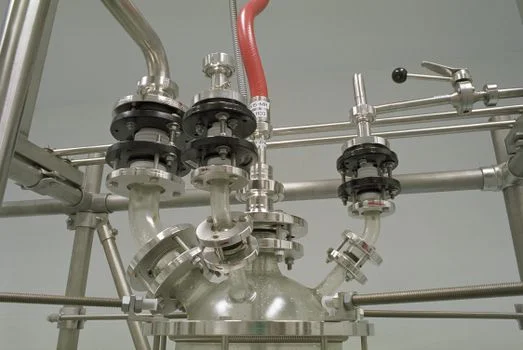
Ion exchange system CAPEX for an etching line typically runs $50,000–$500,000 at 10–200 m³/h, with OPEX of $0.50–$2.00 per cubic meter treated. CAPEX covers resin ($2,500–$5,000/m³), pressure vessels, pumps, piping, instrumentation, and automation. Vessel material choice—FRP versus stainless steel—shifts the hardware line item noticeably.
OPEX tracks resin replacement (cycle of 3–5 years), regeneration chemicals, and pump energy at 0.5–1.5 kWh/m³. A 12-hour regeneration cycle burns roughly twice the acid and caustic of a 24-hour cycle on the same treated volume, so longer cycles favor OPEX when capacity allows. Costs that often surprise first-time buyers include hazardous-waste disposal of spent regenerant, resin-change downtime, and steady-state labor for monitoring and preventive maintenance.
For a 50 m³/h etching wastewater stream, a 5-year TCO comparison versus chemical precipitation plus RO usually favors etching ion exchange once polishing to sub-ppm is required. Precipitation looks cheaper upfront, but the extra polishing step and the avoidance of non-compliance fines—earlier guidance used $50,000 per EPA violation; current CWA judicial maximums reach $68,445 per day under 33 U.S.C. 1319(d) (40 CFR 19.4)—usually flip the math. Request a free quote to model the CAPEX and OPEX for a specific flow rate and influent profile.
| Cost Category | Typical Range (for 10–200 m³/h system) | Factors Influencing Cost |
|---|---|---|
| Capital Expenditure (CAPEX) | ||
| Ion Exchange Resins | $2,500–$5,000/m³ (resin volume) | Resin type, volume, supplier, specific application. |
| System Hardware (Vessels, Pumps, Piping) | $30,000–$250,000 | Capacity, materials of construction, degree of automation. |
| Automation & Controls | $10,000–$50,000 | PLC complexity, online monitoring, remote access features. |
| Installation & Commissioning | 10–20% of equipment cost | Site complexity, labor rates. |
| Total CAPEX | $50,000–$500,000 | |
| Operational Expenditure (OPEX) per m³ Treated | ||
| Regeneration Chemicals (H₂SO₄, NaOH) | $0.20–$0.80/m³ | Wastewater contaminant load, regeneration frequency, chemical prices. |
| Energy (Pumps, Controls) | $0.10–$0.30/m³ (0.5–1.5 kWh/m³) | Pump efficiency, system pressure drop, electricity costs. |
| Resin Replacement (Amortized over 3-5 years) | $0.15–$0.50/m³ | Resin lifespan, initial resin cost, system volume. |
| Labor & Maintenance | $0.05–$0.20/m³ | Automation level, labor rates, preventive maintenance schedule. |
| Waste Disposal (Spent Regenerant) | $0.05–$0.20/m³ | Hazardous waste classification, local disposal costs. |
| Total OPEX | $0.50–$2.00/m³ | |
Compliance Mapping: Meeting Global Discharge Limits with Ion Exchange
Plants apply etching ion exchange against the major frameworks an etching plant must clear: SEMI S23-0303E for semiconductor fabs, EPA 40 CFR 469 and 433 for U.S. electronics and metal finishing, EU 91/271/EEC, and China GB 21900-2008 for electroplating. SEMI S23-0303E is commonly specified at under 0.1 mg/L copper, under 10 mg/L fluoride, and under 1 mg/L TMAH; multi-stage or mixed-bed trains routinely clear 99.9% copper and over 95% fluoride on those streams.
In the United States, Part 469 semiconductor BAT sets fluoride at 32.0 / 17.4 mg/L and TTO at 1.37 mg/L, not a copper cap of 1.3 mg/L (eCFR). For etching and PCB lines under Part 433, copper (T) is 3.38 mg/L daily and 2.07 mg/L monthly (eCFR). Pairing ion exchange with RO handles state-specific TDS ceilings where they apply. In Europe, 91/271/EEC is still cited at under 2 mg/L copper and under 15 mg/L fluoride—both well above what ion exchange effluent typically delivers. In China, GB 21900-2008 holds copper to under 0.5 mg/L and fluoride to under 10 mg/L, which often pushes designs toward mixed-bed polishers as the final stage.
Compliance evidence comes from continuous online monitoring (conductivity, pH) plus periodic third-party laboratory tests of the effluent. A defensible monitoring plan is the cheapest insurance against Clean Water Act penalty exposure: earlier guidance used $50,000 per violation; assessments on or after January 8, 2025 use a $68,445 judicial maximum under 33 U.S.C. 1319(d) (40 CFR 19.4).
| Pollutant | Ion Exchange Effluent (Typical) | SEMI S23-0303E Limit | EPA (40 CFR 469) Limit | EU (91/271/EEC) Limit | China (GB 21900-2008) Limit |
|---|---|---|---|---|---|
| Copper (Cu²⁺) | <0.05 mg/L | <0.1 mg/L | <1.3 mg/L | <2 mg/L | <0.5 mg/L |
| Fluoride (F⁻) | <5 mg/L | <10 mg/L | N/A (State-specific) | <15 mg/L | <10 mg/L |
| TMAH | <0.5 mg/L | <1 mg/L | N/A | N/A | N/A |
| Total Dissolved Solids (TDS) | <50 mg/L (post-mixed bed) | N/A | <250 mg/L (State-specific) | N/A | N/A |
Troubleshooting Ion Exchange Failures in Etching Wastewater Treatment
Most plants we size run into the same handful of failure modes. Early breakthrough—Cu²⁺ above 0.1 mg/L before the expected cycle end—usually points to fouling from organics or oils, channeling in the bed, or insufficient contact time. The fix is straightforward: add a high-efficiency DAF pretreatment for etching wastewater ahead of the columns to strip oils and suspended solids, run a thorough backwash, and verify bed depth against service flow.
High pressure drop across the resin bed typically means fines accumulation, biological growth, or scale. A 5% HCl wash dissolves CaCO₃ and metal hydroxide scale; if biology is the culprit, an on-site ClO₂ generation system for resin disinfection treats the bed without the fouling risk of straight chlorine. Excessive fines usually mean replacement.
Poor regeneration efficiency traces back to under-dosed acid or caustic, short contact time, or irreversible resin degradation. The corrective steps are to lift regenerant concentration to 8–10% per manufacturer guidance, extend contact time to 30–60 minutes, and verify the dosing skid. Resin lifespan below 3 years usually signals oxidative damage from H₂O₂ carryover, thermal shock during regeneration, or mechanical attrition—address each by adding an upstream oxidizer filter or sulfite dose, holding regeneration within resin temperature limits, and trimming backwash flow.
Ion-selective electrodes, conductivity meters, and periodic resin core sampling close the diagnostic loop. A preventive maintenance plan built around those tools catches most problems before effluent quality drifts out of spec.
Selection Checklist and Next Step
Use this checklist before locking in a resin train for an etching wastewater project: confirm influent copper, nickel, fluoride, TMAH, and COD ranges; verify which standard applies (SEMI S23-0303E, EPA 40 CFR 469 or 433, EU 91/271/EEC, China GB 21900-2008); match resin type and capacity to contaminant profile and pH; size vessels for 5–20 BV/h service flow with 1–2 m bed depth; budget regeneration chemicals, energy, resin replacement, and hazardous-waste disposal; plan online monitoring for conductivity and pH plus scheduled third-party sampling. This page is for plant engineers and EPC contractors specifying metal-finishing or semiconductor fab wastewater trains. If your stream is high-strength mixed industrial waste with no clear ionic fingerprint, a coagulation/DAF first stage may be the better starting point. Send your flow rate and influent concentrations to request a sized quotation for an etching wastewater ion exchange skid.
Frequently Asked Questions
What are the primary contaminants ion exchange removes from etching wastewater?
SAC resins target heavy metals—Cu²⁺ and Ni²⁺—plus organic amines such as TMAH. WBA resins remove F⁻ and various organic acids. This selective removal is what allows ion exchange to hit sub-ppm discharge limits on etching streams when flow, bed depth, and regeneration stay inside design limits.
How does ion exchange compare to chemical precipitation for etching wastewater treatment?
Chemical precipitation handles bulk contaminant reduction but cannot reliably clear the sub-ppm copper and fluoride floors set by SEMI S23-0303E, because metal hydroxide and CaF₂ solubility bottoms out above those targets. Ion exchange delivers over 99.9% copper removal and generates less sludge, which is why it is the polishing step of choice on etching lines.
What are the typical CAPEX and OPEX costs for an ion exchange system in an etching plant?
CAPEX runs $50,000–$500,000 for a 10–200 m³/h system, covering resin, vessels, pumps, and automation. OPEX averages $0.50–$2.00 per cubic meter treated, dominated by regeneration chemicals, energy at 0.5–1.5 kWh/m³, and resin replacement on a 3–5 year cycle under normal foulant control.
How often do ion exchange resins need to be replaced in etching wastewater applications?
Plan on 3–5 years of service life. Influent quality, foulant load (oxidizers, oils, organics), regeneration discipline, and hydraulic handling all move that number. Pretreatment and steady-state monitoring push it toward the upper end of the range.
Which global discharge standards can ion exchange systems meet for etching wastewater?
Ion exchange covers SEMI S23-0303E (under 0.1 mg/L Cu, under 10 mg/L F⁻), EPA metal-finishing and electronics rules (Part 433 copper 3.38 / 2.07 mg/L; Part 469 fluoride 32.0 / 17.4 mg/L), EU 91/271/EEC citations (under 2 mg/L Cu, under 15 mg/L F⁻), and China GB 21900-2008 (under 0.5 mg/L Cu, under 10 mg/L F⁻), typically with margin to spare.