Closed loop cooling water treatment specifications target pH 8.5–9.5, conductivity below 2,000 µS/cm, and carbon-steel corrosion below 1 mpy with inhibitors. Programs cost $0.10–$0.50/m³ chemical, $0.50–$2.00/m³ membrane, and $1.00–$3.00/m³ hybrid.
What Is Closed Loop Cooling Water Treatment?
Closed loop cooling water treatment circulates demineralized water in a sealed circuit to control corrosion, scale, and microbes on exchangers and piping. Untreated carbon steel corrodes at 5–15 mpy under oxygenated duty. Inhibitor programs hold steel below 1 mpy when residuals stay in band at pH 8.5–9.5, conductivity below 2,000 µS/cm, and dissolved oxygen below 5 ppb.
Reliable closed loop cooling water treatment specifications keep a sealed circuit at those numbers through seasons of load change. The sections below map failure modes, chemical versus membrane options, CapEx and OpEx bands, and sealed-loop practice for plants and data centers that need stable heat rejection without open-tower variability.
Why Closed Loops Fail: Plant-Level Failure Modes
Closed recirculating cooling systems fail when water chemistry leaves the passivation window for the installed metals. One Midwest power plant case ran at pH 7.2 against an 8.5–9.5 target. Coupon weight loss reached 12 mpy on carbon steel and forced a rebuild above $200,000 plus multi-day downtime. Aggressive corrosion in untreated loops can reach 5–15 mpy.
Three water-chemistry triggers account for most of those failures. CaCO₃ hardness above about 200 mg/L drives scale that cuts heat transfer. Sulfate-reducing bacteria above roughly 10² CFU/mL support microbiologically influenced corrosion. TSS above 50 mg/L creates under-deposit cells that pit even inhibited steel.
Field symptoms are measurable. Pressure drop rising more than 10 psi across exchangers or filters usually means fouling. A loop ΔT more than 5°C below design signals lost heat-transfer area. Pump trips and short maintenance intervals follow corrosion product and particulate buildup.
The cost side is just as measurable. Unplanned downtime often costs $10,000–$50,000 per day at industrial sites. Component replacement can run $20,000–$200,000 each. Fouled hydraulics can raise pumping energy 5–15% versus clean design.
Failures also arrive in a predictable order. Chemistry drifts first, deposits and biofilm follow, and hydraulic symptoms appear only after enough surface is lost. Instrument trends read weeks ahead of the pump-trip stage, which is why the monitoring list in the specs section matters as much as the inhibitor choice.
Closed Loop Cooling Water Treatment Specifications: The 2026 Baseline
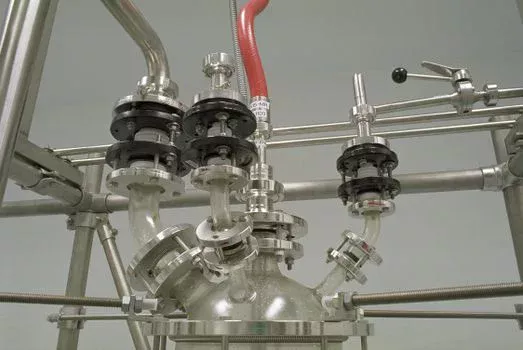
Sealed-loop hardware centers on heat exchangers, circulation pumps, expansion tanks, and online analyzers that hold chemistry inside narrow bands. Plate heat exchangers commonly deliver U-values of 3–5 kW/m²·K under clean water duty. Many shell-and-tube units yield about 1–2 kW/m²·K under comparable duty (Alfa Laval 2024 data cited in the original engineering table). Centrifugal pumps for auxiliary loops are often sized in the 3–15 m³/h band for the stated head.
Expansion vessels should meet ASME Section VIII for the design pressure. Continuous pH, conductivity, and dissolved oxygen sensors close the control loop before coupons show damage. Specifying the analyzer set at design time, not after the first failure, is the cheaper sequence in practice.
Water quality targets remain tight for sealed loops. Keep pH in the 8.5–9.5 window used for many carbon-steel programs. Hold conductivity below 2,000 µS/cm and dissolved oxygen below 5 ppb where oxygen pitting is the concern. Keep TSS below 10 mg/L and hardness below 50 mg/L as CaCO₃.
RO Makeup Water for Closed Cooling Loop Purity
High-purity makeup from industrial reverse osmosis (RO) water treatment systems is the usual path to those ionic limits. Demineralized or RO fill keeps hardness and chlorides out of the loop instead of filtering their consequences out later. Metallurgy rules follow the same targets: carbon steel with inhibitors should stay under 1 mpy, copper alloys under 0.5 mpy, and 316L stainless is preferred when chlorides are elevated. Size flow for the heat load at ΔT 5–15°C and keep total loop pressure drop under 10 psi where the hydraulic design allows.
| Parameter | 2026 Engineering Specification | Measurement Standard |
|---|---|---|
| pH Range | 8.5 – 9.5 | ASTM D1293 |
| Conductivity | <2,000 µS/cm | ASTM D1125 |
| Dissolved Oxygen (DO) | <5 ppb | ASTM D888 |
| Total Suspended Solids (TSS) | <10 mg/L | ASTM D5907 |
| Hardness (as CaCO₃) | <50 mg/L | ASTM D1126 |
| Carbon Steel Corrosion Rate | <1 mpy (with inhibitors) | ASTM D2688-17 |
| Copper Corrosion Rate | <0.5 mpy (with inhibitors) | ASTM D2688-17 |
| Plate Heat Exchanger U-value | 3–5 kW/m²·K | Alfa Laval 2024 Data |
Earlier plant procedures often cited ASTM D2688-17 for coupon corrosion rate. The current ASTM designation is D2688-23, approved December 1, 2023, for weight-loss corrosion rate in water systems including closed chilled water (ASTM D2688-23).
Monitoring cadence separates working specs from wall charts. Continuous instruments carry pH, conductivity, and DO; coupons carry the corrosion verdict monthly; quarterly full panels catch slow drift in hardness and microbes. Sites that fold all three into one routine catch chemistry excursions while they are still cheap to correct.
Closed Recirculating Cooling System Corrosion Control: Chemical vs Membrane
Corrosion control in closed recirculating cooling systems uses chemical passivation, membrane purification of makeup, or both. The two routes are layers rather than rivals. Chemicals protect the wetted surfaces while membranes control what enters the loop, and most long-life plants run both.
Nitrite Inhibitor Dosing for Closed Loop Cooling
According to Veolia's closed recirculating handbook, nitrite concentrations in the range of 600–1200 ppm as NO₂⁻ suitably inhibit iron and steel when pH stays alkaline above 7.0. Earlier plant guidance used a wider 500–1,500 ppm nitrite window. Power Engineering's closed-system guidance notes nitrite programs commonly buffer pH within an 8.5 to 10.5 range. Molybdate programs in the same Veolia chapter target 200–300 ppm as MoO₄²⁻ at pH 7.0–9.0, and this article's original dosing band of 100–300 ppm covers leaner soft-water loops.
Residual control is where dosing succeeds or fails. PLC-controlled chemical dosing systems hold those residuals without manual swings. Non-oxidizing, isothiazolinone-type biocides are common where nitrite supports bacteria. Loops without nitrite sometimes use on-site ClO₂ generation for microbial control in closed loops for autonomous oxidizing dosing.
Nitrite and molybdate split on biology and budget. Nitrite is the economical passivator but feeds the very bacteria that then consume it, so biocide coverage is part of the program, not an option. Molybdate residuals cost more to hold yet sit outside that biological loop, which simplifies control where nitrite loss keeps repeating.
Membrane makeup treatment removes the ionic load before it enters the loop. Industrial RO can cut dissolved ions by up to about 99% and drive makeup conductivity below 10 µS/cm under proper pretreatment. Nanofiltration typically removes about 90% of hardness ions when ultra-pure conductivity is not required. Hybrid RO/NF plus inhibitor packages can hold conductivity below 1 µS/cm with near-complete corrosion prevention, at roughly 2–3× the per-cubic-meter cost of a chemical-only program.
The budget bands make the trade explicit. Chemical programs usually deliver 90–95% corrosion protection at $0.10–$0.50/m³. RO/NF runs about $0.50–$2.00/m³, and hybrids sit near $1.00–$3.00/m³ of treated water. Most mission-critical sites accept the hybrid premium because a single exchanger failure costs more than years of the difference.
| Treatment Method | Primary Mechanism | Typical Performance | Pros | Cons | Estimated Cost/m³ |
|---|---|---|---|---|---|
| Chemical (Nitrite/Molybdate) | Passivation layer formation | Corrosion rate <1 mpy, 90-95% protection | Low CapEx, flexible dosing, effective | Requires continuous monitoring, chemical handling | $0.10 – $0.50 |
| Membrane (RO/NF) | Ion/hardness removal from makeup water | Conductivity <10 µS/cm, 99% protection | Superior water purity, minimal chemical handling | Higher CapEx/OpEx, requires pre-treatment | $0.50 – $2.00 |
| Hybrid (RO/NF + Chemical) | Ion removal + targeted inhibition | Conductivity <1 µS/cm, near-complete protection | Ultimate purity & protection, extended asset life | Highest CapEx/OpEx, complex operation | $1.00 – $3.00 |
Read the table against your metallurgy, not against ambition. Chemical programs hit the protection numbers only while residuals stay in band. Membrane rows assume proper pretreatment; skipping it moves the failure from chemistry to fouling.
What Works Best for US Data Center Closed Loops?
US data center closed loops work best when makeup is low-conductivity RO or demineralized water, inhibitors match the mixed metallurgy, and biocides control nitrite-oxidizing bacteria before residuals collapse. Facility teams that also run open towers should separate tower chemistry from the sealed CDU or CRAH loops, apply dedicated monitoring on each circuit, and keep DO, pH, and inhibitor residuals on continuous instruments rather than monthly grab samples. For the tower side of that split, Data Center Cooling Water Treatment: 2026 Specs & 40% Recovery covers the open-loop half of the campus water balance that this page deliberately leaves alone.
How Should Data Centers Treat Closed-Loop Cooling?
Data centers should treat closed-loop cooling water as a high-availability asset. Purify makeup, dose passivating inhibitors, and add non-oxidizing biocides when nitrite programs are in use. Oxidizing biocides are usually avoided in nitrite-treated sealed loops because they can destroy the inhibitor and attack copper. Sidestream filtration removes iron oxide particulates that settle in low-flow CDU paths, and when blowdown or maintenance drains leave the site as wastewater, large campuses may also need NPDES-aligned polishing before discharge.
Loop discipline extends to operations. Label fill connections so only demineralized water below 10 µS/cm enters the circuit, and log every makeup addition against inhibitor residuals. Most chemistry upsets we investigate trace back to an unlogged top-up from a convenient hose, not to the treatment program itself.
Step-by-Step Process Design for Sealed Cooling Loops
Sealed-loop process design begins with a full water analysis of makeup and existing loop water. Test pH, conductivity, hardness, TSS, and microbes including SRB and aerobes. Next, size flow (GPM or m³/h) from heat load (kW) and ΔT, typically 5–15°C across exchangers. Hold allowable pressure drop under 10 psi for the hydraulic class.
Select metallurgy next. Use carbon steel with inhibitors for trunk piping, and copper or 316L stainless for exchangers in chloride-rich service. Choose the inhibitor and biocide package from the water analysis and metals list, targeting less than 1 mpy on carbon steel. Then install automatic chemical dosing systems plus online pH, conductivity, and DO.
Commissioning closes the design. Hang corrosion coupons on a bypass rack. Flush with demineralized water, charge chemicals, and hold 24–48 hours of monitored circulation before full heat load. Document residual bands and alarm setpoints before handover so operations inherits limits, not intentions.
Selection Checklist
- Confirm all wetted metals and any aluminum or copper couples before picking nitrite versus molybdate.
- Specify makeup quality (RO/demin) so hardness stays below 50 mg/L as CaCO₃.
- Set inhibitor residual bands and biocide strategy for nitrite-fed loops.
- Require continuous pH/conductivity/DO plus monthly coupon pulls.
- Define flush, passivation, and 24–48 h commissioning hold points.
- Plan blowdown and drain handling under the site's discharge permit.
- Document CapEx/OpEx drivers: GPM, makeup quality, and metallurgy upgrades.
Cost Breakdown: CapEx, OpEx, and ROI
Closed loop CapEx for chemical dosing packages typically falls between $50,000 and $200,000 installed for tanks, pumps, and controls. Industrial RO/NF makeup trains more often land at $150,000–$500,000. Hybrid skids often sit at $250,000–$800,000 when membrane and dosing are combined. OpEx tracks the unit costs above: $0.10–$0.50/m³ chemical, $0.50–$2.00/m³ membrane, and $1.00–$3.00/m³ hybrid.
Payback versus untreated risk is often 1–2 years for chemicals, 3–5 years for RO/NF, and 4–7 years for hybrids when downtime and exchanger life are counted. Main cost drivers are loop flow (GPM), makeup hardness and TSS, and whether stainless skids replace carbon steel. Power plants that discharge cooling-related wastes must also budget for industrial wastewater treatment compliance for cooling tower blowdown under US EPA 40 CFR Part 423. That rule sets steam-electric effluent limits for cooling tower blowdown, including free available chlorine and priority-pollutant controls (40 CFR 423.13).
Where metals concentrate in drains, heavy metal removal from closed loop cooling water blowdown may be required. Compact sites sometimes polish sanitary or process sidestreams with an Underground Package Sewage Treatment Plant (WSZ Series) when municipal connection is limited.
For a regional benchmark at the municipal plant scale, our Santiago cost breakdown works through chlie wastewater treatment process cost line items. It is a useful sanity check when a cooling-water budget starts to look like a treatment-plant budget.
| Treatment Method | Estimated CapEx (USD) | Estimated OpEx (USD/m³) | Typical ROI (vs. Untreated) |
|---|---|---|---|
| Chemical Treatment | $50,000 – $200,000 | $0.10 – $0.50 | 1 – 2 Years |
| Membrane (RO/NF) | $150,000 – $500,000 | $0.50 – $2.00 | 3 – 5 Years |
| Hybrid (RO/NF + Chemical) | $250,000 – $800,000 | $1.00 – $3.00 | 4 – 7 Years |
Energy-efficient pumps, automated dosing, and coupon-based predictive maintenance cut OpEx by preventing fouled ΔT and emergency exchanger swaps. Those three levers usually matter more than shaving a few cents off chemical unit cost. Budget owners who skip the coupon rack to save its small line item give back the saving at the first unplanned outage.
Who This Is For / Who Should Look Elsewhere / Next Step
Plant engineers, EPC water specialists, and procurement managers use these specs when sizing sealed chilled-water, CDU, or process auxiliary cooling loops. Open cooling-tower chemistry alone needs a different program and should not be copied into a sealed loop. Hospital effluent duties also follow a different permit and process path. Next step: send loop flow, metallurgy list, and makeup analysis through the quote request page so a dosing-plus-makeup package can be sized against the tables above.
Frequently Asked Questions
Facility buyers comparing sealed cooling programs ask the same chemistry, monitoring, and fill-water questions before approving CapEx.
What is the ideal pH for closed loop cooling water?
The ideal pH band used in many industrial closed-loop specs is 8.5–9.5 for carbon-steel programs without aluminum. That alkaline window supports nitrite or molybdate passivation and limits general corrosion when residuals stay on target. Veolia's handbook keeps molybdate systems near pH 7.0–9.0 and nitrite systems alkaline above 7.0. Power Engineering cites nitrite buffering from 8.5 to 10.5, and aluminum metallurgy usually needs pH held below 9.0 to limit amphoteric attack.
How often should closed loop corrosion be tested?
Corrosion should be checked monthly with coupons on a bypass rack, using ASTM D2688 weight-loss practice, while pH and conductivity run continuously. Monthly pulls catch inhibitor loss and MIC before exchangers plug. Continuous DO and conductivity alarms shorten the gap between coupon intervals. Replace coupons on a fixed schedule so rates stay comparable over seasons and load changes.
What are signs of microbes in a closed loop?
Microbial growth often shows as pressure drop above 10 psi, ΔT more than 5°C below design, or black sludge on filters and exchanger plates. Nitrite residuals that fall without a dosing fault also point to nitrifying bacteria consuming inhibitor. Dip slides plus SRB tests confirm the organism class before biocide selection, using the same dip-slide toolkit common in microbial engineering wastewater treatment programs. Non-oxidizing biocides are preferred when nitrite is the corrosion program of record.
Can tap water fill a closed cooling loop?
Tap water should not fill a closed cooling loop unless it is softened or demineralized to the hardness and conductivity limits above. Municipal hardness, chloride, and oxygen drive rapid scale and pitting on carbon steel and copper. RO or demineralized makeup plus inhibitor charge is the standard fill path. Flush construction debris before the first passivation dose to protect new surfaces.
What lifespan should a treated closed loop reach?
A properly treated and monitored closed loop commonly lasts 15–25 years before major piping or exchanger replacement. Untreated or poorly controlled systems often need major repairs within 5–10 years from corrosion and fouling. Coupon rates under 1 mpy on steel and stable inhibitor residuals are the practical life-extension metrics. Energy and downtime savings usually fund the treatment OpEx inside the ROI windows in the cost table.
What are ASTM D2688 closed loop corrosion rate limits?
ASTM D2688 closed loop corrosion rate limits are program targets rather than a single pass-fail number, and plants set them by metallurgy and service. The working targets above are below 1 mpy on carbon steel and below 0.5 mpy on copper alloys with inhibitors. D2688-23 measures coupon weight loss in water without heat transfer, including closed chilled systems. Exceeding the band on two consecutive pulls is the usual trigger for a chemistry review.
What defines data center closed loop cooling water chemistry?
Data center closed loop cooling water chemistry is defined by low-conductivity RO or demineralized makeup, mixed-metallurgy inhibitors, and continuous pH, conductivity, and DO monitoring. Nitrite-oxidizing bacteria get non-oxidizing biocides before residuals collapse. Tower chemistry stays separate from sealed CDU and CRAH circuits, each with dedicated instruments. Maintenance drains that leave campus as wastewater may need NPDES-aligned polishing.
How much nitrite inhibitor dosing for closed loop cooling is needed?
Most carbon-steel closed loops hold passivation with nitrite residuals of 600–1200 ppm as NO₂⁻ while pH stays above 7.0, per Veolia's closed recirculating handbook. Earlier plant guidance used a wider 500–1,500 ppm window, and leaner soft-water loops sometimes run 100–300 ppm. Dose to a residual band, not a single number, and verify with monthly coupons plus continuous pH. Falling residuals without a dosing fault usually mean nitrifying bacteria.
Related Equipment
- On-site ClO₂ generation for microbial control in closed loops — view specifications, capacity range, and technical data
Need a customized solution? Request a free quote with your specific flow rate and pollutant parameters.