Why Food Processors Are Switching to MBR Systems in 2026
MBR membrane bioreactor food processing systems achieve greater than 95% COD removal and less than 10 mg/L TSS effluent. They meet common NPDES and local discharge targets while cutting footprint by about 60% versus conventional activated sludge. In 2026 designs, PVDF membranes with 0.1 μm pore size and flux of 15–25 LMH dominate food wastewater duty, yet FOG and proteins still drive fouling risk.
Food processing wastewater carries extreme organic loading. COD ranges from about 500 mg/L in vegetable washing to over 5,000 mg/L in meat and dairy lines. Conventional activated sludge (CAS) often reaches only 70–85% COD removal and can miss tightening permit limits. An MBR pairs biological treatment with membrane filtration, so effluent quality stays stable when influent swings. Higher biomass also lets plants shrink the secondary train by about 60% versus clarifier-based layouts when site space is tight.
Compliance pressure drives many upgrades. EPA 40 CFR Part 405 (Dairy Products Processing Point Source Category) sets production-based BOD5 and TSS limits for dairy direct dischargers, expressed as mass per BOD5 input rather than a single BOD5 concentration such as 30 mg/L (eCFR Part 405). FDA 21 CFR Part 129 covers bottled drinking water CGMP and does not set food-plant wastewater discharge limits. Many NPDES and POTW permits still require COD near or below 50 mg/L and TSS under 10 mg/L for surface discharge or reuse. One dairy plant in Wisconsin faced about $200,000 per year in municipal surcharges and EPA fines from unstable COD. After installing HydropureWater's integrated MBR system for food processing, effluent COD fell from 3,200 mg/L to a steady 45 mg/L, with full ROI from fine avoidance and reuse in about 30 months.
Nutrient recovery is also rising in 2026 projects. High nitrogen and phosphorus in food effluent are managed with MBR trains that include anoxic zones. Plants chasing strict phosphorus caps can use MBR for phosphorus removal in food processing wastewater to reach less than 0.1 mg/L P, a target common in sensitive watershed permits.
MBR Engineering Specs for Food Processing Wastewater (2026 Benchmarks)
MBR membrane bioreactor food processing duty typically uses flat-sheet membranes that tolerate high MLSS in food streams. PVDF flat-sheet membranes with a nominal 0.1 μm pore size remain the industry standard for CIP chemical resistance. Flat-sheet modules resist ragging and sludging better than hollow fiber when protein and fiber loads are high.
Design flux for food wastewater runs lower than municipal duty, usually 15 to 25 Liters per Square Meter per Hour (LMH). The conservative flux limits fouling from extracellular polymeric substances (EPS) and soluble microbial products (SMP). Operating MLSS of 8,000 to 12,000 mg/L keeps a low Food-to-Microorganism (F/M) ratio and supports full biodegradation of sugars and proteins. That biomass inventory also buffers toxic shocks and seasonal temperature swings.
| Parameter | 2026 Industry Benchmark | HydropureWater DF Series Performance |
|---|---|---|
| Membrane Material | PVDF (Hydrophilic) | Reinforced PVDF Flat-Sheet |
| Pore Size | 0.04 – 0.1 μm | 0.1 μm (Ultrafiltration) |
| Design Flux (Food Waste) | 15 – 25 LMH | 18 – 22 LMH (Optimized) |
| Operating MLSS | 8,000 – 12,000 mg/L | Up to 15,000 mg/L |
| Energy Consumption | 0.6 – 1.2 kWh/m³ | 0.75 kWh/m³ (with VFD) |
| Effluent COD / TSS | <50 mg/L / <10 mg/L | <30 mg/L / <2 mg/L |
| Cleaning Frequency (CIP) | Every 30 – 90 Days | 90 Days (with DAF Pre-treatment) |
Energy use is a hard 2026 specification. Membrane scouring and biological aeration often consume 60–70% of OPEX. Variable-speed blowers with dissolved oxygen (DO) control at 1.5–2.0 mg/L can cut energy about 20% versus fixed-speed aeration. Pickling and brining streams with high salinity may need MBR for organics plus RO for high-salinity food processing wastewater to meet TDS limits.
Cost Models: MBR vs. Conventional Systems for Food Processing Plants
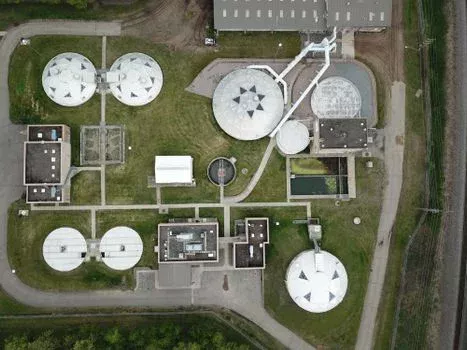
Procurement teams must weigh CAPEX against OPEX and surcharge risk. For a 100 m³/day food plant, MBR CAPEX in 2026 typically runs $250,000 to $450,000. A CAS train plus tertiary filtration often costs $180,000 to $320,000. Total cost of ownership still favors many MBR projects inside a five-year window.
MBR OPEX is driven by energy and membrane replacement, usually $0.30 to $0.60 per cubic meter treated. Longer sludge age and higher MLSS cut sludge mass by 30–50% versus CAS. Where sludge disposal runs $50–$150 per ton, that reduction is a clear annual saving. MBR permeate is often fit for non-potable reuse in cooling towers and floor washing, which lowers fresh-water purchase.
| Cost Factor (100 m³/day) | MBR System (2026) | CAS + Tertiary Filtration |
|---|---|---|
| Initial CAPEX | $250,000 – $450,000 | $180,000 – $320,000 |
| Operational Cost (OPEX/m³) | $0.30 – $0.60 | $0.40 – $0.80 |
| Sludge Production | 0.2 – 0.3 kg/kg COD removed | 0.4 – 0.6 kg/kg COD removed |
| Sludge Disposal Savings | $8,000 – $15,000 / year | Baseline |
| Membrane/Media Replacement | $50 – $100 / m² (5-7 years) | $10 – $20 / m³ (Sand/Carbon) |
| Footprint Requirement | 150 – 200 m² | 400 – 600 m² |
ROI for food plants often hinges on FOG surcharge relief. A DAF pre-treatment for FOG removal in food processing MBRs can cut FOG load by up to 90% and COD by about 30%. That pairing extends membrane life toward the upper end of the 5–7 year range and lowers CIP chemical use, bringing many integrated paybacks to 3–4 years.
Preventing Fouling in Food Processing MBRs: Design and Operational Strategies
Fouling is the main operating risk for food-industry MBRs. FOG and protein-rich streams can cut flux by 40% within 30 days. Zero-fouling here means holding design flux without irreversible pore clogging. The first defense is strong pre-treatment. High-efficiency DAF pre-treatment for FOG removal in food processing MBRs is essential when FOG exceeds 100 mg/L, because fats coat the membrane and resist standard backwash.
Operators must hold biology in a low-growth regime. Keep MLSS below 12,000 mg/L and F/M below 0.15 kg COD/kg MLSS·d to limit sticky EPS. Intermittent coarse-bubble scouring (10 seconds on, 10 seconds off) removes cake while cutting aeration energy about 30% versus continuous scour.
When fouling builds, run a two-stage Clean-In-Place (CIP) protocol:
- Stage 1 (Organic/Biofilm): Sodium Hypochlorite (NaOCl) at 0.5% concentration or NaOH at pH 12 for 2 hours to dissolve proteins and fats.
- Stage 2 (Inorganic/Scaling): Citric Acid at 1% concentration (pH 2) for 2 hours to remove mineral scaling and salt precipitates.
Permanent hydrophilic coatings, as on the HydropureWater DF series, reduce protein adhesion and stretch CIP intervals. Where coliform limits apply, chlorine dioxide disinfection for MBR effluent supports discharge or reuse without sending residual oxidant back onto the membranes.
Compliance Checklist: Meeting FDA and EPA Standards with MBR
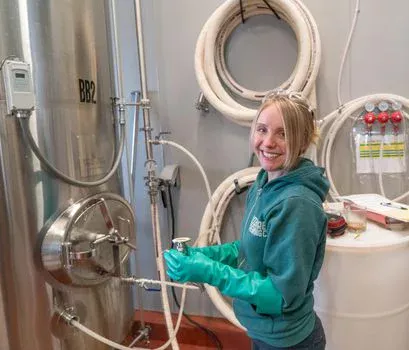
Compliance managers must track federal rules and local permits together. In 2026, regulators expect continuous monitoring records and proof of treatment. The membrane barrier gives solids and pathogen control that gravity clarifiers cannot match.
Use the checklist below as a practical monitoring map for MBR membrane bioreactor food processing permits. EPA 40 CFR Part 405 remains the dairy effluent guideline and regulates BOD5, TSS, and pH on a production basis (EPA Dairy Effluent Guidelines). Earlier vendor tables often listed BOD5 <30 mg/L under Part 405; that figure is a common permit concentration target, not the Part 405 mass-based limit format. FDA 21 CFR Part 129 is bottled-water CGMP, not a wastewater discharge rule, though reuse programs may still track turbidity near 1.0 NTU. Oil and grease is measured with EPA Method 1664 (n-hexane extractable material); FOG values such as <15 mg/L usually come from local pretreatment limits, not from the method itself (EPA Method 1664 FAQ).
| Regulatory Body | Key Parameter | MBR Capability | Compliance Action |
|---|---|---|---|
| FDA 21 CFR Part 129 | Turbidity <1.0 NTU | Typically 0.1 – 0.2 NTU | Continuous online turbidity monitoring |
| EPA 40 CFR Part 405 | BOD5 <30 mg/L | Typically <5 mg/L | Weekly composite sampling |
| EPA Method 1664 | FOG <15 mg/L | Typically <2 mg/L | Monthly grab sample testing |
| Local Limits | Total P <0.5 mg/L | Achievable with Alum/Ferric | Daily orthophosphate testing |
| Health Dept. | Coliform <200 CFU | Log 4-6 Removal | Secondary disinfection (UV/ClO2) |
Keep compliance files for at least three years: daily TMP logs for membrane integrity, CIP records, and effluent reports. High-volume plants often prefer chlorine dioxide disinfection for MBR effluent over chlorine gas or bleach because it avoids trihalomethanes (THMs) and helps stay inside EPA disinfection byproduct limits. That shift moves the plant from reactive fine avoidance to documented control.
Who This Is For and Next Step
This guide is for plant engineers, EPC contractors, and procurement managers at food and beverage sites (dairy, meat, vegetable, brewing, pickling) treating 50–500 m³/day with direct discharge or reuse duties. Sites under 500 mg/L COD or with mainly inorganic loads may do better with DAF plus media filtration. To scope a 100 m³/day MBR skid or a full DAF-plus-MBR line, send influent data to the HydropureWater engineering team for a plant-specific cost proposal.
Frequently Asked Questions
What is the difference between MBR and conventional activated sludge for food processing?
The main difference is solids-liquid separation. Conventional trains rely on gravity clarifiers that need large footprints and can fail during sludge bulking. An MBR uses a 0.1 μm membrane to retain solids, supports higher MLSS, cuts footprint by about 60%, and delivers reuse-grade effluent quality.
How often do MBR membranes need replacement in food processing applications?
PVDF flat-sheet membranes in food duty usually last 5 to 7 years. Life depends on DAF or equivalent pre-treatment and a steady CIP schedule. High FOG or extreme pH swings can shorten life to 3–4 years if unmanaged.
Can MBR handle high-salinity wastewater from food processing (e.g., pickling, brining)?
MBR handles moderate salinity, but TDS above about 5,000 mg/L can slow biology and raise scaling risk. Use the MBR for organics, then add RO for high-salinity food processing wastewater when discharge or reuse needs desalination.
What is the typical payback period for an MBR system in a food plant?
Typical payback falls between 3 and 5 years. Drivers include lower municipal surcharges, 30–50% less sludge for disposal, and reuse credits that cut purchased water cost.
Are there any food-specific contaminants that MBR cannot handle?
MBR removes biodegradable organics well, but not dissolved salts, heavy metals, or many recalcitrant dyes without extra process steps. Cut extreme FOG with DAF before the MBR to avoid instant membrane blinding.