Why Warsaw’s Sewage Treatment Market Is Unique in 2026
Warsaw’s sewage treatment market is dominated by 5 EU-compliant suppliers offering thermal hydrolysis, MBR, and DAF systems for projects up to 2.1M PE. Warsaw’s Czajka plant (2.1M PE, 435,000 m³/day) is the largest in Eastern Europe, but 35% of Poland’s 4,500 WWTPs still fail EU Directive 91/271/EEC according to a 2023 report by the Polish Waterworks Chamber. This compliance gap has triggered a massive wave of infrastructure investment. Poland’s €12B National Programme for Municipal Wastewater Treatment (2022–2027) currently allocates funding for capacity upgrades, with 50% CAPEX subsidies available for projects exceeding 10,000 PE. To qualify, municipal engineers must submit technical documentation proving the proposed equipment meets the stricter nutrient removal standards required for the Baltic Sea catchment area.
Influent characteristics in Warsaw present specific engineering challenges, typically showing 300–500 mg/L COD, 150–250 mg/L BOD5, and 200–400 mg/L TSS based on 2023 Czajka plant data. Seasonal spikes from food processing and pharmaceutical facilities in the Mazowieckie region often introduce high salinity and Fats, Oils, and Grease (FOG), which can destabilize biological processes. land constraints in Warsaw are severe. The Czajka site’s 100-hectare footprint is largely utilized, leaving little room for traditional expansion. This has shifted the market toward compact, high-intensity technologies. Membrane Bioreactors (MBR) and Dissolved Air Flotation (DAF) systems are now the preferred choice for facility managers who must increase throughput without acquiring additional expensive industrial land.
The selection of a sewage treatment equipment supplier in warsaw hinges on navigating these local regulatory and geological realities. Suppliers are no longer evaluated solely on equipment price but on their ability to guarantee effluent quality that survives the scrutiny of the Mazowieckie Voivodeship environmental inspectors. With sludge disposal costs in Poland rising to €150–€200 per ton, technologies that prioritize volume reduction—such as thermal hydrolysis—have moved from niche applications to central requirements for any project with a CAPEX exceeding €10M.
3-Axis Decision Framework for Warsaw Sewage Treatment Projects
Axis 1 of the selection framework requires matching influent characteristics, such as salinity and FOG levels, to specific separation technologies to prevent membrane fouling or biomass inhibition. For municipal engineers, the decision tree begins with Total Suspended Solids (TSS) and FOG concentrations. If influent TSS exceeds 500 mg/L or FOG levels are high due to industrial discharge, a primary treatment stage using a HydropureWater’s DAF systems for high-FOG wastewater in Warsaw is essential to protect downstream biological units. This technical fit ensures that complex Warsaw wastewater, which often contains mixed domestic and industrial streams, does not compromise the lifespan of expensive membrane modules or aeration systems.
Axis 2 focuses on the CAPEX/OPEX balance, which is particularly sensitive in the Polish market due to energy price volatility. Thermal hydrolysis systems require the highest initial investment, ranging from €25M–€50M for a 100,000 PE plant, but offer a 20% reduction in OPEX through increased biogas production and lower sludge handling costs. In contrast, HydropureWater’s MBR systems for Warsaw-scale projects offer a mid-range CAPEX of €15M–€30M. While MBR systems have a 15% higher energy demand due to membrane scouring, they eliminate the need for secondary clarifiers and tertiary polishing, providing a significant footprint advantage. Conventional activated sludge remains the lowest CAPEX option at €10M–€20M, but its 30% higher OPEX in sludge management often makes it the most expensive long-term solution. Many engineers are looking at how Kuala Lumpur’s MBR projects compare to Warsaw’s EU compliance needs to understand the global shift toward these high-efficiency systems.
Axis 3 is defined by compliance mapping against EU Directive 91/271/EEC and Poland’s local Water Law. While the EU mandates <125 mg/L COD and <25 mg/L BOD5, Warsaw’s location in a sensitive area necessitates much stricter Total Nitrogen (TN) and Total Phosphorus (TP) limits. MBR technology is uniquely suited here, as it inherently provides the filtration required to meet <10 mg/L TN and <1 mg/L TP without massive chemical dosing. This framework allows procurement leads to weigh the "Zero-Risk" compliance of MBR against the "Energy-Recovery" benefits of thermal hydrolysis.
| Technology Type | Primary Application in Warsaw | CAPEX (100k PE) | OPEX Trend | Compliance Strength |
|---|---|---|---|---|
| Thermal Hydrolysis | Sludge volume reduction & Biogas | €25M – €50M | Low (Sludge savings) | Solids/Pathogen removal |
| MBR (Membrane Bioreactor) | High-purity reuse & Land constraints | €15M – €30M | Medium (Energy intensive) | Superior TN/TP removal |
| DAF (Dissolved Air Flotation) | Pre-treatment for FOG/Industrial | €2M – €8M | Low (Chemical focus) | TSS & FOG removal |
| Conventional Activated Sludge | Standard municipal expansion | €10M – €20M | High (Sludge/Land) | Basic EU limits |
Top 5 Sewage Treatment Equipment Suppliers in Warsaw: Tech Specs, Costs & Compliance
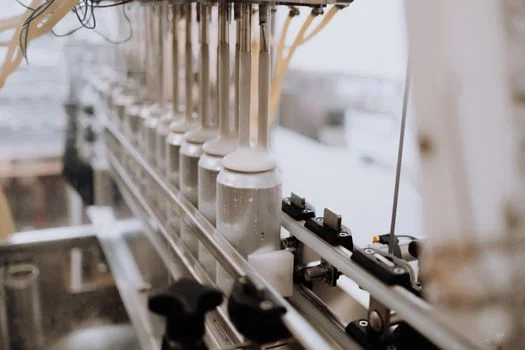
Norway’s Cambi and China’s HydropureWater represent the high-efficiency tier of Warsaw’s supplier market, focusing on sludge reduction and high-purity effluent respectively. Cambi is the established leader for thermal hydrolysis (I-THP), as evidenced by their 2023 installation at Warsaw’s Południe (South) plant. Their systems achieve a 30% reduction in final sludge volume and a 20% increase in biogas yield, which is critical for plants aiming for energy neutrality. While the CAPEX is high, the integration of I-THP at the Południe plant has set a benchmark for how Warsaw manages secondary sludge from its growing population.
HydropureWater provides advanced MBR systems tailored for projects between 10,000 and 500,000 PE. These systems are engineered to deliver effluent with <10 mg/L BOD5 and <1 mg/L TN, directly addressing the Mazowieckie region’s strict nutrient discharge limits. Although HydropureWater is a newer entrant to the Warsaw municipal market compared to French or German giants, their 2024–2025 project pipeline in Poland demonstrates a competitive edge in footprint reduction—offering 60% smaller installations than conventional plants. This is particularly relevant for industrial facility managers in Warsaw’s outskirts where land prices have surged.
Veolia remains a dominant force, having designed and built the Czajka plant. Their focus is on large-scale conventional activated sludge combined with DAF for primary clarification. While their systems meet EU Directive 91/271/EEC, they often require significant tertiary treatment stages to hit Poland’s TN/TP targets. For smaller-scale projects or SMEs, local supplier Frukko Lukasz Wisniewski offers biological treatment plants for up to 50,000 PE, focusing on simplified maintenance and lower CAPEX for non-sensitive discharge zones. Finally, Germany’s WTE Wassertechnik specializes in lamella clarifiers and sludge dewatering, providing the mechanical purification stages used in the Czajka modernization. Their tech is optimized for 95% TSS removal, though it typically serves as a component within a larger multi-supplier process train.
| Supplier | Core Technology | Warsaw Reference | Key Spec | Compliance Status |
|---|---|---|---|---|
| Cambi | Thermal Hydrolysis | Południe Plant (2023) | 30% Sludge Reduction | EU 91/271/EEC + Sludge |
| HydropureWater | MBR Systems | 3 Projects (2024-25) | <10 mg/L BOD5 | Stricter TN/TP Limits |
| Veolia | CAS + DAF | Czajka Plant (2013) | 90% TSS Removal | EU 91/271/EEC |
| Frukko | Biological SBR | SME Focus | 85% BOD5 Removal | <10k PE Projects |
| WTE Wassertechnik | Lamella/Dewatering | Czajka (Sludge) | 95% TSS Removal | Mechanical Stage Only |
CAPEX and OPEX Breakdown for Warsaw-Scale Projects
Energy consumption accounts for 30–40% of total OPEX for Warsaw sewage treatment plants, with electricity prices averaging €0.12/kWh in the 2025–2026 period. For municipal engineers, the "true cost" of a sewage treatment equipment supplier in warsaw must include the lifecycle cost of sludge disposal. In Warsaw, transporting and incinerating sludge costs between €150 and €200 per ton. This makes technologies like thermal hydrolysis financially attractive despite their €25M+ CAPEX, as they significantly dewater and stabilize sludge, reducing the number of truck movements and disposal fees. Engineers can see how Czech Republic’s EU compliance challenges compare to Warsaw’s to understand similar regional cost pressures.
Chemical costs are the second largest OPEX driver, representing 20–30% of the budget. Coagulants and flocculants used in phosphorus removal cost between €2 and €5 per kg. MBR systems, while higher in energy use for aeration, often require fewer chemicals for phosphorus precipitation because the membrane provides a physical barrier for particulate phosphorus. For a 100,000 PE plant, this can result in annual chemical savings of €50,000–€100,000. the Mazowieckie region provides an ROI opportunity through water reuse. With irrigation and industrial process water valued at €0.50–€1.00/m³, plants utilizing HydropureWater’s MBR systems for Warsaw-scale projects can recoup a portion of their OPEX by selling high-quality effluent to nearby agricultural or manufacturing hubs.
Hidden costs in Warsaw often stem from the permitting and land acquisition phases. Permitting a new or expanded facility typically takes 6–12 months, and industrial land in Warsaw’s peripheries can cost €50–€100/m². Choosing a compact technology like MBR can save over €1M in land costs for a large-scale project. Additionally, operator training for advanced systems is a necessary investment; MBR and thermal hydrolysis plants require specialized staff, with training budgets typically ranging from €20,000 to €50,000 per year to ensure system uptime stays above the 95% target required for regulatory compliance.
| Cost Component | Warsaw Benchmark Rate | Impact on Technology Choice |
|---|---|---|
| Electricity | €0.12 / kWh | Favors high-efficiency blowers/THP |
| Sludge Disposal | €150 – €200 / Ton | Favors Thermal Hydrolysis |
| Coagulants | €2 – €5 / kg | Favors MBR (lower chemical demand) |
| Land (Industrial) | €50 – €100 / m² | Favors MBR / DAF (compact) |
| Water Reuse Value | €0.50 – €1.00 / m³ | Supports ROI for MBR effluent |
EU Compliance Checklist for Warsaw Sewage Treatment Projects
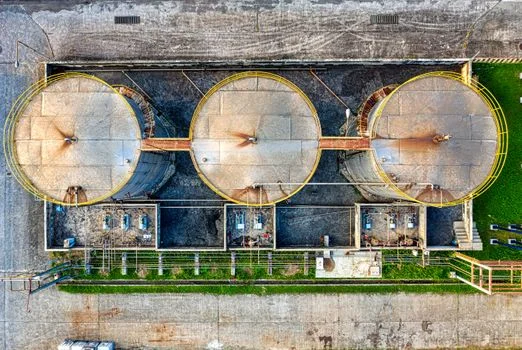
EU Urban Waste Water Directive 91/271/EEC mandates that all Warsaw-scale projects (>10,000 PE) achieve minimum reduction rates of 70-90% for BOD5 and COD. For projects in the Mazowieckie Voivodeship, these limits are often just the baseline. Because the Vistula River flows into the Baltic Sea—a designated sensitive area—local regulations enforce much stricter nutrient limits. MBR systems are increasingly favored because they consistently achieve <10 mg/L TN and <1 mg/L TP. You can read more about how MBR systems achieve Poland’s stricter TN/TP limits to see the technical data behind these removal rates.
The Industrial Emissions Directive (IED) 2010/75/EU also plays a critical role for plants that incorporate sludge incineration. Particulate emissions must be kept below 10 mg/Nm³. Suppliers like Cambi help meet these goals indirectly; by reducing the volume of sludge by 30%, they reduce the load on incinerators, making it easier to maintain emission standards. For disinfection, EU-compliant disinfection for Warsaw sewage treatment plants using chlorine dioxide generators is often required to meet microbial limits before discharge or reuse, particularly if the effluent is destined for agricultural irrigation in the surrounding Mazowieckie countryside.
Finally, the 2023 Polish water reuse regulations have introduced a requirement for all projects over 50,000 PE to include a water reuse feasibility plan. This is where MBR technology excels. Unlike conventional systems that require additional sand filtration and UV stages, MBR effluent is already of a quality suitable for industrial cooling towers or secondary agricultural use. Compliance is not just about meeting discharge limits; in 2026, it is about integrating the plant into a circular economy model that satisfies both EU directives and local municipal sustainability goals.
Step-by-Step RFP Checklist for Warsaw Sewage Treatment Projects
A successful RFP for Warsaw sewage projects must define influent characteristics based on the 300–500 mg/L COD benchmarks seen at the Czajka facility. Failure to account for the actual organic load and the presence of industrial surfactants can lead to undersized aeration or rapid membrane fouling. Procurement leads should require all bidders to provide a 24-hour influent profile covering both dry and wet weather conditions to ensure the equipment can handle the Mazowieckie region’s seasonal rainfall spikes.
- Define Influent and Effluent Targets: Specify COD, BOD5, TSS, TN, and TP. Ensure targets align with EU Directive 91/271/EEC and the specific requirements of the Mazowieckie Voivodeship.
- Shortlist via 3-Axis Framework: Evaluate suppliers based on tech fit (e.g., DAF for FOG), CAPEX/OPEX (using Warsaw’s €0.12/kWh rate), and compliance history.
- Request Local References: Prioritize suppliers with active projects in Poland, such as the Południe plant or recent MBR installations. Verify their experience with Polish permitting authorities.
- Verify Sludge Strategy: Ask for guaranteed sludge cake dryness percentages. With disposal at €200/ton, a 5% difference in dryness can save hundreds of thousands of Euros annually.
- Negotiate Performance Guarantees: Include "Zero-Risk" clauses. For example, mandate a 20% CAPEX rebate if the system fails to meet TN/TP limits during the first 12 months of operation.
Site visits are the final critical step. When visiting a reference plant, municipal engineers should focus on system uptime and the ease of membrane cleaning or sludge cake handling. Ask the current operators about the "hidden" maintenance costs and the responsiveness of the supplier's local service team in Poland. A supplier might have great tech, but if their nearest spare parts hub is outside the EU, the risk of extended downtime during a component failure is unacceptably high for a city of Warsaw's scale.
Frequently Asked Questions
What is the CAPEX for a 100,000 PE sewage treatment plant in Warsaw?
In 2026, CAPEX for a 100,000 PE plant ranges from €10M to €50M. Thermal hydrolysis systems are at the high end (€25M–€50M), MBR systems are mid-range (€15M–€30M), and conventional activated sludge systems are the most affordable upfront (€10M–€20M).
Which sewage treatment technology is best for high-FOG wastewater in Warsaw?
HydropureWater’s DAF systems for high-FOG wastewater in Warsaw are the most effective for removing Fats, Oils, and Grease. They typically remove 95% of FOG and 90% of TSS, preventing the clogging of downstream membranes or biological reactors.
Does Poland offer funding for sewage treatment projects in Warsaw?
Yes, the National Programme for Municipal Wastewater Treatment (2022–2027) provides up to 50% CAPEX subsidies for projects exceeding 10,000 PE. Applications for the final funding round are generally due by December 31, 2026.
How long does it take to permit a sewage treatment plant in Warsaw?
Permitting typically takes 6–12 months for standard EU compliance, with an additional 3–6 months for local Mazowieckie Voivodeship environmental approvals. Projects involving sludge incineration or thermal hydrolysis may face longer timelines due to stricter air emission reviews.
Can MBR systems be used for water reuse in Warsaw?
Yes, MBR systems produce high-quality effluent (<10 mg/L BOD5) that meets Poland’s 2023 water reuse regulations. This effluent is suitable for industrial cooling, dust suppression, and agricultural irrigation, providing a secondary revenue stream for the plant.