For industrial wastewater treatment, the best chlorine dioxide (ClO₂) generator depends on your facility’s scale, chemical handling capacity, and compliance needs. Three-chemical systems (Sodium Chlorite + Hydrochloric Acid + Sodium Hypochlorite) achieve >95% efficiency but require precise dosing, while single-chemical generators (e.g., PURATE™) simplify operation at slightly lower yields (90–93%). Vacuum-based systems eliminate hazardous pressurized lines, reducing safety risks. Key specs to compare: chemical consumption (0.5–2.0 kg NaClO₂ per kg ClO₂), footprint (0.5–3.0 m²), and EPA/EU compliance for residual limits (<0.8 mg/L).
Why Industrial Facilities Need Chlorine Dioxide Generators: Biofilm, Legionella, and Compliance Risks
Biofilm accumulation in industrial cooling towers and pipelines increases the risk of Legionella outbreaks by 300–500%, according to 2023 CDC data. Unlike chlorine, which struggles to penetrate the extracellular polymeric substance (EPS) matrix of a biofilm, chlorine dioxide remains effective across a wide pH range (4.0 to 10.0), allowing it to dissolve the protective layers of complex microbiological colonies. For facility managers, failing to control these pathogens leads to more than just operational inefficiency; it invites severe regulatory penalties.The EPA’s 2024 Safe Drinking Water Act amendments mandate Legionella levels below 1 CFU/mL in high-risk environments, including healthcare facilities and large-scale industrial hospitality water systems. Traditional thermal disinfection programs, while effective in the short term, are increasingly viewed as cost-prohibitive. Data from Garratt-Callahan indicates that thermal programs cost 40–60% more annually than the installation and operation of on-site ClO₂ generators. This cost disparity is driven primarily by the high energy requirements of maintaining elevated water temperatures versus the targeted oxidative power of ClO₂.
A real-world case study illustrates the impact of rapid intervention. A food processing plant in Ohio recently faced a critical shutdown after Legionella counts reached 120 CFU/mL in their primary cooling loop. By implementing a three-chemical Chlorine Dioxide Generator for industrial wastewater treatment, the facility reduced counts to <1 CFU/mL within 48 hours. The precision dosing of the system allowed for continuous disinfection without corroding the plant’s stainless-steel infrastructure, a common side effect of over-chlorination.
The effectiveness of chlorine dioxide generators in controlling biofilm and Legionella makes them a crucial component of industrial water treatment systems.How Chlorine Dioxide Generators Work: Chemical Reactions, Efficiency, and Safety Mechanisms
The efficiency of a chlorine dioxide generator is defined by its ability to convert precursor chemicals into pure ClO₂ gas dissolved in solution without producing excessive byproducts like chlorite or chlorate. The chemistry selected dictates the footprint, safety requirements, and operational complexity of the system.Three-chemical systems represent the industry standard for high-yield applications. The reaction involves sodium chlorite (NaClO₂), hydrochloric acid (HCl), and sodium hypochlorite (NaOCl): NaClO₂ + 2HCl + 2NaOCl → 3NaCl + 2ClO₂ + H₂O. According to 2023 benchmarks, this method achieves a 95–98% yield. It is particularly effective for facilities where precursor costs are a primary concern, as sodium chlorite is highly efficient in this configuration. However, it requires an automated chemical dosing for ClO₂ generators to maintain the precise stoichiometric ratios needed for safety and efficiency.
Single-chemical systems, such as those utilizing PURATE™ technology, rely on the reduction of sodium chlorate (NaClO₃) by hydrogen peroxide (H₂O₂) under acidic conditions (H₂SO₄): NaClO₃ + H₂O₂ + H₂SO₄ → ClO₂ + NaHSO₄ + H₂O. This reaction typically yields 90–93%. While the yield is slightly lower than three-chemical systems, the use of sodium chlorate—which is more stable and often less expensive than sodium chlorite—makes it a viable option for large-scale operations.
Safety mechanisms have evolved significantly with the introduction of vacuum-based systems. Unlike traditional generators that use pressurized dosing pumps, vacuum systems use an eductor to draw chemicals into the reaction chamber. This eliminates the risk of pressurized chemical leaks, a critical safety feature highlighted in 2024 safety whitepapers. Efficiency in these systems is heavily dependent on maintaining a pH range of 3.5–4.5 within the reaction chamber to ensure complete conversion.
| Reaction Type | Precursor Chemicals | Conversion Efficiency | Primary Advantage |
|---|---|---|---|
| Three-Chemical | NaClO₂, HCl, NaOCl | 95–98% | Highest yield; lowest byproduct formation |
| Single-Chemical | NaClO₃, H₂O₂, H₂SO₄ | 90–93% | Simplified logistics; stable precursors |
| Two-Chemical | NaClO₂, HCl | 85–90% | Smallest footprint; lower CAPEX |
Chlorine Dioxide Generator Specifications: Flow Rates, Chemical Consumption, and Footprint
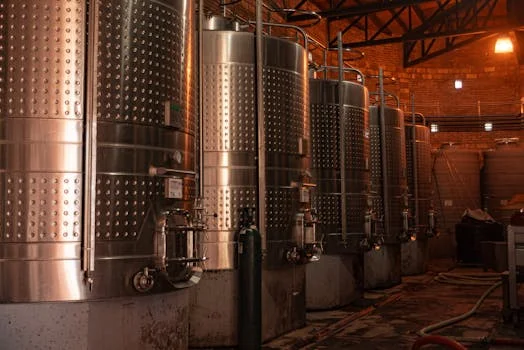
Single-chemical systems are generally scaled for larger industrial demands, providing outputs from 100 to 15,000 g/h. These systems consume 0.8 to 1.5 kg of sodium chlorate per kg of ClO₂ produced. Because sodium chlorate is typically delivered in 1,000 L totes rather than the 200 L drums common for sodium chlorite, the storage footprint for single-chemical systems is often larger, requiring dedicated chemical containment areas.
Physical footprint is a decisive factor for many facility managers. Compact units designed for hospitals or light industrial use can occupy as little as 0.5 m², whereas heavy-duty industrial units for wastewater treatment equipment for industrial facilities often require up to 3.0 m² of floor space. This does not include the required clearance for maintenance or the secondary containment for chemical storage tanks.
| System Scale | Output Range (g/h) | Footprint (m²) | Storage Requirement |
|---|---|---|---|
| Compact/Medical | 50–500 | 0.5–1.0 | 200 L Drums |
| Medium Industrial | 500–5,000 | 1.0–2.0 | Drums or Small Totes |
| Large Industrial | 5,000–20,000+ | 2.0–3.5 | 1,000 L Totes/Bulk Tank |
Cost Comparison: CAPEX, OPEX, and ROI for Industrial ClO₂ Generators
The total cost of ownership for a chlorine dioxide system is split between the initial capital expenditure (CAPEX) and the ongoing operating expenses (OPEX). Three-chemical systems generally have a lower CAPEX, ranging from $15,000 to $120,000, making them accessible for mid-sized facilities. Single-chemical systems, due to their complex vacuum-based reactors and larger storage requirements, range from $25,000 to $200,000. When evaluating costs, it's essential to consider both the initial investment and the long-term operating expenses.OPEX is primarily driven by chemical consumption and annual maintenance. While sodium chlorite is more expensive per kg than sodium chlorate, the higher efficiency of three-chemical generators can offset this cost. Maintenance contracts typically range from $1,500 to $5,000 per year, covering sensor calibration, pump seal replacement, and reaction chamber inspections. When compared to traditional bleach (sodium hypochlorite) dosing, ClO₂ generators often demonstrate a 40% reduction in chemical spend because ClO₂ is a more potent oxidizer and does not react with ammonia or organic nitrogen.
ROI calculations typically show a payback period of 12 to 24 months. For example, a 5,000 g/h system treating 100 m³/h of cooling tower water can save approximately $45,000 annually compared to high-dosage bleach programs. These savings stem from reduced chemical volume, lower corrosion rates (extending equipment life), and the elimination of expensive thermal shock treatments.
| Cost Metric | Three-Chemical System | Single-Chemical System |
|---|---|---|
| CAPEX Range | $15,000 – $120,000 | $25,000 – $200,000 |
| Chemical Cost (per kg ClO₂) | $0.20 – $0.35 | $0.15 – $0.25 |
| Annual Maintenance | $1,500 – $3,500 | $2,500 – $5,000 |
| Typical Payback | 14–18 Months | 18–24 Months |
Compliance Standards: EPA, EU, and WHO Limits for Chlorine Dioxide in Industrial Water
In the European Union, the Drinking Water Directive (98/83/EC, updated 2024) is more stringent, often requiring residual ClO₂ levels to remain below 0.2 mg/L at the point of use. This necessitates high-precision generators with integrated redox or amperometric sensors. For global operations, the WHO Guidelines for Drinking-water Quality (5th edition) suggest a limit of 0.7 mg/L for ClO₂. Compliance for ClO₂ compliance standards for medical wastewater often involves even stricter internal validation to ensure zero pathogen breakthrough in sensitive environments.
Regional Compliance Checklist:
- North America: EPA Safe Drinking Water Act (MRDL <0.8 mg/L).
- European Union: Directive 98/83/EC (Residual <0.2 mg/L).
- Middle East: GSO 149:2014 standards for unbottled drinking water.
- Global: WHO 5th Edition Guidelines (<0.7 mg/L).
Choosing the Right Chlorine Dioxide Generator: A Decision Framework for Industrial Facilities
To select the most efficient system, engineers must follow a structured framework that balances technical requirements with safety and cost.Step 1: Assess Water Volume and Demand. Calculate your Peak Hourly Demand (PHD). Small facilities (<50 m³/h) usually benefit from two-chemical generators. Medium to large facilities (50–500+ m³/h) require the