In 2025, wastewater treatment plant costs in Morocco range from €1.2M for a 50 m³/h compact MBR system to over €300M for a 50,000 m³/day municipal facility. Morocco’s €5.6B national wastewater program prioritizes water reuse, with 34 new WWTPs planned by 2027 under the supervision of the Office National de l'Electricité et de l'Eau Potable (ONEE). Key cost drivers include technology choice (MBR vs. conventional), sludge handling requirements, and strict compliance with Moroccan reuse standards, such as maintaining BOD levels below 10 mg/L for unrestricted irrigation. This guide provides granular engineering specifications, local compliance requirements, and a step-by-step ROI calculator to help procurement teams and municipal engineers justify investments and evaluate wastewater treatment plant cost in Morocco.
Why Morocco’s Wastewater Treatment Costs Are Rising in 2025
Morocco’s water demand currently exceeds its natural availability by approximately 2.5 billion m³ per year, forcing a strategic shift toward high-cost, high-efficiency treatment technologies.Groundwater depletion accounts for 13% of total demand, a critical figure that has prompted the Moroccan government to accelerate the National Program for Liquid Sanitation and Wastewater Reuse (PNA). Under ONEE’s 2024–2027 plan, the target for wastewater reuse has been increased from 38 Mm³/year to 100 Mm³/year, necessitating advanced tertiary treatment stages that add 15–25% to traditional CAPEX.
Industrial sectors, particularly textiles in Casablanca and food processing in Agadir, face intensifying regulatory pressure. Law 10-95 on water reuse establishes a legal framework where non-compliance results in significant financial penalties and potential operational shutdowns. Enforcement timelines have tightened in 2025, with regional hydraulic basin agencies (ABH) increasing the frequency of discharge audits. For many industrial operators, the cost of inaction now exceeds the cost of investment.
Consider a hypothetical but realistic case of a textile factory in the Tit Mellil industrial zone. By installing a 100 m³/h compact MBR system for Moroccan water reuse projects, the facility was able to recycle 75% of its process water. This reduced freshwater procurement costs by 30% and eliminated monthly non-compliance fines that averaged MAD 45,000. In the context of rising Moroccan industrial water tariffs, which now reach up to MAD 15/m³ in certain zones, the economic justification for advanced treatment has never been stronger.
The 2025 market reflects global inflationary pressures on stainless steel and specialized membranes. However, these are partially offset by the "Made in Morocco" initiative, which encourages local civil works and assembly. Understanding wastewater treatment plant cost in Morocco requires balancing these international equipment costs with local engineering and labor realities.
Wastewater Treatment Plant Cost Breakdown by Capacity in Morocco
CAPEX for Moroccan wastewater treatment projects is typically distributed across civil works (30–40%), mechanical and electrical equipment (40–50%), and engineering or permitting (10–20%).For industrial facilities, the equipment percentage often trends higher due to the need for specialized reactors like DAF systems for industrial wastewater pretreatment in Morocco. Operating expenses (OPEX) are dominated by energy consumption, which accounts for 35–50% of the annual budget, followed by chemical dosing and sludge management.
| Plant Capacity (m³/h) | Estimated CAPEX (€) | Annual OPEX (€) | Cost per m³ Treated (€) | Typical Technology |
|---|---|---|---|---|
| 50 m³/h (Small Industrial) | €1.2M – €1.8M | €90,000 – €130,000 | €0.45 – €0.75 | MBR / SBR |
| 500 m³/h (Medium Municipal) | €8.5M – €12M | €450,000 – €650,000 | €0.25 – €0.45 | CAS / MBR |
| 5,000 m³/h (Large Municipal) | €65M – €95M | €2.8M – €3.5M | €0.15 – €0.30 | Conventional Activated Sludge |
Moroccan labor costs for 2025 are estimated at €8–12 per hour for plant operators and €15–20 per hour for specialized environmental engineers. While these rates are lower than European benchmarks, the technical complexity of modern plants requires continuous training, which should be factored into the "Labor" component of OPEX (typically 10–20%). Energy costs remain a significant variable, with Moroccan industrial tariffs ranging from €0.10 to €0.14/kWh depending on the voltage level and peak usage times.
For procurement managers, industrial wastewater treatment cost in Morocco is often higher per cubic meter than municipal costs due to high Chemical Oxygen Demand (COD) loading. Pretreatment steps, such as those utilizing sludge dewatering solutions for Moroccan WWTPs, are essential to reduce the volumetric load on biological stages and lower overall life-cycle costs. These cost structures are comparable to wastewater treatment plant costs in other water-scarce regions, where reuse is the primary driver of technology selection.
Engineering Specifications for Morocco’s Wastewater Treatment Technologies
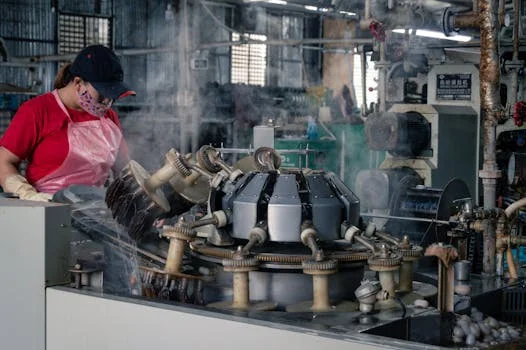
While MBR systems carry a 20–30% higher CAPEX compared to Conventional Activated Sludge (CAS), their footprint is up to 90% smaller. This is a critical advantage in industrial zones like Ain Sebaa where land prices are prohibitive. For more details, see detailed MBR effluent quality specifications.
| Parameter | MBR (Membrane Bioreactor) | CAS (Conventional) | DAF (Dissolved Air Flotation) |
|---|---|---|---|
| Effluent BOD (mg/L) | < 5 | 20 – 30 | N/A (Pretreatment) |
| Effluent TSS (mg/L) | < 1 | 15 – 25 | < 50 |
| Footprint Requirement | Very Low | High | Low |
| Energy Use (kWh/m³) | 0.8 – 1.2 | 0.3 – 0.6 | 0.1 – 0.2 |
| Primary Use Case | Water Reuse / Industrial | Large Municipal | FOG / TSS Removal |
In the food processing and textile sectors, Dissolved Air Flotation (DAF) serves as a vital pretreatment stage. Modern DAF units, such as HydropureWater’s, demonstrate removal efficiencies of 90–95% for Fats, Oils, and Grease (FOG) and 80–90% for Total Suspended Solids (TSS). By removing these contaminants upstream, facilities protect their biological reactors from fouling and significantly reduce the frequency of membrane cleaning in MBR systems.
Sludge handling is the final engineering hurdle. In Morocco’s Mediterranean and semi-arid climates, managing sludge volume is essential to control transport costs. High-pressure plate and frame filter presses are standard for 2025 projects, capable of reducing sludge volume by 70–80% and producing a cake with 30–40% dry solids content. This technology is particularly effective when integrated with sludge dewatering equipment for Mediterranean climates, where high evaporation rates can be leveraged in subsequent drying stages.
Local Compliance and Permitting: What Moroccan WWTPs Must Meet in 2025
Article 45 of Law 10-95 mandates that any discharge into the Moroccan environment must strictly adhere to limit values: <30 mg/L for BOD, <90 mg/L COD, and <30 mg/L TSS.The ONEE permitting process is rigorous and typically spans 6 to 12 months. It begins with a Mandatory Environmental Impact Assessment (EIA), followed by a technical feasibility study that must be approved by the relevant Hydraulic Basin Agency (ABH). Industrial facilities must also provide a pretreatment plan if they intend to discharge into the municipal sewer system, as many Moroccan municipalities now enforce sector-specific limits on heavy metals, phenols, and high-salinity brine.
Failure to comply carries heavy risks. In 2024, a large food processing plant in Agadir was fined MAD 500,000 after its untreated effluent caused a localized failure in the municipal sewer network due to excessive FOG levels. Beyond the fine, the plant was forced to halt production for 14 days while an emergency DAF system was installed. This underscores the importance of integrating Moroccan wastewater treatment regulations into the initial design phase to avoid catastrophic operational interruptions.
Key compliance checklist for 2025:
- Environmental Impact Assessment (EIA): Required for all plants >1,000 population equivalent.
- ABH Authorization: Necessary for any water abstraction or discharge.
- Reuse Certification: Mandatory if effluent is used for irrigation or industrial cooling.
- Sludge Disposal Plan: Must specify the destination of dewatered sludge (landfill vs. agricultural use).
ROI Calculator: Justifying Your Wastewater Treatment Investment in Morocco

To calculate the Return on Investment (ROI), procurement managers must look beyond CAPEX and evaluate the Total Cost of Ownership (TCO) against the rising costs of freshwater and regulatory non-compliance. In many Moroccan regions, the "avoided cost" of freshwater is the strongest driver for ROI.
| ROI Component | Description / Formula | Estimated Annual Value (Example) |
|---|---|---|
| Freshwater Savings | (m³ Reused) x (Industrial Water Tariff) | €350,000 |
| Avoided Fines | Average annual non-compliance penalties | €45,000 |
| OPEX Reduction | Savings from optimized chemical/energy use | €25,000 |
| Gov. Incentives | 20% CAPEX Subsidy (amortized) | €80,000 |
| Total Annual Benefit | Sum of above | €500,000 |
Step 1: Estimate Water Savings. If your facility consumes 500,000 m³ of water annually and an MBR system allows for 70% reuse, you save 350