Western Australia industrial wastewater compliance in 2026 requires COD ≤ 200 mg/L, TSS ≤ 30 mg/L, pH 6.5–8.5, and arsenic ≤ 0.1 mg/L for inland disposal under EPA WA guidelines, with mining and food plants budgeting AUD 2M–15M CAPEX for 90–98% removal trains.
Western Australia Industrial Wastewater Compliance: The 2026 Baseline
EPA WA's 2026 guidelines cap industrial discharge at COD ≤ 200 mg/L, TSS ≤ 30 mg/L, pH 6.5–8.5, arsenic ≤ 0.1 mg/L, and lead ≤ 0.5 mg/L for inland disposal. Mining and food processing plants budget AUD 2M–15M CAPEX for trains achieving 90–98% contaminant removal across remote sites.
EPA WA's 2026 Industrial Wastewater Guidelines significantly tighten limits for key pollutants, increasing compliance urgency for industrial facilities across Western Australia. These new standards, which come into effect in January 2026, reduce acceptable discharge levels for parameters such as Chemical Oxygen Demand (COD) to ≤200 mg/L, Total Suspended Solids (TSS) to ≤30 mg/L, and heavy metals like lead to ≤0.5 mg/L, representing a considerable shift from 2023 regulations. The financial implications of non-compliance are severe; a WA gold mine incurred AUD 180K in fines in 2024 for exceeding arsenic limits (0.3 mg/L discharged vs. 0.1 mg/L permitted), underscoring the escalating cost of missing environmental standards.
The tightening of these regulations is primarily driven by Western Australia's increasing water scarcity, exemplified by Perth's ongoing 2025–2026 drought plan and the broader regional push for sustainable water management. The EPA's strategic focus includes promoting recycled water for industrial reuse, with a potential to supply over 50 gigalitres/year to industries and reduce reliance on potable sources. This policy shift mandates higher treatment quality for effluent that could be repurposed or discharged into sensitive environments.
Western Australia's unique operational challenges — vast remote sites, high natural salinity in many water sources, and highly variable influent loads — further complicate treatment. Mining wastewater can present with 5,000–10,000 mg/L TSS, requiring robust and adaptable solutions. Food processing plants often deal with high organic loads and fats, oils, and greases (FOG), necessitating specialized pre-treatment and primary clarification.
Licensing sits with the regulator, not the plant. Discharging without a licence is an offence, and penalties for non-compliance can reach AUD 250K per breach, on top of shutdowns and mandatory remediation. Applications run through DWER's Environment Online portal, while discharges to sewer instead need a trade waste permit with pre-treatment to acceptance criteria. Buyers comparing regimes internationally can cross-check the EU timeline in EU Urban Wastewater Treatment Directive: Compliance, Deadlines & Tech; Gulf-region readers can start from the Ajman Industrial Effluent Guide: 2026 Specs and Compliance for the UAE equivalent.
| Parameter | 2023 Limit (mg/L, unless stated) | 2026 Limit (mg/L, unless stated) |
|---|---|---|
| COD | ≤ 300 | ≤ 200 |
| TSS | ≤ 50 | ≤ 30 |
| pH | 6.0–9.0 | 6.5–8.5 |
| Arsenic | ≤ 0.15 | ≤ 0.1 |
| Lead | ≤ 0.75 | ≤ 0.5 |
| Oil & Grease | ≤ 15 | ≤ 10 |
EPA WA 2026 Discharge Limits Engineering Parameters for Compliance
Meeting EPA WA's 2026 discharge limits requires precise adherence to specific effluent targets and a thorough understanding of influent characteristics. The updated guidelines specify stricter parameters for a broader range of contaminants, as detailed in Table 2, with footnotes indicating industry-specific variances that environmental engineers must account for in process designs. Mining operations may face more stringent limits for cyanide (e.g., ≤0.05 mg/L) compared to food processing facilities.
Influent variability is a critical design consideration in WA. Mining wastewater typically exhibits high contaminant loads, with COD ranging from 3,000–10,000 mg/L and TSS from 5,000–15,000 mg/L, often accompanied by heavy metals. Food processing effluent presents COD levels of 2,000–5,000 mg/L and FOG concentrations of 500–2,000 mg/L. Oil and gas operations contend with hydrocarbons at 1,000–3,000 mg/L alongside other dissolved and suspended solids. Effective pre-treatment is paramount for managing these diverse influent streams.
Key pre-treatment requirements include pH adjustment to maintain a range of 6.5–8.5, essential for optimal biological activity and preventing corrosion. Equalization tanks are critical for buffering flow spikes and load variations, ensuring a consistent feed to downstream processes. Screening for solids greater than 5 mm is a fundamental step to protect pumps and downstream equipment from damage and blockages. For this, mechanical bar screens for effective solids removal are often deployed.
| Parameter | 2023 Limit (mg/L, unless stated) | 2026 Limit (mg/L, unless stated) | Industry-Specific Variance (2026) |
|---|---|---|---|
| COD | ≤ 300 | ≤ 200 | Mining: ≤ 150 mg/L for sensitive receiving waters |
| BOD5 | ≤ 30 | ≤ 20 | Food Processing: ≤ 15 mg/L for direct discharge to surface water |
| TSS | ≤ 50 | ≤ 30 | Oil/Gas: ≤ 20 mg/L for offshore discharge |
| pH | 6.0–9.0 | 6.5–8.5 | No significant variance, tight range for all |
| Oil & Grease | ≤ 15 | ≤ 10 | Oil/Gas: Non-detectable free oil, total ≤ 5 mg/L |
| Arsenic | ≤ 0.15 | ≤ 0.1 | Mining: Stricter for gold/nickel operations (e.g., ≤ 0.05 mg/L) |
| Lead | ≤ 0.75 | ≤ 0.5 | Battery Mfg: Stricter for specific industrial activities (e.g., ≤ 0.1 mg/L) |
| Mercury | ≤ 0.005 | ≤ 0.002 | Chemical Mfg: Stricter for specific industrial activities (e.g., ≤ 0.001 mg/L) |
| Total Nitrogen | ≤ 25 | ≤ 15 | Food Processing: ≤ 10 mg/L for discharge to nutrient-sensitive areas |
| Total Phosphorus | ≤ 5 | ≤ 2 | Agriculture: ≤ 1 mg/L for irrigation reuse |
International buyers often benchmark these numbers against other regimes before specifying equipment. For a European point of comparison, see how EU wastewater standards compare to WA's EPA 2026 limits; the WA columns above remain the governing values for any plant discharging in the state.
High Salinity Wastewater Treatment Western Australia Coastal and Inland Sites
High salinity wastewater treatment in Western Australia is a design constraint before it is a process choice. Coastal industrial sites see influent TDS levels reach 35,000 mg/L, and many inland bore-water streams carry dissolved salts that stress biology and scale equipment. For treated wastewater to qualify for reuse, that salinity typically requires advanced purification through reverse osmosis (RO) or nanofiltration to meet TDS limits around ≤500 mg/L for many reuse scenarios. RO delivers over 98% TDS removal but consumes 3–5 kWh/m³ and fouls quickly without disciplined pre-treatment — the same lesson Perth's desalination operators learned at Woodman Point-scale TDS complexity.
In practice, DWER sets reuse criteria in the licence case by case, so WA plants should design to the licence's reuse table, not to a generic standard.
MBR vs DAF Western Australia Mining Wastewater: Full Technology Comparison
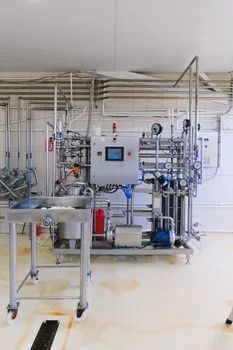
Selecting the optimal wastewater treatment technology for Western Australia's industrial landscape hinges on matching influent characteristics, budget constraints, and compliance needs. A direct comparison of Membrane Bioreactors (MBR), Dissolved Air Flotation (DAF), and Reverse Osmosis (RO) systems reveals distinct advantages and limitations across key performance parameters, as summarized in Table 3. This matrix serves as a critical tool for buyers making informed decisions.
MBR systems, such as MBR systems for WA's high-COD industrial wastewater, offer exceptional contaminant removal, achieving 95–99% COD removal and producing near-reuse quality effluent (<1 μm filtration). This efficiency makes them ideal for applications requiring stringent discharge limits or water reuse, such as mining or advanced food processing. However, MBR systems typically involve 30% higher CAPEX compared to conventional activated sludge systems and can be sensitive to high FOG concentrations, potentially leading to membrane fouling on high-solid influents. Membrane lifespan generally ranges from 5 to 10 years, depending on influent quality and maintenance.
DAF systems, including DAF systems for WA's high-TSS food processing wastewater, excel in removing TSS and FOG, achieving 90–95% TSS removal. They represent a lower CAPEX option, typically costing AUD 2.5M–6M for a 100 m³/h system, and demonstrate strong resilience to variable hydraulic and organic loads. That profile makes DAF an ideal primary treatment solution for food processing, where high TSS and FOG are prevalent. DAF systems also have lower energy consumption than MBR or RO, contributing to lower OPEX — particularly in WA with its higher electricity costs.
RO systems are unmatched at removing dissolved solids, achieving over 98% TDS removal, making them essential for high-salinity influent and the highest-quality reuse water. The limitations are significant: energy consumption of 3–5 kWh/m³ and substantial membrane fouling risk in high-salinity WA applications where proper pre-treatment is crucial. Membrane lifespan for RO typically ranges from 3 to 7 years, depending on pre-treatment effectiveness.
WA-specific considerations further influence selection. Remote sites benefit significantly from modular systems, such as the HydropureWater WSZ series, which simplify installation and reduce on-site labor requirements. For coastal sites, where corrosive saltwater environments are a factor, equipment constructed from corrosion-resistant materials like 316L stainless steel is critical for long-term durability and operational integrity.
| Parameter | MBR (Membrane Bioreactor) | DAF (Dissolved Air Flotation) | RO (Reverse Osmosis) |
|---|---|---|---|
| COD Removal (%) | 95–99% | 50–70% (primary), 80–90% (with chemical) | 90–98% (post-biological) |
| TSS Removal (%) | >99% | 90–95% | >99% (with proper pre-treatment) |
| Footprint (m²/100 m³/day) | 100–150 | 150–250 | 50–100 (post-pre-treatment) |
| CAPEX (AUD/m³ capacity) | 8,000–15,000 | 4,000–8,000 | 10,000–25,000 |
| OPEX (AUD/m³/year) | 0.8–1.5 | 0.3–0.7 | 1.5–3.0 |
| Energy Use (kWh/m³) | 0.8–1.2 | 0.3–0.5 | 3–5 |
| Membrane Lifespan (years) | 5–10 | N/A (no membranes) | 3–7 |
| Salinity Tolerance (mg/L TDS) | Up to 10,000 (biological) | High (physical process) | Low (requires desalination) |
| Primary WA Use Cases | Mining (high COD/BOD), Food Processing (high-quality reuse) | Food Processing (high TSS/FOG), Oil/Gas (primary clarification) | Coastal Industries (desalination), Mining (ultra-pure water reuse) |
Industrial Wastewater CAPEX Western Australia Mining Projects Budget For
Industrial wastewater CAPEX in Western Australia ranges from AUD 2M for a 50 m³/h DAF system to AUD 15M for a 200 m³/h RO + DAF hybrid. A 50 m³/h DAF system suitable for food processing might incur AUD 2M–5M, while a 100 m³/h MBR system for mining operations could cost AUD 3.5M–8M. Larger, more complex RO + DAF hybrid systems, often required in oil and gas for advanced purification, typically range from AUD 5M–15M. These figures must account for site preparation, which can add 20–30% to total CAPEX, and a remote installation premium of 15–25% for projects in regions like the Pilbara or Kimberley due to logistics and specialized labor.
Operational Expenditure (OPEX) is primarily driven by four components: energy (30–50% of total OPEX), chemicals (20–30%), membrane replacement (10–20% for MBR/RO), and labor (10–15%). WA's high electricity costs, averaging AUD 0.25–0.35/kWh, significantly impact OPEX, favoring low-energy systems like DAF over more energy-intensive MBR or RO technologies, especially for high-TSS influent. For strategies to optimize these costs, refer to 12 strategies to cut WA wastewater treatment OPEX by 30–50%.
Return on Investment (ROI) calculations provide a clear financial justification for upgrades or new installations. Consider a 100 m³/h mining wastewater system with an estimated CAPEX of AUD 4.5M. If its annual OPEX is AUD 0.8M, but it generates AUD 1.2M/year in water reuse savings (by treating 30% of influent to a reusable standard), the net annual savings are AUD 0.4M. This scenario projects a payback period of approximately 3.8 years, sensitive to WA's variable water prices. Hidden costs add up too: EPA WA's 2026 monitoring requirements for real-time pH and conductivity sensors can add AUD 50K–150K/year for compliance reporting and data management.
| System Type & Capacity | Estimated CAPEX (AUD) | Estimated Annual OPEX (AUD) | Primary Industries |
|---|---|---|---|
| DAF System (50 m³/h) | 2,000,000 – 5,000,000 | 250,000 – 450,000 | Food Processing, Light Manufacturing |
| MBR System (100 m³/h) | 3,500,000 – 8,000,000 | 800,000 – 1,200,000 | Mining, Heavy Industry, High-Quality Reuse |
| RO + DAF Hybrid (200 m³/h) | 5,000,000 – 15,000,000 | 1,500,000 – 2,500,000 | Oil/Gas, Desalination, Advanced Reuse |
| Notes: CAPEX includes equipment, installation, and commissioning. OPEX includes energy, chemicals, maintenance, and labor. Remote site premiums (15-25%) not included in base figures. | |||
Compliance-Ready Equipment Selection: A 7-Step Checklist for WA Buyers
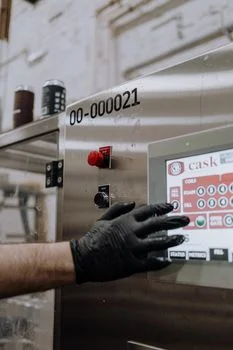
Compliance-ready equipment selection for industrial wastewater treatment in Western Australia mandates a structured approach that avoids compliance failures and cost overruns. The following 7-step checklist provides a practical framework for WA buyers evaluating vendors and systems:
- Match influent load (COD, TSS, salinity) to technology capacity. An undersized system is a primary cause of failure. DAF systems are optimized for influent with up to 5,000 mg/L TSS, while MBR systems are better suited for COD loads up to 2,000 mg/L, depending on specific design.
- Verify EPA WA compliance. Demand comprehensive third-party test reports for COD, TSS, heavy metals, and other relevant parameters from NATA-accredited laboratories. Reports should demonstrate consistent effluent quality meeting or exceeding EPA WA 2026 standards under various operational conditions. For a detailed guide on MBR selection, see how to select MBR systems for WA's mining and food processing wastewater.
- Assess remote operability. For WA's geographically dispersed sites, modular systems, such as modular wastewater systems for WA's remote industrial sites, are highly advantageous. They reduce on-site labor requirements by up to 40% compared to custom-built plants, minimizing logistical complexity and personnel costs on remote mining projects.
- Evaluate energy efficiency. Given WA's high electricity costs (AUD 0.25–0.35/kWh), energy-efficient technologies matter. DAF systems, consuming 0.3–0.5 kWh/m³, are often more cost-effective than MBR systems (0.8–1.2 kWh/m³) for influent streams dominated by high TSS.
- Demand fail-safe containment. Ensure proposed systems incorporate robust risk mitigation measures per EPA WA's 2026 guidelines, including double-lined tanks, advanced leak detection systems, and automated emergency shutdown protocols to prevent environmental contamination.
- Plan for scalability. Western Australia's dynamic industrial growth, particularly in lithium mining, necessitates future-proofing. Specify pumps and tanks with 50% headroom for capacity expansions to accommodate increased production without entirely new infrastructure.
- Secure local support. A WA-based service contract is invaluable for minimizing downtime on remote operations. Localized technical support and spare parts availability can reduce critical downtime by up to 60%, ensuring rapid response to operational issues.
Who This Is For, and Next Step
Plant engineers, EPC contractors, and procurement managers specifying industrial wastewater treatment for WA mining, food processing, or oil and gas sites at influent COD 500–10,000 mg/L are the audience for this blueprint. Municipal sewer-connection enquiries and residential on-site systems follow different permit paths and are outside this scope.
Send your influent profile (COD, TSS, TDS, metals), flow rate, site location, and target EPA WA licence limits to our engineering team for a sized CAPEX and OPEX proposal for your Western Australia site.
Frequently Asked Questions
What are the EPA WA 2026 discharge limits for industrial wastewater?
The EPA WA 2026 discharge limits for industrial wastewater are COD ≤ 200 mg/L, TSS ≤ 30 mg/L, pH 6.5–8.5, arsenic ≤ 0.1 mg/L, and lead ≤ 0.5 mg/L. Mining sites may face stricter limits for contaminants like cyanide (≤ 0.05 mg/L) or arsenic (≤ 0.05 mg/L) in gold and nickel operations. Design to the licence conditions issued by DWER, which can be tighter than the baseline table.
How much does an industrial wastewater treatment system cost in WA?
CAPEX varies widely by technology and capacity. A 50 m³/h DAF system for food processing can cost AUD 2M–5M, a 100 m³/h MBR system for mining AUD 3.5M–8M, and a 200 m³/h RO + DAF hybrid for oil/gas AUD 5M–15M. Remote site installations typically add a 15–25% premium for logistics and labor in regions like the Pilbara.
Which technology is best for WA's remote mining sites?
Modular MBR or DAF systems, such as the HydropureWater WSZ series, are often preferred for WA's remote mining sites. These integrated solutions offer easier installation, reduced on-site labor, and remote monitoring capability. MBR trains with 10-year membrane lifespans cut maintenance frequency and associated OPEX by 30–40% compared to custom-built, labor-intensive alternatives.
Can treated wastewater be reused in WA industries?
Yes, treated wastewater can be reused in WA industries, aligning with EPA WA's 2026 guidelines that encourage water conservation. Reuse is permitted for non-potable applications such as dust suppression, cooling tower makeup, or process water, provided effluent meets the licence's quality criteria, typically COD ≤ 50 mg/L and TSS ≤ 5 mg/L. RO systems are particularly effective for high-salinity influent destined for reuse.
How do you get a Western Australia food processing wastewater permit?
A Western Australia food processing wastewater permit starts with DWER: works approval before construction and an operating licence before discharge, both under Part V of the Environmental Protection Act 1986, applied through the Environment Online portal. Discharge to sewer instead requires a Water Corporation trade waste permit with pre-treatment to acceptance criteria. Support the application with NATA-accredited effluent test reports.