Rabat’s Industrial Wastewater Challenge: Regulations, Deadlines, and Sector-Specific Risks
Morocco’s Decree 2-09-139 mandates that industrial facilities in Rabat achieve direct discharge limits of <125 mg/L COD and <35 mg/L TSS by the 2026 regulatory deadline. For a textile factory manager in the Ain Atiq industrial zone, the clock is ticking toward a transition from basic filtration to advanced secondary and tertiary treatment. Historically, many facilities relied on municipal infrastructure, but the 2026 framework shifts the burden of compliance directly onto the industrial operator. Failure to meet these standards results in fines reaching MAD 500,000 per year and, in extreme cases of environmental degradation, mandatory operational shutdowns, as evidenced by the 2023 closure of a textile plant in Casablanca for persistent effluent violations.
The regulatory pressure is compounded by the Millennium Challenge Corporation’s (MCC) $131 million investment in 11 Moroccan industrial parks. This initiative has established wastewater treatment as a non-negotiable prerequisite for land discounts and park entry. In Rabat’s key industrial hubs—including Technopolis Rabat-Shore and Ain Atiq—the contaminant profiles vary significantly by sector. Textile operations face challenges with synthetic dyes and heavy metals; food processing facilities must manage high Biological Oxygen Demand (BOD) and Fats, Oils, and Grease (FOG); and chemical plants require precise pH neutralization and toxin removal. Law 10-95 provides the legal foundation for these requirements, designating the Water Directorate as the enforcement body responsible for auditing industrial discharge.
| Parameter | Direct Discharge Limit (Decree 2-09-139) | Typical Raw Textile Effluent | Typical Raw Food Processing Effluent |
|---|---|---|---|
| Chemical Oxygen Demand (COD) | <125 mg/L | 800–2,500 mg/L | 1,500–4,000 mg/L |
| Total Suspended Solids (TSS) | <35 mg/L | 300–600 mg/L | 500–1,200 mg/L |
| Biological Oxygen Demand (BOD5) | <50 mg/L | 200–500 mg/L | 800–2,000 mg/L |
| Fats, Oils, and Grease (FOG) | <10 mg/L | <50 mg/L | 100–400 mg/L |
Effluent Quality by Technology: How DAF, MBR, and Coagulation Systems Compare for Rabat’s Industries
Membrane Bioreactor (MBR) systems achieve a 60% reduction in physical footprint compared to conventional activated sludge while delivering effluent with <10 mg/L BOD for agricultural reuse. In the context of Rabat’s water scarcity, the ability to reuse treated water for irrigation or process cooling is becoming a financial necessity. DF series MBR systems for Rabat’s chemical and pharmaceutical sectors utilize 0.1 μm filtration membranes to eliminate secondary clarifiers, ensuring that even the most stringent 2026 targets for reuse are met consistently. This technology is particularly effective for high-BOD wastewater in healthcare and chemical settings, where pathogen removal and chemical stability are paramount.
For industries dealing with high concentrations of suspended solids and grease, such as food processing and textile dyeing, Dissolved Air Flotation (DAF) remains the industry standard. DAF systems for Rabat’s food processing and textile industries achieve 92–97% TSS removal and 85–90% FOG removal. By introducing micro-bubbles into the wastewater, the DAF system forces contaminants to the surface for automated skimming. This process is highly effective at achieving 95% TSS removal in food processing wastewater, providing a robust primary treatment stage that protects downstream biological processes. While coagulation and sedimentation systems offer a lower initial CAPEX, they often struggle with the fluctuating hydraulic loads common in Rabat’s industrial parks and produce significantly more sludge (0.5–1.5 kg/m³) compared to DAF or MBR.
| Technology | COD Removal Rate | TSS Removal Rate | Hydraulic Loading Capacity | Best Use Case in Rabat |
|---|---|---|---|---|
| DAF (HydropureWater) | 60–85% | 92–97% | 4–300 m³/h | Textile, Food (FOG/TSS removal) |
| MBR (HydropureWater DF) | 95–99% | >99% | 10–500 m³/h | Chemical, Reuse Applications |
| Coagulation/Sedimentation | 50–70% | 70–85% | Variable | Pre-treatment for small facilities |
Cost Breakdown for Industrial Wastewater Treatment in Rabat: CAPEX, OPEX, and ROI by Technology
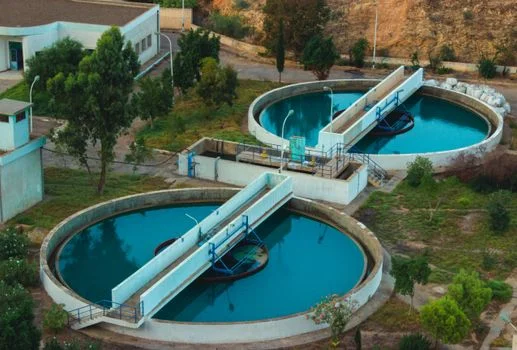
The CAPEX for industrial wastewater treatment in Rabat typically ranges from MAD 5 million for high-efficiency DAF units to over MAD 25 million for large-scale MBR installations. While the initial investment for MBR is higher, the long-term ROI is driven by the elimination of municipal discharge fees and the potential for water reuse. In Rabat, where industrial water tariffs are rising, a facility reusing 70% of its treated effluent can achieve a payback period of 3 to 5 years. For a textile plant in Rabat, installing a DAF system with a CAPEX of MAD 8 million resulted in an 80% reduction in environmental fines, leading to a full 18-month payback (HydropureWater field data, 2025).
OPEX is primarily influenced by energy consumption and chemical dosing. MBR systems consume between 0.8 and 1.2 kWh/m³ due to the aeration required for membrane scouring, whereas DAF systems are more energy-efficient at 0.3 to 0.5 kWh/m³. However, MBR systems require membrane replacement every 5 to 7 years, which can cost between MAD 2 million and 5 million depending on the plant size. Coagulation systems, while inexpensive to build, incur high OPEX through chemical consumption—often ranging from MAD 50 to 150 per ton of sludge produced. Evaluating how industrial parks comply with EPA-equivalent standards reveals a trend toward higher CAPEX/lower OPEX technologies like MBR to ensure long-term compliance stability.
| Cost Category | DAF System (50–300 m³/h) | MBR System (100–500 m³/h) | Coagulation System |
|---|---|---|---|
| Estimated CAPEX | MAD 5M – 12M | MAD 15M – 25M | MAD 3M – 8M |
| Energy OPEX | 0.3–0.5 kWh/m³ | 0.8–1.2 kWh/m³ | 0.2–0.4 kWh/m³ |
| Maintenance | Low (Skimmer parts) | High (Membrane cleaning) | Moderate (Pump seals) |
| ROI Period | 2–4 Years | 3–5 Years | 4–6 Years |
Selecting the Right System for Your Rabat Facility: A Decision Framework for Engineers and Procurement Teams
Selecting a wastewater treatment system in Rabat requires analyzing effluent targets, available land area, and long-term energy consumption profiles. Engineers must determine if the objective is simple compliance with Decree 2-09-139 for direct discharge or if the facility intends to meet Morocco’s 2026 targets for agricultural reuse. If reuse is the goal, MBR is the only viable solution capable of producing the <10 mg/L BOD and low turbidity required by national standards. For facilities with limited space, such as those in the Technopolis area, MBR’s integrated design eliminates the need for large sedimentation tanks, making it the preferred choice for land-constrained sites.
The decision framework should follow these four steps:
- Effluent Quality Audit: Analyze raw wastewater for FOG and TSS. If FOG is >100 mg/L, a DAF system is mandatory as primary treatment.
- Footprint Evaluation: Measure available land. If the available area is less than 200 m² for a 500 m³/day flow, prioritize MBR technology.
- Budget Alignment: Compare 10-year Total Cost of Ownership (TCO). While coagulation has the lowest entry price, the sludge disposal costs in Rabat often make it more expensive than DAF over a 5-year horizon.
- Operational Capacity: Assess the technical skill of the on-site team. DAF systems are largely mechanical and easier to maintain, whereas MBR requires strict adherence to Chemical Enhanced Backwash (CEB) protocols.
"The shift toward MBR in Rabat is not just about compliance; it is about future-proofing industrial operations against the inevitable increase in water scarcity and regulatory oversight." — HydropureWater Engineering Report, 2024.
Compliance Checklist: How to Meet Morocco’s 2026 Wastewater Standards in Rabat
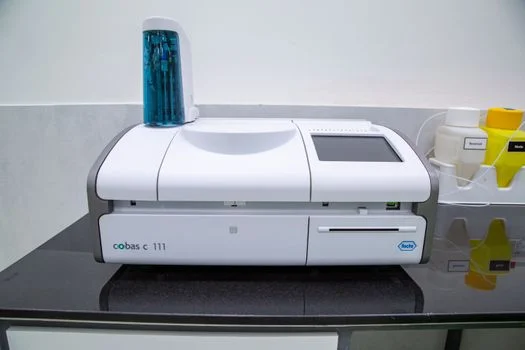
Compliance with Morocco’s Law 10-95 requires industrial operators to maintain continuous monitoring of pH, COD, and TSS levels for monthly reporting to the Water Directorate. A robust compliance strategy begins with effective pretreatment to protect sensitive secondary treatment equipment. Utilizing GX series bar screens for Rabat’s industrial pretreatment ensures that large debris and solids are removed before they can damage pumps or foul membranes. PLC-controlled chemical dosing for Rabat’s pH adjustment and coagulation needs is essential for maintaining the effluent pH between 6.5 and 8.5, as required by Decree 2-09-139.
The 2026 Compliance Audit Checklist:
- Pre-treatment: Are bar screens (1–3 mm) installed to prevent pump clogging? Is there a pH neutralization tank with automated dosing?
- Primary Treatment: Does the system achieve <150 mg/L TSS before entering biological stages? (Required for DAF/Coagulation).
- Secondary Treatment: Is the system designed to reduce COD to <125 mg/L? (Typical for MBR systems for high-BOD wastewater).
- Tertiary Treatment (Reuse Only): Does the effluent meet <10 mg/L BOD and <2 NTU turbidity?