Industrial Wastewater Treatment in Colombia 2026: Engineering Specs, Compliance & Cost-Optimized Equipment Guide
In 2026, industrial wastewater treatment in Colombia requires systems that meet Resolution 0631’s strict discharge limits (TSS < 30 mg/L, BOD < 50 mg/L) while optimizing costs—CAPEX ranges from $500K for compact MBR units (10–50 m³/day) to $2B+ for large-scale municipal projects like Bogotá’s Canoas plant. Energy-efficient technologies like DAF (92–97% TSS removal) and MBR (COD < 50 mg/L) are critical for industries such as textiles, food processing, and mining, where operational costs average $0.30–$1.20 per m³ treated. As regulatory oversight tightens, facility managers must transition from basic primary treatment to advanced tertiary processes to avoid escalating non-compliance penalties.
Why Colombia’s Industrial Wastewater Treatment Costs Are Rising in 2026
Non-compliance with Resolution 0631 in 2026 carries financial risks of up to 5% of a facility's annual gross revenue, as enforced by the Ministry of Environment and Sustainable Development. This regulatory pressure is part of a broader national shift; Colombia’s $12B National Water Plan (2022–2031) targets 80% wastewater treatment coverage by 2031, which has effectively increased the annual demand for industrial-grade systems by 15–20% (Ministry of Environment, 2023). For procurement teams, this surge in demand, coupled with global supply chain adjustments for specialized membranes and high-efficiency pumps, has fundamentally altered the CAPEX landscape.
Urbanization in major hubs like Bogotá and Medellín is driving the adoption of large-scale regional plants, such as the $1.52 billion Canoas project, which boasts a 14 m³/s capacity. While these massive infrastructure projects aim to reduce per-capita treatment costs from $1,506 to approximately $400–$800, industrial facilities located outside these municipal grids must bear the full cost of decentralized systems. In 2026, the specific contaminant profiles of Colombia's primary industrial sectors—textile dye removal, food processing fats, oils, and grease (FOG), and mining heavy metals—require more sophisticated engineering than the traditional activated sludge systems used a decade ago.
the rising cost of electricity in Colombia (averaging 600–800 COP/kWh for industrial users) has made energy consumption the primary driver of OPEX. Systems that lack automated controls or variable-frequency drives (VFDs) are becoming obsolete as operational budgets tighten. The pharmaceutical sector, in particular, faces the highest cost increases, as effluent with COD levels exceeding 1,000 mg/L requires advanced oxidation or high-flux membrane bioreactors to meet the new 2026 discharge benchmarks.
Resolution 0631 Compliance: Discharge Limits and Industry-Specific Challenges
Resolution 0631 establishes differentiated discharge limits based on over 50 specific industrial activities, requiring engineers to tailor treatment trains to exact contaminant thresholds. For instance, while a general industrial facility might be permitted higher COD levels, the textile industry faces a stringent color limit of less than 50 Pt-Co units, a parameter that conventional biological treatment often fails to meet. Achieving these standards requires a deep understanding of the influent's chemical oxygen demand (COD), biochemical oxygen demand (BOD), and total suspended solids (TSS).
| Parameter | Textile Industry | Food Processing | Mining (Metals) | Pharmaceuticals |
|---|---|---|---|---|
| TSS (mg/L) | < 30 | < 50 | < 30 | < 25 |
| BOD5 (mg/L) | < 50 | < 70 | < 40 | < 30 |
| COD (mg/L) | < 150 | < 200 | < 120 | < 100 |
| FOG (mg/L) | < 10 | < 15 | N/A | < 5 |
| Specific Challenge | Reactive Dyes | High Organic Load | Cr, Pb, As Removal | Refractory COD |
In the textile industry, reactive dyes are notoriously difficult to degrade. Conventional systems typically achieve only 60–70% color removal, which is insufficient for Resolution 0631. Engineers now specify advanced oxidation processes (AOPs) or MBR systems for high-COD industrial wastewater in Colombia to reach 95% color removal. In the food processing sector, FOG limits are the primary hurdle. Dissolved Air Flotation (DAF) is the industry standard here, but recent engineering data suggests that supplementing DAF with chemical dosing (such as polyaluminum chloride) can reduce the physical footprint of the system by up to 40% while maintaining discharge compliance.
Mining operations in regions like Antioquia and Chocó must address heavy metal concentrations (Chromium, Lead, Arsenic). Chemical precipitation at elevated pH levels (9–11) remains the baseline, but many facilities are moving toward electrocoagulation. This technology reduces sludge volume by 30% compared to traditional lime precipitation, significantly lowering long-term disposal costs. For pharmaceutical plants, where COD often exceeds 1,000 mg/L, anaerobic digestion followed by MBR is the only viable path to meet the COD < 100 mg/L requirement. You can find more details on pharmaceutical wastewater treatment strategies for COD > 1,000 mg/L in our technical blueprints.
MBR vs. DAF vs. Chemical Dosing: Technology Comparison for Colombian Industries
Selecting the appropriate technology for a Colombian facility involves a trade-off between initial capital investment and long-term operational efficiency. Membrane Bioreactors (MBR) offer the highest effluent quality but come with higher energy demands. Dissolved Air Flotation (DAF) is unmatched for solids and grease removal, while chemical dosing systems provide the lowest entry cost for heavy metal stabilization. The following table provides a side-by-side technical comparison based on 2026 performance benchmarks.
| Feature | MBR System | DAF System | Chemical Dosing |
|---|---|---|---|
| TSS Removal | > 99% | 92–97% | 80–90% |
| COD Removal | 90–95% | 40–60% | 20–40% |
| CAPEX ($/m³/day) | $4,500 – $6,000 | $1,500 – $3,000 | $800 – $1,500 |
| OPEX ($/m³) | $0.80 – $1.20 | $0.40 – $0.80 | $0.30 – $0.60 |
| Energy (kWh/m³) | 0.8 – 1.5 | 0.2 – 0.5 | 0.1 – 0.2 |
MBR technology is the preferred choice for facilities with limited space or those targeting water reuse. In hard water regions like the Bogotá plateau, membrane fouling is a significant concern, often increasing OPEX by 15–20% due to the need for more frequent chemical cleanings (CIP). For food processing plants, DAF systems for FOG and suspended solids removal in food processing are essential. These systems require precise pH adjustment, typically between 6.5 and 8.5, to ensure optimal flocculation. Without this balance, the effectiveness of the air bubbles in lifting solids is severely compromised.
For mining and electroplating industries, chemical dosing systems for heavy metal removal in mining wastewater provide a reliable method for precipitation. While the CAPEX is low, engineers must account for the high cost of sludge disposal, which can add $0.10–$0.20 per kg of sludge produced. In many cases, a hybrid approach is the most cost-effective. For example, a textile factory might use chemical dosing for initial color precipitation followed by an MBR for final organic polishing. For specific mining applications, integrating ion exchange for hexavalent chromium removal in mining wastewater can achieve near-zero discharge levels.
Cost Benchmarks for Industrial Wastewater Treatment in Colombia (2026)
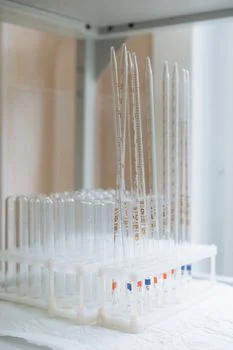
Budgeting for wastewater infrastructure in Colombia requires a granular breakdown of both capital and operational expenses. For a compact industrial system treating 10–100 m³/day, CAPEX generally falls between $500,000 and $2,000,000. Medium-scale facilities (100–1,000 m³/day) see costs rise to the $2M–$10M range. These figures are heavily influenced by the level of automation and the quality of materials (e.g., 304 vs. 316 stainless steel for corrosive environments). Operational costs are dominated by energy (40–60%), followed by chemical consumables (20–30%) and specialized labor (10–15%).
| Industry Scale | Flow Rate (m³/day) | Avg. CAPEX (USD) | Avg. OPEX (USD/m³) | ROI Period (Years) |
|---|---|---|---|---|
| Small Industrial | 50 | $650,000 | $1.10 | 5 – 7 |
| Medium Factory | 500 | $4,200,000 | $0.75 | 4 – 6 |
| Large Facility | 2,000 | $12,500,000 | $0.55 | 3 – 5 |
The Return on Investment (ROI) for these systems is increasingly driven by the avoidance of fines and the potential for water reuse. In the textile industry, an MBR system may have a higher CAPEX than a DAF system, but its ability to produce high-quality effluent suitable for non-potable reuse can shorten the payback period to under 6 years. Comparatively, global wastewater treatment cost benchmarks for industrial buyers suggest that Colombian facilities are currently paying a premium for imported components, making local engineering expertise and system optimization critical for cost control.
Sludge management is an often-overlooked OPEX driver. In Colombia, the logistics of transporting hazardous sludge from remote mining or manufacturing sites to certified disposal facilities can represent 5–10% of total operational costs. Implementing dewatering equipment, such as screw presses or filter presses, can reduce sludge volume by 70%, offering a rapid ROI through reduced transport fees. Facility managers should also factor in quarterly compliance testing costs, which average $1,500–$3,000 per year depending on the complexity of the parameters being monitored.
Step-by-Step Guide to Selecting Wastewater Treatment Equipment for Colombian Facilities
Navigating the selection process requires a systematic approach to ensure both Resolution 0631 compliance and budgetary alignment. The following decision framework is designed for engineering and procurement teams evaluating new or upgraded systems.
Step 1: Characterize the Influent. Accurate data is the foundation of engineering. You must determine the peak flow rate, average flow, and a full contaminant profile (BOD, COD, TSS, FOG, and heavy metals). For example, a typical textile factory in Medellín might average 500 m³/day with a COD of 1,200 mg/L and color levels of 200 Pt-Co units. Lab testing over a 7-day period is recommended to capture operational fluctuations.
Step 2: Match Contaminants to Technology. Use the "High-Bar" rule: select the technology that addresses your most difficult parameter first. If COD is > 500 mg/L, prioritize MBR systems for high-COD industrial wastewater in Colombia. If FOG is > 100 mg/L, a DAF system for FOG and suspended solids removal must be the primary treatment stage. Heavy metals require chemical precipitation or ion exchange.
Step 3: Size for Peak Loads and Regulatory Safety. Systems should be sized for 120% of peak flow to ensure compliance during production surges. For a 500 m³/day textile plant, specify a system with at least 100 m² of membrane area (such as the HydropureWater DF Series) to maintain a stable flux and achieve COD < 50 mg/L even during high-load periods.
Step 4: Evaluate CAPEX vs. OPEX Trade-offs. In urban areas like Bogotá where land is expensive, MBR systems are often more cost-effective due to their 60% smaller footprint compared to conventional activated sludge. However, in rural mining areas where land is available but electricity is unreliable, a simpler chemical dosing and settling pond system may be more resilient, despite higher sludge disposal costs.
Step 5: Establish a Compliance and Maintenance Schedule. Resolution 0631 requires quarterly sampling for TSS and BOD, and annual testing for heavy metals. Ensure your equipment provider offers training for on-site operators; for instance, MBR systems require specialized membrane cleaning (CIP) every 3–6 months to prevent irreversible fouling and maintain the system's ROI.
Frequently Asked Questions

What are the penalties for non-compliance with Resolution 0631 in Colombia?
Fines range from 1% to 5% of a facility's annual gross revenue. Beyond financial penalties, regional environmental authorities (such as the CAR or Corantioquia) have the power to issue temporary or permanent plant shutdowns for repeated discharge violations (Ministry of Environment, 2024).
How do I reduce energy costs in MBR systems?
The most effective method is the integration of variable-frequency drives (VFDs) on aeration blowers. By adjusting the air flow based on real-time dissolved oxygen (DO) levels, facilities can reduce energy consumption by 20–30% (HydropureWater field data, 2025).
What is the best wastewater treatment system for a textile factory in Colombia?
For meeting the < 50 Pt-Co color limit, MBR systems are superior as they achieve 95% color removal. However, for smaller facilities with strict budget constraints, a DAF system combined with aggressive chemical dosing can be a viable alternative, reducing CAPEX by approximately 30%.
Can I reuse treated wastewater in my industrial process?
Yes. Effluent from an MBR system typically meets the quality standards for non-potable reuse, including cooling tower make-up water, floor washing, and irrigation. This can significantly reduce a facility's raw water procurement costs and improve overall sustainability metrics.
How often should I test my wastewater for Resolution 0631 compliance?
According to Ministry of Environment guidelines, industrial facilities should conduct quarterly testing for TSS and BOD, annual testing for heavy metals, and monthly monitoring of pH and temperature to ensure continuous compliance.