Chemical precipitation removes hexavalent chromium (Cr⁶⁺) by reducing it to trivalent chromium (Cr³⁺) at pH 2–3 with sodium metabisulfite or ferrous sulfate, then precipitating Cr(OH)₃ with lime at pH 8–9. Under US EPA metal finishing rules (40 CFR 433), Chromium (T) is limited to 2.77 mg/L daily maximum and 1.71 mg/L monthly average. Electroplating pretreatment under 40 CFR 413 for plants ≥38,000 L/d sets Cr at 7.0 mg/L max and 4.0 mg/L average. China’s GB 21900-2008 sets tighter electroplating limits, including <1.5 mg/L total chromium for many new sources. Reagent costs typically run $0.80–$2.50 per kg Cr removed, with sludge disposal adding $0.15–$0.40 per kg Cr. This guide covers engineering specs, reagent trade-offs, and cost models for industrial chromium chemical precipitation.
Chromium Chemical Precipitation: Mechanisms and Critical Parameters
Chromium wastewater treatment by chemical precipitation reduces Cr⁶⁺ to Cr³⁺ at pH 2.0–3.0 with sodium metabisulfite or ferrous sulfate, then precipitates Cr(OH)₃ at pH 8.0–9.0. Plants dose 3.0–3.5 kg Na₂S₂O₅ per kg Cr⁶⁺, hold reduction ORP below about 200 mV, and target ≥30 minutes acid-stage HRT before clarification and filter-press dewatering to 30–35% cake solids.
Hexavalent chromium must be reduced to Cr³⁺ before hydroxide precipitation can work, because Cr⁶⁺ anions stay dissolved at every practical pH. Sodium metabisulfite (Na₂S₂O₅) in acid is the common continuous-process choice. The balanced reaction is: Cr₂O₇²⁻ + 3HSO₃⁻ + 5H⁺ → 2Cr³⁺ + 3SO₄²⁻ + 4H₂O. Theory needs about 2.81 kg Na₂S₂O₅ per kg Cr⁶⁺; plants dose 3.0–3.5 kg/kg to cover dissolved oxygen and other oxidants.
pH governs reduction rate more than any other setpoint. Above pH 4.0, the rate falls steeply; at pH 2.0–3.0 the reaction is usually complete in under 15 minutes. With ferrous sulfate (FeSO₄·7H₂O), keep pH strictly below 3.0. If pH rises, Fe²⁺ oxidizes to Fe³⁺ with DO, wasting 20–40% of the dose and leaving Cr⁶⁺ behind. Design setpoints for the reduction stage are summarized below:
| Parameter | Sodium Metabisulfite (SMB) | Ferrous Sulfate (FeSO₄) | Zero-Valent Iron (ZVI) |
|---|---|---|---|
| Optimal pH Range | 2.0 – 3.0 | 2.0 – 3.0 | 4.0 – 5.0 |
| ORP Setpoint (mV) | < 250 mV | < 200 mV | < 300 mV |
| Reaction Time (min) | 15 – 30 | 30 – 45 | 180 – 360 |
| Stoichiometric Ratio (kg/kg Cr) | 3.0 – 3.5 | 8.0 – 10.0 | 5.0 – 8.0 |
A standard train starts with a high-speed reduction tank, then a pH-adjustment tank to pH 8.5–9.2, a flocculation zone, and a clarifier. For 99.9% removal on variable chrome loads, automated chemical dosing for chromium reduction keeps ORP and acid feed aligned with influent swings.
Why Chromium Wastewater Treatment Misses Discharge Limits
Incomplete Cr⁶⁺ reduction is the most common cause of chromium permit failures in metal finishing plants. Cr⁶⁺ exists as soluble chromate or dichromate across the full pH range, so lime or caustic alone cannot precipitate it. Most plants we size for 10–500 m³/h chrome lines fail when reduction and precipitation share one “average” pH setpoint.
In 2024, a large electroplating plant in Jiangsu, China, was fined about $250,000 after total chromium exceeded 5 mg/L against the GB 21900-2008 new-source limit of 1.5 mg/L. The audit found reduction run at pH 5.0 to cut acid use. At that pH, sodium metabisulfite kinetics drop sharply, cutting reagent efficiency by 30–50% (HydropureWater field data, 2025). Residual Cr⁶⁺ then passed the clarifier untreated.
Poor solids capture compounds the chemistry error. Fine Cr(OH)₃ flocs carry over when clarifiers are undersized or overloaded. Separating acid reduction from alkaline precipitation—and verifying ORP before raising pH—is the practical path to stable compliance under EPA, EU, and Chinese rules.
Reagent Selection: Metabisulfite, Ferrous Sulfate, or ZVI

Reagent choice trades unit chemical cost against sludge mass and residence time. Sodium metabisulfite suits high-flow continuous lines because sludge yield stays low. Ferrous sulfate costs less per kilogram of reagent but precipitates Fe(OH)₃ with the chrome, raising cake volume. Zero-valent iron fits batch, low-concentration loads; reaction times of 180–360 minutes rule it out for most high-volume plating rinses.
| Reagent | Efficiency (%) | Sludge Yield (kg/kg Cr) | Reagent Cost ($/kg Cr) | Operational Complexity |
|---|---|---|---|---|
| Sodium Metabisulfite | 95 – 99% | 0.5 – 0.8 | $0.80 – $1.20 | Moderate (requires SO₂ safety) |
| Ferrous Sulfate | 90 – 98% | 1.2 – 1.8 | $1.50 – $2.50* | High (due to sludge handling) |
| Zero-Valent Iron | 90 – 95% | 2.0 – 3.0 | $2.00 – $3.50 | Low (batch process) |
*Note: While the reagent itself is cheaper, the higher sludge yield increases disposal costs by 20–30%.
Sodium metabisulfite is preferred above about 100 m³/h when hazardous-waste tonnage drives OPEX. Ferrous sulfate still fits smaller shops or mixed-metal streams where iron co-precipitation helps, including plants that also run nickel wastewater treatment by chemical precipitation. TCO usually favors the lower sludge path once chrome cake disposal hits $200–$500 per ton.
System Design from Reduction to Sludge Dewatering
Chromium treatment trains need staged HRT and reliable solid-liquid separation. Size the reduction tank for at least 30 minutes HRT and line it with FRP or HDPE for continuous pH 2 service. ORP below about 200 mV usually means Cr⁶⁺ conversion is complete; above 300 mV the controller should raise reductant dose.
After reduction, raise pH to 8.0–9.0 with lime (Ca(OH)₂) or NaOH. Lime often yields denser sludge because calcium aids coagulation, though NaOH doses cleaner. A lamella clarifier for chromium sludge separation supports surface loading of 0.5–1.0 m/h, which helps catch light gelatinous Cr(OH)₃ flocs.
Clarifier underflow typically leaves at 1–2% solids. A filter press for chromium hydroxide sludge dewatering can reach 30–35% cake solids and cut haulage volume. Where permits sit near <0.5 mg/L total chromium, add sand filtration or DAF polishing to strip residual TSS that carries precipitated metal.
What Does Code-Compliant Chromium Treatment Cost?
Code-compliant chromium effluent systems are priced mainly by flow and influent Cr strength. For a 50 m³/h train, CapEx commonly falls between $75,000 and $150,000 for tanks, dosing skids, clarifier, and filter press. OPEX is driven by reagents and sludge disposal, often $1.50–$3.00 per m³ treated.
| Flow Rate (m³/h) | CapEx (USD) | OPEX ($/m³) | Sludge Disposal ($/kg Cr) | Total Cost ($/m³) |
|---|---|---|---|---|
| 10 m³/h | $50,000 – $70,000 | $2.50 – $3.50 | $0.25 – $0.40 | $2.75 – $3.90 |
| 50 m³/h | $80,000 – $120,000 | $1.80 – $2.50 | $0.20 – $0.35 | $2.00 – $2.85 |
| 100 m³/h | $140,000 – $200,000 | $1.40 – $2.10 | $0.15 – $0.30 | $1.55 – $2.40 |
How Much Does Chemical-Based Wastewater Treatment Cost?
Chemical-based wastewater treatment cost for chrome lines is usually far below membrane or ion-exchange OPEX when influent Cr exceeds about 50 mg/L. RO/NF or resin systems often run $8–$15/m³ because of fouling and regenerant handling. Closed-loop reuse of treated rinse water can cut purchased water 30–50% and pay back CapEx in 18–24 months on many plating shops (HydropureWater field data, 2025).
Meeting EPA, EU, and China Chromium Limits
US chromium limits depend on which categorical rule applies. Earlier plant summaries often cited 40 CFR 413.02 for a 2.77 mg/L total chromium cap; 413.02 is the definitions section, not the numeric table. According to the current eCFR, 40 CFR 433 (Metal Finishing) sets Chromium (T) at 2.77 mg/L maximum for any one day and 1.71 mg/L as a monthly average. For ≥38,000 L/d (10,000 gal/d) electroplating PSES under 40 CFR 413, Cr is 7.0 mg/L max and 4.0 mg/L as a four-day average.
EU installations under the Industrial Emissions Directive (2010/75/EU) may face local chrome caps near 0.5 mg/L for sensitive waters. China’s GB 21900-2008 remains among the stricter electroplating standards; Table 3 special-limit areas use 0.5 mg/L total chromium and 0.1 mg/L Cr⁶⁺. Defense-in-depth controls that plants actually run:
- Continuous ORP monitoring to verify <200 mV after reduction.
- Dual-stage pH control so precipitation does not drift below 8.0.
- Weekly lab checks of both Cr⁶⁺ and total Cr on final effluent.
- Documented hazardous-sludge manifests for RCRA or local equivalent audits.
Those operating rules matter as much as tank volume, the same way they do for copper wastewater treatment via chemical precipitation.
Troubleshooting Guide: Fixing Common Chromium Precipitation Failures
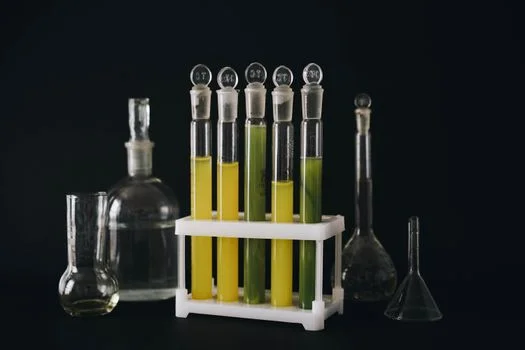
Yellow effluent almost always means leftover Cr⁶⁺ from high reduction pH or short HRT. Clear water with high total Cr usually means pin floc or clarifier overload. Use the matrix below before changing polymer brands.
| Symptom | Likely Cause | Diagnostic Test | Solution |
|---|---|---|---|
| Yellow Effluent (Cr⁶⁺ >0.1 mg/L) | pH too high during reduction | Check Reduction Tank pH | Lower pH to 2.0 – 2.5; check acid pump |
| High Total Cr (Cr³⁺ >1.5 mg/L) | pH too low during precipitation | Check Precipitation Tank pH | Raise pH to 8.5 – 9.0; verify lime dosing |
| Cloudy Clarifier Overflow | Flocculant overdose or high TSS | Jar Test with PAM | Reduce PAM dosage; check mechanical bar screen for influent solids |
| Wet Sludge Cake | Insufficient press pressure | Check Filter Press Gauge | Increase pressure to 6–8 bar; check cloth condition |
Pin floc on high-sulfate feeds (common with ferrous sulfate) may need cationic or non-ionic PAM instead of the usual anionic grade. Weekly pH and ORP probe calibration prevents most of the failures we see in the field.
Selection Checklist, Audience, and Next Step
Before freezing a chromium precipitation design, confirm these items:
- Peak Cr⁶⁺ and total Cr (mg/L) plus design flow (m³/h).
- Separate reduction (pH 2–3) and precipitation (pH 8–9) tanks with ≥30 min reduction HRT.
- ORP interlock that holds alkaline feed until reduction setpoint is met.
- Clarifier surface loading ≤1.0 m/h for Cr(OH)₃ flocs.
- Filter-press capacity to 30–35% cake solids and a licensed chrome-sludge outlet.
- Permit basis: 40 CFR 413 vs 433, GB 21900-2008 table, or local EU limit.
- Reagent TCO including sludge haul, not bag price alone.
Who this is for: electroplating, anodizing, and chromate-conversion shops that need categorical chrome compliance with chemical precipitation. Who should look elsewhere: ultra-low Cr targets that already justify ion exchange or RO polishing as the primary barrier, or dilute streams better served by dedicated ZVI batch units. For a sized dosing-and-clarifier package matched to your chrome load, submit the influent data through our request-quote form.
Frequently Asked Questions
What is the optimal pH for chromium reduction?
The optimal reduction pH is 2.0–3.0 when using sodium metabisulfite or ferrous sulfate. Above pH 4.0 the reaction slows sharply, and at pH 5.0 reagent efficiency can fall by about 50%. Zero-valent iron systems typically run nearer pH 4.0–5.0, but residence times stretch to 180–360 minutes, so they suit batch duty more than continuous high-flow plating rinses.
How much sludge does chromium precipitation produce?
Sludge yield tracks the reductant. Sodium metabisulfite usually forms about 0.5–0.8 kg dry solids per kg chromium removed. Ferrous sulfate yields about 1.2–1.8 kg/kg because iron precipitates as Fe(OH)₃ with the chrome. That extra cake often raises disposal cost 20–30%, which can erase the apparent savings from a cheaper ferrous bag price.
Can chromium and nickel wastewater be treated together?
Both metals can finish in one clarifier, but not in one reaction pH. Chromium reduction needs pH 2–3, while nickel hydroxide precipitates best near pH 9.5–10.5. Reduce Cr⁶⁺ in a dedicated acid stage first, then combine with nickel-bearing streams for alkaline precipitation and solids separation.
Is sodium metabisulfite safer than sulfur dioxide gas?
Yes. Sodium metabisulfite is a solid that is simpler to store than pressurized SO₂ cylinders. It can still release SO₂ if mixed with strong acid in a confined headspace, so plants need ventilation, leak detection, and automated dosing rather than open manual charging.
What CapEx should a 50 m³/h chrome line expect?
A 50 m³/h chemical precipitation train typically budgets $80,000–$120,000 CapEx for reaction tanks, dosing, clarifier, and filter press, with many full packages landing between $75,000 and $150,000. OPEX often sits near $1.80–$2.50/m³ before counting local sludge tariffs, so always model disposal with the reagent choice.