
Milwaukee’s industrial facilities must meet MMSD’s 98.4% wastewater capture rate and Wisconsin DNR Chapter NR 211 standards (<30 mg/L TSS, <25 mg/L BOD). In 2025, top suppliers offer equipment like DAF systems (4–300 m³/h, 92–97% TSS removal) and MBR units (10–2,000 m³/day, <1 mg/L TSS) to achieve compliance. This guide compares specs, costs, and local supplier track records to help buyers select zero-risk systems for food processing, metalworking, and municipal applications.
Why Milwaukee’s Industrial Facilities Need Zero-Risk Sewage Treatment Equipment
Industrial facilities in Milwaukee face significant compliance risks, with potential fines reaching up to $25,000 per day from the Wisconsin DNR for failing to meet wastewater discharge standards (Wisconsin DNR 2024). Since 1994, the Milwaukee Metropolitan Sewerage District (MMSD) has maintained an impressive 98.4% wastewater capture rate, setting a high baseline for all industrial discharges into the regional sewer system. This stringent regulatory environment necessitates a zero-risk approach to sewage treatment equipment selection and operation for Milwaukee industrial wastewater treatment.
Milwaukee’s diverse economy includes critical sectors like food processing, metalworking, and healthcare, all of which generate complex wastewater streams. Food processors, for instance, often produce effluent high in Total Suspended Solids (TSS) and Fats, Oils, and Grease (FOG). A local cheese plant, facing a compliance crisis, successfully reduced its TSS from 500 mg/L to 12 mg/L by implementing a Dissolved Air Flotation (DAF) system (HydropureWater 2023). Metalworking facilities, conversely, must contend with heavy metals and emulsified oils, requiring specialized pre-treatment before discharge.
Wisconsin DNR Chapter NR 211 mandates strict limits for industrial discharges, including <30 mg/L TSS, <25 mg/L Biochemical Oxygen Demand (BOD), and <10 mg/L FOG. Meeting these parameters is crucial for either direct discharge into surface waters or for obtaining pre-treatment approval from MMSD. Equipment selection must directly address these thresholds to ensure continuous compliance.
Beyond regulatory adherence, aligning with Milwaukee’s circular economy initiatives offers additional benefits. MMSD’s Jones Island facility recovers resources by producing Milorganite® fertilizer, while the South Shore plant generates biogas from wastewater solids. Industrial facilities that implement advanced treatment systems, such as MBR units for water reuse or sludge dewatering for reduced waste volume, can contribute to these regional resource recovery goals, potentially leading to operational savings and enhanced corporate sustainability profiles.
Milwaukee’s Top Sewage Treatment Equipment Types: Engineering Specs & Use Cases
Dissolved Air Flotation (DAF) systems, such as the DAF systems for Milwaukee’s food processing and metalworking sectors, achieve 92–97% TSS removal and 85–95% FOG removal, making them a primary solution for Milwaukee’s food processing and metalworking industries. With flow rates ranging from 4–300 m³/h, DAF units effectively separate suspended solids, oils, and greases through micro-bubble adhesion, producing a concentrated sludge float for easy removal. They are particularly effective in industries with high FOG loads, such as dairies, breweries, and meat processing plants.
For facilities requiring high-quality effluent or aiming for water reuse, Integrated MBR systems for Milwaukee’s water reuse and space-constrained facilities offer superior performance. These Membrane Bioreactor (MBR) units, with capacities from 10–2,000 m³/day, consistently deliver effluent with <1 mg/L TSS and <5 mg/L BOD. MBR technology integrates biological treatment with membrane filtration, resulting in a compact footprint (up to 60% smaller than conventional systems), making them ideal for urban facilities or those seeking to meet Wisconsin DNR reuse standards for applications like cooling towers, irrigation, or non-potable process water.
For decentralized or remote applications, WSZ underground plants for Milwaukee’s hotels, hospitals, and rural communities provide a fully automated, compact solution. These Underground Package Plants (WSZ Series) treat flows from 1–80 m³/h using A/O biological treatment and sedimentation. Designed for minimal operator intervention, they are often deployed in hotels, hospitals, and rural residential developments where space and continuous oversight are limited, offering discreet and efficient sewage treatment.
Clarifiers, specifically lamella clarifiers, are effective for high-flow municipal pre-treatment and industrial applications with high inorganic solids. With surface loading rates of 20–40 m/h, high-efficiency sedimentation tanks can achieve significant TSS reduction with approximately 30% lower chemical use compared to traditional designs. MMSD’s Jones Island facility utilizes similar sedimentation technologies in its treatment train, highlighting their role in large-scale solids separation.
Finally, for facilities generating substantial sludge, plate and frame filter presses are critical for dewatering. With filtration areas ranging from 1–500 m², these Sludge Dewatering systems achieve over 98% solids capture, significantly reducing sludge volume and disposal costs. This is particularly important for Milwaukee facilities facing limited landfill access or high hauling fees, mirroring the dewatering processes used at MMSD’s South Shore plant for Milorganite® production.
| Equipment Type | Key Specs | Removal Efficiency (TSS/BOD/FOG) | Ideal Use Case in Milwaukee |
|---|---|---|---|
| DAF Systems | 4–300 m³/h flow | 92–97% TSS, 85–95% FOG | Food processing (dairy, meat, brewery), metalworking, pulp/paper |
| MBR Systems (Integrated MBR) | 10–2,000 m³/day flow | <1 mg/L TSS, <5 mg/L BOD | Water reuse, urban facilities, space-constrained sites, high-quality effluent needs |
| Underground Package Plants (WSZ Series) | 1–80 m³/h flow | A/O biological treatment + sedimentation | Hotels, hospitals, rural areas, discreet installations |
| Clarifiers (Lamella) | 20–40 m/h surface loading rate | High TSS (primary sedimentation) | High-flow municipal pre-treatment, industrial primary clarification |
| Sludge Dewatering (Plate/Frame Filter Press) | 1–500 m² filtration area | 98%+ solids capture | Sludge volume reduction, reduced disposal costs, facilities with limited landfill access |
CAPEX/OPEX Breakdown for Milwaukee Sewage Treatment Equipment (2025)
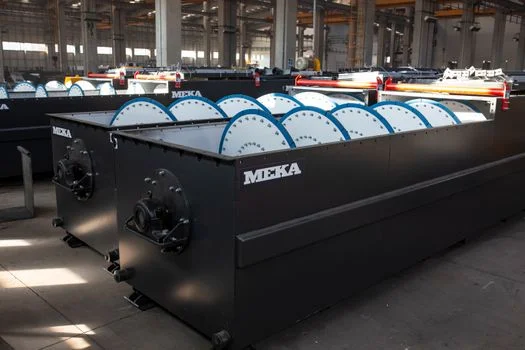
The capital expenditure (CAPEX) for industrial sewage treatment equipment in Milwaukee ranges from $30,000 for a filter press to over $2 million for advanced MBR systems, reflecting diverse technological complexities and capacities. Understanding these costs, along with operational expenditures (OPEX), is crucial for accurate budgeting and demonstrating return on investment (ROI).
For a typical industrial facility in Milwaukee, the CAPEX for a DAF system can range from $50,000 to $300,000, depending on flow rate and automation. MBR systems, offering higher treatment quality and smaller footprints, typically command a CAPEX between $200,000 and $2,000,000 or more for larger installations. Underground Package Plants are generally priced from $80,000 to $500,000. Clarifiers range from $100,000 to $400,000, and a Plate/Frame Filter Press can cost between $30,000 and $200,000.
Operational expenditure (OPEX) is often calculated per cubic meter (m³) of treated wastewater. DAF systems incur OPEX between $0.20 and $0.50 per m³, primarily due to chemical consumption and energy for air compression. MBR systems, while providing superior effluent, have higher OPEX, typically $0.40–$0.80 per m³, driven by membrane cleaning, replacement, and aeration energy. Underground Package Plants are more efficient with OPEX of $0.15–$0.30 per m³, while Clarifiers are among the lowest at $0.10–$0.25 per m³. Sludge Dewatering with a Filter Press has an OPEX of $0.05–$0.15 per m³, mainly for energy and filter cloth replacement.
Milwaukee-specific costs significantly influence the total financial picture. Permitting through MMSD can range from $5,000 to $20,000, depending on the project's complexity and discharge volume. Installation costs from local contractors typically fall between $20 and $50 per hour. Energy costs in Wisconsin, at approximately $0.12/kWh, are slightly higher than the national average of $0.10/kWh, impacting the OPEX of energy-intensive equipment like MBRs and DAFs. the DAF vs. IAF cost comparison for Milwaukee industrial buyers provides further insights into specific technology cost nuances.
ROI drivers include significant savings from water reuse (achieved with MBR systems), reduced sludge disposal costs (via filter presses), and crucially, the avoidance of substantial DNR fines and operational shutdowns. For example, a Milwaukee metal fabricator implemented a DAF system, resulting in an estimated annual saving of $120,000 by reducing surcharges and improving compliance (HydropureWater 2024).
| Equipment Type | CAPEX Range (2025, USD) | OPEX per m³ Treated (2025, USD) | Key Cost Drivers |
|---|---|---|---|
| DAF Systems | $50,000 – $300,000 | $0.20 – $0.50 | Chemicals, energy (air compressor), sludge disposal |
| MBR Systems | $200,000 – $2,000,000+ | $0.40 – $0.80 | Energy (aeration, pumps), membrane replacement, cleaning chemicals |
| Underground Package Plants | $80,000 – $500,000 | $0.15 – $0.30 | Energy (pumps, blowers), minor chemical dosing, periodic maintenance |
| Clarifiers | $100,000 – $400,000 | $0.10 – $0.25 | Energy (pumps), chemical flocculants, sludge disposal |
| Sludge Dewatering (Filter Press) | $30,000 – $200,000 | $0.05 – $0.15 | Energy (hydraulics), filter cloth replacement, polymer, labor |
Milwaukee Sewage Treatment Equipment Suppliers: Comparison & Selection Framework
Selecting the optimal sewage treatment equipment supplier in Milwaukee requires evaluating local project experience, compliance expertise, and post-sale service capabilities, which vary significantly among providers like Veolia, ALAR, and HydropureWater. A robust selection framework minimizes risk and ensures long-term operational success for industrial buyers. Key comparison criteria include the supplier's track record with similar wastewater challenges in Milwaukee (e.g., food processors, metal fabricators), their demonstrated expertise in navigating MMSD and Wisconsin DNR Chapter NR 211 compliance, and their ability to provide turnkey solutions from design and installation to operator training. Post-sale service, including response times for emergencies and reliable spare parts availability, is equally critical for maintaining continuous compliance and operational efficiency.
For instance, Veolia holds significant strengths in large-scale municipal operations, notably its contract with MMSD for managing the regional wastewater treatment system. However, its focus may often be less tailored to the specific, smaller-scale industrial pre-treatment projects common in Milwaukee's diverse manufacturing sectors. ALAR specializes in DAF and dewatering technologies, offering proven solutions for high-solids and FOG-laden industrial wastewater. While effective in its niche, ALAR may have more limited experience with advanced MBR systems or integrated underground package plants.
HydropureWater offers turnkey systems for a range of industrial applications, including local Milwaukee projects involving DAF systems for cheese plants and MBR units for metal fabricators. Their approach emphasizes comprehensive solutions, from initial wastewater characterization to installation and 24/7 post-sale service support, ensuring continuous compliance and operational reliability. Understanding the nuances of MBR system selection guide for Milwaukee’s water reuse applications is also crucial when evaluating suppliers for specific goals.
A structured selection framework helps industrial buyers make informed decisions:
- Match Equipment to Wastewater Type: Ensure the proposed technology directly addresses the specific contaminants (TSS, BOD, FOG, heavy metals) and flow characteristics of the facility's wastewater.
- Verify MMSD/DNR Compliance: Confirm the supplier's proposed system guarantees compliance with Milwaukee's specific discharge limits and pre-treatment requirements.
- Compare CAPEX/OPEX: Evaluate the total cost of ownership over the system's lifespan, considering both initial investment and ongoing operational expenses.
- Check Local References: Request and contact references from other Milwaukee-area industrial facilities that have implemented the supplier's equipment for similar applications.
- Assess Service Contracts: Review post-sale service, maintenance, and spare parts availability to ensure minimal downtime and rapid support.
| Supplier Example | Strengths (Milwaukee Focus) | Weaknesses / Niche | Local Project Focus | Compliance Expertise | Service & Support |
|---|---|---|---|---|---|
| Veolia | Large-scale municipal operations, overall system management (MMSD) | Less tailored for small-to-medium industrial pre-treatment projects | MMSD regional wastewater treatment system | High-level municipal compliance | Comprehensive for large contracts |
| ALAR | Specializes in DAF and dewatering technologies for industrial use | Limited experience with MBR or underground package plants | Industrial DAF for food processing, metal finishing | Strong in DAF-related compliance | Focused on DAF/dewatering equipment |
| HydropureWater | Turnkey systems for food processing & metalworking, local project track record | N/A (as the company providing the content, focus on strengths) | Cheese plant DAF, metal fabricator MBR in Milwaukee area | MMSD/DNR Chapter NR 211 guarantees | 24/7 service, spare parts, operator training |
Step-by-Step Guide to Selecting Zero-Risk Sewage Treatment Equipment in Milwaukee
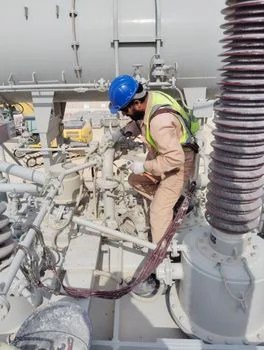
A zero-risk approach to selecting sewage treatment equipment in Milwaukee begins with a thorough wastewater characterization, often leveraging MMSD's free lab testing services for industrial users to accurately identify contaminants like TSS, BOD, FOG, and heavy metals. This initial assessment forms the bedrock of an effective and compliant system design.
- Step 1: Characterize Wastewater Thoroughly. Utilize MMSD’s free lab testing for industrial users to obtain precise data on your facility’s wastewater composition (e.g., TSS, BOD, FOG, heavy metals, pH, temperature). This data is critical for accurate equipment sizing and technology selection.
- Step 2: Determine Discharge Route and Requirements. Identify whether your treated wastewater will be discharged directly to MMSD, reused within your facility, or discharged to surface water. MMSD pre-approval is required for all industrial discharges into the regional sewer system. Understand the specific pre-treatment requirements for your chosen route.
- Step 3: Select Appropriate Equipment Type. Based on your wastewater characteristics and discharge goals, select the most suitable equipment. For high FOG and TSS, a DAF system is often ideal. For high-quality effluent and water reuse, MBR systems are preferred. For decentralized, low-maintenance needs, underground package plants are a strong option. Refer to the equipment comparison table from the previous section.
- Step 4: Request Supplier Proposals with Compliance Guarantees. Solicit detailed proposals from multiple reputable suppliers. Ensure proposals include explicit guarantees for meeting Milwaukee-specific compliance standards, such as <30 mg/L TSS and <25 mg/L BOD, and outline the technology, CAPEX, and estimated OPEX.
- Step 5: Conduct Site Visits and Reference Checks. Arrange visits to local Milwaukee facilities that are currently using the proposed equipment from your shortlisted suppliers. For example, consider visiting HydropureWater’s cheese plant DAF installation in Wauwatosa to observe real-world performance and talk to operators. Verify supplier claims with existing clients.
- Step 6: Finalize Contract with Performance-Based Milestones. Secure a contract that includes clear performance guarantees, a phased payment schedule tied to project milestones, and a final compliance test (e.g., a 90-day post-installation compliance period) to ensure the system meets all specified discharge limits.
- Step 7: Implement Staff Training and Ongoing Maintenance. Ensure your operational staff receives comprehensive training on the new system's operation and routine maintenance. MMSD offers free workshops and resources for industrial users to help maintain compliance and optimize system performance, reducing the risk of future operational issues.
This structured approach minimizes uncertainty and helps Milwaukee industrial buyers secure a sewage treatment solution that is both compliant and cost-effective, drawing lessons from similar challenges such as how Vadodara’s industrial wastewater challenges mirror Milwaukee’s in the broader industrial context.
Frequently Asked Questions
What are the Wisconsin DNR Chapter NR 211 limits for industrial wastewater?
Wisconsin DNR Chapter NR 211 limits for industrial wastewater typically mandate <30 mg/L TSS (Total Suspended Solids), <25 mg/L BOD (Biochemical Oxygen Demand), and <10 mg/L FOG (Fats, Oils, and Grease) for direct discharge or MMSD pre-treatment approval.
How much does a DAF system cost for a Milwaukee food processor?
A DAF system for a Milwaukee food processor typically has a CAPEX (Capital Expenditure) ranging from $80,000 to $200,000, depending on flow rate and features. OPEX (Operational Expenditure) is generally $0.30–$0.50 per m³ treated, with DAF systems offering 92–97% TSS removal efficiency.
Can MBR systems be used for water reuse in Milwaukee?
Yes, MBR systems are highly effective for water reuse in Milwaukee. MBR effluent consistently meets stringent Wisconsin DNR reuse standards, typically achieving <1 mg/L TSS and <5 mg/L BOD, making it suitable for non-potable applications like cooling towers, boiler feed water, or irrigation within industrial facilities.
What’s the lead time for sewage treatment equipment in Milwaukee?
The lead time for standard sewage treatment equipment like DAF systems and clarifiers in Milwaukee is typically 8–16 weeks. For more complex or custom systems such as MBR units or underground package plants, lead times can extend to 16–24 weeks, depending on design complexity and manufacturing schedules (HydropureWater 2025).
Does MMSD offer financial incentives for industrial wastewater treatment upgrades?
Yes, MMSD occasionally offers financial incentives, including low-interest loans and grants, for industrial facilities that implement wastewater treatment upgrades. These incentives often target projects that significantly reduce sewer overflows, improve water quality, or align with regional resource recovery and circular economy goals.


