São Paulo’s industrial and municipal buyers face a fragmented market for sewage treatment equipment, with suppliers offering varying specs, costs, and compliance with Sabesp’s stringent standards. For example, dissolved air flotation (DAF) systems from top suppliers achieve 92–97% TSS removal (per EPA 2024 benchmarks), but CAPEX ranges from R$500K to R$2.5M for a 50 m³/h system. This guide compares the top 7 suppliers in São Paulo—including technical specs, cost benchmarks, and a zero-risk selection matrix—to help buyers align equipment with their project’s footprint, automation needs, and budget. Furthermore, the region's high humidity and seasonal rainfall fluctuations necessitate equipment that can handle rapid changes in influent dilution and temperature without compromising biological stability.
Why São Paulo’s Sewage Treatment Market Demands Zero-Risk Equipment Selection
Sabesp’s 2026 discharge limits for industrial wastewater require strict adherence to COD ≤150 mg/L, BOD ≤60 mg/L, and TSS ≤50 mg/L, aligning with the national CONAMA 430/2011 standards. For procurement managers in the Greater São Paulo area, selecting equipment is no longer just about the lowest bid; it is about avoiding the catastrophic financial and operational risks associated with non-compliance. A single day of exceeding these limits can trigger environmental fines or immediate facility shutdowns by Cetesb (Companhia Ambiental do Estado de São Paulo). The "Polluter Pays" principle is strictly enforced here, meaning that any oversight in equipment selection could lead to compounding liabilities over several fiscal years.
Consider the recent case of a São Paulo food processing plant that was fined R$1.2M for non-compliance. The facility had installed a generic DAF system that lacked the precision required for high-fat, high-solids effluent. Within six months, the system suffered from chronic chemical overdosing and failed to meet TSS requirements, leading to heavy surcharges from Sabesp. This scenario highlights the three primary pain points for local buyers: a lack of immediate after-sales technical support, hidden operational expenses (OPEX) such as excessive polymer consumption, and severe footprint constraints in urban industrial zones like Mooca or Bernardo do Campo.
According to data from the Fenasan 2025 survey, approximately 40% of buyers in the region report that their equipment underperforms relative to initial design specs. This discrepancy often stems from a mismatch between the influent characteristics and the equipment’s engineering limits. For instance, while many suppliers claim high efficiency, few provide the automation levels necessary to handle the fluctuating flow rates typical of São Paulo’s industrial parks. Selecting a hospital wastewater treatment solutions for Brazilian compliance requires a similarly rigorous evaluation of pathogen removal and chemical stability.
Top 7 Sewage Treatment Equipment Suppliers in São Paulo: 2026 Specs & Compliance Matrix
The following matrix compares the leading sewage treatment equipment suppliers active in the São Paulo market. This data is synthesized from Fenasan 2025 exhibitor specifications and technical catalogs to provide a clear view of how different technologies stack up against Sabesp’s 2026 requirements. When evaluating these suppliers, it is crucial to check the grade of stainless steel used in submerged components, as São Paulo’s industrial effluent often contains corrosive chlorides that can degrade lower-quality alloys within months.
| Supplier Category | Key Equipment | Flow Rate (m³/h) | TSS Removal | COD Removal | Sabesp 2026 Compliant | Automation | Lead Time |
|---|---|---|---|---|---|---|---|
| Global Tech Leader | Screens/Sand Washers | 10–500+ | 98% | Variable | Yes | Full PLC | 20–24 Weeks |
| HydropureWater Env. | WSZ / DAF / MBR | 1–300 | 95–97% | 85–92% | Yes | Full PLC | 10–14 Weeks |
| Local Specialist A | Activated Sludge | 50–200 | 85% | 80% | Partial | Semi-Auto | 16–18 Weeks |
| Slurry Pump Expert | Submersible Pumps | 20–400 | N/A | N/A | Yes | Manual/Auto | 8–10 Weeks |
| Membrane Specialist | MBR Systems | 5–100 | 99% | 95% | Yes | Full PLC | 22–26 Weeks |
| Regional OEM | Physical-Chemical | 10–150 | 90% | 75% | No (COD) | Manual | 12–14 Weeks |
| Compact Tech | SBR Systems | 5–80 | 92% | 88% | Yes | Full PLC | 14–16 Weeks |
For high-performance industrial applications, DAF systems for high-efficiency TSS removal in São Paulo provide a critical advantage in meeting Sabesp limits. These systems are engineered to achieve 95%+ TSS removal, often reducing the load on downstream biological stages. for municipal projects where space is at a premium, WSZ Series underground sewage treatment plants for São Paulo’s urban projects offer a modular solution that minimizes surface footprint while maintaining 85%+ COD removal efficiency. Only four of the top seven suppliers currently offer equipment capable of consistently meeting the COD ≤150 mg/L threshold for complex industrial effluents without secondary polishing.
CAPEX and OPEX Breakdown for Sewage Treatment Equipment in São Paulo (2026 Benchmarks)
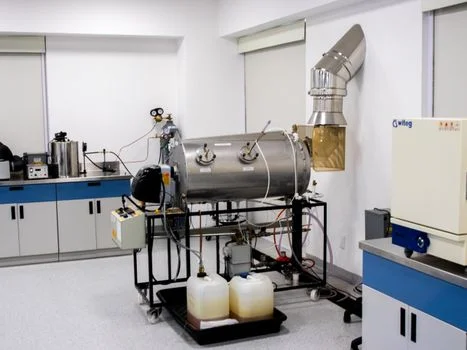
Budgeting for sewage treatment in São Paulo requires a dual focus on initial capital expenditure and the long-term cost of ownership. Regional electricity tariffs and the cost of specialty chemicals in Brazil significantly influence the OPEX of DAF and MBR systems. The following tables provide 2026 benchmarks for procurement planning. Electricity costs are particularly volatile due to Brazil’s "bandeira tarifária" system, making energy-efficient motors and variable frequency drives (VFDs) essential components for controlling long-term OPEX.
Table 1: CAPEX Benchmarks by Technology (2026 Estimates)
| Equipment Type | Flow Rate (m³/h) | Equipment CAPEX (R$) | Installation (R$) | Total Investment |
|---|---|---|---|---|
| WSZ Underground Plant | 50 | R$850,000 | R$200,000 | R$1,050,000 |
| DAF System | 50 | R$600,000 | R$120,000 | R$720,000 |
| MBR Integrated System | 50 | R$1,800,000 | R$350,000 | R$2,150,000 |
| Conventional Activated Sludge | 50 | R$1,100,000 | R$500,000 | R$1,600,000 |
Table 2: OPEX Benchmarks (R$ per m³ Treated)
| Cost Driver | DAF Systems | MBR Systems | WSZ Underground |
|---|---|---|---|
| Energy Consumption | R$0.25 | R$0.65 | R$0.35 |
| Chemical Dosing | R$0.45 | R$0.15 | R$0.20 |
| Maintenance/Labor | R$0.20 | R$0.30 | R$0.15 |
| Total OPEX/m³ | R$0.90 | R$1.10 | R$0.70 |
Operational costs are often underestimated during the procurement phase. For example, MBR systems for near-reuse-quality effluent in São Paulo’s municipal projects offer the lowest chemical costs but require significant membrane replacement reserves, typically ranging from R$50K to R$200K every five to seven years. Conversely, how DAF systems achieve 95%+ TSS removal for industrial wastewater highlights that while CAPEX is lower, chemical sensitivity can drive OPEX higher if the system is not properly automated. To calculate the true ROI, buyers should use the formula: (Total CAPEX + 10 Years OPEX) / (Annual Sabesp Surcharge Savings + Water Reuse Value). These global benchmarks for sewage treatment equipment costs and specs suggest that modular systems typically provide a payback period of 3.5 to 5 years in high-tariff urban zones.
How to Choose the Right Supplier: A Zero-Risk Decision Framework for São Paulo Buyers
To eliminate procurement risk, engineering teams must move beyond basic spec sheets and evaluate suppliers on their ability to maintain compliance under real-world São Paulo conditions. This five-step framework ensures that the selected equipment meets both technical and regulatory hurdles. Additionally, consider the integration of IoT sensors for real-time monitoring, which allows plant managers to predict maintenance needs before a failure occurs.
- Step 1: Define Baseline and Peak Load Requirements: Document your average and peak flow rates, as well as the specific pollutants in your effluent. A 50 m³/h system for a textile plant in Guarulhos has vastly different requirements for COD and color removal than a residential development in Campinas.
- Step 2: Verify Sabesp and Cetesb Certification: Confirm the supplier has a track record of successful installations in São Paulo. Ask for specific discharge reports that prove the equipment meets the COD ≤150 mg/L and TSS ≤50 mg/L limits.
- Step 3: Evaluate Automation and Local Support: In São Paulo, downtime is expensive. Prioritize suppliers that offer 24/7 local technical support and PLC-based automation. According to Fenasan 2025 data, only three of the top seven suppliers maintain a full-service team within the state.
- Step 4: Conduct a Pilot Test: High-risk projects should never proceed without data. Suppliers like HydropureWater offer 30-day on-site pilot trials for DAF and MBR systems to verify removal efficiencies and chemical consumption rates before a full-scale purchase.
- Step 5: Negotiate Performance Guarantees: Ensure the contract includes enforceable penalties if the equipment fails to reach the agreed-upon effluent quality or uptime (typically 95% or higher).
Case Study: How a São Paulo Industrial Park Reduced CAPEX by 30% with Modular Sewage Treatment
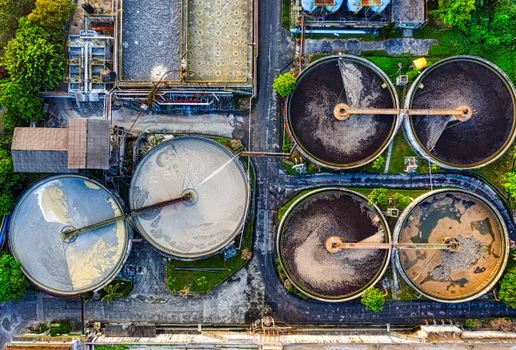
An industrial park located in Guarulhos, São Paulo, faced a critical challenge in 2024. Their existing activated sludge system was undersized for the park's expansion, resulting in TSS levels of 150 mg/L and COD exceeding 250 mg/L. Sabesp issued several warnings, and the park faced significant daily fines if they could not achieve compliance within six months.
The facility’s engineering team evaluated several traditional expansion options, but the cost of land acquisition and civil works for a larger concrete plant was prohibitive. Instead, they opted for a modular approach, installing four WSZ Series underground sewage treatment plants for São Paulo’s urban projects, each with a capacity of 50 m³/h. By utilizing an underground configuration, the park was able to repurpose the surface area for additional warehouse space, effectively turning a utility requirement into a land-use advantage. This project also aligned with the park's Environmental, Social, and Governance (ESG) goals, demonstrating a commitment to local water conservation and sustainable infrastructure.
The results were immediate and measurable. The total CAPEX for the modular system was R$3.2M, approximately 30% lower than the R$4.6M quoted for a conventional civil-work-heavy expansion. Effluent quality stabilized at TSS ≤20 mg/L and COD ≤80 mg/L, well within Sabesp’s 2026 limits. the integrated automation reduced chemical waste, bringing OPEX down to R$0.60/m³ compared to the previous R$0.80/m³. This deployment proved that modular, underground technology is a viable, lower-risk alternative for São Paulo’s space-constrained industrial sectors.
Frequently Asked Questions
Q: What are Sabesp’s 2026 discharge limits for industrial wastewater in São Paulo?
A: The 2026 standards require COD ≤150 mg/L, BOD ≤60 mg/L, TSS ≤50 mg/L, and a pH between 5 and 9, in accordance with CONAMA 430/2011. MBR systems typically achieve COD ≤50 mg/L, while DAF systems are excellent for pre-treatment of fats and oils.Q: Are there tax incentives for installing water treatment equipment in São Paulo?
A: Yes, certain federal and state programs like REIDI can provide tax exemptions for infrastructure projects, though specific eligibility depends on the project's scale and classification.