Why SO2 Scrubbers Matter for Industrial Compliance
The SO2 scrubber working principle is wet alkaline absorption that removes 95–99% of sulfur dioxide from industrial flue gas. Hot gas contacts lime, limestone, or caustic slurry in an absorber, converting SO2 into sulfite or gypsum solids. Typical limestone trains quench gas from 120–180°C to about 50–60°C at L/G 5–15 L/m³ and pH 5.5–6.5.
Earlier materials often cited a 50 ppmv SO2 target for new coal boilers. According to US EPA 40 CFR 60.43Da (eCFR, current), units built after May 3, 2011 must meet 130 ng/J (1.0 lb/MWh) gross output or 97 percent SO2 reduction. In the European Union, Directive 2010/75/EU still sets 200 mg/Nm³ SO2 for solid-fuel plants above 300 MWth. China’s GB 13223-2023 ultra-low-emission zones continue to demand levels as low as 35 mg/m³.
Failure to meet these benchmarks triggers financial penalties as well as environmental harm. For example, a 500 MW coal-fired power plant in Poland faced EU IED fines exceeding €2.5 million annually before upgrading its aging scrubber system. By implementing a modern limestone forced-oxidation system, the facility reduced SO2 concentrations from 1,200 ppmv to just 20 ppmv. This transition secured regulatory compliance and stabilized the plant's operational permit. The reaction CaCO3 + SO2 + 0.5O2 → CaSO4·2H2O (gypsum) supports those outlet levels when oxidation air and stoichiometry stay in range.
SO2 Scrubber Working Principle: Chemical Reactions and Process Flow
Wet SO2 scrubbers convert gaseous sulfur dioxide into a stable solid or liquid byproduct through gas–liquid mass transfer and alkaline neutralization. Gaseous SO2 diffuses across the liquid film and reacts with dissolved alkaline species, following two-film mass-transfer theory. Large industrial trains commonly use limestone (CaCO3) because it is abundant and low cost, as applied in a Flue Gas Desulfurization (FGD) Scrubber System for combined SO2 and particulate capture.
The primary chemical reactions for SO2 absorption include:
- Limestone: CaCO3(s) + SO2(g) → CaSO3(s) + CO2(g)
- Lime: Ca(OH)2(s) + SO2(g) → CaSO3(s) + H2O(l)
- Caustic Soda: 2NaOH(aq) + SO2(g) → Na2SO3(aq) + H2O(l)
In limestone and lime systems, a critical "forced oxidation" step is employed to stabilize the byproduct. Air is injected into the absorber sump to convert calcium sulfite into calcium sulfate dihydrate, commonly known as synthetic gypsum: CaSO3 + 0.5O2 + 2H2O → CaSO4·2H2O. This byproduct is then dewatered and can be sold for wallboard manufacturing or cement production.
The engineering process flow follows five distinct stages:
- Flue Gas Cooling: Hot flue gas (120–180°C) enters the absorber and is quenched by the reagent slurry, cooling it to its adiabatic saturation temperature (typically 50–60°C).
- Reagent Slurry Contact: The gas moves upward through a packed bed or spray zone, encountering a counter-current flow of alkaline slurry.
- SO2 Absorption: SO2 is absorbed into the liquid droplets, where the neutralization reactions occur.
- Oxidation: In the bottom sump, oxygen is introduced to complete the conversion to gypsum.
- Gypsum Dewatering: The resulting slurry is pumped to hydrocyclones and vacuum filters to produce a solid byproduct with 5–15% moisture content.
| Process Stage | Input Parameters | Output Parameters | Primary Objective |
|---|---|---|---|
| Quench/Cooling | 150°C Flue Gas | 55°C Saturated Gas | Protect internal linings & improve absorption |
| Absorption | 1,500 ppm SO2 | <30 ppm SO2 | Mass transfer of SO2 to liquid phase |
| Oxidation | CaSO3 Slurry | CaSO4·2H2O (Gypsum) | Stabilize byproduct for disposal/sale |
Key Engineering Parameters for SO2 Scrubber Design
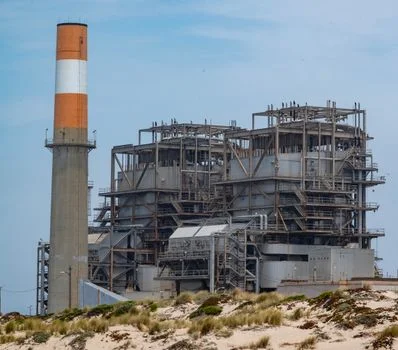
SO2 scrubber working principle design hinges on liquid-to-gas ratio: for limestone-based scrubbers L/G typically ranges from 5 to 15 L/m³, the most critical variable for balancing SO2 capture versus auxiliary power demand. A higher L/G ratio increases reaction surface area for high-sulfur fuels. It also raises OPEX through higher slurry-pump electricity use. Engineers must also carefully control the slurry pH; for limestone, a pH range of 5.5–6.5 is ideal. If the pH drops below 5.0, absorption efficiency plummets; if it rises above 7.0, the risk of calcium carbonate scaling on the internal packing becomes critical (HydropureWater field data, 2025).
Gas velocity within the absorber is another vital spec. Standard packed bed absorbers operate at 1.5–2.5 m/s. Exceeding 3.0 m/s leads to "liquid entrainment," where the flue gas carries reagent droplets out of the stack, causing "rainout" and damaging downstream equipment. Reagent stoichiometry—the molar ratio of reagent to SO2—is kept between 1.02 and 1.05 for limestone to ensure near-complete removal without wasting raw materials. Finally, the system pressure drop must be managed between 1.5 and 3.0 kPa to prevent excessive load on the induced draft (ID) fans.
| Design Parameter | Limestone (Wet) | Lime (Wet) | Caustic Soda |
|---|---|---|---|
| L/G Ratio (L/m³) | 10–15 | 3–10 | 2–8 |
| Operating pH Range | 5.5–6.5 | 6.0–7.0 | 7.0–8.0 |
| Gas Velocity (m/s) | 1.8–2.2 | 2.0–2.5 | 2.0–3.0 |
| Stoichiometry (mol/mol) | 1.03–1.05 | 1.01–1.03 | 1.00–1.02 |
| Typical Pressure Drop (kPa) | 2.0–3.0 | 1.5–2.5 | 1.0–2.0 |
Lime vs. Limestone vs. Caustic Soda: Reagent Comparison for SO2 Scrubbers
Limestone is the most cost-effective reagent for large-scale SO2 removal, priced between $20 and $40 per ton. It does require higher stoichiometry than lime or caustic soda. While limestone has a lower reactivity, its ability to produce high-quality gypsum makes it the standard for the power industry. In contrast, hydrated lime (Ca(OH)2) is more reactive and requires a lower L/G ratio, which reduces the size and CAPEX of the absorber. However, lime costs significantly more ($80–$120/ton), making it more suitable for medium-scale facilities or plants with restricted space for large absorber towers.
Caustic soda (NaOH) offers the highest removal efficiency and the simplest operation, as it forms highly soluble sodium salts that eliminate the risk of scaling. However, at $300–$500 per ton, caustic soda is rarely economic for high-volume flue gas unless SO2 is very low or duty is intermittent. Caustic soda does not produce a sellable solid byproduct; instead, it generates a liquid wastewater stream that requires secondary treatment. For caustic trains, HydropureWater’s PLC-controlled chemical dosing systems for precise reagent delivery help limit chemical waste and hold pH steady.
| Feature | Limestone | Lime | Caustic Soda |
|---|---|---|---|
| Reagent Cost | Low ($20–40/ton) | Medium ($80–120/ton) | High ($300–500/ton) |
| Removal Efficiency | 95–98% | 97–99% | 99%+ |
| Byproduct Value | High (Saleable Gypsum) | Medium (Gypsum) | None (Wastewater) |
| Scaling Risk | Moderate to High | Moderate | Zero |
| Operational Complexity | High (Slurry Handling) | Moderate | Low (Liquid Handling) |
How to Select the Right SO2 Scrubber System for Your Facility
Selecting an SO2 scrubber system requires calculating removal efficiency from peak fuel sulfur and the facility’s regulatory ceiling. A mismatch in system sizing can lead to either non-compliance fines or excessive energy consumption. Procurement teams should follow this 5-step engineering framework:
- Characterize Flue Gas: Determine peak SO2 concentration (ppmv), total flow rate (Nm³/h), temperature, and inlet particulate load. For example, a 200 MW plant emitting 2,000 ppmv SO2 at 500,000 Nm³/h requires a system capable of handling high mass transfer rates.
- Define Regulatory Targets: Identify the strictest limit applicable (e.g., EU IED at 200 mg/Nm³). Explore detailed FGD scrubber engineering specs and selection criteria to see how these limits influence material choice.
- Calculate Required Removal Efficiency: If your inlet is 5,700 mg/Nm³ (approx. 2,000 ppmv) and your limit is 200 mg/Nm³, you need 96.5% removal. This efficiency level dictates a wet scrubbing approach over a dry sorbent injection.
- Reagent and Byproduct Strategy: Evaluate local reagent availability. If a local wallboard factory can purchase gypsum, limestone forced oxidation is the clear winner for ROI. If space is limited and no byproduct market exists, a lime-based system may be preferable.
- Size the Absorber: Use the gas velocity (2.0 m/s) and L/G ratio (12 L/m³) to determine the absorber diameter and pump head requirements. Ensure the mist eliminators are rated for the calculated gas velocity.
In many cases, SO2 scrubbers are preceded by particulate control devices. You can learn how pulse jet dust collectors enhance SO2 scrubber performance by cutting solids load in the slurry. Lower solids reduce nozzle plugging and abrasive wear on internals.
Common SO2 Scrubber Problems and How to Troubleshoot Them
Calcium sulfate scaling is the primary operational failure mode in wet FGD systems. It often occurs when absorber pH exceeds 7.0 or when sulfite oxidation is too slow. This hard scale builds up on packing media and mist eliminators, increasing pressure drop and reducing gas-liquid contact. To troubleshoot, operators must verify that the oxidation air blowers are delivering the stoichiometric oxygen requirement and consider adding organic acid scale inhibitors to the slurry.
Corrosion is another significant threat, particularly in the "wet-dry interface" where hot gas first meets the slurry. Low pH levels (below 5.0) caused by high SO2 loading or reagent feed failure can lead to rapid pitting in stainless steel components. Using high-nickel alloys like Hastelloy C-276 or rubber-lined carbon steel in these zones is a standard engineering practice. Additionally, reagent carryover—where slurry droplets exit the stack—is usually caused by gas velocities exceeding 3.0 m/s or fouled mist eliminators. Quarterly inspections of the mist eliminator wash nozzles are essential to maintain system integrity.
"Proactive monitoring of the slurry solids concentration is vital; maintaining a level between 10% and 15% ensures optimal gypsum crystal growth and prevents dewatering issues in the vacuum filters." — HydropureWater Engineering Operations Manual, 2025.
Treating Scrubber Blowdown and Related Water Processes
Wet FGD blowdown often carries suspended solids, sulfate, and dissolved metals that need a dedicated water train. Plants that also face heavy-metal polishing can review chemical precipitation for copper removal when copper or similar metals appear in purge streams.
What is MBR working principle?
Membrane bioreactor (MBR) working principle combines biological oxidation with ultrafiltration membranes that retain mixed liquor solids. Industrial duty often holds 8,000–12,000 mg/L MLSS. For FGD wastewater organics and fine solids after primary clarification, MBR produces filtrate suitable for reuse or discharge polishing when soluble COD and suspended solids must both drop.
What is lamella clarifier working principle?
Lamella clarifier working principle uses inclined plates to shorten particle settling distance. That raises effective clarification area inside a compact footprint. Gypsum fines and precipitated solids from scrubber purge often settle on lamella packs before thickening. That cuts clarifier area versus a rectangular basin at the same overflow rate.
How does a sludge thickening centrifuge work?
A sludge thickening centrifuge separates solids from FGD purge slurry by high-speed rotation, typically raising cake solids before filter-press or landfill handling. Operators set bowl speed and differential to balance capture versus polymer dose when gypsum crystal size varies with oxidation rate.
Who this is for: plant engineers sizing wet FGD for coal, petcoke, or high-sulfur process gas. Who should look elsewhere: sites with very low SO2 and intermittent duty may prefer dry sorbent injection instead. For a duty-specific L/G, pH, and reagent comparison, share flue-gas data with the equipment team before locking CAPEX.
Frequently Asked Questions
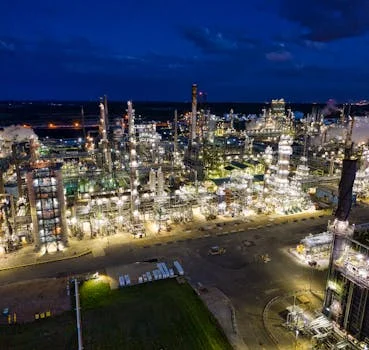
What is the difference between wet and dry FGD systems?
Wet FGD systems use an alkaline slurry to achieve 95–99% SO2 removal and are ideal for large-scale, high-sulfur applications. Dry FGD systems spray a dry sorbent or a fine mist into the gas stream, achieving 80–90% removal. While dry systems have lower CAPEX and produce no wastewater, their lower efficiency and higher reagent costs often result in higher long-term OPEX for large plants.
How much does a SO2 scrubber system cost?
For coal-fired power plants, CAPEX typically ranges from $50 to $150 per kW of plant capacity. For a 500 MW plant, this equates to a $25M–$75M investment. OPEX is generally between $0.002 and $0.005 per kWh, with reagent costs accounting for approximately 60–70% of the total operating budget.
What are the emission limits for SO2 in the EU and US?
According to US EPA 40 CFR 60.43Da for units after May 3, 2011, SO2 limits are 130 ng/J (1.0 lb/MWh) gross or 97% reduction. That is not a single 50 ppmv ceiling. The EU IED still mandates 200 mg/Nm³ for solid-fuel plants over 300 MWth, while ultra-low-emission zones in China require 35 mg/m³.
Can SO2 scrubbers remove NOx?
Standard wet SO2 scrubbers are inefficient at NOx removal, capturing less than 30% of total nitrogen oxides because nitric oxide (NO) is largely insoluble in water. For comprehensive emission control, scrubbers must be paired with Selective Catalytic Reduction (SCR) or Selective Non-Catalytic Reduction (SNCR) systems located upstream of the scrubber.
What is ozone generator for water treatment working principle?
An ozone generator for water treatment working principle forms O3 by corona discharge or UV. Dissolved ozone then oxidizes COD, color, and odor compounds. On FGD purge or caustic scrubber wastewater, ozone is a polishing step after solids removal when residual organics block reuse targets.