Wastewater Treatment Plant Cost in Connecticut 2025: CAPEX, OPEX & Tech-Specific Breakdown for Industrial Buyers
In 2025, wastewater treatment plant costs in Connecticut range from $5M for a 0.1 MGD prefabricated industrial system to $200M+ for a 15 MGD municipal plant like Norwich’s. CAPEX is driven by technology (MBR systems cost 30–50% more than conventional activated sludge) and site constraints (rock excavation adds $200–$400/m³). OPEX averages $0.50–$2.50/m³, with energy (40% of OPEX) and sludge disposal ($0.15–$0.30/lb dry solids) as the largest variable costs. Connecticut’s strict nutrient limits (TN < 3 mg/L, TP < 0.2 mg/L) require advanced tertiary treatment, adding 15–25% to CAPEX.
Why Connecticut’s Wastewater Treatment Costs Are Rising in 2025
The financial profile of wastewater infrastructure in Connecticut is currently defined by a sharp upward trajectory. The Norwich Public Utilities (NPU) $200 million wastewater treatment plant upgrade, a 15 MGD facility, serves as a benchmark for the current market. This project reflects the 18% increase in regional construction costs observed since 2020, as tracked by the Engineering News-Record (ENR) Construction Cost Index. For industrial facility managers, these figures signal that historical budget benchmarks are no longer applicable.
Regulatory pressure from the Connecticut Department of Energy and Environmental Protection (DEEP) is a primary driver of these escalating costs. The 2024 nutrient limits, requiring Total Nitrogen (TN) levels below 3 mg/L and Total Phosphorus (TP) below 0.2 mg/L, necessitate the integration of advanced tertiary treatment stages. According to EPA Nutrient Control Cost Estimates, achieving these concentrations typically adds 15–25% to the total CAPEX of a new facility compared to standard secondary treatment systems. Connecticut’s labor market presents a unique challenge for OPEX forecasting; the average gross salary for a wastewater treatment plant operator in Connecticut is $73,595, which is approximately 14% higher than the national average.
Waste management logistics also contribute to the high cost of doing business in the state. Sludge disposal costs in Connecticut currently range between $0.15 and $0.30 per pound of dry solids. These rates are roughly 30% higher than the national median, driven by limited local landfill capacity and the implementation of stricter PFAS (per- and polyfluoroalkyl substances) monitoring requirements at disposal sites. For a comparative perspective, how Georgia’s industrial wastewater costs compare to Connecticut’s reveals that southern states often benefit from significantly lower labor and disposal overheads, highlighting the premium paid for Connecticut compliance.
CAPEX Breakdown: How Plant Size and Technology Impact Costs
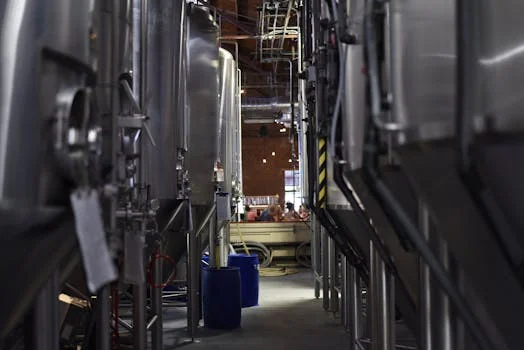
Capital expenditure (CAPEX) for a wastewater treatment plant in Connecticut is not a linear function of flow rate. Economies of scale are present, but they are often offset by the technical complexity required to meet high-purity effluent standards. For industrial buyers, the choice between a custom civil-engineered plant and a modular system is the most significant financial decision in the planning phase.
| Plant Capacity (MGD) | Estimated CAPEX Range (USD) | Technology Type | Construction Duration |
|---|---|---|---|
| 0.1 MGD | $800,000 – $1,500,000 | Prefabricated / Modular | 6 – 10 Months |
| 1.0 MGD | $8,000,000 – $12,000,000 | Conventional Activated Sludge | 18 – 24 Months |
| 1.0 MGD | $11,000,000 – $16,000,000 | Membrane Bioreactor (MBR) | 14 – 18 Months |
| 10.0 MGD | $80,000,000 – $120,000,000 | Custom Civil / BNR | 30 – 42 Months |
| 15.0 MGD | $150,000,000 – $200,000,000+ | Advanced Tertiary (e.g., Norwich) | 48 – 60 Months |
Technology selection acts as a cost multiplier on the base construction rate. Conventional activated sludge systems serve as the 1.0x baseline. In contrast, MBR systems for Connecticut’s strict nutrient limits carry a 1.3x to 1.5x multiplier due to the cost of membrane modules and high-capacity aeration systems. For facilities dealing with high fats, oils, and grease (FOG), DAF systems for industrial pretreatment in Connecticut represent a 1.2x multiplier but are essential for preventing downstream process failures.
Site-specific constraints in Connecticut can inflate these budgets rapidly. Rock excavation is a common issue in the state’s geology, adding $200 to $400 per cubic meter to foundation costs. Additionally, soft costs—including DEEP permitting, environmental impact studies, and wetland mitigation—can account for 15% to 25% of the total project budget. Prefabricated plants can mitigate some of these costs, often reducing total CAPEX by 15–25% by minimizing on-site civil work and shortening the project timeline by up to 40%.
OPEX Drivers: Energy, Chemicals, and Sludge Disposal Costs
OPEX in Connecticut is dominated by energy consumption, chemical demand, and sludge management.Operating expenditure (OPEX) in Connecticut is dominated by three variables: energy consumption, chemical demand for nutrient removal, and sludge management. Energy typically accounts for 40% of a plant’s annual operating budget. Aeration alone consumes between 0.3 and 0.6 kWh per cubic meter of treated water. Because MBR systems operate at higher Mixed Liquor Suspended Solids (MLSS) concentrations, they require 20–30% more energy for membrane scouring and oxygen transfer compared to conventional systems, according to 2024 EPA benchmarks.
Chemical costs are highly sensitive to influent variability. To meet phosphorus limits of 0.2 mg/L, plants must employ precise chemical dosing for nutrient removal compliance, utilizing coagulants like ferric chloride or aluminum sulfate. Typical chemical costs range from $0.05 to $0.15 per cubic meter for coagulants and an additional $0.02 to $0.08 for polymer flocculants. Without automated dosing, chemical waste can increase OPEX by as much as 15% annually.
Sludge disposal remains the most volatile OPEX component. Connecticut’s 2024 PFAS regulations have restricted land application options, forcing many facilities to transport sludge to out-of-state incinerators or specialized landfills. This has pushed local costs to $0.20–$0.30 per pound of dry solids. To combat this, industrial facilities are increasingly investing in sludge dewatering to reduce disposal costs in Connecticut, as increasing cake dryness from 15% to 30% effectively halves the weight-based disposal fee. Finally, labor costs must be factored in; a 1 MGD plant typically requires one full-time operator ($73,595 average) plus a maintenance technician for every 5 MGD of capacity ($65,000 average).
MBR vs. Conventional Systems: Cost and Performance Trade-Offs
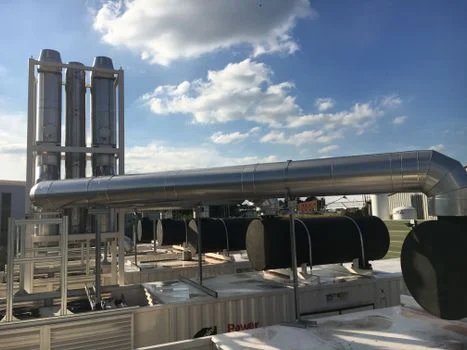
For Connecticut industrial buyers, the choice between Membrane Bioreactors (MBR) and Conventional Activated Sludge (CAS) is often a trade-off between footprint and long-term compliance security. MBR technology integrates biological degradation with membrane filtration, eliminating the need for secondary clarifiers and tertiary sand filters.
| Feature | Conventional Activated Sludge (CAS) | Membrane Bioreactor (MBR) |
|---|---|---|
| CAPEX (1 MGD) | $8M – $10M | $11M – $14M |
| Energy Demand | 0.3 – 0.5 kWh/m³ | 0.6 – 0.8 kWh/m³ |
| Footprint Requirement | 100% (Baseline) | 30% – 40% of CAS |
| Effluent Quality (TSS) | 10 – 20 mg/L | < 1 mg/L |
| Sludge Yield | Higher | 15% Lower (due to high SRT) |
While MBR systems carry a 30–50% CAPEX premium, they are often the only viable option for urban sites in Stamford, Hartford, or New Haven where land is unavailable for large clarifiers. Understanding the MBR membrane module working principle reveals why these systems excel at meeting Connecticut’s strict reuse standards; the physical barrier of the membrane ensures effluent BOD and TSS levels remain consistently below 10 mg/L and 1 mg/L, respectively, without the risk of "bulking" common in conventional clarifiers.
From an OPEX perspective, MBRs increase energy costs but provide a significant advantage in sludge management. By operating at a longer Sludge Retention Time (SRT), MBRs produce roughly 15% less biological sludge than CAS systems, directly reducing the high disposal fees associated with Connecticut's waste regulations. For a detailed technical comparison, facility engineers should review how DAF clarifiers remove 95%+ suspended solids as a potential pretreatment step to reduce the organic load on MBR membranes, thereby extending their service life.
Connecticut-Specific Compliance Costs: DEEP Permits and Nutrient Limits
Navigating the Connecticut DEEP regulatory framework requires a dedicated budget for "soft costs."Navigating the Connecticut DEEP regulatory framework requires a dedicated budget for "soft costs." For a new industrial wastewater discharge, the permitting process alone can take 12 to 18 months. Application fees for the General Permit for the Discharge of Process Wastewater and Stormwater range from $5,000 to $50,000, but the associated engineering studies—including anti-degradation reviews and mixing zone modeling—typically cost between $50,000 and $200,000.
Nutrient removal is the most expensive technical requirement for Connecticut plants. To achieve TN < 3 mg/L, facilities must implement multi-stage BNR (Biological Nutrient Removal) or denitrification filters. These additions typically add $1.5M to $3M per MGD to the CAPEX. Phosphorus removal is equally rigorous; achieving TP < 0.2 mg/L often requires two-point chemical precipitation combined with tertiary filtration. Failure to meet these limits can result in fines exceeding $25,000 per day per violation under the Clean Water Act.
Emerging PFAS compliance is the newest cost center. Connecticut’s 2024 limits for PFOA and PFOS in drinking water (14 ppt) are influencing wastewater discharge expectations. If a facility is identified as a significant PFAS source, DEEP may require the installation of Granular Activated Carbon (GAC) or Reverse Osmosis (RO) systems. These technologies can add $0.5M to $1M per MGD to CAPEX and increase OPEX by 20% due to media replacement costs. Additionally, the 2025 MS4 (Municipal Separate Storm Sewer System) permit requirements necessitate advanced stormwater management, adding up to $1M in site development costs for infiltration basins and green infrastructure.