New Orleans Sewage Treatment Equipment Suppliers: 2025 Selection Guide with LDEQ Compliance and Coastal Engineering Specs
New Orleans equipment suppliers must size sewage treatment trains for LDEQ LPDES schedule limits that often run tighter than federal secondary treatment, while resisting coastal salinity up to 35,000 mg/L TDS. Federal EPA secondary treatment still sets 30 mg/L BOD5 and 30 mg/L TSS as 30-day averages (40 CFR 133.102). LDEQ sanitary general permit LAG560000 instead assigns schedule-specific monthly averages such as 20 mg/L BOD with 20 mg/L TSS, or tighter Schedule C values of 10 mg/L BOD with 15 mg/L TSS. Systems that chase ≤10 mg/L TSS and ≤15 mg/L BOD design targets need advanced solids and biological polishing. Coastal builds that specify 316L stainless steel, FRP, or epoxy-coated steel typically add a 20–30% material premium. CAPEX still spans about $50K for small package plants to over $2M for industrial MBR trains.
Why New Orleans Wastewater Treatment Needs Are Unique: LDEQ Limits, Salinity, and Coastal Corrosion Risks
Louisiana Department of Environmental Quality issues LPDES sanitary limits by schedule, not one citywide 10/15 rule. Common LAG560000 schedules use 20 mg/L BOD and 20 mg/L TSS monthly averages; Schedule C tightens to 10 mg/L BOD and 15 mg/L TSS monthly averages, with 15 mg/L and 23 mg/L daily maxima. Those limits protect wetlands and Mississippi River receiving waters. Procurement teams comparing New Orleans equipment suppliers should read the facility authorization letter before freezing equipment specs.
Coastal salinity adds a second engineering problem. Total Dissolved Solids in brackish water can reach 35,000 mg/L, close to seawater levels, which accelerates electrochemical corrosion of conventional carbon steel. High chloride content drives pitting corrosion that can hole carbon steel in 3–5 years. A coastal refinery in Plaquemines Parish suffered operational disruptions and faced EPA penalty exposure after widespread corrosion in its wastewater system. The Port of New Orleans replaced multiple carbon steel DAF units with 316L stainless steel after failures inside four years and saw maintenance costs drop by 40%. Earlier Region 6 briefings often cited $37,500 per day; EPA's January 8, 2025 inflation adjustment sets Clean Water Act judicial civil penalties under 33 U.S.C. 1319(d) at $68,445 per day for assessments on or after that date (Federal Register, 2025).
| Parameter | LDEQ Standard (New Orleans) | Federal EPA Secondary Treatment | Impact on Equipment Selection |
|---|---|---|---|
| Total Suspended Solids (TSS) | ≤ 10 mg/L | ≤ 30 mg/L | Requires advanced filtration (e.g., MBR, tertiary filters) |
| Biochemical Oxygen Demand (BOD) | ≤ 15 mg/L | ≤ 30 mg/L | Demands highly efficient biological treatment processes |
| Coastal Salinity (TDS) | Up to 35,000 mg/L | N/A (varies by location) | Mandates corrosion-resistant materials (316L SS, FRP, specialized coatings) |
| EPA Region 6 Penalties | Up to $37,500/day | Up to $59,017/day (maximum per violation, 2024) | High financial risk for non-compliance; justifies investment in reliable systems |
Engineering Specs for Salinity-Resistant Sewage Treatment Equipment: Materials, Coatings, and Design Standards
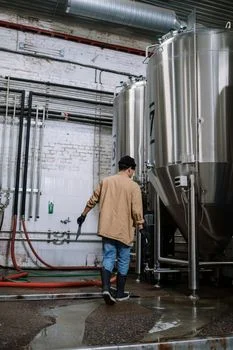
Specifying the right materials and coatings is what separates a 4-year coastal installation from a 20-year one. Carbon steel remains the cheapest option, but service life in high-salinity service rarely exceeds 3–5 years because chloride-driven pitting and galvanic corrosion attack weld zones and stagnant pockets. Most plants we size for the Gulf coast move to 316L stainless steel, Fiber Reinforced Plastic (FRP), or epoxy-coated carbon steel, which adds 10–30% to material cost but extends service life to 12–25 years.
| Material Type | Cost Premium (vs. Carbon Steel) | Typical Lifespan (Coastal) | Chloride Resistance | Key Considerations |
|---|---|---|---|---|
| Carbon Steel | Base (0%) | 3–5 years | Poor | Rapid pitting corrosion, galvanic corrosion risk |
| Epoxy-Coated Carbon Steel | 10–15% | 8–12 years | Moderate (coating dependent) | Requires minimum 250 μm thickness; susceptible to mechanical damage |
| 316L Stainless Steel | 20–30% | 15–20+ years | Excellent | Superior resistance to pitting and crevice corrosion; higher initial CAPEX |
| Fiber Reinforced Plastic (FRP) | 15–25% | 20–25+ years | Excellent | Lightweight, non-corrosive, but can be brittle; UV protection needed |
Sacrificial anode systems add another 5–7 years of service in high-salinity service. Zinc or magnesium anodes placed inside tanks or on submerged components preferentially corrode, protecting critical metal structures through cathodic protection. Where direct metal exposure cannot be avoided, fusion-bonded epoxy (FBE), polyurethane, or ceramic coatings with a minimum dry film thickness of 250 μm provide barrier protection. Avoid crevices, sharp edges, and stagnant zones in the design; chlorides concentrate in those spots and initiate crevice corrosion. For pumping service, submersible pumps with duplex stainless steel impellers (CD4MCuN or 2205) and ceramic mechanical seals, built to API 610 for centrifugal pumps, are the standard choice for salty, abrasive wastewater. HydropureWater's DAF systems for FOG-heavy industrial wastewater in coastal environments integrate these material and design principles for extended service life.
Top 5 Sewage Treatment System Types for New Orleans: LDEQ Compliance, CAPEX, and Use-Case Matching
Choosing the right treatment train balances LDEQ schedule compliance, capital cost, operating cost, and site constraints such as footprint and influent strength. Match the system to the wastewater; do not force one technology onto every coastal site.
Membrane Bioreactor (MBR) systems consistently produce near-reuse effluent with sub-1 μm filtration. That margin helps when a permit or buyer target sits near 10 mg/L TSS and 15 mg/L BOD. MBRs carry about 30% higher CAPEX than conventional systems but need 60% less footprint, which matters on tight urban sites. HydropureWater's MBR systems for near-reuse-quality effluent in space-constrained New Orleans projects are built around this advantage.
Dissolved Air Flotation (DAF) systems fit industrial streams with high Fats, Oils, and Grease (FOG), such as food processing or petrochemical plants. Properly sized units reach 90–95% FOG removal and cut the load on downstream biology. Underground Package Sewage Treatment Plant (WSZ Series) integrated package plants handle 1–80 m³/h flows for small municipal or commercial sites with anoxic/aerobic (A/O) nutrient removal and minimal operator attention. Conventional activated sludge is the lowest CAPEX path ($50K–$500K) but burns 0.3–0.6 kWh/m³ on aeration and produces sludge that costs real money to handle. Sequencing Batch Reactors (SBRs) combine equalization, biological treatment, and clarification in one tank, which suits variable industrial flows.
| System Type | TSS Removal Efficiency | Footprint (vs. Activated Sludge) | CAPEX Range (2025) | OPEX (kWh/m³) | LDEQ Compliance Risk | Best Use Case (New Orleans) |
|---|---|---|---|---|---|---|
| MBR Systems | 95–99% | 60% smaller | $500K–$2M+ | 0.6–0.8 | Low | High-purity effluent, limited space, industrial/municipal |
| DAF Systems | 90–95% (for FOG/TSS) | Similar to primary clarifiers | $200K–$800K | 0.2–0.4 | Medium (pre-treatment) | FOG-heavy industrial (food, petrochemical) |
| Integrated Package Plants (WSZ Series) | 90–98% | Compact, underground option | $50K–$200K | 0.3–0.5 | Low-Medium | Small municipal, commercial, hotels |
| Activated Sludge | 85–95% | Standard (100%) | $50K–$500K | 0.3–0.6 | Medium-High | Large municipal, where footprint is not critical |
| Sequencing Batch Reactors (SBR) | 85–95% | 30% smaller | $100K–$600K | 0.4–0.7 | Medium | Variable flow industrial, smaller municipal |
Supplier Selection Framework: 7 Steps to Avoid Non-Compliance and Cost Overruns in New Orleans
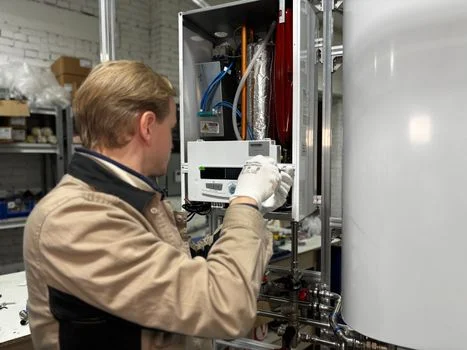
A disciplined supplier evaluation process protects both your LDEQ permit and your project budget. Use this 7-step framework when comparing wastewater treatment plant equipment suppliers for any coastal Louisiana site.
- Step 1: Verify LDEQ Permit Compliance. Match equipment performance to the facility's LPDES schedule, not a generic citywide limit. Demand third-party laboratory reports for the authorized BOD and TSS averages, plus fecal coliform where required.
- Step 2: Assess Corrosion Resistance. Ask for material certifications (ASTM A240 for 316L stainless steel, ASTM D3299 for FRP) and coating thickness reports (minimum 250 μm for epoxy-coated components) to prove durability in brackish water.
- Step 3: Evaluate Footprint Constraints. Urban New Orleans sites rarely have spare land. Compare system footprints; an MBR can save up to 60% space versus conventional activated sludge, which mattered in a recent New Orleans hotel retrofit.
- Step 4: Compare CAPEX/OPEX Trade-offs. Model a 5-year Total Cost of Ownership that includes energy, chemicals (coagulants, flocculants, disinfectants), and maintenance, not just the purchase price.
- Step 5: Request Pilot Testing. A 30–60 day on-site pilot validates effluent quality and equipment resilience under real salinity and wastewater conditions before you commit.
- Step 6: Check Local References. Call 2–3 New Orleans facilities running the same supplier's equipment. Ask about uptime, LDEQ compliance history, actual maintenance costs, and technical support response time.
- Step 7: Negotiate Performance Guarantees. Contractually require 95%+ uptime and LDEQ discharge compliance, with clear penalty clauses for missed effluent targets.
Cost Breakdown: CAPEX, OPEX, and ROI for New Orleans Sewage Treatment Projects
CAPEX for new installations spans $50K–$200K for smaller package plants, $200K–$800K for DAF systems, and $500K–$2M for industrial MBR systems. Coastal projects in New Orleans carry a 20–30% premium for 316L stainless steel or FRP construction.
OPEX breaks down into energy (0.2–0.8 kWh/m³ depending on treatment intensity), chemicals for coagulants, flocculants, and disinfectants, labor (0.5–2 FTEs), and annual maintenance at roughly 5–10% of initial CAPEX. Non-compliance remains the largest financial risk: earlier Region 6 figures of $37,500 per day are outdated against the current $68,445 per day CWA judicial maximum under 33 U.S.C. 1319(d) (EPA, January 8, 2025). One New Orleans food processing plant cut $120K a year by switching from activated sludge to a DAF unit, dropping chemical costs 40% and energy use 25%. Louisiana applicants can also explore Clean Water State Revolving Fund (CWSRF) low-interest loans for eligible municipal projects.
| Cost Category | Typical Range/Factor (New Orleans) | Notes for Coastal Projects |
|---|---|---|
| CAPEX (Package Plants) | $50K–$200K | Add 20–30% for corrosion-resistant materials |
| CAPEX (DAF Systems) | $200K–$800K | 316L SS or FRP construction required |
| CAPEX (MBR Systems) | $500K–$2M+ | Higher initial cost, but lower footprint/higher effluent quality |
| Energy Consumption (OPEX) | 0.2–0.8 kWh/m³ | Varies by treatment intensity; MBRs typically higher per volume |
| Chemicals (OPEX) | Varies by process | Coagulants, flocculants, disinfectants are significant costs |
| Labor (OPEX) | 0.5–2 FTEs | Automated package plants require less labor |
| Maintenance (OPEX) | 5–10% of CAPEX/year | Critical for preventing costly failures in corrosive environments |
| Avoided EPA Penalties | Up to $37,500/day | Major ROI driver for compliance-focused projects |
Who This Is For, Who Should Look Elsewhere, and Next Step
This guide is for procurement managers and plant engineers in coastal Louisiana sizing new sewage treatment equipment or replacing corroded assets under LDEQ permits. If your project is inland with TDS under 1,000 mg/L and no chloride concern, you can skip the 316L/FRP premium and focus on conventional activated sludge or SBR economics. If you handle radioactive or hazardous industrial waste streams, you need a specialized vendor outside the municipal/industrial envelope covered here.
For most coastal projects, lock the LPDES schedule first, pick the system type from the comparison table, then pressure-test two or three New Orleans equipment suppliers against the 7-step framework above. Request a quote with your flow rate, influent characteristics, and effluent target, and HydropureWater will size the equipment and material spec against LDEQ requirements.
Frequently Asked Questions
What are the LDEQ discharge limits for sewage treatment in New Orleans?
LDEQ does not publish one citywide 10 mg/L TSS and 15 mg/L BOD rule. Sanitary general permit LAG560000 sets schedule-specific monthly averages such as 20/20 mg/L BOD/TSS or tighter Schedule C values of 10 mg/L BOD and 15 mg/L TSS. Federal secondary treatment remains 30 mg/L BOD5 and 30 mg/L TSS as 30-day averages (40 CFR 133.102). Always confirm the facility authorization letter before buying equipment.
How does coastal salinity affect sewage treatment equipment?
Coastal salinity in New Orleans reaches up to 35,000 mg/L Total Dissolved Solids, which drives chloride pitting corrosion in carbon steel components. Specifying 316L stainless steel, Fiber Reinforced Plastic, or epoxy coatings extends equipment service life from 3–5 years for bare carbon steel to 15–25 years in brackish service.
What is the best sewage treatment system for a small New Orleans hotel?
For a small New Orleans hotel with limited space and staff, WSZ Series integrated package plants are often the best fit. These compact, automated units handle 1–80 m³/h flows with anoxic/aerobic biological treatment and minimal operator intervention.
How much does a sewage treatment system cost in New Orleans?
CAPEX for a sewage treatment system in New Orleans ranges from $50K for small package plants to over $2M for industrial MBR systems. Coastal projects should add a 20–30% premium for 316L stainless steel or FRP construction needed to survive brackish water.
Can a standard DAF system be used in brackish water?
No. Standard carbon steel DAF systems fail in brackish water within 3–5 years due to chloride pitting. Coastal service requires 316L stainless steel or FRP DAF models, often paired with sacrificial anodes, to reach the 15–20 year service life expected in Louisiana installations.