Sand Filter Water Treatment for Food Processing: 2025 Engineering Specs, 99% TSS Removal & Zero-Risk Selection Guide
Sand filters remove up to 99% of total suspended solids (TSS) in food processing water, meeting FDA’s <500 CFU/mL microbial limit for food contact water (21 CFR 110.80). Using graded media layers including sand, anthracite, and gravel, these systems filter particles down to 10 microns—a threshold critical for removing organic debris, bacteria, and yeast from dairy, meat, and beverage plant effluent. Backwash cycles, typically automated every 8–24 hours, restore filtration capacity, with multi-media filters offering 30% longer run times than single-media systems in high-TSS applications like poultry processing. For engineers, implementing these systems is often the difference between regulatory compliance and costly production halts.
Why Food Processors Need Sand Filtration: Compliance, Cost, and Contaminant Challenges
Food processing facilities operate under stringent regulatory oversight where water quality directly impacts product safety. The FDA’s 21 CFR 110.80 mandates that water used in food contact or as an ingredient must meet specific microbial counts, typically <500 CFU/mL. Sand filtration systems provide a primary defense, capable of reducing bacteria and viruses by up to 99.9% when properly sized (HydropureWater field data, 2025). Without these systems, organic loads in the water can harbor pathogens like Listeria or Salmonella, leading to catastrophic consequences.
Contaminant profiles vary significantly across subsectors, necessitating specific filtration approaches. In dairy plants, high concentrations of lactose and milk proteins can quickly foul downstream equipment. Meat processing facilities deal with blood, fats, and fine bone fragments, while beverage plants must manage yeast and pulp residues. Failure to manage these contaminants results in high non-compliance costs. The average cost of an FDA recall in 2024 reached $10 million per incident, while EPA fines for Clean Water Act violations can exceed $37,500 per day. A 2023 case study of a mid-sized poultry plant revealed that a single week of discharge non-compliance resulted in over $250,000 in combined fines and emergency remediation fees.
Beyond compliance, the return on investment (ROI) for sand filtration is driven by operational efficiency. By removing the bulk of suspended solids, these filters eliminate the need for aggressive pre-chlorination, reducing chemical costs by 15-20%. they protect expensive downstream components, such as reverse osmosis membranes or ultrafiltration units, extending their service life by 40% in most industrial environments. This makes sand filtration a foundational element of food processing wastewater compliance standards in Africa and globally.
How Sand Filters Work in Food Processing: Mechanisms, Media, and Microbial Control
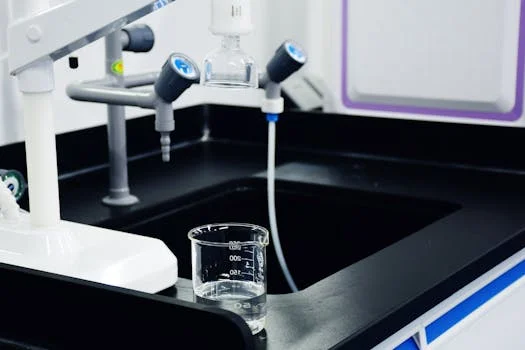
The efficacy of sand filtration in food processing relies on the principle of depth filtration. Unlike surface filters that trap particles on a single plane, sand filters utilize a graded bed of media. As water percolates through the bed, particles are captured through physical straining, sedimentation, and adsorption. In food processing, where TSS loads can fluctuate during wash-down cycles, this depth allows for a much higher dirt-holding capacity.
Media Selection and Sizing
Media grain size is the most critical engineering parameter. For dairy applications, sand sized between 0.45–0.6mm is standard for capturing fine proteins. Meat processing requires slightly coarser media (0.6–0.8mm) to prevent premature clogging from fats, while beverage plants often use 0.35–0.5mm sand for high-clarity ingredient water. Many modern plants utilize FDA-compliant multi-media sand filters for food processing, which layer anthracite (low density, top), sand (medium density, middle), and gravel (high density, support) to achieve 95–99% TSS removal.
Microbial Control and Organic Certification
For organic-certified plants (USDA NOP), slow sand filters (SSFs) are often preferred. SSFs operate at lower loading rates (0.1–0.4 m/h) and rely on the development of a biological layer known as the "schmutzdecke." This layer consists of bacteria, fungi, and protozoa that biologically degrade organic matter and pathogens, achieving a 99.9% reduction in bacteria without the use of synthetic chemicals. This is a primary strategy for microbial control strategies for food processing water.
| Food Subsector | Primary Contaminant | Typical Inlet TSS (mg/L) | Removal Efficiency (%) | Recommended Media Size (mm) |
|---|---|---|---|---|
| Dairy | Proteins/Lactose | 200 - 500 | 92 - 96% | 0.45 - 0.6 |
| Meat/Poultry | Fats/Blood/Tallow | 500 - 1,200 | 95 - 98% | 0.6 - 0.8 |
| Beverage | Yeast/Pulp/Sugars | 50 - 150 | 98 - 99% | 0.35 - 0.5 |
| Vegetable Prep | Soil/Starch/Silt | 300 - 800 | 94 - 97% | 0.5 - 0.7 |
The backwash process is the final piece of the mechanism. When the pressure differential across the bed reaches 0.5–0.7 bar, the flow is reversed. Air scouring is often introduced first to agitate the media and dislodge sticky organic debris, followed by a water wash that flushes the contaminants to a waste stream. This typically consumes 2–5% of the total treated water volume.
Single-Media vs. Multi-Media Sand Filters: Performance, Cost, and Compliance Comparison
Engineers must decide between simple single-media systems and more complex multi-media configurations. Single-media filters, typically containing only silica sand, are effective for low-TSS applications like bottled water polishing. However, they are prone to surface blinding, where the top layer of sand clogs quickly, necessitating frequent backwashing. Multi-media filters solve this by using layers of decreasing porosity, allowing larger particles to be trapped in the top anthracite layer while finer particles penetrate deeper into the sand.
| Feature | Single-Media (Sand Only) | Multi-Media (Anthracite/Sand/Gravel) |
|---|---|---|
| TSS Removal Rate | 90 - 95% | 95 - 99% |
| Filtration Threshold | 20 - 30 Microns | 10 - 15 Microns |
| Backwash Frequency | Every 4 - 8 Hours | Every 12 - 24 Hours |
| CapEx (Est. 50 m³/h) | $15,000 - $30,000 | $30,000 - $80,000 |
| OpEx (Chemicals/Energy) | Higher (Frequent Backwash) | 25% Lower than Single-Media |
| Media Life Span | 2 - 3 Years | 5 - 7 Years |
From a compliance standpoint, both systems can meet FDA standards, but multi-media systems offer a higher "safety margin" against process upsets. If a meat processing plant experiences a surge in blood or fat in the effluent, a single-media filter will likely fail or require an immediate manual override, whereas a multi-media system’s depth filtration handles the surge with minimal impact on effluent quality. For detailed comparisons, engineers should consult detailed engineering specs for industrial sand filters.
Sizing and Designing Sand Filters for Food Processing: Engineering Parameters and Calculators

Sizing a sand filter requires balancing the hydraulic loading rate with the required effluent quality. In the food industry, a loading rate of 5–15 m³/h per m² of filter area is standard. High-TSS applications like vegetable washing require the lower end of that range (5–8 m³/h/m²) to prevent rapid head loss.
The Sizing Formula:
To determine the required filter area (A), use the formula: A = Q / V, where Q is the flow rate (m³/h) and V is the filtration velocity (m/h).
Example: A dairy plant processing 50 m³/h with a desired loading rate of 10 m/h would require: 50 / 10 = 5 m² of filter surface area. This could be achieved with two 1.8-meter diameter vessels operating in parallel.
Media depth is another critical factor. Per 2024 EPA guidelines for food industry wastewater, a minimum media depth of 0.6m is required, though 1.0–1.2m is recommended for high-load meat processing effluent. Materials of construction must be carefully selected; while FRP (Fiber Reinforced Plastic) is cost-effective, Stainless Steel (304 or 316L) is often mandated in food-contact areas for its superior sanitization capabilities. To ensure consistent performance, integration with a PLC-controlled chemical dosing for sand filter optimization is recommended to manage coagulant addition during high-turbidity events.
Optimizing Sand Filter Performance in Food Plants: Backwash, Media, and Maintenance Best Practices
Optimization centers on the backwash cycle. In food plants, organic fouling is the primary cause of system failure. If fats, oils, and greases (FOG) are not removed via pre-treatment, they can coat the sand grains, causing "mud balls" and channeling—where water bypasses the media through cracks. To prevent this, backwash duration should be 5–10 minutes with a flow rate of 10–15 m³/h per m², often supplemented by air scouring to break up biological films.
Maintenance Checklist:
- Turbidity Monitoring: Effluent should consistently measure <1 NTU. Sudden spikes indicate media channeling or breakthrough.
- Pressure Differential: Automated backwash should trigger at 0.5–0.7 bar (7–10 psi). Delaying backwash risks media compaction.
- Media Inspection: Annually check for media loss or "mud balling." Silica sand should be replaced every 3–5 years, while anthracite may last up to 7 years in well-maintained systems.
- Chemical Cleaning: If biological fouling persists, use FDA-approved oxidizing agents during a dedicated maintenance cycle to strip the schmutzdecke and restore flow rates (per 2024 WEF guidelines).
Cost Breakdown and ROI: Sand Filtration vs. Alternative Food Processing Water Treatment Systems
When evaluating water treatment options, procurement teams must weigh initial CapEx against long-term OpEx. Sand filters are generally the most cost-effective for TSS removal compared to Dissolved Air Flotation (DAF) or Membrane Filtration (RO/UF).
| Technology | CapEx (Relative) | OpEx (per m³) | Primary Advantage |
|---|---|---|---|
| Sand Filtration | $15K - $80K | $0.10 - $0.30 | Low maintenance, high durability |
| DAF System | $50K - $200K | $0.20 - $0.50 | Superior FOG removal for meat plants |
| Reverse Osmosis | $80K - $300K | $0.50 - $1.50 | Removes dissolved solids/salts |
ROI Calculation:
ROI = (Annual Savings - Annual OpEx) / CapEx
For a meat processing plant treating 100 m³/h, switching from a manual chemical-heavy process to an automated multi-media sand filter can save $40,000 annually in chemicals and $25,000 in labor. With a CapEx of $120,000, the ROI is realized in under two years. In many cases, a DAF system for pre-treatment of high-FOG food processing wastewater is used in tandem with sand filters to protect the media, while reverse osmosis systems provide the final polish for ingredient-grade water.
Frequently Asked Questions
Can sand filters remove oil and grease from food wastewater?
Sand filters are not designed for high concentrations of free oil or grease, which can clog the media. While they can remove trace amounts of emulsified fats, any influent with FOG levels above 50 mg/L should be pre-treated with a DAF system to prevent media fouling and "mud ball" formation.
How often should sand filter media be replaced in a food plant?
In most food processing environments, the media should be inspected annually and replaced every 3 to 7 years. Silica sand typically lasts 3–5 years, while anthracite can last up to 7 years. Replacement is necessary when the grains become rounded (reducing filtration efficiency) or heavily fouled with organic matter.
Do sand filters meet FDA requirements for ingredient water?
Yes, sand filters are a recognized method for achieving the microbial and clarity standards required by FDA 21 CFR 110.80. However, for ingredient-grade water, they are usually part of a multi-stage system that includes carbon filtration and UV or ozone disinfection to ensure a 99.99% pathogen kill rate.
What is the difference between air scouring and water backwashing?
Air scouring uses compressed air to vigorously agitate the sand bed, loosening sticky organic particles common in food processing. Water backwashing then flushes these loosened particles out of the tank. Using both reduces total water consumption by 15–20% compared to water-only backwashing.