Why Ogun municipalities are upgrading sewage plants
A municipal sewage treatment plant in Ogun State must meet OGEPA Water Quality Regulations 2023 Third Schedule limits of 30 mg/L BOD (5-day at 20°C) and 50 mg/L COD for environmental discharge. Earlier guidance used ≤50 mg/L BOD and ≤100 mg/L COD. Typical raw sewage runs 300–500 mg/L BOD and 600–1,200 mg/L COD, requiring biological treatment plus disinfection.
Ogun faces rising industrial load and tighter enforcement. SONA Group’s 2019 plant in Sango-Ota increased municipal wastewater load by about 30%, and aging networks in Agbara I and Owode already run near capacity. A 2024 Ogun State audit found municipalities without compliant plants spent 2.5 times more on emergency tankers and fines than on planned upgrades. Package units such as the compact WSZ Series (1–80 m³/h) deliver 90–95% pollutant removal at ₦25M–₦250M, while municipal-scale plants (500–5,000 m³/day) need custom sludge handling and disinfection.
According to The Guardian (June 2025), NAFDAC’s Ogun II Office in Ota sealed 39 packaged-water facilities between February and June 2025 after inspecting 43 sites, mainly for Good Manufacturing Practice failures such as expired licences and fake registration numbers. OGEPA also fined four industries in 2024 for missing effluent treatment plants, with individual penalties up to ₦5 million per violation. Design to the 2023 schedule limits, keep operator logs, and size sludge dewatering early.
Municipal sewage treatment plant design for Ogun wastewater
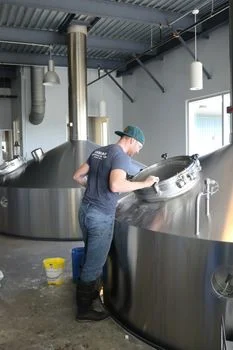
Effective process design for Ogun municipal sewage starts from local influent and the OGEPA 2023 effluent table, not a generic overseas template. A typical 1,000 m³/day train uses screening, primary sedimentation, biological treatment (conventional activated sludge A/O or MBR), secondary clarification, then disinfection with chlorine dioxide (ClO₂) or UV.
Selecting the biological stage is the main CapEx and footprint decision. Most plants we size for Ogun’s mixed domestic–industrial catchments run at the lower end of hydraulic retention time when night flows drop, so aeration turndown matters as much as peak capacity.
- Conventional Activated Sludge (CAS): Achieves 85–90% BOD removal and needs about 1,200 m² for a 1,000 m³/day plant. Estimated CapEx is around ₦280M. Land is the constraint in densifying towns.
- Membrane Bioreactor (MBR): MBR systems for Ogun’s high-efficiency municipal plants reach 95–98% BOD removal. Footprint falls by over 50%, to about 480 m² for 1,000 m³/day, which suits Agbara I-type sites. CapEx is higher, about ₦350M for 1,000 m³/day, but effluent quality and lower sludge volume often close the lifecycle gap.
- Dissolved Air Flotation (DAF) pre-treatment: Where textile or other industrial discharges dominate, as in parts of Owode, DAF ahead of biology is critical. DAF machines can remove 60–70% TSS and protect the downstream biomass.
Ogun influent often shows TSS of 400–800 mg/L from industrial discharge and seasonal ammonia spikes of 20–50 mg/L from agricultural runoff (per OGEPA 2024 monitoring reports). Those loads call for solid primary treatment and nitrification–denitrification capacity, not BOD-only design. Screens and grit removal should be specified for fibrous textile waste; otherwise blower energy climbs and membranes foul early.
Sludge handling is non-negotiable. OGEPA requires dewatered sludge ≤20% moisture before disposal. Plate-and-frame filter presses routinely reach 15–18% moisture at CapEx of ₦12M–₦30M depending on capacity (per HydropureWater 2025 specs). Plan cake storage and licensed haulage in the same package as the press; plants that omit that line item fail inspections even when liquid effluent is compliant.
Disinfection choice affects both compliance and neighbour complaints. Chlorine dioxide is often preferred for Ogun municipal effluent because it covers a broad pathogen range, oxidises residual organics, and forms fewer chlorinated by-products than free chlorine under the same dose. UV works when power quality is stable and transmittance stays high after clarification; many Ogun sites still keep ClO₂ as the primary barrier because generator fuel can backstop grid outages.
Technology comparison for a 1,000 m³/day reference plant:
| Technology | BOD Removal Efficiency | Footprint (1,000 m³/day) | Estimated CapEx (1,000 m³/day) | Key Advantage for Ogun |
|---|---|---|---|---|
| Conventional Activated Sludge | 85–90% | 1,200 m² | ₦280M | Lower initial investment |
| MBR (Membrane Bioreactor) | 95–98% | 480 m² | ₦350M | Superior effluent, compact footprint |
| DAF Pre-treatment | 60–70% TSS removal | Varies (pre-treatment) | ₦30M–₦80M | Critical for high industrial influent |
What CapEx and OPEX should Ogun plants budget?
Capital cost for Ogun municipal plants scales with capacity, technology, and how much civil work is cast on site. Accurate budgeting must separate CapEx, OPEX, and permit-side hidden costs before council approval. The table below keeps the same component split used in recent Ogun feasibility packages.
| Component | 500 m³/day | 1,000 m³/day | 2,000 m³/day | Notes |
|---|---|---|---|---|
| Civil works | ₦45M | ₦75M | ₦120M | Includes excavation, concrete, tank construction |
| Mechanical equipment | ₦80M | ₦140M | ₦250M | Pumps, blowers, membranes (for MBR), mixers |
| Electrical & automation | ₦30M | ₦50M | ₦80M | PLC, sensors, SCADA, control panels |
| Disinfection (ClO₂) | ₦12M | ₦20M | ₦35M | ClO₂ generators and dosing systems |
| Sludge dewatering | ₦15M | ₦25M | ₦40M | Plate-and-frame filter press with ancillaries |
| Total CapEx | ₦182M | ₦310M | ₦525M | Excludes land acquisition and hidden costs |
Automation adds 15–20% to initial CapEx yet can cut long-term OPEX by up to 30% through energy and labour savings (per 2024 Ogun State feasibility studies). Lifecycle cost analysis matters more than the civil bid when power is unreliable and tanker fines accumulate. OPEX for municipal plants in Ogun typically sits at ₦0.85–₦1.20 per cubic metre treated. Sludge disposal averages about ₦0.35/m³ of treated wastewater; electricity is about ₦0.25/m³ depending on technology and blower efficiency.
Hidden costs still surprise first-time owners. OGEPA permit fees run ₦2.5M–₦5M. Mandatory Environmental Impact Assessments for plants above 500 m³/day cost ₦10M–₦20M, consistent with federal EIA practice illustrated in Ogun project filings such as the Aseese multipurpose EIA (Federal Ministry of Environment submission, 2022). Turnkey lead times of 12–18 months mean permit work must start before civil tender, not after. Owners who compress that window usually pay for temporary tankers while waiting on discharge approval.
Cost drivers beyond the equipment list include import duties on membranes and blowers, diesel for standby generators, and polymer for sludge conditioning. A 1,000 m³/day plant that looks cheaper on mechanical CapEx can still overshoot OPEX if blowers lack turndown or if cake haulage distance exceeds 30 km. Build those items into the tender scoring sheet before award.
How do OGEPA and NAFDAC permits work in Ogun?

OGEPA and NAFDAC approvals decide whether an Ogun municipal plant can commission on schedule. Skipping either step is how projects stall after mechanical completion. The permit path has three practical stages.
- Environmental Impact Assessment (EIA): Mandatory for municipal plants exceeding 500 m³/day. Allow 3–6 months and ₦10M–₦20M.
- OGEPA Effluent Discharge Permit: Required for any wastewater release to the environment. Allow 2–4 months and ₦2.5M–₦5M; renew annually.
- NAFDAC Water Quality Certification: Needed when treated effluent enters waters used for human contact or other sensitive uses. Allow 1–2 months and about ₦1.5M.
Pre-inspection checklist used by plants that pass audits:
- Effluent quality logs: Six months of BOD, COD, TSS, and pH against the OGEPA 2023 limits (BOD 30 mg/L at 20°C; COD 50 mg/L for environmental discharge).
- Sludge disposal records: Proof that dewatered cake meets ≤20% moisture.
- Operator training certificates: At least two certified operators per shift with current cards.
- Emergency response plan: Spill containment, alarms, and shutdown drills documented.
- Calibrated sensors: Online and lab instruments with calibration certificates on file.
Sixty percent of 2024 OGEPA penalties traced to missing operator logs or uncalibrated sensors (per OGEPA enforcement reports). Start the EIA at least 12 months before construction and file discharge permits at least 6 months before commissioning. That buffer absorbs sampling repeats and drawing revisions without stopping civil works.
What should a turnkey supplier scorecard include?
A turnkey supplier for Ogun municipal works should be scored on compliance history, local response time, and lifecycle cost clarity—not lowest civil bid alone. Use a 100-point weighted matrix before shortlisting.
| Criteria | Weight | Scoring Notes |
|---|---|---|
| OGEPA/NAFDAC compliance track record | 30% | Must have 3+ verifiable Ogun State municipal project references with current compliance records. |
| Local service support & response time | 25% | Demonstrated 24/7 response capability and a Service Level Agreement (SLA) promising <4-hour on-site presence in Ogun. |
| Turnkey capabilities & experience | 20% | Proven expertise in full project lifecycle: design, civil works, mechanical installation, electrical & automation integration. |
| Performance guarantees & warranties | 15% | Offers guaranteed ≥95% uptime, effluent quality bonds, and extended warranties on critical equipment. |
| Cost transparency & lifecycle analysis | 10% | Provides a fully itemized CapEx/OPEX breakdown and a comprehensive lifecycle cost analysis for the proposed solution. |
Red flags in Ogun tenders: no local service team (Lagos-only desks often miss the <4-hour SLA), no 2023–2025 OGEPA permit references, and generic proposals that ignore Ogun influent TSS and ammonia ranges. Ask for named permit numbers and recent lab sheets, not brochure photos. Based on 2024 Ogun State procurement data and market presence, commonly shortlisted providers include HydropureWater (MBR and WSZ package systems, three municipal projects in Ogun since 2022, typical package CapEx ₦25M–₦250M), Sewatech Nigeria (Agbara I Central Sewage Treatment Plant reference), Rufus Thomas & Co. (Ota-based OGEPA-compliant installs), and Larcord Projects (Agege-based, 5-year service contracts).
Case study: Agbara I upgrade to MBR
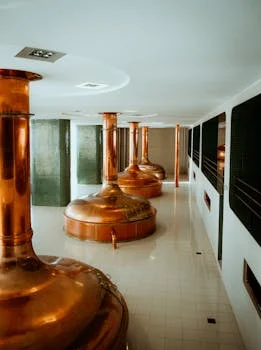
Agbara I’s central sewage works started as an 800 m³/day conventional activated sludge plant in 2018. By 2023 it failed OGEPA inspections with effluent BOD averaging 70 mg/L against the then-applied ≤50 mg/L limit, plus sludge moisture violations. Fines and downtime followed. The site also lacked spare aeration capacity for industrial peaks from nearby estates.
The municipality retrofitted a 1,000 m³/day MBR system with HydropureWater DF Series membranes in 2024. CapEx was ₦320M. Footprint fell by 50%. Within three months of commissioning, effluent BOD stayed below the applicable limit. Sludge volume dropped 40%, from 120 m³/month to 72 m³/month; the MBR membrane bioreactor module helped by running higher biomass and less excess sludge. Variable-frequency blowers cut electricity about 25%, bringing OPEX to ₦0.95/m³ from ₦1.40/m³ on the old train. For space-limited Ogun sites facing tighter 2023 limits, that retrofit path is the one most owners now ask us to model first.
For industrial-heavy catchments, sample COD and oil & grease through one dry season and one wet season before freezing the process flow diagram. Owode-type textile spikes and Agbara-type estate peaks rarely show up in a single grab sample, and undersized DAF or anoxic zones are expensive to retrofit after civil works close.
Who this is for / Next step
This guide is for Ogun municipal engineers, EPC contractors, and procurement officers sizing 500–5,000 m³/day plants against OGEPA 2023 limits. Look elsewhere if you only need a household septic or a single-factory package under about 50 m³/day. Selection checklist before tender: confirm design BOD/COD to 30/50 mg/L for environmental discharge; lock EIA timing; specify DAF if industrial TSS is high; price filter-press cake ≤20% moisture; demand a local <4-hour SLA; require itemised CapEx/OPEX with energy at local tariff. For a capacity-matched equipment list and CapEx sheet, request a municipal plant quote with your influent data and discharge point.
Frequently Asked Questions
What are the OGEPA effluent limits for municipal sewage in Ogun?
Earlier practice often cited ≤50 mg/L BOD and ≤100 mg/L COD. The OGEPA Water Quality Regulations 2023 Third Schedule sets BOD at 30 mg/L (5-day at 20°C) and COD at 50 mg/L for effluent discharge into the environment. Design, monitoring logs, and tender specs should use the 2023 figures unless your permit states a site-specific limit.
How long does an OGEPA effluent discharge permit take?
An OGEPA Effluent Discharge Permit usually takes 2–4 months after a complete file, including EIA for plants above 500 m³/day. Apply at least 6 months before commissioning so revisions do not delay start-up. Annual renewal is typical, so keep operator and sensor records ready for inspection.
What CapEx should a 1,000 m³/day Ogun plant expect?
CapEx for a 1,000 m³/day municipal plant in Ogun runs about ₦280M for conventional activated sludge and about ₦350M for MBR, excluding land and EIA. An itemised build with civil, mechanical, electrical, ClO₂ disinfection, and filter-press dewatering often totals near ₦310M. Always separate hidden permit and EIA costs from equipment CapEx.
Is NAFDAC certification required for every Ogun sewage plant?
NAFDAC Water Quality Certification is required when treated effluent enters waters used for human contact or other sensitive uses, or when discharge can affect packaged-water producers. It is not automatic for every inland discharge permit. Confirm the receiving-water use with OGEPA before skipping the NAFDAC step.
How do MBR and activated sludge compare for Ogun municipal wastewater?
MBR typically delivers 95–98% BOD removal on about 480 m² for 1,000 m³/day, versus 85–90% BOD removal on about 1,200 m² for conventional activated sludge. MBR CapEx is higher, but Agbara I-type sites gain footprint and sludge reduction. Similar municipal sizing trade-offs appear in South Korea’s municipal plants. Pair either train with reliable disinfection; ClO₂ disinfection systems are widely specified for Ogun effluent pathogen control.