UV disinfection troubleshooting starts at three checks: quartz sleeve fouling (about 90% of intensity alarms), lamps past 12,000 operating hours, and effluent UV transmittance (UVT) below 70% at 254 nm. Confirm hydraulic flow is within design ±10% and restore a validated dose near 40 mJ/cm² before swapping hardware at random.
Why UV Disinfection Systems Miss Permit Limits
Most UV permit misses on fecal coliform or E. coli come from low delivered dose, not a dead reactor. Quartz fouling, lamp aging past about 12,000 hours, UVT under 70% at 254 nm, or flow above design ±10% cut intensity or contact time. Restore dose near 40 mJ/cm² for secondary effluent before changing lamp banks or ballasts.
Wastewater plants that fail fecal coliform or E. coli limits often open the UV channel first. Roughly 80% of UV disinfection failures still trace to weak upstream pretreatment rather than the reactor itself. UV works by line of sight at 254 nm; if light never reaches the cell, the pathogen survives. Effluent UVT below 70% at 254 nm cuts penetration sharply, so measure inlet UVT with a spectrophotometer before blaming lamps (HydropureWater field data, 2025).
Hydraulic overload is the next frequent cause. Flow more than 10% above design shortens residence time in the UV bank. Dose equals intensity times exposure time, so high velocity leaves DNA unrepaired. Most industrial trains are sized to a stated peak flow; exceeding that peak leaves the validated dose envelope.
Design context matters when you read alarms. Secondary municipal or industrial effluent commonly targets a UV dose of 40 mJ/cm².Low-pressure high-output (LPHO) lamps suit steady flow; medium-pressure (MP) lamps pack intensity into a smaller footprint but run hotter and foul differently. If intensity looks healthy yet counts stay high, check baffles and short-circuit paths next.
Step-by-Step Diagnostic Flow for Disinfection Troubleshooting
Technicians should move from the System Control Center (SCC) to the wet hardware in a fixed order. Photograph the active alarm list first—“Low UV Intensity,” “Lamp Out,” or similar—so recurring faults have a timestamped baseline.
- Verify sensor accuracy: Compare the live UV sensor reading with the historical baseline at the current lamp-hour count. A deviation greater than 15% from the expected intensity usually means calibration drift or a fouled sensor window. Clean the window; if the reading stays low, recalibrate.
- Analyze hydraulic load: Check flow against the nameplate design. If the train is rated 500 m³/h ±5%, confirm throughput on SCADA or a magnetic flow meter. High flow cuts dose; very low flow can overheat MP reactors.
- Inspect the wiper: Trigger one cleaning cycle and watch the carriage. Stuttering or a stuck seal leaves biofilm and scale on the sleeves within hours.
- Check lamp status on the SCC: Individual lamp output should stay above 85% of rated intensity. A whole bank dropping at once points to ballast or power supply, not a sudden UVT swing.
That sequence separates a water problem (low UVT) from a mechanical problem (wiper failure or aged lamps). For plant-wide symptoms upstream of UV, use this guide to industrial system fixes that reduce downtime to isolate pretreatment variables.
Quartz Sleeve Fouling: Causes and Instant Remedies
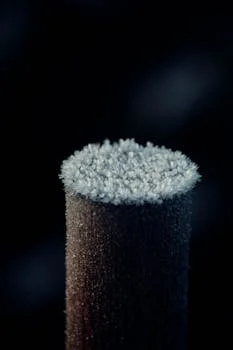
Quartz sleeve fouling drives most UV intensity alarms. Inorganic scale is usually calcium carbonate (CaCO₃) or iron hydroxide (Fe(OH)₃) in hard water. Organic biofilm grows when high-BOD effluent feeds bacteria on the warm sleeve surface.
For an immediate recovery, lift the module and soak sleeves in a 10% citric acid solution for about 30 minutes. Scrub with a soft, non-abrasive cloth only. Steel wool or pads scratch quartz; each scratch refracts light and permanently lowers transmission.
Automatic wiper failure accounts for about 60% of avoidable fouling events. Inspect wiper seal wear every year. Hard or cracked rings smear debris instead of clearing it. Keeping sleeves clean is cheaper than recovering a heavily scaled bank. Upstream fine screening to protect UV chambers from debris stops hair, plastics, and rags from creating shadow zones on the lamp racks.
Limit free chlorine below 0.2 mg/L when scale forms fast on hot quartz. High oxidant residuals can speed mineral precipitation on sleeve surfaces. Plants with aggressive scaling chemistry can add automated chemical dosing to prevent scaling in UV systems for mild acid or anti-scalant wipe cycles. NWRI (2012) design practice still assumes about 80% sleeve transmittance after fouling unless site tests justify a higher factor.
UV Lamp and Ballast Failure: Testing and Replacement
UV lamps solarize over time: the envelope transmits less 254 nm light even when the arc still looks bright. Most industrial LPHO lamps are replaced at 12,000 hours. Beyond that point germicidal output often falls to 60–70% of new intensity, so a 40 mJ/cm² validated dose becomes unreachable. According to US EPA UVDGM (2006), typical LPHO mercury lamp life is 8,000–12,000 hours, while MP lamps are often closer to 4,000–8,000 hours.
Field checks for lamp or ballast faults:
- Ballast output test: Measure voltage at the lamp leads with a multimeter. Expect the rated supply (often 240 V ±5%) to stay steady. Missing or swinging voltage usually means a failed ballast.
- Visual inspection: Flicker, dark ends, or failure to strike means end of life or ballast trouble. Ballasts older than five years are commonly replaced with the lamp set for electrical match.
- Handling protocol: Wear lint-free gloves. Skin oil creates hot spots that age the lamp early and seed localized fouling.
If energy cost or chronic lamp failures push you toward chemical disinfection, compare alternative disinfection methods against your effluent profile. A hybrid train can also pair UV with a Chlorine Dioxide (ClO₂) Generator for Water Disinfection when residual demand or virus credit requires an oxidant.
Critical UV System Parameters and Tolerance Limits
Operators should keep the reactor inside its validated envelope. The table below lists working thresholds for secondary and reuse wastewater based on common secondary-effluent practice, EPA UV guidance methods, and HydropureWater field data:
| Parameter | Required Range | Alarm Trigger | Corrective Action |
|---|---|---|---|
| UV Dose | 40 - 180 mJ/cm² | < 30 mJ/cm² | Reduce flow or clean sleeves |
| UV Transmittance (UVT) | > 70% | < 60% | Check upstream polymer/clarification |
| Flow Rate | Design ±10% | > 115% Design | Divert flow or engage extra banks |
| Lamp Intensity | 85 - 100% | < 70% | Replace lamps or check sensors |
| Turbidity | < 5 NTU | > 10 NTU | Check filter/clarifier performance |
Running outside these limits tracks closely with disinfection failure. When UVT falls to 55%, particle shadowing can protect pathogens even with every lamp on. Adding UV power rarely fixes that case; solids control does. For solids-side faults that starve UV of clean feed, see the industrial sludge system troubleshooting guide.
Maintenance Best Practices to Prevent UV Downtime
Scheduled work beats emergency bypasses. Split tasks by interval so parts are checked before they trip the plant.
- Daily: Scan SCC alarms. Confirm water covers the top lamp so sleeves stay cool and fully submerged. Wipe low-level sensor rods to avoid dry-run trips.
- Monthly: Check sleeve nuts for tightness and look for moisture inside quartz. Confirm the wiper stroke covers the full lamp length.
- Yearly: Replace lamps and sleeve O-rings at the 12,000-hour mark (or earlier if intensity trends demand it). Replace hardened wiper seals. Run multi-point sensor calibration.
- Every 2 years: On hydraulic-wiper systems, drain and refill reservoir fluid and replace the hydraulic filter to limit pump cavitation.
Plants that keep these intervals cut unplanned downtime by up to 60% in our field records. Trend lamp hours against UVT so aging shows up before a permit sample fails.
Selection Checklist and Next Step
Use this checklist before you order parts or change setpoints:
- Measured UVT at 254 nm at the reactor inlet
- Current flow versus design peak (±10%)
- Lamp hours and bank intensity versus the 85% floor
- Wiper cycle proof and sleeve cleanliness after one acid clean
- Sensor calibration age and window condition
- Upstream screen, clarifier, and polymer performance
- Whether the duty is secondary disinfection (~40 mJ/cm²) or reuse (NWRI higher design doses)
Who this is for: plant engineers and EPC teams diagnosing secondary or reuse UV banks with intensity, dose, or coliform alarms. Who should look elsewhere: sites that need a persistent chemical residual alone, with no UV channel in service. To size cleaning chemistry, lamp banks, or a hybrid ClO₂ assist for your flow and UVT, request a UV disinfection review with HydropureWater.
Frequently Asked Questions

Why is my UV sterilizer not working?
Fouled quartz sleeves, lamps past about 12,000 hours, or UVT below 70% at 254 nm cause most UV sterilizer failures. Clean or replace sleeves first, then confirm lamp hours and inlet UVT with a spectrophotometer. Only after those checks should you open ballasts or redesign hydraulics.
How often should UV lamps be replaced?
Replace industrial LPHO UV lamps at about 12,000 operating hours, or sooner if intensity trends below 85% of rated output. US EPA UVDGM (2006) lists typical LPHO life as 8,000–12,000 hours and MP life as 4,000–8,000 hours. A glowing lamp can still miss the validated dose after solarization.
What is the UVT of wastewater and why does it matter?
UV transmittance (UVT) is the percent of 254 nm light that passes through a 1 cm path of water. Secondary effluent below 70% UVT often cannot deliver a 40 mJ/cm² dose without more lamps or lower flow. Fix clarification and filtration before adding UV power.
Can UV systems work with high-turbidity wastewater?
No. Turbidity above 10 NTU lets solids shield bacteria from UV light, so counts stay high even at full lamp power. Bring turbidity below 5 NTU with upstream clarification or filtration, then recheck delivered dose and inlet UVT at 254 nm before raising UV intensity setpoints.
What flow rate is ideal for UV disinfection?
Keep flow within ±10% of the reactor design capacity used in validation. Flows above about 115% of design cut contact time and drop delivered dose below the permit target. Divert surplus flow or bring standby banks online instead of overloading one channel.