Clinic wastewater treatment systems use a 3-stage process—pretreatment (screening/equalization), biological or chemical treatment (MBR, DAF, or activated sludge), and disinfection (ozone, UV, or chlorine dioxide)—to remove pathogens, pharmaceuticals, and high BOD/COD loads before discharge. For example, an MBR system can reduce COD from 800 mg/L to ≤50 mg/L, meeting EPA 40 CFR Part 503 limits for medical facilities. Compact systems like HydropureWater’s compact medical wastewater treatment system (0.5 m² footprint) combine filtration and ozone disinfection for 99%+ pathogen kill with no chemical dosing.
Why Clinic Wastewater Needs Specialized Treatment (Not Just a Septic Tank)
Clinic wastewater contains pharmaceutical residues and pathogens that standard septic systems or municipal sewer connections often fail to neutralize, resulting in a 30% to 50% antibiotic bypass rate according to 2023 EPA data. Unlike residential sewage, which typically presents a Chemical Oxygen Demand (COD) of 200–300 mg/L, medical effluent from dental offices, veterinary clinics, and outpatient centers frequently reaches 800–1,200 mg/L. This concentration includes specialized contaminants such as hormones, disinfectants, and heavy metals like mercury or copper from dental amalgams.
Regulatory frameworks have become increasingly stringent to prevent these contaminants from entering groundwater. In the United States, EPA 40 CFR Part 503 sets strict limits on fecal coliforms (<1,000 MPN/100 mL), while the EU Urban Waste Water Directive 91/271/EEC enforces similar microbiological standards for small-scale medical discharges. In China, the GB 18466-2005 standard is even more rigorous, requiring COD levels to remain ≤60 mg/L for direct discharge from medical institutions. Failure to meet these standards is not merely an environmental risk but a significant financial liability. For instance, a dental clinic in California was recently fined $25,000 for exceeding copper discharge limits—recording 0.5 mg/L against an EPA limit of 0.3 mg/L—due to an inadequately maintained amalgam separator and filtration system.
Standard septic tanks are anaerobic environments designed for solids settling, not the complex degradation of synthetic pharmaceuticals. Without specialized secondary and tertiary treatment, clinics risk "disinfection bypass," where pathogens are shielded by suspended solids and survive the treatment process. This necessitates a dedicated, engineered approach that combines mechanical separation with advanced oxidation or biological membrane filtration.
Step-by-Step: How Clinic Wastewater Treatment Systems Work
A standard medical wastewater treatment process requires a multi-stage configuration to reduce influent COD from upwards of 1,200 mg/L to below regulatory discharge limits through mechanical, biological, and chemical phases. The engineering objective is to ensure that every drop of water meets the Hydraulic Retention Time (HRT) required for contaminant neutralization.
Step 1: Pretreatment (Screening & Equalization)
Raw wastewater first passes through a fine screen (typically 1–3 mm bar spacing) to remove macro-solids like bandages, hair, or plastic debris. The water then enters an equalization tank. Because clinics have "peaky" flow rates (high volume during business hours, zero at night), the equalization tank buffers the flow. A typical HRT of 6–12 hours is required to stabilize pH and concentration before the water moves to primary treatment.
Step 2: Primary Treatment (Solid-Liquid Separation)
In this phase, a DAF system for TSS and FOG removal uses micro-bubbles to float suspended solids and fats/oils/grease (FOG) to the surface for skimming. According to EPA 2024 benchmarks, a well-calibrated primary stage can remove 60–80% of Total Suspended Solids (TSS) and 30–50% of Biological Oxygen Demand (BOD).
Step 3: Secondary Treatment (Biological or Chemical Degradation)
This is the "engine" of the system. An MBR system for high-efficiency COD/BOD removal is the gold standard here, utilizing a submerged membrane with pore sizes <0.1 μm. While traditional activated sludge reaches 85–92% COD removal, MBR consistently achieves 95–98%. This stage breaks down dissolved organic matter and pharmaceutical residues through aerobic digestion.
Step 4: Tertiary Treatment (Disinfection)
To meet pathogen limits, the water undergoes disinfection. While UV and chlorine are options, ozone is preferred for clinics because it leaves no chemical residue and has a 99%+ kill rate for viruses and antibiotic-resistant bacteria. A chlorine dioxide generator may also be used in larger outpatient facilities to maintain a disinfection residual in the discharge line.
Step 5: Sludge Handling
The byproduct of treatment—sludge—must be dewatered. Using a filter press (achieving 20–30% solids) or a centrifuge, the sludge is reduced in volume for hazardous waste disposal. Under EPA Part 503, this sludge must contain <1,000 MPN/g of fecal coliforms to be considered treated.
| Stage | Key Parameter | Influent Range | Effluent Target | Technology Used |
|---|---|---|---|---|
| Pretreatment | Solids Removal | >500 mg/L TSS | <100 mg/L TSS | 1-3mm Screening |
| Secondary | COD Removal | 800-1200 mg/L | <50 mg/L | MBR or Activated Sludge |
| Tertiary | Pathogen Kill | 10^6 CFU/100mL | <1,000 CFU/100mL | Ozone or UV |
Clinic Wastewater Treatment Technologies Compared: MBR vs. DAF + Ozone vs. Chemical Dosing
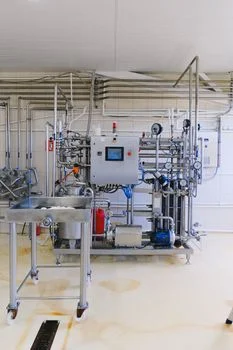
Selecting the right technology depends on the clinic’s specific waste profile, available footprint, and operational budget. Membrane Bioreactor (MBR) systems represent the high-performance tier, whereas Chemical Dosing offers a lower entry cost with higher long-term operational expenses.
MBR (Membrane Bioreactor) is the most space-efficient solution, often integrated into a step-by-step MBR process guide for small clinics. It combines biological treatment and membrane filtration into a single tank. With a footprint as small as 0.5 m², it is ideal for urban dental offices. The CAPEX is higher ($25,000–$60,000), but the OPEX remains moderate ($0.80–$1.50/m³), primarily driven by membrane cleaning every 5–8 years.
DAF + Ozone is the preferred choice for veterinary clinics or outpatient centers with high grease or hair loads. The DAF unit removes the bulk of the physical contaminants, while the ozone generator provides aggressive oxidation of complex pharmaceuticals. The CAPEX ranges from $15,000 to $40,000, and the system boasts a long lifespan, with ozone generators typically lasting 10–15 years with minimal maintenance.
Chemical Dosing systems utilize an automatic chemical dosing system to trigger coagulation and flocculation. While this has the lowest CAPEX ($10,000–$25,000), it has the highest OPEX ($1.00–$2.00/m³) due to the continuous need for Polyaluminum Chloride (PAC) and polymers. It is best suited for facilities that already have a large footprint (3–6 m²) and can manage daily chemical replenishment.
| Feature | MBR System | DAF + Ozone | Chemical Dosing |
|---|---|---|---|
| COD Removal Rate | 95–98% | 85–90% | 80–90% |
| Footprint (Small Clinic) | 0.5 – 2.0 m² | 2.0 – 4.0 m² | 3.0 – 6.0 m² |
| CAPEX Range | $25k – $60k | $15k – $40k | $10k – $25k |
| OPEX (per m³) | $0.80 – $1.50 | $0.50 – $1.00 | $1.00 – $2.00 |
| Maintenance Level | Medium (Membrane Clean) | Low (Skimmer Adjust) | High (Daily Dosing) |
Compliance Checklist: Meeting EPA, EU, and China Standards for Clinic Wastewater
Compliance officers must ensure that clinic discharge meets three primary pillars: organic load reduction, pathogen neutralization, and heavy metal capture. The following table summarizes the maximum allowable limits for discharge into municipal sewers or the environment.
| Standard | COD Limit | BOD Limit | Fecal Coliforms | Testing Frequency |
|---|---|---|---|---|
| EPA 40 CFR Part 503 | ≤60 mg/L | ≤30 mg/L | <1,000 MPN/100mL | Quarterly |
| EU Directive 91/271/EEC | ≤125 mg/L | ≤25 mg/L | <1,000 CFU/100mL | Annual |
| China GB 18466-2005 | ≤60 mg/L | ≤20 mg/L | <500 MPN/L | Monthly |
To remain compliant, clinics should adopt the following testing protocols:
- COD Testing: Use the Hach Method 8000 for rapid onsite results.
- BOD Testing: Standard 5-day incubation test to verify biological stability.
- Fecal Coliforms: Membrane filtration or Most Probable Number (MPN) method to ensure 99.9% pathogen kill.
- Documentation: Maintain a 3-year digital log of maintenance, calibration certificates for ozone generators, and discharge quality reports for regulatory audits.
Cost Breakdown: CAPEX, OPEX, and ROI for Clinic Wastewater Systems
Investing in a detailed guide to medical wastewater treatment systems reveals that the Return on Investment (ROI) is primarily driven by risk mitigation and resource recovery. While the initial CAPEX for an MBR or DAF system may seem high, the cost of a single compliance violation—often ranging from $5,000 to $50,000—can exceed the entire cost of the equipment.
ROI Calculation Example:
Consider a veterinary clinic processing 5 m³/day. By installing a DAF + Ozone system ($25,000 CAPEX), the clinic avoids potential fines and can potentially reuse treated water for toilet flushing or landscape irrigation. Assuming a water cost of $1.50/m³ and an OPEX of $0.50/m³, the clinic saves $5.00 per day in water costs alone. When combined with the avoidance of a $10,000 "average" fine every three years, the system pays for itself in approximately 4.2 years.
| Cost Category | Chemical Dosing | DAF + Ozone | MBR System |
|---|---|---|---|
| Equipment & Install | $10,000 – $25,000 | $15,000 – $40,000 | $25,000 – $60,000 |
| Annual Energy | $500 – $800 | $1,200 – $2,000 | $2,500 – $4,000 |
| Annual Consumables | $3,000 – $5,000 | $200 – $500 | $800 – $1,500 |
| Estimated ROI Period | 6–8 Years | 3–5 Years | 4–6 Years |
Financing options like the EPA Clean Water State Revolving Fund or vendor-specific leasing programs (often $500–$1,500/month) allow clinics to upgrade their infrastructure without a massive upfront cash outlay.
Common Problems and How to Fix Them: Troubleshooting Clinic Wastewater Systems
System downtime in a medical facility can lead to immediate backup and operational closure. Most issues stem from inadequate pretreatment or neglected maintenance of the disinfection stage.
- Problem: Effluent COD exceeds 60 mg/L.
Cause: Insufficient HRT or membrane fouling in MBR systems.
Fix: Check the flow rate to ensure it hasn't exceeded the wastewater treatment plant size calculator limits. If using MBR, perform a chemical clean (CIP) using citric acid or sodium hypochlorite. - Problem: Fecal Coliform count is high.
Cause: Disinfection bypass or low ozone residual.
Fix: Test the ozone residual at the discharge point; it should be between 0.5–1.0 mg/L. If using UV, check the lamp intensity (>30 mJ/cm²) and clean the quartz sleeves. - Problem: Excessive sludge production.
Cause: Overdosing of coagulants in an automatic chemical dosing system.
Fix: Conduct a jar test to optimize PAC dosing. Ensure the polymer dose is <1 mg/L to prevent "sludge bulking." - Problem: High energy consumption.
Cause: Oversized pumps or inefficient aeration.
Fix: Install Variable Frequency Drives (VFDs) on aeration blowers. This can reduce energy use by 20–30% during low-flow periods.
Frequently Asked Questions
Q: Can I use a septic tank for clinic wastewater?
A: No. Septic tanks fail to remove pharmaceuticals (30–50% removal) or pathogens (fecal coliforms often >10,000 CFU/100 mL), risking compliance violations and fines. EPA 40 CFR Part 503 requires dedicated treatment for medical facilities.
Q: What’s the smallest system for a dental office?
A: Compact systems like HydropureWater’s compact medical wastewater treatment system (0.5 m² footprint) handle 1–5 m³/day with ozone disinfection (99%+ kill rate) and no chemical dosing. CAPEX: $15,000–$25,000; OPEX: $0.50–$0.80/m³.
Q: How often do I need to test clinic wastewater?
A: Monthly for self-monitoring (COD, BOD, pH, fecal coliforms), quarterly for EPA compliance (40 CFR Part 503), and annually for EU Directive 91/271/EEC reporting. Keep records for 3 years.
Q: Can I reuse treated clinic wastewater?
A: Yes, but only for non-potable uses (e.g., irrigation, toilet flushing) after advanced treatment (MBR + RO or ozone + filtration). Check local regulations—some states (e.g., California) require specific permits for reuse.
Q: What’s the biggest mistake clinics make with wastewater treatment?
A: Underestimating maintenance. MBR membranes need weekly cleaning, ozone generators require quarterly calibration, and chemical dosing systems need daily pH monitoring. Neglect leads to compliance violations and costly repairs. For more details, consult our detailed guide to medical wastewater treatment systems.