Hospital wastewater treatment system engineering specs are set by a contaminant profile few other facilities produce. Pathogen densities reach 10⁶–10⁹ CFU/mL and antibiotic residues run 1–100 μg/L, while dental and radiology wings add mercury and silver. A compliant train removes each class in sequence: screens catch solids above 3 mm, MBR membranes deliver 99% TSS removal, and ozone at 5–10 mg/L ends the job in 15–30 minutes of contact. Permits then cap effluent at COD ≤ 125 mg/L and fecal coliform ≤ 200 CFU/100 mL, with plants sized across 1–500 m³/h of flow.
Hospital Wastewater Treatment System Engineering Specs: The Short Answer
A compliant hospital wastewater treatment system combines screening above 3 mm, biological treatment at 6–12 hour HRT, membrane or clarifier separation, and terminal disinfection with UV or ozone. Sized from 1–500 m³/h, it must hold effluent at COD ≤ 125 mg/L, TSS ≤ 35 mg/L, and fecal coliform ≤ 200 CFU/100 mL.
The spec package behind that answer covers design flow, HRT, membrane pore size, disinfection dose, and the effluent limits a permit enforces. Every number in this guide carries its operating condition, because a dose without contact time is unusable on a drawing set. The companion Medical Wastewater Treatment System Specifications guide widens the dataset for tender documents.
Why Medical Effluent Is Not Domestic Sewage
Hospital effluent sits in a different risk class from domestic sewage. Domestic sewage carries fecal coliform loads of 10³–10⁵ CFU/mL; hospital effluent frequently reaches 10⁶–10⁹ CFU/mL, per WHO 2023 data, alongside multi-drug resistant organisms that survive conventional chlorination. According to the WHO fact sheet on health-care waste, care activities spread drug-resistant microorganisms from health facilities into the environment, which is the exact failure mode a treatment train must close.
The chemical load is equally specific. Studies have detected ciprofloxacin and amoxicillin at 1–100 μg/L and estrogen at 0.1–10 μg/L, levels that standard activated sludge often fails to neutralize. Oncology and radiology departments contribute radioactive isotopes, mercury, and silver that poison downstream biology without dedicated pretreatment. According to the WHO, about 85% of waste generated by health-care activities is general, non-hazardous waste, and the remaining 15% is hazardous material.
The financial exposure is concrete. Under the EPA's 2024 rates, penalties for non-compliance with 40 CFR Part 460 can reach $56,460 per day per violation, and EU member states impose fines from €10,000 to over €1M under Directive 91/271/EEC. A 2023 case in Germany traced a multidrug-resistant Pseudomonas aeruginosa outbreak to untreated hospital discharge, triggering multi-million euro lawsuits and a full environmental management overhaul. For clinic-scale streams, medical equipment water treatment environmental engineering follows a separate, lighter checklist.
Stage by Stage: Pretreatment, Biology, Terminal Disinfection
Pretreatment protects everything downstream. Rotary mechanical bar screens (GX Series) remove 95% or more of solids larger than 3 mm, stopping bandages and plastics before they reach pumps and membranes. Grit chambers held at 30–60 seconds of retention cut sand concentrations below 10 mg/L. Where suspended solids run high, high-efficiency sedimentation tanks or lamella clarifiers at a 1.5–2.5 m/h loading rate remove 50–70% of TSS and 25–40% of BOD.
The biological stage does the bulk of the work. Anoxic-oxic trains at 6–12 hour HRT remove 85–95% of BOD and 70–90% of ammonia, which suits large campuses with space to spare. For tighter effluent targets, MBR systems for hospital wastewater with 99% TSS removal use 0.1 μm PVDF membranes to push effluent COD below 50 mg/L. The membrane doubles as a physical barrier against most pathogens and eliminates the secondary clarifier, cutting footprint by up to 60%.
Terminal disinfection is the stage regulators sample first. UV systems need pre-filtration below 10 NTU and a dose of 10–30 mJ/cm² for a 99.9% kill rate, though they leave no residual. Ozone at 5–10 mg/L with 15–30 minutes of contact oxidizes pharmaceutical residues and pathogens in one step, which is why the Medical & Hospital Wastewater Treatment System is built around it. Pathogenic sludge is dewatered on plate-and-frame filter presses to 20–30% dry solids, then sterilized by autoclaving at 121°C for 30 minutes.
| Treatment Stage | Key Equipment | Engineering Parameter | Removal Efficiency |
|---|---|---|---|
| Pretreatment | GX Rotary Screen | >3 mm solids removal | 95% TSS (Large) |
| Primary Clarification | Lamella Clarifier | 1.5–2.5 m/h loading rate | 50–70% TSS |
| Biological Stage | MBR (0.1 μm) | 6–12 h HRT | 99% TSS, 95% COD |
| Disinfection | Ozone Generator | 5–10 mg/L dosage | 99.99% Pathogens |
| Sludge Dewatering | Plate & Frame Press | 20–30% Dry solids | N/A (Volume Reduc.) |
How to Design an MBR System for Hospital Wastewater
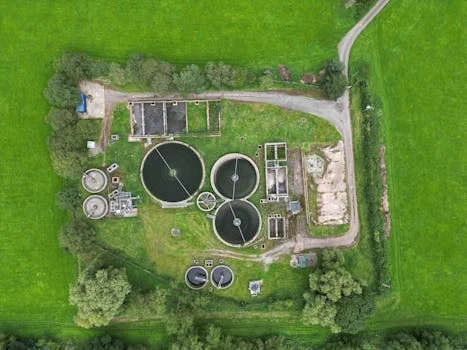
Design starts with load, not with equipment catalogues. Size membrane area against peak daily flow, hold the biological HRT at 6–12 hours, and set flux at the low end of the vendor band because hospital load swings with outpatient hours. Against conventional activated sludge at roughly 90% TSS removal, MBR lifts that figure to 99% and cuts footprint by up to 60%, at an energy premium of 0.8–1.2 kWh/m³ versus 0.3–0.5 kWh/m³.
The comparison below frames the three technologies most hospitals actually tender. For deeper kinetics, detailed MBR engineering specs and selection criteria cover fouling budgets and flux design in depth. Smaller sites should also weigh compact sewage treatment solutions for small facilities before committing to full-scale civil works.
| Technology | Removal Efficiency | Footprint | Energy Use | Best For |
|---|---|---|---|---|
| MBR | 99% TSS, 95% COD, 90% NH3 | 0.5–1 m²/m³/d | 0.8–1.2 kWh/m³ | Urban/Space-constrained hospitals |
| AO (Activated Sludge) | 90% TSS, 85% COD, 70% NH3 | 1–2 m²/m³/d | 0.3–0.5 kWh/m³ | Large facilities with ample space |
| Electrocoagulation | 95% Heavy Metals, 70% COD | 0.3–0.8 m²/m³/d | 1.5–3 kWh/m³ | Specialized labs/Pharma waste |
Selection follows the effluent target. Reuse-grade water points to MBR for its integrated filtration; heavy-metal loads from dental or laboratory wings point to electrocoagulation as pretreatment or standalone; space-rich campuses accept AO on operating cost. Most plants we size for 100–500 bed hospitals end up as MBR with ozone polishing on the disinfection stage.
Hospital Effluent Disinfection: Ozone vs UV
Ozone wins on chemistry; UV wins on operating cost. Ozone at 5–10 mg/L for 15–30 minutes oxidizes pharmaceutical residues that UV passes through untouched, without forming chlorinated by-products. UV at 10–30 mJ/cm² achieves a 99.9% kill rate for 0.02–0.08 USD per m³, but only while turbidity stays below 10 NTU, because shadowed particles survive the lamp. Ozone runs 0.05–0.15 USD per m³, and lamp fouling plus channel cleanliness are the hidden UV line items.
Chlorine dioxide splits the difference at 0.03–0.10 USD per m³ with a residual that survives storage tanks. Chlorine dioxide generators dose accurately at clinic scale, and the oxidant avoids the trihalomethanes hypochlorite forms. According to the US EPA, disinfection with chlorine, ultraviolet radiation, or ozone destroys the pathogens of concern in reuse streams, so the choice is economics, not capability. Most specifiers pair a primary disinfectant with a backup chemistry for maintenance windows.
Compliance Standards: EPA, EU, and China GB Requirements
Three rulebooks dominate hospital tenders. US EPA limits under 40 CFR Part 460 hold BOD5 and TSS at or below 30 mg/L each and cap fecal coliform at 200 CFU/100 mL. The EU's Directive 91/271/EEC sets COD at or below 125 mg/L and adds nutrient removal above 10,000 population equivalents. China's GB 18466-2005 is the strictest of the three at 60 mg/L COD and 100 CFU/L fecal coliform.
| Parameter | U.S. EPA 40 CFR 460 | EU Directive 91/271/EEC | China GB 18466-2005 |
|---|---|---|---|
| BOD₅ | ≤ 30 mg/L | ≤ 25 mg/L | ≤ 20 mg/L (Class II) |
| COD | N/A (Site specific) | ≤ 125 mg/L | ≤ 60 mg/L |
| TSS | ≤ 30 mg/L | ≤ 35 mg/L | ≤ 20 mg/L |
| Fecal Coliform | ≤ 200 CFU/100 mL | 6-log removal (Direct) | ≤ 100 CFU/L |
| Ammonia (NH3-N) | N/A | ≤ 15 mg/L (TN) | ≤ 15 mg/L |
The European Commission reports that over 90% of urban wastewater is dealt with in line with EU standards, and enforcement tightens as the revised directive framework rolls out. In the United States, one healthcare-sector rule is already on the books: pretreatment standards promulgated in 2017 and codified at 40 CFR Part 441 target dental mercury. The US EPA expects compliance to cut that load by 5.1 tons of mercury and 5.3 tons of other metals per year across about 103,000 dental offices. Hospital-side limits stay permit-driven under the general pretreatment program.
Permit strategy therefore starts with the receiving water, not the equipment catalogue. A train that clears GB 18466-2005 will usually clear the other two columns, which is why export projects specify to the strictest table. For market-specific practice, regional compliance requirements for hospital wastewater drawn from deployed projects show how permit conditions vary by jurisdiction.
Cost Breakdown: CapEx, OPEX, and Payback
Budget a medical wastewater treatment system on lifecycle cost, not on the invoice. Advanced trains such as MBR carry higher first cost, offset by smaller footprint, higher automation, and fewer compliance surprises. The bands below are tender-grade planning numbers.
CapEx benchmarks (2025 USD) by flow band:
- 1–10 m³/h: $50,000–$150,000 for compact MBR or AO plus UV systems.
- 10–50 m³/h: $150,000–$500,000 for MBR with ozone or electrocoagulation.
- 50–500 m³/h: $500,000–$2M for large AO trains with tertiary filtration and chlorine dioxide generators for hospital effluent disinfection.
OPEX benchmarks per m³ treated:
- Energy: 0.05–0.30 USD, with MBR at the top of the band from membrane scouring air.
- Chemicals: 0.02–0.15 USD, ozone costing more than UV or chlorine dioxide.
- Membrane replacement: 0.03–0.08 USD for MBR plants, amortized over 5–8 years of membrane life.
A raw payback on water savings alone can stretch past 40 years for a 50 m³/h plant, so the honest model prices avoided enforcement instead. With penalties running above $20,000 per year and permit exposure included, payback typically lands under 5 years. Phased modular build-outs and solar-assisted UV stages trim the operating line further.
Equipment Selection Checklist for Procurement Teams
Score every vendor against these ten questions before shortlisting. The WHO handbook Safe Management of Wastes from Health-Care Activities treats such controls as frontline infection prevention, and procurement is where they get enforced.
- Does the system meet local discharge standards (EPA, EU, or China GB) for COD, BOD, and pathogens?
- Is the disinfection method validated for 4–6 log pathogen removal (UV dose >30 mJ/cm², ozone >5 mg/L for 15 min)?
- Does the vendor provide third-party performance data or pilot test reports?
- Is the system modular enough to allow phased capacity expansion?
- Does the package include IoT sensors for remote monitoring of membrane fouling and pump health?
- Are critical spares (membranes, UV lamps, ozone generators) stocked locally for fast replacement?
- Does the design include redundancy (dual pumps, backup power) for critical components?
- Is the footprint compatible with the site (containerized or underground options)?
- Does the vendor deliver operator training and support for permit applications?
- Are total lifecycle costs (CapEx plus 20-year OPEX) competitive against the alternatives?
Next Steps: Turn These Specs into a Priced Proposal
Collect four numbers before contacting any vendor: bed count, peak hourly flow, the governing discharge limit set, and available footprint. With those, an engineer can lock the HRT band, membrane area, and disinfection dose quickly. Send your flow data for a sized quotation and a compliance check against the limits in the tables above.
Frequently Asked Questions
What Does Medical Wastewater EPA 40 CFR 460 Compliance Require?
Compliance centers on BOD and TSS: effluent must hold BOD5 at or below 30 mg/L, TSS at or below 30 mg/L, and fecal coliform at or below 200 CFU/100 mL, with no visible floating solids. Under the EPA's 2024 rates, penalties can reach $56,460 per day per violation. Note that the agency's promulgated healthcare-sector rule to date is the 2017 dental pretreatment standard at 40 CFR Part 441. Hospital-side limits stay permit-driven, so the discharge permit sets your numbers.
What Drives Medical Wastewater Treatment System Cost per m3?
Three line items dominate medical wastewater treatment system cost per m3: energy at 0.05–0.30 USD, chemicals at 0.02–0.15 USD, and membrane replacement at 0.03–0.08 USD. CapEx scales with flow, from $50,000–$150,000 at 1–10 m³/h to $500,000–$2M at 50–500 m³/h. Footprint constraints and redundancy choices move the total more than any single equipment brand choice does.
Is a Compact Medical Wastewater Treatment System Right for Clinics?
Yes, for flows in the 1–10 m³/h band a compact skid or containerized system is usually the right fit. Packaged MBR plus UV or ozone units arrive pre-tested, need one trained operator, and hold effluent below 50 mg/L COD when loadings stay within design. Very small clinics often discharge to a municipal sewer under a local permit instead, once the receiving plant accepts the load.
How Often Should MBR Membranes Be Replaced?
Plan on 5–8 years for quality PVDF membranes. Weekly chemical cleaning with 0.5% NaOCl controls fouling, and replacement runs $50–$100 per m² of membrane area. Watch transmembrane pressure and budget the change-out once TMP consistently exceeds 30 kPa. Most short membrane lives we see trace back to skipped cleaning cycles, not to membrane defects.
Can Hospital Wastewater Be Reused for Non-Potable Applications?
Yes, toilet flushing and irrigation become defensible once tertiary treatment holds fecal coliform below 10 CFU/100 mL and turbidity below 1 NTU. The train is MBR plus reverse osmosis and UV; those are the benchmarks behind WHO guidance and California Title 22. In the United States, the US EPA leaves reuse rules primarily to the states, so confirm the local standard before specifying reuse equipment.