Why Solar Cell Arsenic Wastewater Demands Specialized Treatment
Solar cell manufacturing generates arsenic-laden wastewater with concentrations up to 50 mg/L—far exceeding China’s GB 8978-1996 discharge limit of 0.5 mg/L. Modular arsenic treatment systems achieve 99.9% removal efficiency using adsorption (activated alumina, iron-based media) or coagulation-precipitation (pH 6–8, FeCl₃ dosing at 10–30 mg/L). For zero liquid discharge (ZLD), reverse osmosis (RO) membranes reduce arsenic to <0.01 mg/L, enabling 90% water reuse. System costs range from $150,000–$500,000 for 10–50 m³/h capacity, with payback periods of 2–4 years via reduced fines and water savings.
Arsenic in photovoltaic (PV) production primarily originates from the etching, texturing, and doping stages, where arsenic-containing compounds like arsine gas (AsH₃) or dopant solutions are utilized. According to 2024 industry benchmarks, these processes produce complex effluent streams characterized by high acidity and fluctuating arsenic loads ranging from 10 to 50 mg/L. Unlike municipal wastewater, solar cell effluent contains competing ions such as phosphates and silicates, which can significantly interfere with standard treatment chemistries if not managed through specialized engineering.
Regulatory frameworks have tightened globally, leaving little room for operational error. In China, the GB 8978-1996 standard mandates a limit of <0.5 mg/L, while the EU Directive 2010/75/EU often requires <0.1 mg/L for industrial discharge. In jurisdictions targeting high-purity water reuse, such as the U.S. EPA standards for drinking water, levels must drop below 0.01 mg/L. A typical 1 GW PV plant discharging 50 m³/h of 30 mg/L arsenic wastewater faces approximately $250,000 per year in environmental penalties based on 2025 penalty structures if discharge compliance is not met.
Beyond regulatory risks, untreated arsenic poses severe operational hazards. Arsenic concentrations exceeding 10 mg/L are known to cause stainless steel pitting and corrosion in downstream piping and heat exchangers. Worker safety is a critical concern; OSHA PEL (Permissible Exposure Limit) for inorganic arsenic is 0.01 mg/m³, necessitating airtight, automated treatment systems that minimize manual handling of hazardous reagents and sludge. Integrating water reclaim strategies for monocrystalline silicon wastewater can mitigate these risks by isolating toxic streams early in the process flow.
Arsenic Treatment Technologies for Solar Cell Wastewater: Mechanisms and Performance
Adsorption remains the gold standard for polishing solar cell wastewater to sub-ppb levels, utilizing activated alumina or iron-based media like Bayoxide E33. These media remove arsenic via chemisorption, where As(V) and As(III) ions bind to the surface hydroxyl groups of the media. Achieving 95–99% efficiency requires maintaining a narrow pH window of 5.5 to 7.0. At flow rates of 10–20 Bed Volumes per hour (BV/h), typical media lifespans range from 6 to 12 months, depending on the presence of competing anions like silica and phosphorus.
Coagulation-precipitation is the most cost-effective primary treatment for high-concentration influent. By utilizing an PLC-controlled chemical dosing for arsenic coagulation-precipitation, operators can inject Ferric Chloride (FeCl₃) or Aluminum Sulfate (Al₂(SO₄)₃) at dosages of 10–30 mg/L. At a pH of 6–8, soluble arsenic reacts to form insoluble Ferric Arsenate (FeAsO₄), which is then removed via sedimentation or flotation. While highly effective for bulk removal (90–95%), this process generates significant sludge volumes—typically 5–10% of the total treated water volume—which must be dewatered and stabilized as hazardous waste.
Membrane filtration, specifically the use of RO systems for arsenic polishing and ZLD integration, provides a physical barrier that reduces arsenic to <0.01 mg/L. High-rejection membranes, such as the Dow Filmtec BW30-400, are capable of achieving 99% rejection of pentavalent arsenic [As(V)]. However, trivalent arsenic [As(III)] is smaller and less charged, often requiring pre-oxidation with chlorine or ozone to ensure high rejection rates. Pretreatment is mandatory; a Silt Density Index (SDI) of <3 must be maintained to prevent irreversible fouling of the membrane spacers by colloidal arsenic precipitates.
Electrocoagulation (EC) is an emerging technology gaining traction in 2025 pilot projects. EC uses sacrificial iron or aluminum anodes to generate coagulants in situ through electrolysis. This method eliminates the need for liquid chemical storage and achieves up to 98% removal with energy consumption as low as 0.5–1.0 kWh/m³. While CapEx is higher than traditional precipitation, the reduced chemical footprint and lower sludge volume make it an attractive option for plants with limited space or strict chemical handling protocols. This technology is often paired with nickel wastewater treatment for solar cell plants to manage multi-metal contamination streams simultaneously.
Comparison Table: Arsenic Treatment Technologies for Solar Cell Wastewater
The following table provides a technical decision matrix for environmental engineers evaluating the trade-offs between removal efficiency, operational costs, and physical footprint for arsenic treatment in PV manufacturing environments.
| Technology | Removal Efficiency (%) | Influent Range (mg/L) | Optimum pH | OpEx ($/m³) | CapEx ($/m³/h) | Footprint (m²/m³/h) | Sludge Vol (%) |
|---|---|---|---|---|---|---|---|
| Activated Alumina | 95–99% | 1–50 | 5.5–7.0 | $0.80–$1.20 | $10,000–$20,000 | 0.1–0.2 | 2–5% |
| FeCl₃ Coagulation | 90–95% | 10–100 | 6.0–8.0 | $0.40–$0.70 | $5,000–$12,000 | 0.3–0.5 | 8–12% |
| Reverse Osmosis | 98–99.9% | 0.1–10 | 6.5–8.5 | $1.00–$1.50 | $25,000–$45,000 | 0.2–0.3 | <1% |
| Electrocoagulation | 96–98% | 5–50 | 6.0–9.0 | $0.90–$1.30 | $20,000–$35,000 | 0.1–0.15 | 3–6% |
Data synthesized from EPA 2024 benchmarks and 2025 HydropureWater field performance data.
Designing a Cost-Optimized ZLD System for Solar Cell Arsenic Wastewater
A cost-optimized Zero Liquid Discharge (ZLD) system for solar cell manufacturing must balance high recovery rates with the stabilization of hazardous arsenic residues. The process begins with a multi-stage pretreatment phase: pH adjustment tanks followed by a reaction zone where FeCl₃ and polymer flocculants are added. This primary stage removes the bulk of the arsenic (up to 95%) and prepares the water for membrane separation. Integrating solar-powered ZLD systems for PV manufacturing wastewater can further reduce the carbon footprint of these energy-intensive processes.
Secondary treatment involves RO membranes that concentrate the remaining arsenic into a small volume of brine. The permeate, which typically contains <0.01 mg/L of arsenic, is redirected back to the plant’s cooling towers or ultrapure water (UPW) feed, achieving up to 90% water reuse. The concentrated brine is then sent to an evaporator or a high-pressure RO stage to further reduce liquid volume. Management of the final waste stream is the most significant cost driver; arsenic-laden sludge must be processed through a sludge dewatering for arsenic-laden hazardous waste system to reach 30-40% solids, reducing disposal weights and costs.
| Cost Component | Estimated Cost (50 m³/h System) | Percentage of Total |
|---|---|---|
| Equipment CapEx (Pumps, Tanks, PLC) | $180,000 - $220,000 | 40% |
| Membrane & Media Initial Load | $90,000 - $110,000 | 20% |
| Annual Media/Membrane Replacement | $45,000 - $60,000 | 12% |
| Annual Chemical & Energy OPEX | $75,000 - $95,000 | 18% |
| Hazardous Sludge Disposal (Annual) | $50,000 - $70,000 | 10% |
The Return on Investment (ROI) for such a system is compelling for 1 GW+ facilities. For a plant processing 50 m³/h, the annual savings from avoided freshwater purchases (at $1.50/m³) and the elimination of environmental fines ($250,000/year) total approximately $370,000. With a total CapEx of roughly $500,000, the payback period is achieved in less than 24 months. This calculation assumes regional hazardous waste disposal rates of $350/ton for arsenic-stabilized sludge (China/EU average, 2025).
Case Study: 99.9% Arsenic Removal for a 1 GW Solar Cell Plant in Jiangsu
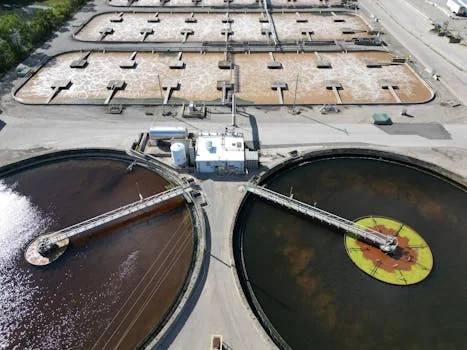
A leading monocrystalline silicon cell manufacturer in Jiangsu province faced critical production halts in late 2024 due to influent arsenic concentrations reaching 45 mg/L. This concentration was 90 times the national discharge limit, resulting in daily fines and a mandate from local authorities to implement a ZLD solution or face permanent closure. The plant's existing treatment was a basic lime precipitation unit that failed to reach compliance due to the presence of high silica concentrations (80 mg/L) which inhibited arsenic-calcium bonding.
The solution implemented was a modular three-stage system. First, silica was reduced to <10 mg/L using Magnesium Chloride (MgCl₂) at pH 10.5. Following silica removal, the pH was adjusted back to 7.0 for coagulation with FeCl₃ (25 mg/L dosing). The final polishing stage utilized dual-vessel activated alumina adsorption (Bayoxide E33) operating at a 10 BV/h flow rate. This configuration ensured that even during peak