Solar cell manufacturing generates chromium wastewater with Cr(VI) concentrations up to 500 mg/L—far exceeding China’s GB 8978-1996 discharge limit of 0.5 mg/L. Effective treatment requires a two-step process: (1) reduction of Cr(VI) to Cr(III) via bioremediation (99.9% removal, per Chlorella sp. MQ-1 studies), photocatalysis (95%+ removal under UV/solar light), or chemical reduction (90-98% removal with SO₂/FeSO₄), followed by (2) precipitation as chromium hydroxide at pH 8.5–9.0. Solar-powered ZLD systems can reduce OPEX by 40% compared to conventional chemical treatment, with payback periods under 3 years for plants processing ≥50 m³/day.
Why Chromium Wastewater from Solar Cell Production Requires Specialized Treatment
Solar cell manufacturing generates chromium wastewater primarily during Phosphorus Silicate Glass (PSG) etching, where HF/HNO₃ mixtures interact with chromium-containing substrates, and during the metallization phase involving screen printing pastes. Unlike generic industrial runoff, these streams often contain high concentrations of hexavalent chromium [Cr(VI)], which is categorized as an IARC Group 1 carcinogen. In typical crystalline silicon (c-Si) production, edge isolation via laser ablation also produces debris that, when washed, contributes to the total chromium load. According to 2025 industry benchmarks, a 100 MW/year solar cell plant typically generates approximately 30 m³/day of chromium-laden wastewater with concentrations ranging from 100 to 500 mg/L.
Regulatory compliance for these facilities is increasingly stringent. The 2025 chromium discharge limits for solar cell manufacturers under China’s GB 8978-1996 mandate a Cr(VI) limit of 0.5 mg/L, while the EU Industrial Emissions Directive 2010/75/EU enforces a total chromium limit of 0.1 mg/L. In the United States, EPA 40 CFR Part 469 sets the standard at 1.0 mg/L for Cr(VI). These limits are justified by the high toxicity of Cr(VI), which exhibits LC50 values of only 50–100 mg/L for aquatic life per WHO 2023 guidelines. Failure to isolate and treat these specific streams often leads to the contamination of larger wastewater volumes, resulting in massive compliance costs or total factory shutdowns, as seen recently in industrial zones in Jiangsu province.
Step-by-Step Chromium Wastewater Treatment Process for Solar Cell Manufacturers
Achieving 99.9% Cr(VI) removal requires a multi-stage segregation and reduction process that prevents cross-contamination with other solar-specific waste streams like TMAH or HF. The first critical step is wastewater segregation; for a 50 m³/day facility, chromium streams should be isolated from organic and acidic rinse waters to keep the treatment volume manageable (typically 10-15% of total plant effluent). Following isolation, primary sedimentation is conducted to remove suspended solids (TSS). Using DAF systems for chromium wastewater pretreatment, engineers can reduce TSS to <50 mg/L, which protects downstream reduction catalysts and biological agents.
The core of the treatment is the reduction of Cr(VI) to Cr(III). This is achieved through three primary engineering pathways: chemical reduction, bioremediation, or photocatalysis. In chemical reduction, sodium bisulfite (NaHSO₃) or ferrous sulfate (FeSO₄) is dosed at a pH of 2.0–3.0, maintaining an ORP of -300 to -500 mV to ensure complete conversion. Alternatively, emerging bioremediation uses Chlorella sp. MQ-1 at a neutral pH (6.0–7.0) with a 24–48 hour retention time. Once reduced, the Cr(III) is precipitated as chromium hydroxide [Cr(OH)₃] by raising the pH to 8.5–9.0 using Ca(OH)₂ or NaOH. The resulting sludge is then processed through high-pressure filter presses for chromium hydroxide sludge dewatering, which achieve a 30–40% dry solids content, significantly lowering hazardous waste disposal volumes.
| Process Step | Critical Parameter | Target Value | Equipment/Method |
|---|---|---|---|
| Segregation | Volume Ratio | 10–15% of total flow | Dedicated piping/holding tanks |
| Pretreatment | TSS Removal | <50 mg/L | DAF / Clarifiers |
| Cr(VI) Reduction | ORP / pH | -300 to -500 mV / pH 2.5 | Chemical Dosing / Bioreactor |
| Precipitation | pH Setpoint | 8.5–9.0 | NaOH or Ca(OH)₂ Dosing |
| Dewatering | Solid Content | 35% Dry Solids | Plate-and-Frame Filter Press |
| Polishing (ZLD) | Effluent Cr | <0.05 mg/L | MBR / RO Membrane |
For plants aiming for Zero Liquid Discharge (ZLD), the clarified effluent is passed through MBR systems for chromium effluent polishing and ZLD. This ensures that any residual trace metals are captured before the water enters Reverse Osmosis (RO) or evaporation stages. This integrated approach not only meets discharge standards but allows for 95% water recovery, which is essential for facilities operating in water-stressed regions.
Bioremediation vs. Photocatalysis vs. Chemical Reduction: Head-to-Head Comparison for Cr(VI) Treatment
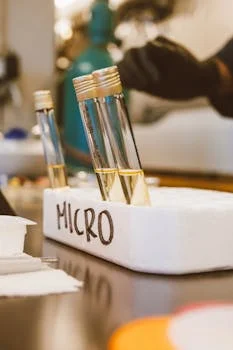
Chemical reduction offers the smallest equipment footprint at 0.5–1.0 m²/m³/day, while bioremediation provides the highest removal efficiency for low-concentration streams. Choosing the right method depends on the specific Cr(VI) load and available plant space. Chemical reduction remains the industry standard for high-load streams (up to 500 mg/L) due to its rapid reaction kinetics and reliability, though it produces the highest volume of sludge (0.8–1.2 kg/m³). In contrast, bioremediation using Chlorella sp. MQ-1 is highly effective at concentrations below 100 mg/L, achieving 99.9% removal with significantly lower chemical costs ($0.10–$0.30/m³), though it requires a much larger footprint for biological retention tanks.
Photocatalysis using ZnO or TiO₂ is an emerging "green" alternative that leverages UV or solar light to drive the reduction process. While it requires the largest footprint (4–6 m²/m³/day) to ensure adequate light penetration, it produces the least amount of sludge (0.1–0.3 kg/m³) and has the lowest operational energy cost when integrated with solar PV. For most solar cell manufacturers, a hybrid approach—using chemical reduction for concentrated waste and bioremediation or photocatalysis for rinse waters—often yields the best balance of compliance and OPEX.
| Metric | Chemical Reduction | Bioremediation | Photocatalysis |
|---|---|---|---|
| Removal Efficiency | 90–98% | 99.9% (<100 mg/L) | 95–98% |
| Footprint (m²/m³/d) | 0.5–1.0 | 2.0–3.0 | 4.0–6.0 |
| Energy Use (kWh/m³) | 0.1–0.3 | 0.2–0.5 | 0.1–1.0 (Solar vs UV) |
| Chemical Cost (USD/m³) | $0.50–$1.50 | $0.10–$0.30 | $0.05–$0.20 |
| Sludge Gen (kg/m³) | 0.8–1.2 | 0.3–0.5 | 0.1–0.3 |
Solar-Powered ZLD Systems for Chromium Wastewater: Engineering Specs and Cost Breakdown
Integrating solar PV arrays with Zero Liquid Discharge (ZLD) systems can offset up to 80% of the energy demand required for chromium wastewater evaporation. A standard solar-powered ZLD system for a solar cell plant includes a PV array (300–500 W/m²), high-recovery RO membranes, and a mechanical vapor recompression (MVR) evaporator. By utilizing JY series RO systems, plants can recover up to 95% of treated water for reuse in cooling towers or non-critical rinsing. The energy balance is particularly favorable in regions with high solar irradiance; for example, a system requiring 2.0 kWh/m³ for evaporation can be almost entirely powered by onsite PV during peak hours.
The capital expenditure (CapEx) for these systems in 2025 ranges from $1.2 to $2.5 million for plants processing 50–200 m³/day. While the initial investment is higher than traditional chemical precipitation, the OPEX savings are substantial. Solar-powered ZLD reduces operational costs by 30–40% compared to conventional chemical treatment ($0.80–$1.50/m³ vs. $1.20–$2.50/m³). For a facility in Jiangsu processing 150 m³/day, the $1.8 million ZLD system achieved a payback period of approximately 3.2 years, primarily through the elimination of hazardous water discharge fees and a $120,000 annual reduction in utility and chemical spending.
| Component | CapEx Share (%) | Function | 2025 Tech Spec |
|---|---|---|---|
| Solar PV Array | 30% | Energy supply | >22% Efficiency N-type cells |
| Membrane System | 25% | Brine concentration | HydropureWater JY Series (95% recovery) |
| MVR Evaporator | 20% | Crystallization | Titanium heat exchangers |
| Automation/PLC | 15% | Process control | PLC-controlled chemical dosing for Cr(VI) reduction and pH adjustment |
| Civil Works | 10% | Infrastructure | Anti-corrosive epoxy coating |
Detailed engineering of these systems is also covered in our guide to solar-powered ZLD systems for high-salinity wastewater, which shares many common evaporation technologies with chromium treatment.
Equipment Selection Guide: Matching Treatment Systems to Your Plant’s Chromium Wastewater Profile
Selecting chromium treatment equipment depends primarily on the daily volumetric flow and the initial hexavalent chromium concentration of the isolated waste stream. Small-scale facilities (processing <50 m³/day) with Cr(VI) levels under 100 mg/L are best served by batch chemical reduction systems. These setups typically include a reaction tank equipped with an agitator and a 1–10 m² plate-and-frame filter press. This configuration minimizes CapEx (typically $50K–$150K) while ensuring compliance with discharge standards through precise manual or semi-automated dosing.
Medium-sized plants (50–200 m³/day) with higher Cr(VI) loads (100–500 mg/L) require continuous flow systems to maintain throughput. These should integrate DAF systems for chromium wastewater pretreatment followed by an MBR for final polishing. For large-scale manufacturing (≥200 m³/day), a fully automated ZLD system is the only viable long-term solution to mitigate the risk of discharge violations. These systems must utilize SCADA-integrated PLC-controlled chemical dosing for Cr(VI) reduction and pH adjustment to manage the complex chemistry of high-volume reduction and precipitation in real-time. This is similar to the precision required in nickel wastewater treatment for solar cell manufacturing, where multiple heavy metals must be managed simultaneously.
| Plant Scale | Cr(VI) Load | Recommended Equipment | Typical CapEx |
|---|---|---|---|
| Small (<50 m³/d) | Low (<100 mg/L) | Batch Reduction + Filter Press | $50K – $150K |
| Medium (50-200 m³/d) | Med (100-500 mg/L) | DAF + Continuous Reduction + MBR systems for chromium effluent polishing and ZLD | $500K – $1.5M |
| Large (>200 m³/d) | High (>500 mg/L) | Solar ZLD + MVR Evaporator | $2M – $5M+ |
Frequently Asked Questions
What is the optimal pH for Cr(VI) reduction with SO₂?
The optimal pH range is 2.0–3.0. At this acidity, the reduction reaction is nearly instantaneous. Monitoring should maintain an ORP between -300 and -500 mV using a gold electrode to ensure 90–98% removal efficiency (per Yokogawa application data).
Can bioremediation handle high Cr(VI) loads?
Bioremediation using Chlorella sp. MQ-1 is highly effective at Cr(VI) concentrations ≤100 mg/L. If influent concentrations exceed this, the wastewater must be pre-diluted or undergo primary chemical reduction to prevent toxicity to the biological agents.
How much solar PV capacity is needed for a ZLD system?
A typical ZLD system requires 1.5–2.5 kWh per m³ of wastewater. For a 100 m³/day plant, you would need roughly 250 kWh/day. Assuming 5 average sun hours, a 50–60 kW solar PV array is required to offset the energy demand.
What are the disposal options for chromium hydroxide sludge?
In China, this is classified under hazardous waste code HW17. Options include disposal in certified hazardous waste landfills, stabilization/solidification for construction use, or recycling as a raw material for chromium green pigment production.
How often should ORP/pH sensors be calibrated in chromium streams?
Due to the presence of heavy metals and sulfur-based reducing agents, ORP sensors (gold electrode) should be calibrated weekly. pH sensors typically require biweekly calibration to prevent electrode fouling and ensure dosing accuracy.