Why IC Developer Wastewater Requires Specialized Treatment
Integrated circuit (IC) developer wastewater contains high concentrations of organic solvents (e.g., TMAH, PGMEA), heavy metals (copper, chromium), and suspended solids, requiring hybrid zero liquid discharge (ZLD) systems to achieve 99.9% recovery and compliance with China GB 31573-2015 and US EPA limits. A 2025 hybrid ZLD system—combining chemical precipitation, membrane filtration, and MVR evaporation—reduces COD by 95%+ and recovers 99.9% of heavy metals, with CAPEX ranging from $3.2M to $8.5M for 50–200 m³/h systems. This guide provides engineering specs, cost breakdowns, and a compliance blueprint for semiconductor fabs.
Developer wastewater composition is characterized by high levels of Tetramethylammonium hydroxide (TMAH) at 2–5% and Propylene Glycol Methyl Ether Acetate (PGMEA) at 1–3%, which contribute to a Chemical Oxygen Demand (COD) that frequently exceeds 8,000 mg/L. According to 2024 fab data from top research institutions, these streams also carry significant heavy metal loads, including copper (50–200 mg/L) and chromium (10–50 mg/L). The presence of chelating agents like EDTA creates stable metal complexes that inhibit traditional chemical precipitation, necessitating advanced oxidation processes (AOP) or electrocoagulation to break the bonds before removal.
Regulatory drivers for this specialized treatment are increasingly stringent. China GB 31573-2015 mandates COD levels below 50 mg/L and Copper below 0.5 mg/L for direct discharge, while US EPA 40 CFR Part 469 enforces a Copper limit of 1.3 mg/L. In the EU, the Industrial Emissions Directive 2010/75/EU sets a COD benchmark of 125 mg/L. Generic semiconductor wastewater systems often fail because they cannot handle the specific toxicity of TMAH or the high organic load of developer solvents. For instance, a 2023 project in Hsinchu demonstrated that only a hybrid system could reduce COD from 8,000 mg/L to <50 mg/L while maintaining continuous operation without membrane fouling.
| Parameter | Typical Influent (Developer) | China GB 31573-2015 | US EPA 40 CFR 469 | EU 2010/75/EU |
|---|---|---|---|---|
| COD (mg/L) | 5,000 – 10,000 | < 50 | N/A (TTO focus) | < 125 |
| Copper (mg/L) | 50 – 200 | < 0.5 | < 1.3 | < 0.5 (BAT-AEL) |
| TMAH (mg/L) | 20,000 – 50,000 | Strictly Monitored | Included in TTO | Regulated via Toxicity |
| pH | 11.0 – 13.0 | 6.0 – 9.0 | 6.0 – 9.0 | 6.0 – 9.0 |
Hybrid ZLD System Design for IC Developer Wastewater: Step-by-Step Process Flow
The primary engineering challenge in developer wastewater treatment is the sequential removal of recalcitrant organics and dissolved metals through a multi-stage hybrid ZLD architecture. The process begins with a Pretreatment Stage using chemical precipitation and electrocoagulation. By adjusting the pH to 9–10, engineers can facilitate the reaction Cu²⁺ + 2OH⁻ → Cu(OH)₂↓. Electrocoagulation, operating at a current density of 10–20 A/m², utilizes sacrificial anodes to destabilize chelating agents, removing 90%+ of heavy metals and 70% of initial COD before the stream reaches sensitive membranes.
Membrane Filtration follows, utilizing ultrafiltration (UF) with 0.02–0.1 μm pore sizes as a barrier for suspended solids, followed by Nanofiltration (NF) or Reverse Osmosis (RO). High-rejection industrial RO systems for TMAH and heavy metal removal are critical here; NF typically achieves 95% TMAH rejection, while specialized RO membranes can reach 99% rejection. The permeate is often suitable for non-critical fab reuse, while the concentrate is sent to the thermal stage.
The Evaporation & Crystallization stage employs Mechanical Vapor Recompression (MVR). MVR evaporators are highly energy-efficient, consuming only 0.05–0.1 kWh/kg of water evaporated. This system concentrates the brine into a slurry, which is then processed by a forced-circulation crystallizer to recover salts such as Sodium Sulfate (Na₂SO₄). Finally, Sludge Handling utilizes a plate-and-frame filter press for hazardous sludge dewatering, achieving 30–40% solids content to minimize disposal costs in compliance with China HW06 or US RCRA protocols.
| Process Stage | Key Equipment | Technical Parameter | Removal/Recovery Target |
|---|---|---|---|
| Pretreatment | Electrocoagulation Tank | 10–20 A/m² Current Density | 90% Heavy Metals |
| Filtration | Nanofiltration (NF) | 20–30 L/m²·h Permeate Flux | 95% TMAH Rejection |
| Concentration | MVR Evaporator | < 0.1 kWh/kg Energy Use | 95% Water Recovery |
| Dewatering | Plate & Frame Press | 100–300 m² Filtration Area | 35% Cake Solids |
Recovery Rates and Effluent Quality: Benchmarking Hybrid ZLD Systems
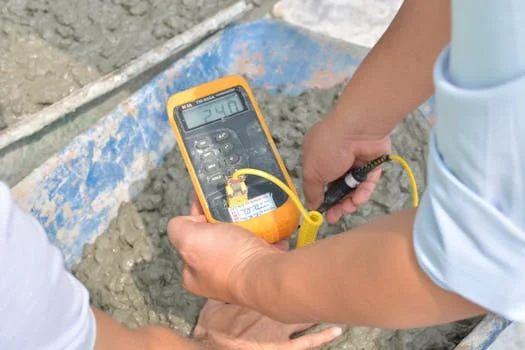
Hybrid ZLD systems for semiconductor fabs consistently deliver 99.9% recovery for copper and 99.5% for chromium, according to 2024 performance data from Suzhou-based installations. COD reduction is achieved through a combination of MBR systems for organic solvent removal in semiconductor wastewater and UV-H₂O₂ advanced oxidation. In the UV-H₂O₂ stage, a dosage of 100–300 mg/L H₂O₂ combined with a UV intensity of 50–100 mW/cm² breaks down PGMEA and TMAH into biodegradable intermediates or CO₂ and water, ensuring effluent COD remains below 50 mg/L.
Water recovery is a critical KPI for fab sustainability. While Minimum Liquid Discharge (MLD) systems typically recover 70–80% of influent water, ZLD systems reach 90–95%, significantly reducing the volume of hazardous waste for off-site disposal. Although ZLD requires higher initial CAPEX, the reduction in regulatory risk and the value of recovered water often justify the investment. For example, RO permeate with a Total Dissolved Solids (TDS) count of <10 mg/L can be diverted to cooling towers or scrubbers, displacing the need for fresh ultrapure water (UPW) intake.
| Contaminant | Hybrid ZLD Recovery | Conventional Chemical Recovery | MBR-only Recovery |
|---|---|---|---|
| Copper (Cu) | 99.9% | 85.0% | 60.0% |
| Chromium (Cr) | 99.5% | 80.0% | 55.0% |
| COD | 98.0% | 40.0% | 85.0% |
| TMAH | 99.0% | < 10% | 70.0% |
| Water Reuse | 95.0% | 0.0% | 60.0% |
Cost Breakdown: CAPEX, OPEX, and ROI for IC Developer Wastewater ZLD Systems
Capital expenditure (CAPEX) for a 100 m³/h IC developer wastewater ZLD system typically ranges from $5.2M to $6.8M, with equipment costs accounting for approximately 40% of the total budget. Engineering, procurement, and construction (EPC) services, including complex piping for hazardous solvent handling, add another 30%. Operating expenditure (OPEX) is dominated by energy costs for thermal evaporation (50%) and chemical reagents for pH adjustment and oxidation (20%). On average, treating developer wastewater via hybrid ZLD costs between $0.80 and $1.50 per cubic meter.
The Return on Investment (ROI) for these systems is driven by three primary factors: water savings, metal recovery, and the avoidance of non-compliance fines. A 2024 project in Shanghai achieved a 3.2-year payback period by recovering high-purity copper and reusing 92% of treated water, which offset the high cost of local industrial water. Procurement teams can use a baseline formula to estimate CAPEX: CAPEX = $16,000 × (Flow Rate in m³/h)^0.8. This power-law scaling accounts for the economies of scale inherent in large-scale MVR and RO installations.
| Cost Component | Percentage of Total | Estimated Cost (100 m³/h System) |
|---|---|---|
| Core Equipment (MVR, RO, Press) | 40% | $2,400,000 |
| Installation & Piping | 30% | $1,800,000 |
| Engineering & Design | 20% | $1,200,000 |
| Permitting & Commissioning | 10% | $600,000 |
| Total CAPEX | 100% | $6,000,000 |
Regulatory Compliance Blueprint: Meeting China GB, US EPA, and EU Standards
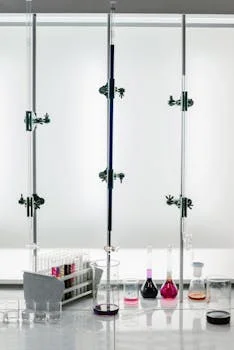
Compliance with China GB 31573-2015 requires a rigorous monitoring regime, including daily composite samples for heavy metals and weekly testing for COD and Ammonia Nitrogen. For fabs operating in the US, 40 CFR Part 469 focuses on Total Toxic Organics (TTO), which is the sum of 110 priority pollutants. To ensure compliance, the hybrid ZLD system must be designed with redundant sensors and automated diversion valves that send off-spec effluent back to the equalization tank if limits are breached. This is particularly important for semiconductor wastewater discharge standards and compliance strategies, where a single excursion can result in fines exceeding $100,000.
Audit preparation for EHS managers should include a comprehensive documentation package: permit applications, effluent monitoring reports, and certified hazardous waste disposal manifests. Common audit findings often involve incomplete chain-of-custody for hazardous sludge or uncalibrated pH probes. By implementing an automated data logging system that integrates with the fab's central management software, engineers can provide real-time proof of compliance during unannounced inspections. For further technical details on related streams, engineers should also consult electroplating wastewater treatment solutions for semiconductor fabs and CMP wastewater treatment for semiconductor manufacturing.
| Standard | Copper Limit | COD Limit | Key Requirement |
|---|---|---|---|
| China GB 31573-2015 | 0.5 mg/L | 50 mg/L | Strict Ammonia limits |
| US EPA 40 CFR 469 | 1.3 mg/L | N/A | TTO < 2.13 mg/L |
| EU 2010/75/EU | 0.5 mg/L | 125 mg/L | BAT-AEL Compliance |
Choosing the Right System: Decision Framework for Semiconductor Fabs
Selecting between a ZLD and an MLD system depends largely on the local cost of water and the regulatory environment regarding concentrate disposal. ZLD systems, while more expensive (approx. $8.5M for 200 m³/h), eliminate the need for off-site concentrate hauling, which can cost between $200 and $500 per cubic meter. For fabs in water-stressed regions or those subject to "Zero Discharge" mandates, ZLD is the only viable path. Conversely, if local regulations allow for high-TDS discharge to a municipal plant, an MLD system may offer a lower CAPEX of roughly $5M for the same capacity.
Vendor selection should prioritize a proven track record in the semiconductor industry. Engineers should request at least three references from fabs processing similar wafer sizes and chemistries. Critical risk mitigation strategies include a 3–6 month pilot test at 10 m³/h to validate membrane flux and MVR scaling rates. performance guarantees should be written into the contract, covering 99% uptime and 95% COD removal. A robust decision tree for system selection begins with heavy metal concentration: if Copper exceeds 200 mg/L, electrocoagulation must be the primary pretreatment step; if below 50 mg/L, traditional chemical precipitation may suffice.
Decision Framework Logic:
1. If Local Discharge Limit is < 500 mg/L TDS → MLD System.
2. If Local Discharge Limit is "Zero" or Hauling Cost > $300/m³ → Hybrid ZLD System.
3. If Chelated Metals are present → Advanced Oxidation/Electrocoagulation required.
4. If TMAH > 1% → High-rejection RO + MVR required.
Frequently Asked Questions
What is the typical COD of IC developer wastewater?
Typical COD ranges from 5,000 to 10,000 mg/L, primarily derived from organic solvents like TMAH and PGMEA. Hybrid ZLD systems reduce this to <50 mg/L using a combination of UV-H₂O₂ oxidation and high-rejection RO membranes.
How much does a 100 m³/h IC developer wastewater ZLD system cost?
Based on 2025 data, the CAPEX for a 100 m³/h system is between $5.2M and $6.8M. The OPEX typically ranges from $1.10 to $1.40 per cubic meter treated, with an ROI of 3 to 5 years depending on water reuse rates.
What are the key regulatory limits for IC developer wastewater in China?
Under GB 31573-2015, the limits are COD < 50 mg/L, Cu < 0.5 mg/L, and Cr(VI) < 0.1 mg/L. Non-compliance can lead to significant fines and operational shutdowns.
Can IC developer wastewater be reused in the fab?
Yes, RO permeate with TDS < 10 mg/L is frequently reused for scrubbers, cooling towers, or general facility cleaning. However, it is not used for UPW without additional polishing steps like electrodeionization (EDI).
What are the most common failures in IC developer wastewater treatment systems?
The three most common failures are membrane fouling due to inadequate pretreatment, pH probe drift leading to poor precipitation, and sludge dewatering inefficiency caused by sub-optimal polymer dosing.