Why CMP Wastewater Treatment is a Bottleneck for Semiconductor Fabs
Integrated circuit (IC) fabs generate CMP wastewater with high TSS (500–2000 mg/L), COD (300–1500 mg/L), and abrasives like cerium dioxide (CeO₂), requiring hybrid treatment systems to achieve 99.9% recovery and zero liquid discharge (ZLD). A 2026 design combining dissolved air flotation (DAF), reverse osmosis (RO), and chemical dosing can reduce CAPEX to $1.8M–$3.2M for a 50 m³/h system, with OPEX of $0.8–$1.5/m³ treated, depending on influent quality and local discharge limits (e.g., China GB 8978-1996 vs. US EPA 40 CFR Part 469).
CMP wastewater accounts for 30–40% of total fab wastewater volume, posing significant compliance risks and driving up operational costs. In water-stressed regions, the ability to reuse water is no longer a luxury but a necessity. For instance, a 300mm fab generating 100 m³/day of CMP wastewater might face substantial fines and production delays if its effluent, characterized by TSS levels exceeding 70 mg/L and COD above 100 mg/L (as per China GB 8978-1996), fails to meet stringent discharge standards. Conventional treatment systems often struggle with the abrasive nature of CMP slurries, particularly cerium dioxide and silica particles, leading to premature equipment failure and recovery rates that hover between 70–80%, far below the ZLD targets.
CMP Wastewater Contaminant Profile: What’s in Your Slurry?
Understanding the precise composition of CMP wastewater is foundational to designing an effective treatment system. The primary culprits are abrasive particles like cerium dioxide (CeO₂) and silica, typically ranging from 50–300 mg/L and 100–500 mg/L respectively. These abrasives, with particle sizes as small as 0.1 μm for CeO₂ and even smaller colloidal silica, present a significant challenge for conventional filtration. Beyond solids, CMP wastewater also contains organic acids, such as citric acid, contributing to high Chemical Oxygen Demand (COD) levels between 300–1500 mg/L. trace metals like copper, aluminum, and iron, originating from wafer materials and polishing equipment, can be present. The pH of CMP wastewater can fluctuate dramatically, from highly acidic to alkaline conditions (pH 2–11), depending on the specific polishing step, necessitating careful pH adjustment for optimal treatment efficacy.
| Contaminant | Concentration Range | Primary Source | Treatment Challenge |
|---|---|---|---|
| Cerium Dioxide (CeO₂) | 50–300 mg/L | CMP Slurry | Fine particle size (0.1–10 μm), abrasive, requires specialized flocculation. |
| Silica | 100–500 mg/L | CMP Slurry | Colloidal and dissolved forms (0.01–1 μm), prone to membrane fouling. |
| Organic Acids (e.g., Citric Acid) | Variable | CMP Slurry Additives | Contributes to high COD, requires biological or advanced oxidation treatment. |
| Trace Metals (Cu, Al, Fe) | ppm levels | Wafer Materials, Equipment Wear | Can precipitate and foul membranes, requires efficient removal. |
| Total Suspended Solids (TSS) | 500–2000 mg/L | Abrasives, Slurry Residues | High loading requires robust primary separation. |
The fine particle size distribution of CMP abrasives, particularly CeO₂, makes them difficult to remove through simple sedimentation. Effective flocculation often requires high-molecular-weight polymers to bridge these small particles, forming larger flocs that can be more readily separated. Colloidal silica can be particularly challenging, often requiring specific coagulants or advanced separation techniques.
Hybrid CMP Wastewater Treatment System: 2026 Design Blueprint
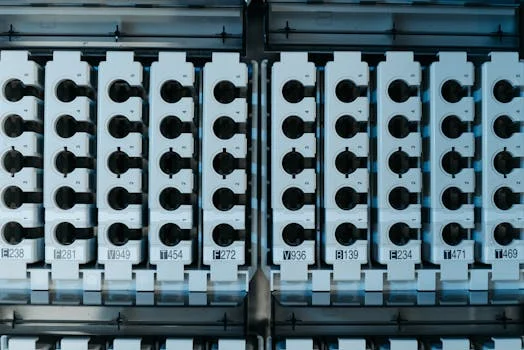
A 2026-generation hybrid system for integrated circuit chemical mechanical polishing wastewater treatment is designed to achieve near-zero liquid discharge (ZLD) by integrating multiple stages of treatment and resource recovery. The process begins with robust pretreatment to protect downstream equipment.
- Pretreatment: A rotary mechanical bar screen (e.g., from our GX Series) is employed to remove large debris (>1 mm) and prevent blockages in subsequent stages.
- pH Adjustment: An automatic dosing system precisely adjusts the influent pH to an optimal range of 6.5–7.5. This step is critical for maximizing the efficiency of chemical coagulants and flocculants in the DAF stage.
- Primary Solids Removal: A dissolved air flotation (DAF) system (e.g., HydropureWater's) utilizes microbubbles (30–50 μm) to float suspended solids to the surface for removal. This stage is designed to achieve 90–95% TSS removal, significantly reducing the load on downstream processes.
- Secondary Polishing: A Membrane Bioreactor (MBR) system (e.g., our DF Series) with a 0.1 μm pore size membrane is employed to remove residual COD and dissolved metals. The MBR provides a high-quality effluent with excellent solids and pathogen removal.
- Tertiary Treatment: An industrial reverse osmosis (RO) system (e.g., our Industrial RO Water Treatment System) operates at 60–80 bar to achieve up to 95% water recovery. This stage is crucial for ZLD and for producing high-purity water suitable for reuse within the fab.
- Sludge Dewatering: Sludge generated from the DAF and MBR processes is dewatered using a plate and frame filter press (e.g., our Plate and Frame Filter Press for Sludge Dewatering). This reduces sludge volume by 70–80%, minimizing disposal costs.
The conceptual process flow is DAF → MBR → RO → Sludge Dewatering. While electrocoagulation is a viable technology for certain CMP wastewater streams, its operational expenditure (OPEX) typically ranges from $1.2–$2.0/m³, compared to the $0.5–$1.0/m³ for DAF, making DAF a more cost-effective choice for high-volume TSS removal in this hybrid design.
Technology Comparison: DAF vs. MBR vs. Electrocoagulation for CMP Wastewater
Selecting the right combination of treatment technologies is paramount for achieving high recovery rates and cost-effectiveness in CMP wastewater management. Each technology offers distinct advantages and disadvantages when dealing with the complex contaminant profile of semiconductor fabs.
| Technology | TSS Removal | COD Removal | Recovery Rate | Footprint (approx.) | CAPEX (50 m³/h) | OPEX ($/m³) |
|---|---|---|---|---|---|---|
| DAF | 90–95% | 60–70% | Up to 80% (as standalone) | 20 m² | $250K | $0.5–$1.0 |
| MBR | 99% | 90% | Up to 90% (as standalone) | 15 m² | $400K | $0.8–$1.5 |
| Electrocoagulation | 85–90% | 70–80% | Up to 75% (as standalone) | 10 m² | $300K | $1.2–$2.0 |
| Hybrid (DAF + MBR + RO) | >99.9% | >95% | 95–99.9% | 50 m² | $1.8M | $0.8–$1.5 |
DAF excels at removing high concentrations of suspended solids and larger abrasive particles, making it an ideal first stage for CMP wastewater. MBR technology provides superior removal of fine suspended solids and dissolved organic compounds, acting as an effective secondary treatment. Electrocoagulation can be effective for specific contaminants but generally incurs higher operational costs and may not achieve the same level of solids removal as DAF. For ZLD and high recovery rates, a hybrid approach combining DAF for primary solids removal, MBR for secondary polishing, and RO for tertiary treatment and water reclamation is the most robust solution. While the hybrid system has a larger footprint and higher initial CAPEX, its unparalleled recovery rate and water reuse potential offer significant long-term economic and environmental benefits, especially for fabs in water-scarce regions or those facing stringent discharge regulations. For specific applications, referring to existing silicon wafer wastewater treatment solutions can provide further context.
2026 CMP Wastewater Treatment Cost Breakdown: CAPEX, OPEX & ROI Calculator
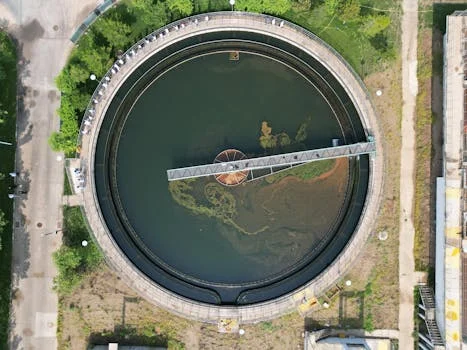
Implementing a state-of-the-art CMP wastewater treatment system requires a clear understanding of both capital expenditure (CAPEX) and operational expenditure (OPEX). For a 50 m³/h hybrid system designed for ZLD, encompassing DAF, MBR, and RO stages, the projected CAPEX in 2026 is estimated to range from $1.8 million to $3.2 million. This includes the cost of the primary treatment (DAF system, approximately $250K), secondary treatment (MBR module, around $400K), tertiary treatment (RO system, typically $600K), chemical dosing equipment ($100K), sludge dewatering (plate and frame filter press, around $150K), and essential engineering and integration services (estimated at $300K).
| Cost Factor | Low Estimate | High Estimate | Notes |
|---|---|---|---|
| DAF System | $200,000 | $300,000 | Varies with capacity and automation. |
| MBR Module (DF Series) | $350,000 | $450,000 | Membrane type and configuration impact cost. |
| RO System | $500,000 | $700,000 | Includes high-pressure pumps and pre-treatment. |
| Chemical Dosing & Control | $80,000 | $120,000 | Automated systems for pH, coagulants, flocculants. |
| Sludge Dewatering (Filter Press) | $120,000 | $180,000 | Capacity and automation level are key factors. |
| Piping, Installation & Engineering | $250,000 | $350,000 | Site-specific requirements and complexity. |
| Total CAPEX | $1,500,000 | $2,100,000 | (Excludes land and civil works) |
| Total OPEX per m³ | $0.80 | $1.50 | Includes energy, chemicals, consumables, labor, maintenance. |
Operational expenditure (OPEX) is projected to be between $0.8 to $1.5 per cubic meter of treated water. This includes energy costs for pumps and aeration, chemical consumption (e.g., polymers for flocculation, pH adjustment chemicals), membrane replacement for RO systems (estimated at $20K–$50K annually, with membranes typically lasting 3–5 years), and labor for operation and maintenance. Chemical costs are typically in the range of $0.1–$0.3/m³. For fabs located in water-stressed regions where the cost of fresh water can exceed $5/m³, the return on investment (ROI) for a ZLD system can be realized within 3–5 years, making the initial investment highly justifiable. Detailed 2025 CMP wastewater treatment cost data provides further insights into these financial considerations.
Compliance Checklist: China GB vs. US EPA Discharge Limits for CMP Wastewater
Meeting stringent environmental regulations is a primary driver for advanced CMP wastewater treatment. While both China's GB 8978-1996 and the US EPA's 40 CFR Part 469 set limits for various wastewater parameters, subtle differences exist, and many fabs aim for reuse standards that are even more rigorous than discharge limits.
| Parameter | China GB 8978-1996 | US EPA 40 CFR Part 469 | Typical CMP Influent |
|---|---|---|---|
| TSS (mg/L) | < 70 | < 50 | 500–2000 |
| COD (mg/L) | < 100 | < 120 | 300–1500 |
| pH | 6–9 | 6–9 | 2–11 |
| Copper (mg/L) | < 0.5 | < 1.3 | Trace to low ppm |
| Aluminum (mg/L) | < 5 | < 2 | Trace to low ppm |
| Cerium Dioxide (mg/L) | N/A (TSS covers) | N/A (TSS covers) | 50–300 |
| Silica (mg/L) | N/A (TSS/COD covers) | N/A (TSS/COD covers) | 100–500 |
It is crucial for EHS managers to understand that these are general discharge limits. Many fabs, especially those implementing water reuse strategies, target much lower levels for parameters such as turbidity (e.g., <1 NTU) and dissolved metals (e.g., <0.1 mg/L) to meet the demanding quality requirements for ultrapure water (UPW) needed in semiconductor manufacturing processes. The RO permeate from a well-designed ZLD system can consistently achieve these ultra-low levels, effectively turning wastewater into a valuable internal resource. For fabs facing unique regulatory landscapes, consulting specific regional environmental agencies is recommended. The challenges of treating high-salinity wastewater for fabs also require careful consideration in system design.
Frequently Asked Questions
Q1: What is the primary challenge in treating CMP wastewater for ZLD?
A1: The primary challenge lies in the high concentration of fine abrasive particles, such as cerium dioxide and silica, which are difficult to remove and can cause rapid fouling of membranes. Achieving 99.9% recovery also demands highly efficient removal of dissolved solids.
Q2: How does DAF contribute to CMP wastewater treatment?
A2: Dissolved air flotation (DAF) is effective for the initial removal of high suspended solids (TSS) and larger abrasive particles from CMP wastewater. By using microbubbles, it floats these solids to the surface for easy skimming, significantly reducing the load on downstream processes like MBR and RO.
Q3: What is the expected lifespan of RO membranes in a CMP wastewater ZLD system?
A3: The lifespan of RO membranes in CMP wastewater treatment typically ranges from 3 to 5 years. This can be influenced by the effectiveness of upstream pretreatment (DAF, MBR) in removing fouling agents like silica and fine particulates. Regular cleaning and maintenance are essential.
Q4: Can CMP wastewater be reused in the semiconductor fab after treatment?
A4: Yes, a well-designed ZLD system, particularly one incorporating RO, can produce water of sufficient purity for reuse in many fab processes, including rinse water and even some ultrapure water (UPW) applications, depending on the final polishing stages.
Q5: What is the typical ROI for a CMP wastewater ZLD system in a water-scarce region?
A5: In regions with high freshwater costs (e.g., >$5/m³), the ROI for a CMP wastewater ZLD system can be as short as 3–5 years. This is achieved by offsetting the cost of expensive freshwater intake with the significantly lower cost of treated and reused wastewater ($0.8–$1.5/m³).