Why Islamabad Needs Advanced Sewage Treatment Equipment in 2025
Islamabad’s industrial and municipal sectors face strict NEQS compliance and water scarcity in 2025, making sewage treatment equipment selection critical. Top suppliers offer ISO-certified systems with 90-97% BOD removal (MBBR) and 95%+ suspended solids reduction (DAF), but project-specific costs range from PKR 15M–50M for 50–500 m³/day plants. This guide provides engineering specs, CAPEX/OPEX breakdowns, and a zero-risk supplier selection framework to match technology to your effluent load, space constraints, and budget.
The regulatory landscape in Pakistan has shifted significantly, with the Pakistan Environmental Protection Agency (EPA) enforcing updated National Environmental Quality Standards (NEQS) as of 2024. For industrial discharge, compliance now requires Total Suspended Solids (TSS) below 50 mg/L, Biological Oxygen Demand (BOD) under 30 mg/L, and Chemical Oxygen Demand (COD) below 100 mg/L. Failure to meet these benchmarks is no longer a minor oversight; in early 2024, a textile factory in the I-9 industrial sector was fined PKR 2.5M for non-compliance. The facility subsequently upgraded to an underground WSZ sewage treatment plant for space-constrained sites, achieving 92% BOD removal and reaching a full ROI within six months through water reuse.
Beyond regulation, Islamabad faces a dire water security crisis. A 2023 Capital Development Authority (CDA) report indicates the city’s water demand exceeds supply by 25%. This gap drives new mandates for greywater reuse, which can account for 30% of municipal demand. Simultaneously, industrial growth in sectors like food processing and textiles increases effluent loads by an estimated 12% annually (Pakistan Bureau of Statistics, 2024). The environmental impact of neglect is evident in the Rawal Lake catchment area, where groundwater E. coli levels have been recorded at 10 times the World Health Organization (WHO) limits. For procurement managers, selecting high-performance equipment is crucial to ensure operational continuity in a water-stressed environment.
Matching Sewage Treatment Technology to Your Project Type
Selecting the correct technology is the most critical step in avoiding "white elephant" projects where equipment fails to meet influent characteristics. For municipal sewage projects ranging from 50 to 500 m³/day, Moving Bed Biofilm Reactor (MBBR) or Sequential Batch Reactor (SBR) systems are the industry standard. These systems typically achieve 90–95% BOD removal with a compact footprint of 0.5–2 m² per m³ of treated water. For urban Islamabad developments, underground WSZ sewage treatment plants for space-constrained sites offer a discrete solution. Industrial applications require careful consideration of specific requirements.
Industrial applications, particularly those involving high Fats, Oils, and Grease (FOG) or heavy metals, require a multi-stage approach. A DAF system for high-FOG industrial effluent is essential for initial TSS removal (up to 95%), followed by biological treatment to stabilize organic loads. In contrast, healthcare facilities must prioritize pathogen elimination. Compact hospital wastewater treatment systems with ozone disinfection utilize Membrane Bioreactor (MBR) technology with 0.1 μm filtration to ensure a 99.9% pathogen kill rate, meeting both NEQS and international WHO standards for medical waste.
| Project Type | Recommended Technology | Key Performance Metric | Effluent Quality Goal |
|---|---|---|---|
| Municipal/Residential | MBBR / WSZ Series | 90-95% BOD Removal | NEQS Compliance / Irrigation |
| Industrial (Textile/Food) | DAF + Biological | 95% TSS / 90% FOG Removal | Process Water Pre-treatment |
| Hospital/Medical | MBR + Ozone | 99.9% Pathogen Kill | WHO Medical Standards |
| High-Grade Reuse | MBR + RO (JY Series) | 90% Water Recovery | Cooling Tower / Boiler Feed |
For sites where space is at a premium, such as commercial plazas in Blue Area or E-sectors, containerized MBR systems for hospital and municipal wastewater reuse reduce the physical footprint by 60% compared to conventional activated sludge plants. This technology mapping ensures that the procurement process begins with a clear technical alignment between the waste stream and the treatment mechanism.
Engineering Specs: What to Demand from Suppliers

Procurement leads should demand detailed engineering specifications from suppliers to ensure long-term viability. A standard MBBR system should be rated for 90–95% BOD and 85–90% COD removal. Suppliers must provide MBR effluent quality benchmarks and reuse standards backed by lab data.
Footprint and civil requirements are often underestimated. While conventional STPs require roughly 0.8 m² per cubic meter of daily flow, modern MBR systems only need 0.3 m²/m³. underground WSZ plants require specific excavation depth (typically 1.2 m to 2.5 m) and reinforced concrete slab specifications. Energy consumption is a significant OPEX component; in Islamabad, industrial electricity tariffs range from PKR 18–22/kWh. MBBR systems typically consume 0.2–0.4 kWh/m³, whereas high-intensity MBR systems may reach 0.6–1.0 kWh/m³.
Sludge production is another critical technical parameter. Biological systems produce approximately 0.2–0.4 kg of dry solids per m³ of treated water. MBR systems can reduce this to 0.1–0.2 kg/m³, lowering disposal costs. Demand Programmable Logic Controller (PLC) automation and SCADA for remote monitoring to reduce operational labor costs by up to 30%. All equipment must carry ISO 9001 and ISO 14001 certifications.
Top 5 Sewage Treatment Equipment Suppliers in Islamabad: Head-to-Head Comparison
The following table compares leading supplier archetypes active in the Islamabad market for a standard 100 m³/day treatment capacity. This comparison allows project leads to evaluate vendors based on technical focus and budgetary constraints.
| Supplier Type | Primary Technology | BOD Removal | Footprint | Est. CAPEX (PKR) | Lead Time |
|---|---|---|---|---|---|
| Specialized Bio-Tech Firm | MBBR / AOP | 95% | Medium | 30M | 12 Weeks |
| Industrial Process Provider | DAF / Clarifiers | 85% (High TSS) | Large | 25M | 8 Weeks |
| Water Reuse Specialist | MBR + RO | 98% | Very Small | 45M | 10 Weeks |
| Municipal Contractor | SBR / ASP | 90% | Very Large | 20M | 16 Weeks |
| Medical Waste Specialist | MBR + Ozone | 97% (Pathogens) | Small | 50M | 14 Weeks |
When evaluating suppliers, consider factors like local service centers and references for NEQS-compliant projects. A supplier offering significantly lower CAPEX without energy consumption data may have higher operational costs.
CAPEX and OPEX Breakdown for Islamabad Projects
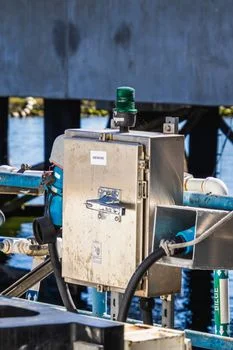
Budgeting for a sewage treatment plant in Islamabad requires accounting for localized costs. For a 100 m³/day MBBR system, the Capital Expenditure (CAPEX) typically totals PKR 35M, including PKR 25M for equipment, PKR 5M for civil works, PKR 3M for installation, and PKR 2M for commissioning and training. Import duties on specialized equipment can add 15% to the equipment cost.
Operational Expenditure (OPEX) for the same system averages PKR 3M annually, broken down into energy (PKR 1.2M), chemicals (PKR 800K), labor (PKR 600K), and sludge disposal fees (PKR 400K). Hidden costs include CDA approval fees (approximately PKR 500K) and land leasing (up to PKR 2M/year).
| Cost Component | Estimated Cost (PKR) | Frequency | Optimization Tip |
|---|---|---|---|
| Core Equipment | 25,000,000 | One-time | Use integrated WSZ units |
| Civil Works | 5,000,000 | One-time | Containerized units save 50% |
| Electricity (OPEX) | 1,200,000 | Annual | VFD-controlled blowers |
| CDA Approval Fees | 500,000 | One-time | Submit NEQS-ready designs |
The Return on Investment (ROI) is primarily driven by water reuse, with potential savings of PKR 1.5M per year, resulting in a typical payback period of 4–6 years.
Step-by-Step Supplier Selection Checklist for Zero-Risk Procurement
To avoid costly procurement mistakes, follow this structured framework. Begin by defining the effluent profile through 7-day composite sampling. Request site visits to verify operational performance and standardize the RFP with specific engineering specs. Negotiate performance guarantees and verify compliance certifications. Audit the O&M plan and ensure a comprehensive manual and training.
- Define the Effluent Profile: Conduct 7-day composite sampling of raw sewage to measure BOD, COD, TSS, and FOG.
- Request Site Visits: Visit at least three operational sites in Pakistan to verify effluent clarity and discuss maintenance.
- Standardize the RFP: Include specific engineering specs and demand 10-year spare parts availability.
- Negotiate Performance Guarantees: Include liquidated damages for non-compliance and 30-day performance testing.
- Verify Compliance Certifications: Ensure supplier registration with the Pakistan EPA and ISO 9001:2015 standards.
- Audit the O&M Plan: Ensure a comprehensive O&M manual and at least two weeks of hands-on training.
By following this checklist, procurement managers can ensure the selected sewage treatment equipment supplier in Islamabad provides a reliable system.
Frequently Asked Questions
What is the most cost-effective sewage treatment technology for Islamabad’s industrial sector?
MBBR systems offer the best balance of CAPEX (PKR 25M for 100 m³/day) and OPEX (PKR 3M/year), providing