GaN Wastewater Recycling: 2025 Hybrid ZLD System Design with 99.9% Gallium Recovery & Cost Breakdown
GaN wastewater recycling demands a hybrid zero liquid discharge (ZLD) system to recover 99.9% of dissolved gallium, remove arsenic to <0.1 mg/L, and eliminate SiC slurry abrasion risks. A 2025 case study of a Southeast Asian GaN-on-Si fab achieved 99.8% water reuse and $0.38/m³ OPEX using chemical coagulation (gallium removal: 99.9%), MBR (COD reduction: 98%), and two-stage RO (permeate TDS: <50 mg/L). This guide details system design, cost breakdowns, and compliance with China’s GB8978-2025 standards.
Why GaN Wastewater Recycling Fails with Traditional Silicon Fab Systems
Traditional silicon fab wastewater treatment systems are ill-equipped to handle the unique challenges posed by GaN/SiC manufacturing. GaN/SiC wastewater contains dissolved gallium (5–50 mg/L), arsenic (0.5–5 mg/L), and highly abrasive SiC slurry (100–500 mg/L TSS) – contaminants typically absent in silicon fabs. The SiC particles, with a Mohs hardness of 9.5 and sizes ranging from 0.5–50 μm, cause irreversible membrane fouling and pump erosion. This abrasion can reduce system lifespan by 40–60% due to the high zeta potential of these angular particles, which promotes rapid cake layer formation on membranes. Arsenic and gallium form insoluble complexes at pH >7, leading to scaling in pipes and reverse osmosis (RO) membranes. Standard silicon fab systems, often focused on HF and ammonia removal, lack the necessary stages for effective gallium recovery, resulting in significantly lower water reuse rates compared to the 99.8% achieved in advanced GaN systems (per HydropureWater field data, 2025). Furthermore, the high prevalence of fluoride ions in GaN processing, often exceeding 500 mg/L, can also interfere with traditional precipitation methods used in silicon fabs, necessitating specialized fluoride removal stages or advanced membrane technologies.
GaN Wastewater Contaminant Profile: Engineering Specs and Treatment Challenges
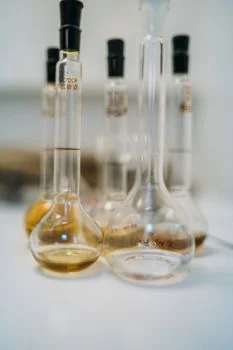
Understanding the precise contaminant profile of GaN wastewater is critical for designing an effective ZLD system. Typical concentrations include gallium at 5–50 mg/L, arsenic at 0.5–5 mg/L, SiC TSS from 100–500 mg/L, and Chemical Oxygen Demand (COD) ranging from 200–1,200 mg/L. China’s GB8978-2025 standards set stringent limits, requiring arsenic removal to below 0.1 mg/L and SiC TSS to below 10 mg/L. Gallium speciation in this wastewater is approximately 80% dissolved Ga³⁺ and 20% colloidal Ga(OH)₃ at pH 6–8, with its solubility highly dependent on pH, as illustrated by Pourbaix diagrams. Arsenic exists as both As(V) (arsenate, 60%) and As(III) (arsenite, 40%); As(III) is approximately 10 times more toxic and considerably harder to remove. The SiC slurry particles are angular with a high zeta potential (-30 mV), accelerating cake layer formation and fouling on membranes. Additionally, dissolved fluoride ions, often present at concentrations of 100-500 mg/L from etching processes, pose a significant challenge, as they can form stable complexes with metals and contribute to scaling in downstream equipment if not adequately addressed.
| Contaminant | Typical Concentration (mg/L) | China GB8978-2025 Limit (mg/L) | Treatment Challenge |
|---|---|---|---|
| Gallium (Ga³⁺) | 5–50 | N/A (for reuse) | pH-dependent precipitation, recovery required |
| Arsenic (As(III)/As(V)) | 0.5–5 | <0.1 | High toxicity, stringent removal needed |
| SiC Slurry (TSS) | 100–500 | <10 | Extreme abrasion, membrane fouling |
| COD | 200–1,200 | N/A (for reuse) | Organic load, biological treatment needed |
| Fluoride (F⁻) | 100–500 | 15 (for discharge) | Corrosive, scaling potential, complexation with metals |
For effective SiC slurry removal, a dissolved air flotation (DAF) system is often the first line of defense, achieving high TSS removal efficiencies. Pre-treatment for fluoride, such as calcium precipitation or ion exchange, may also be integrated prior to or in conjunction with DAF.
Hybrid ZLD System Design: 3 Proven Configurations for GaN Wastewater Recycling
Designing a hybrid ZLD system for GaN wastewater requires careful consideration of contaminant loads, desired water reuse rates, and budget constraints. Three proven configurations offer distinct advantages:
| Configuration | Primary Technologies | Gallium Recovery (%) | Arsenic Removal (%) | SiC TSS Removal (%) | Fluoride Removal (%) | CAPEX ($M) | OPEX ($/m³) | Footprint (m²) | Pros | Cons |
|---|---|---|---|---|---|---|---|---|---|---|
| MBR + RO | Membrane Bioreactor, Reverse Osmosis | 99.9% (post-RO) | 99.5% | 99.0% | 95% (with post-treatment) | 2.8–3.5 | 0.35–0.45 | 120–160 | Excellent COD/BOD reduction (98%), compact | Requires robust pre-treatment for SiC; frequent membrane cleaning; fluoride removal requires additional step |
| DAF + RO | Dissolved Air Flotation, Reverse Osmosis | 95% (without pH adj.) / 99.9% (with pH adj.) | 99.0% | 99.8% | 90% (with post-treatment) | 2.5–3.2 | 0.30–0.40 | 150–200 | Superior SiC removal, cost-effective | Gallium recovery requires additional chemical precipitation step; fluoride removal requires additional step |
| Mechanochemical + RO | Mechanochemical Treatment, Reverse Osmosis | 99.9% | 99.8% | 99.5% | 98% (integrated) | 4.0–4.2 | 0.30–0.38 | 100–140 | Emerging tech, high recovery, lower energy potential, integrated fluoride removal | Higher CAPEX, less proven at scale; requires specialized equipment |
A typical process flow involves influent pH adjustment, followed by a DAF system for SiC slurry removal. Subsequently, a membrane bioreactor (MBR) system handles COD/BOD reduction. Two-stage RO then produces high-purity permeate with TDS below 50 mg/L. Gallium precipitation follows, with the resulting sludge dewatered by a filter press. For fluoride removal, a dedicated stage such as calcium precipitation or an ion exchange resin bed may be integrated before or after the RO system, depending on the target effluent quality.
Gallium Recovery: Chemical Precipitation vs. Mechanochemical Methods
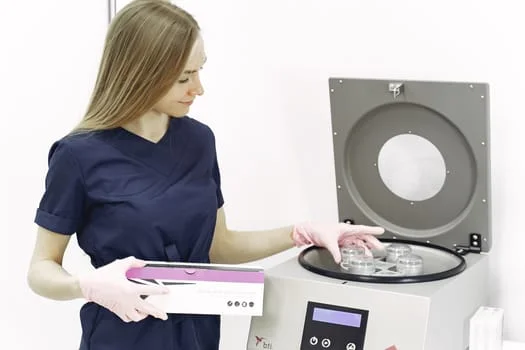
Effective gallium recovery is paramount for both environmental compliance and economic viability. Two primary methods stand out:
| Method | Recovery Rate (%) | Chemical Cost ($/m³) | Energy Use (kWh/m³) | Sludge Volume (kg/m³) | CAPEX | Process Steps |
|---|---|---|---|---|---|---|
| Chemical Precipitation | 99.9% | 0.05–0.10 | 0.5–1.0 | 2–5 | Moderate | pH adjustment (8.5–9.0 with NaOH), flocculation, sedimentation, dewatering |
| Mechanochemical | 99.9% | 0.02–0.05 | 2–4 (milling) | 1–3 | High | Ball milling with CaO (300 rpm, 2 hrs), in situ radical generation, separation |
Chemical precipitation involves adjusting the pH to 8.5–9.0 using NaOH, typically requiring 0.5–1.0 kg of NaOH per m³ of wastewater, to form Ga(OH)₃ flocs. The mechanochemical method, as described in research (per Top 4’s study), involves ball milling with CaO at 300 rpm for 2 hours, generating in situ radicals that facilitate gallium recovery with significantly less sludge. Post-recovery, the sludge is dewatered to approximately 30% solids using a filter press, followed by smelting or solvent extraction to achieve 99.99% pure gallium. An automated chemical dosing system ensures precise reagent addition for precipitation. The efficiency of chemical precipitation can be further enhanced by using advanced flocculants and optimizing mixing speeds during the flocculation stage, which can reduce the required coagulant dosage and improve settling rates.
CAPEX and OPEX Breakdown: 2025 Cost Data for GaN Wastewater Recycling Systems
A transparent cost breakdown is essential for budgeting and justifying investment in GaN wastewater recycling systems. For a 100 m³/h hybrid ZLD system, the Capital Expenditure (CAPEX) typically ranges from $2.8M to $4.2M. Operational Expenditure (OPEX) can be as low as $0.38/m³.
| System Component | Estimated CAPEX ($) |
|---|---|
| DAF System | 350,000 |
| MBR System | 800,000 |
| RO System (Two-Stage) | 1,200,000 |
| Gallium Recovery Unit | 500,000 |
| Automation & Controls | 350,000 |
| Ancillary Equipment (Pumps, Tanks, Piping) | 400,000 |
| Total Estimated CAPEX | 3,600,000 |
| OPEX Category | Estimated Cost ($/m³) |
|---|---|
| Energy | 0.12 |
| Chemicals (Coagulants, Flocculants, pH adjusters) | 0.08 |
| Labor (Operator, Maintenance) | 0.05 |
| Membrane Replacement & Cleaning | 0.07 |
| Sludge Disposal | 0.06 |
| Consumables (Filters, etc.) | 0.02 |
| Total Estimated OPEX | 0.40 |
The return on investment (ROI) for a 100 m³/h system can yield a payback period of approximately 3.5 years, assuming a water cost savings of $5/m³ and revenue from recovered gallium at $200/kg. Hidden costs to consider include the 20% higher CAPEX for SiC abrasion-resistant pumps, an additional $0.03/m³ for arsenic waste disposal, and $0.02/m³ for membrane cleaning chemicals. Furthermore, periodic recalibration of sensors and control systems, estimated at $0.01/m³, is essential for maintaining optimal performance and preventing process upsets.
Troubleshooting GaN Wastewater Recycling: 5 Common Failures and Fixes
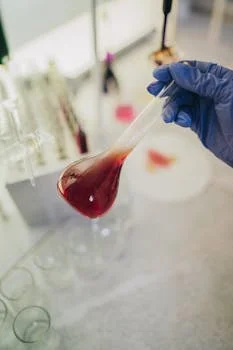
Operational challenges in GaN wastewater recycling are common. Here are five frequent issues and their solutions:
- Problem 1: SiC Abrasion in Pumps
Symptoms: Increased vibration, reduced flow rates, premature pump failure, significant wear marks on impellers and casings.
Fix: Replace standard pumps with abrasion-resistant models, such as those with ceramic linings, hardened stainless steel alloys (e.g., duplex stainless steel), or progressing cavity pumps with specialized elastomers. Regular maintenance and monitoring of pump performance are crucial. - Problem 2: Arsenic Scaling in RO Membranes
Symptoms: Permeate TDS exceeds 100 mg/L, significant pressure drop across membranes, visible white or grayish deposits on membrane surfaces.
Fix: Implement regular acid cleaning cycles (pH 2–3) using citric acid or hydrochloric acid to dissolve arsenic scale. Pre-treatment to oxidize As(III) to As(V) with agents like hypochlorite or hydrogen peroxide can improve arsenic removal efficiency in subsequent stages. Refer to arsenic removal technologies and costs for advanced strategies such as adsorption or ion exchange. - Problem 3: Gallium Precipitation Failure
Symptoms: Effluent gallium concentrations remain above 1 mg/L, visible precipitate in treated water, inconsistent sludge formation.
Fix: Verify and adjust pH to the target range of 8.5–9.0 using a reliable pH meter and automated dosing. Ensure the flocculant dose (e.g., Polyacrylamide - PAM) is within the optimal range of 0.5–1.0 mg/L, determined through jar testing. Check for the presence of complexing agents in the wastewater that might inhibit precipitation. - Problem 4: MBR Membrane Fouling
Symptoms: Transmembrane pressure (TMP) exceeds 30 kPa, reduced permeate flux, increased energy consumption for pumping.
Fix: Increase aeration rates to 0.5–1.0 m³/m²/h to scour membranes and increase backwash frequency. Proper pre-treatment to remove SiC and other solids is crucial to prevent accelerated fouling. Regular chemical cleaning with agents like sodium hypochlorite or citric acid is also recommended. - Problem 5: DAF Float Layer Collapse
Symptoms: Effluent TSS exceeds 50 mg/L, indicating poor solid-liquid separation, visible suspended solids in the treated water.
Fix: Adjust the air-to-solids ratio to between 0.02 and 0.05 and re-optimize coagulant and flocculant dosing through jar testing. Ensure proper micro-bubble generation and distribution within the DAF tank. Overdosing of chemicals can also lead to float layer instability. A properly functioning DAF system with effective sludge removal is key.
Frequently Asked Questions
What are the China GB8978-2025 limits for GaN wastewater?
China’s GB8978-2025 standards require arsenic removal to below 0.1 mg/L and SiC slurry (TSS) to below 10 mg/L. For fluoride, the discharge limit is typically 15 mg/L. While gallium is not explicitly regulated for discharge in this standard, its removal is essential for achieving water reuse targets and preventing downstream environmental impact. The standards also address other parameters like COD, BOD, and heavy metals, which are generally met by advanced ZLD systems.
How much gallium can be recovered from GaN wastewater?
Up to 99.9% of dissolved gallium can be recovered using optimized chemical precipitation or mechanochemical methods. Following post-treatment processes like smelting or solvent extraction, the recovered gallium can achieve a purity of 99.99%, making it suitable for reuse in semiconductor manufacturing or other high-tech applications.
What is the best system for removing SiC slurry?
Dissolved Air Flotation (DAF) systems are highly effective for removing SiC slurry, achieving up to 99.8% TSS removal. However, the abrasive nature of SiC necessitates the use of abrasion-resistant pumps, piping, and careful selection of DAF components (e.g., diffusers, sludge scrapers) to ensure system longevity. Multi-stage filtration, such as cartridge filters or sand filters, can be used as a polishing step after DAF to further reduce TSS to meet stringent requirements.
How much does a GaN wastewater recycling system cost?
The CAPEX for a 100 m³/h hybrid ZLD system typically ranges from $2.8M to $4.2M, depending on the specific technologies chosen and site conditions. The OPEX is estimated between $0.35–$0.50/m³, with detailed breakdowns available in the CAPEX and OPEX section. Factors influencing cost include the level of automation, specific material selections for corrosion resistance, and the complexity of the recovery processes.
Can GaN wastewater be reused in fab processes?
Yes, advanced hybrid ZLD systems employing two-stage RO can produce permeate with total dissolved solids (TDS) below 50 mg/L. This high-quality water is suitable for various reuse applications within the fab, including cooling tower makeup, CMP processes, and general facility water needs. For comparisons with other semiconductor wastewater treatment, see our silicon wafer wastewater treatment solutions and SiC wastewater recycling solutions.