
How Rotary Drum Screens Work: Step-by-Step Process Flow
A rotary drum screen is a mechanical filtration unit that separates suspended solids from an influent stream by rotating a cylindrical drum fitted with wedge-wire, perforated, or mesh media. Liquids pass through the apertures while particles larger than the opening are retained on the media surface, then lifted, washed, and discharged as compacted screenings. The rotating geometry handles variable flow and high solids loading with lower headloss than static screens of comparable aperture.
Stage 1: Influent Entry and Distribution
Wastewater enters through an influent pipe into the interior of the drum (internally fed) or over the top of the drum (externally fed). In internally fed units, a distribution weir or headbox spreads flow evenly across the drum length, preventing localized blinding and ensuring the full surface area of the 0.5–2.5 m diameter drum is used for filtration.
Stage 2: Filtration and Solids Capture
The drum rotates at 1–5 RPM. Liquid passes through the screen openings while solids larger than the aperture are retained. Slower rotation allows thicker cake formation, which can capture particles smaller than the opening itself; faster rotation is used at high flows to prevent overflow at the weir.
Stage 3: Transport, Wash, and Compaction
Rotation lifts captured solids to the top of the drum, where a dual-nozzle spray wash at 3–5 bar cleans the media and returns organics to the flow to limit BOD in the final screenings. The washed solids drop into a central hopper or screw conveyor, where an integrated compactor dewaters them to roughly 40% dryness, cutting disposal volume by about 50% and weight by about 67% (HydropureWater field data, 2025).
Process Flow Components:
- Influent Pipe: Directs raw wastewater into the distribution headbox.
- Drum Screen Media: The primary filtration barrier (wedge wire or perforated).
- Filtrate Outlet: Collects the screened water for downstream treatment.
- Spray Wash Nozzles: High-pressure headers that prevent bio-fouling and blinding.
- Compactor/Screw Drive: Mechanical assembly that squeezes moisture from screenings.
- Solids Discharge Chute: The exit point for dewatered, compacted waste.
Internally Fed vs. Externally Fed Drum Screens: Key Differences and Use Cases
The choice between internally and externally fed drum screens is dictated by how influent arrives (pumped or gravity) and by the nature of the solids being removed. Internally fed units are the default for high-solids industrial duty because they use the interior surface area to trap debris, so bypass stays low even during flow surges.
Internally fed screens typically handle higher solids concentrations and are favored for MBR systems requiring fine screening pretreatment. Wastewater is pumped into the drum, and the pressurized flow forces liquid through the media; headloss runs 50–200 mm, and capture of fibrous material is strong. Externally fed screens rely on gravity flow over the outside of the drum, are simpler to maintain, and are usually limited to lower-solids streams or coarse screening where headloss must stay below 50 mm.
| Feature | Internally Fed Drum Screen | Externally Fed Drum Screen |
|---|---|---|
| Flow Mechanism | Pumped or high-head gravity | Gravity overflow |
| Headloss Range | 50–200 mm | 20–50 mm |
| Flow Rate Capacity | 50–5,000 m³/h | 10–1,000 m³/h |
| Typical Screen Openings | 0.5–6 mm (Fine) | 1–10 mm (Coarse) |
| Best Use Case | Pulp mills, MBR protection, Food processing | Municipal primary screening, cooling water |
| Maintenance Profile | Requires pressurized spray wash | Simple access, lower maintenance |
Rotary Drum Screen Specifications: Engineering Parameters by Industry
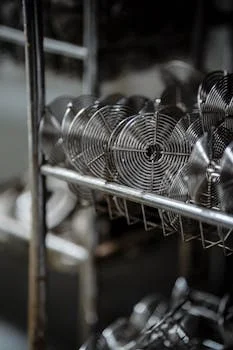
Engineering a rotary drum screen means matching media and drum geometry to the chemistry and physical character of the wastewater. Semiconductor wastewater treatment systems typically need fine mesh media (0.1–0.5 mm) to strip micro-particulates, while food processing lines usually call for 316 stainless steel to survive washdowns and fatty acids.
Wedge wire is the workhorse media for most industrial duty because its V-shaped profile sheds particles; anything that clears the leading edge clears the rest of the opening. Perforated plates are specified when two-dimensional screening is needed to keep long thin fibers (hair, plastic string) from stapling through. According to 2024 EPA benchmarks, high-performance drum screens reach 92–97% TSS removal in municipal service and 85–95% in industrial service, with the higher end usually achieved when downstream flocculation after screening handles the residual colloidal fraction.
| Industry Application | Flow Rate (m³/h) | Screen Media Type | Opening Size (mm) | Material of Construction |
|---|---|---|---|---|
| Municipal WWTP | 100–5,000 | Wedge Wire / Perforated | 1.0–6.0 | 304 Stainless Steel |
| Food Processing | 50–1,000 | Wedge Wire | 0.5–1.5 | 316L Stainless Steel |
| Pulp & Paper | 200–3,000 | Perforated Plate | 1.0–3.0 | 316 Stainless / Duplex |
| Semiconductor Fabs | 10–500 | Wire Mesh / Fine Wedge | 0.02–0.5 | 316L Stainless Steel |
| MBR Pretreatment | 100–2,000 | Perforated Plate | 0.5–2.0 | 304/316 Stainless Steel |
Rotary Drum Screen vs. Alternative Screening Technologies: Comparison Matrix
Rotary drum screens deliver the highest TSS removal of the fine-screening class, but they carry a higher capital cost than traditional bar screens. For coarse screening above 10 mm openings, GX Series rotary bar screens for coarse screening applications are usually the more cost-effective pick. Once downstream pumps or membranes become sensitive to fine debris, the drum screen's 90%+ capture rate tends to justify the spend.
Versus static screens such as sieve bends, drum screens add active cleaning through rotation and spray bars, which prevents the blinding seen in high-FOG streams. Compared with trommel screens used in solid-waste or mining service, industrial drum screens are built to tighter tolerances with precision seals so liquid-borne solids do not bypass the media.
| Parameter | Rotary Drum Screen | Multi-Rake Bar Screen | Perforated Band Screen | Static Sieve Bend |
|---|---|---|---|---|
| TSS Removal | 92–97% | 60–80% | 85–92% | 40–60% |
| Min. Opening | 0.02 mm | 6 mm | 1 mm | 0.25 mm |
| Maintenance | Moderate (Spray wash) | High (Rake wear) | Moderate (Chain wear) | Low (Manual cleaning) |
| CAPEX (USD) | $50k – $250k | $20k – $100k | $40k – $150k | $5k – $30k |
| Dewatering | Integrated (40% DS) | Requires separate press | Integrated (30% DS) | None |
Selecting a Rotary Drum Screen: Decision Framework for Industrial Buyers
Sizing a rotary drum screen correctly requires a quantitative look at current influent data and at future capacity. Undersized units overflow; oversized units waste spray water and energy. Most plants we size for run at the lower end of the published flow range because they leave headroom for the 1-in-10-year peak event.
Step 1: Define Influent Profile
Quantify peak flow (m³/h), average TSS (mg/L), and the share of FOG or fibrous material in the stream. A poultry plant running 1,500 mg/L TSS with high fat content, for example, needs 316 stainless steel and a heated spray header to keep the nozzles from fouling.
Step 2: Match Media to Solids
Use wedge wire for abrasive or granular solids to maximize media life. Choose perforated plate for fibers and plastics to prevent stapling through. Specify mesh media only when an ultra-fine polish is required, and budget for more aggressive cleaning cycles.
Step 3: Size for Peak Flow and Solids Loading
Calculate solids loading rate (SLR) in kg/m²/h. Most industrial drum screens are rated 5–50 kg/m²/h. Confirm the drum diameter and length handle the design peak event without bypassing the distribution weir.
Step 4: Material Compatibility
304 stainless steel is adequate for municipal wastewater. Drop to 316L when pH is below 5, when chlorides exceed 200 mg/L, or when the stream carries fatty acids or solvents. For high-chloride service, duplex stainless is the conservative choice.For a 1,000 m³/h plant that is 10–30 m³/h of service water that must be filtered and pressurized, so it belongs on the utility load list.
Step 6: Confirm Discharge Handling
Integrated compaction to ~40% DS cuts disposal volume by roughly 50% and weight by 67% (HydropureWater field data, 2025). If haul-off is the dominant operating cost, integrated dewatering pays back faster than a separate screw press.
Step 7: Validate with a Pilot or CFD
For flows above 2,000 m³/h or unusual solids, a pilot run on site or a CFD model of the drum interior catches distribution problems before the unit is fabricated.
Inspection and Daily Checks: How Do I Inspect a Rotary Screen Daily?
A daily walk-around on a rotary drum screen takes about ten minutes and catches the failures that cause bypass: blinding, spray nozzle wear, and seal leakage. Most plants we audit run a written checklist tied to a log sheet so trends are visible week to week.
- Influent level: Read the upstream level gauge or sight glass; a rising level at constant flow usually means the drum is blinding.
- Headloss: Compare the upstream/downstream level reading against the 50–200 mm (internally fed) or 20–50 mm (externally fed) band; step changes outside that band mean media or spray problems.
- Drum rotation: Confirm 1–5 RPM at the drive; a slipping belt or a stalled drum is the most common cause of overflow.
- Spray nozzles: Watch the wash pattern; plugged or worn nozzles leave clean stripes on the drum that become bypass points within hours.
- Seals and discharge: Check the discharge chute and the compactor outlet for leaks; screenings carry pathogens and odors, so any drip is a containment issue.
For buyers comparing drum screens to fine bar screens or perforated band screens, the daily inspection load is similar in time but heavier in wear parts on the drum (spray nozzles, seals, bearings) than on a static sieve bend.
Who This Guide Is For, and Next Step
This rotary drum screen explained guide is written for plant engineers sizing fine screening upstream of MBR or membrane systems, EPC contractors writing specs for municipal or food and beverage plants, and procurement managers comparing drum screens to multi-rake bar screens, perforated band screens, and static sieve bends. If your stream carries abrasive grit above 5% or temperatures above 80 °C continuously, ask for a duplex or higher alloy drum and a heated spray header before quoting.
Send us your peak flow (m³/h), average TSS (mg/L), and target aperture (mm); we will return a sized selection with CAPEX band and a spray-water budget. Request a sized quotation here with your influent data attached.
Frequently Asked Questions
What is a rotary drum screen and how does it work in wastewater treatment?
A rotary drum screen is a cylindrical, rotating fine screen that separates suspended solids from wastewater. Influent enters the drum, liquid passes through the apertures, and retained solids are lifted, spray-washed at 3–5 bar, and discharged as dewatered screenings at roughly 40% dry solids. Removal is 92–97% TSS in municipal service and 85–95% in industrial service, depending on aperture and downstream flocculation.
What is the difference between internally fed and externally fed drum screens?
Internally fed drum screens accept pumped or high-head flow inside the drum, run at 50–200 mm headloss, and handle 50–5,000 m³/h with 0.5–6 mm apertures, which suits MBR pretreatment and pulp and paper. Externally fed drum screens use gravity overflow over the outside of the drum, run at 20–50 mm headloss, and are sized 10–1,000 m³/h with 1–10 mm apertures for municipal primary screening and cooling water.
How does a rotary drum screen compare to a multi-rake bar screen?
A rotary drum screen reaches 92–97% TSS removal down to 0.02 mm openings and dewaters screenings to about 40% DS in an integrated compactor, while a multi-rake bar screen typically delivers 60–80% TSS removal down to 6 mm and needs a separate press for dewatering. Drum screen CAPEX runs $50k–$250k versus $20k–$100k for multi-rake bar screens; choose the drum when downstream membranes or fine-bulk-solids pumps are sensitive to fiber and grit carryover.
How do I inspect a rotary screen daily?
Run a ten-minute daily walk-around: read the upstream level and headloss against the 50–200 mm (internal) or 20–50 mm (external) band, confirm drum rotation at 1–5 RPM, watch the spray pattern for plugged nozzles, and check the discharge chute and seals for leaks. Log readings on a trend sheet so a rising upstream level at constant flow flags blinding before it becomes an overflow event.
What aperture and material should I specify for a food processing wastewater drum screen?
Food processing wastewater typically runs 50–1,000 m³/h with high FOG and CIP chemicals, so specify 316L stainless steel construction, wedge wire media at 0.5–1.5 mm aperture, and a heated spray header operating at 3–5 bar to prevent nozzle fouling. Match the drum size to peak hourly flow, not average flow, and confirm the compactor can hold roughly 40% DS to keep haul-off costs in line.