A typical semiconductor chip fab generates 5–10 million gallons per day (MGD) of wastewater, with electroplating lines contributing high concentrations of copper (50–500 mg/L), nickel (20–200 mg/L), chromium (10–100 mg/L), and arsenic (5–50 mg/L). Zero liquid discharge (ZLD) systems for electroplating wastewater achieve 99.9% heavy metal removal and 95–98% water recovery, but costs vary widely: $3–$8 per 1,000 gallons treated for chemical precipitation + RO, versus $8–$15 for hybrid systems with ion exchange polishing. Regulatory limits (e.g., China GB8978, EPA 40 CFR Part 469) require effluent concentrations below 0.5 mg/L for most metals, driving adoption of multi-stage treatment trains.
Why Electroplating Wastewater is the Toughest Challenge in Chip Fabs
Electroplating wastewater in semiconductor fabrication contains heavy metal concentrations 10 to 100 times higher than other internal streams, such as Chemical Mechanical Planarization (CMP) or Ultrapure Water (UPW) reject (HydropureWater field data, 2025). While CMP wastewater typically presents copper levels below 5 mg/L, electroplating rinse waters and spent baths frequently exceed 500 mg/L. This concentration gradient necessitates segregated treatment architectures, as the presence of high-density metals can overwhelm the biological or general physical-chemical systems used for the rest of the facility's effluent. Understanding how CMP wastewater treatment differs from electroplating streams is critical for engineers designing centralized versus decentralized treatment nodes.
The complexity of this stream is compounded by extreme pH variability, ranging from pH 2 in acid copper baths to pH 12 in cyanide-based processes. the modern 300mm fab utilizes advanced packaging techniques like wafer bumping and redistribution layers (RDL), which introduce complexing agents such as EDTA, citric acid, and various proprietary organic brighteners. These chelating agents form stable, soluble complexes with metal ions, effectively "shielding" them from traditional hydroxide precipitation. Without advanced oxidation or specialized precipitants, these metals remain in the effluent, leading to regulatory excursions and high Total Dissolved Solids (TDS) discharge fines.
Regulatory frameworks have tightened significantly as fabs scale. Under China’s GB8978-1996 and more recent regional standards, the discharge limit for copper in electroplating-specific streams is often 0.5 mg/L, compared to 1.0 mg/L for general industrial discharge. In the United States, EPA 40 CFR Part 469 mandates strict Pretreatment Standards for New Sources (PSNS), pushing fab managers toward Zero Liquid Discharge (ZLD) to mitigate risk. A standard 300mm fab electroplating line generates between 150 and 300 m³/day of wastewater with a TDS load between 3,000 and 8,000 mg/L, creating a massive burden on evaporation and crystallization systems if not pre-concentrated efficiently.
| Parameter | Electroplating Stream | CMP Wastewater | UPW Reject |
|---|---|---|---|
| Copper (Cu) Concentration | 50–500 mg/L | <5 mg/L | <0.1 mg/L |
| TDS Levels | 3,000–8,000 mg/L | 400–800 mg/L | 200–500 mg/L |
| Primary Challenge | Chelated Metals / Toxicity | Sub-micron Slurry Solids | High Volume / Low Loading |
| Treatment Goal | 99.9% Metal Removal / ZLD | Solid-Liquid Separation | Direct Reclamation |
Electroplating Wastewater Characteristics: Influent Quality Parameters by Metal Type
Accurate system design begins with a granular understanding of the influent chemistry, which varies based on the specific plating chemistry deployed. Hexavalent chromium [Cr(VI)], commonly used in certain etching and plating steps, represents one of the most toxic components. Unlike trivalent chromium [Cr(III)], Cr(VI) does not precipitate as a hydroxide and must first undergo chemical reduction—typically using sodium metabisulfite at pH 2.0–3.0—before it can be removed. Failure to account for the reduction step in the initial engineering specs will lead to total system failure in meeting discharge limits.
Arsenic and cyanide also present unique challenges. Arsenic, often appearing in gallium arsenide (GaAs) wafer processing, requires specialized co-precipitation with ferric chloride or adsorption onto activated alumina. Cyanide, though being phased out in many modern "cyanide-free" baths, may still be present in legacy lines, requiring two-stage alkaline chlorination for complete destruction. For a deeper dive into these requirements, see the engineering specs for heavy metal removal in semiconductor fabs.
The role of chelating agents cannot be overstated. EDTA and other organic ligands are designed to keep metals in solution during the plating process; they continue to do so in the wastewater. Breaking these bonds requires precise chemical dosing for electroplating wastewater pH adjustment and metal precipitation, often utilizing organosulfide precipitants that have a higher affinity for the metal than the chelating agent itself. The table below outlines the typical influent ranges for these critical contaminants based on EPA 40 CFR Part 469 and HydropureWater field data.
| Contaminant | Influent Range (mg/L) | Chemical Form | Removal Target (mg/L) |
|---|---|---|---|
| Copper (Cu) | 50–500 | Cu²⁺ / Chelated Cu | <0.3 |
| Nickel (Ni) | 20–200 | Ni²⁺ / Ni-EDTA | <0.1 |
| Chromium (VI) | 10–100 | CrO₄²⁻ / Cr₂O₇²⁻ | <0.05 |
| Arsenic (As) | 5–50 | As(III) / As(V) | <0.01 |
| Cyanide (CN⁻) | 10–150 | Free / Complexed | <0.2 |
Wastewater generation points in the electroplating line include continuous rinse tank overflows, which provide a steady, relatively dilute flow, and periodic bath dumps, which are highly concentrated "slugs." Engineering a buffer tank with sufficient equalization volume (typically 24–48 hours of hydraulic retention time) is essential to prevent these bath dumps from shocking the downstream membrane and ion exchange systems.
Hybrid Treatment Systems for Electroplating Wastewater: Process Designs for 99.9% Removal
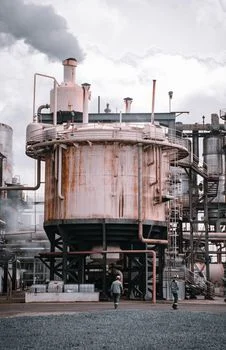
Relying on a single technology for electroplating wastewater is no longer viable given the 99.9% removal rates required for ZLD. Hybrid systems combine the cost-effectiveness of chemical precipitation with the precision of membrane filtration and the polishing capabilities of ion exchange. The process flow typically begins with chemical reaction tanks where pH is adjusted and coagulants are added. Because the resulting metal hydroxide flocs are often light and prone to shearing, a high-efficiency DAF system for electroplating wastewater pretreatment is frequently superior to conventional clarifiers, as it uses micro-bubbles to float flocs to the surface for removal, achieving much higher solids consistency.
Following primary solids removal, Ultrafiltration (UF) acts as a critical barrier for suspended solids and colloidal metals, protecting the downstream industrial RO system for electroplating wastewater recovery. The RO stage is the "workhorse" for water recovery, typically operating at 75–85% recovery in a standard configuration. However, to push toward ZLD levels (95%+), a secondary "High-Recovery RO" or "Brine Concentrator" stage is required. At this stage, the risk of scaling from calcium sulfate or silica is high, requiring advanced antiscalant dosing and potentially intermediate softening.
The final polishing step for heavy metals utilizes Ion Exchange (IX). While RO removes the bulk of the TDS, IX resins—specifically chelating resins with iminodiacetic acid groups—selectively target residual copper and nickel ions. This ensures that even if the RO membrane has a minor passage or if chelates bypass the initial precipitation, the final effluent remains well below the 0.1 mg/L threshold. The following table compares these technologies based on their operational impact and removal efficiency.
| Technology | Primary Target | Removal Rate | CAPEX | OPEX |
|---|---|---|---|---|
| Chemical + DAF | Bulk Metals / SS | 90–95% | Low | Moderate (Chemicals) |
| UF / MF | Colloids / Bacteria | 99% (Solids) | Moderate | Low (Electricity) |
| Reverse Osmosis | TDS / Dissolved Ions | 98–99.5% | High | Moderate (Energy) |
| Ion Exchange | Trace Heavy Metals | 99.9%+ | Moderate | High (Regeneration) |
A typical hybrid system blueprint for a 300 m³/day line involves: 1. Cr(VI) Reduction (if needed) → 2. pH Adjustment/Precipitation → 3. DAF Clarification → 4. Multi-Media Filtration → 5. Ultrafiltration → 6. Two-Stage RO → 7. Chelating Ion Exchange Polishing. This multi-barrier approach ensures that the fab remains compliant even during process fluctuations or bath re-tooling.
Zero Liquid Discharge (ZLD) for Electroplating Wastewater: Cost Breakdown and ROI
Implementing ZLD in a semiconductor environment is a significant capital commitment, with CAPEX ranging from $1.5M to $5M for systems handling 100–300 m³/day. The high cost is driven by the need for corrosion-resistant materials (e.g., Titanium or high-grade stainless steel) and the inclusion of thermal evaporation or crystallization components to handle the final RO brine. For procurement teams, understanding ZLD system designs and cost breakdowns for semiconductor wastewater is essential for multi-year budget planning.
OPEX is dominated by energy consumption, particularly if mechanical vapor recompression (MVR) evaporators are used. Energy accounts for roughly 30–40% of the total operating cost. Chemicals for pH adjustment, coagulation, and resin regeneration contribute another 20–30%. Despite the high costs, the ROI is driven by three factors: the rising cost of industrial freshwater (which can exceed $5 per 1,000 gallons in water-scarce regions), the elimination of discharge permit fees and potential fines, and the "social license to operate" in regions with strict environmental ESG mandates.
| System Scale | Treatment Tech | Est. CAPEX | OPEX ($/1k Gal) | Water Recovery |
|---|---|---|---|---|
| 100 m³/day | Chemical + RO | $0.8M–$1.2M | $3–$6 | 75–85% |
| 100 m³/day | Hybrid (IX + ZLD) | $1.8M–$2.5M | $9–$14 | 98%+ |
| 300 m³/day | Chemical + RO | $2.0M–$3.0M | $2.5–$5 | 80–85% |
| 300 m³/day | Hybrid (IX + ZLD) | $4.0M–$6.0M | $8–$13 | 99%+ |
For a large fab, the difference between 80% recovery and 99% recovery can represent millions of gallons of water saved annually. In jurisdictions like Singapore or parts of China and the US Southwest, where "new water" is expensive or unavailable, ZLD is often the only path forward for facility expansion. The payback period for these systems typically ranges from 3 to 7 years, depending on local water tariffs and the severity of discharge penalties.
How to Select the Right Electroplating Wastewater Treatment System for Your Fab
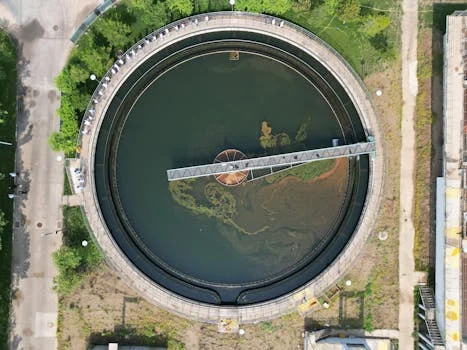
Selecting a treatment architecture requires a balance between current contaminant profiles and future-proofing for fab re-tooling. If a fab currently plates copper but anticipates moving to nickel-rich advanced packaging, the system must include chelating resin IX from the outset. Use the following decision framework to guide your selection:
- Contaminant Profile: Are chelating agents present? If yes, standard hydroxide precipitation will fail; specify organosulfide precipitants or advanced oxidation (AOP).
- Fab Capacity: For flows <100 m³/day, a simplified Chemical + DAF + RO train may suffice if discharge limits allow. For >300 m³/day, the economies of scale favor a full hybrid ZLD system with MVR evaporation.
- Regulatory Limits: If your local standard is <0.1 mg/L for any metal, ion exchange polishing is mandatory, as RO alone cannot guarantee this level of consistency.
- Budget Structure: High CAPEX/Low OPEX (e.g., high-efficiency RO) versus Low CAPEX/High OPEX (e.g., heavy chemical dosing).
Before finalizing a vendor, utilize this 10-point checklist to ensure engineering robustness:
- Does the vendor provide bench-scale treatability testing with your specific plating chemistry?
- What is the guaranteed lifespan of the RO membranes given the high TDS and metal loading?
- How does the system handle "slug loads" from accidental bath dumps?
- Is the ion exchange resin regenerate-able on-site, or does it require off-site disposal?
- What is the specific energy consumption (SEC) in kWh/m³ for the ZLD stage?
- Are the chemical dosing pumps integrated with real-time ORP and pH sensors?
- Does the DAF system include a saturation vessel designed for micro-bubble consistency?
- What is the footprint requirement for the hybrid train?
- Does the automation software allow for remote monitoring and predictive maintenance?
- What is the lead time for critical spares like high-pressure RO pumps and specialized resins?
Frequently Asked Questions
How do chelating agents like EDTA affect electroplating wastewater treatment? Chelating agents form stable, water-soluble complexes with metal ions like copper and nickel, preventing them from reacting with hydroxide ions to form precipitates. In a chip fab environment, this means traditional lime or caustic soda treatment will not work. To treat chelated waste, you must either use advanced oxidation (like Fenton’s reagent) to break the organic bond or use specialized organosulfide precipitants that can "out-compete" the chelant for the metal ion.
What is the typical lifespan of RO membranes in semiconductor electroplating applications? In these high-stress environments, RO membranes typically last 1.5 to 3 years. The lifespan is heavily dependent on the effectiveness of the pretreatment (DAF and UF). If metal hydroxides or organic brighteners reach the RO surface, irreversible fouling can occur within months. Implementing a robust Clean-In-Place (CIP) regimen every 1–3 months is essential to maintain flux and salt rejection.
Is Zero Liquid Discharge (ZLD) mandatory for all semiconductor fabs? While not federally mandatory in all countries, ZLD is increasingly required by local municipalities and environmental bureaus, especially in "water-stressed" regions. In China, many industrial parks require ZLD for all new electroplating permits. In the US, while EPA 40 CFR Part 469 sets concentration limits, many fabs adopt ZLD voluntarily to ensure 100% compliance and to meet corporate sustainability goals.
Can ion exchange replace reverse osmosis for metal removal? IX is excellent for "polishing" (removing the last 1–5 mg/L), but it is not economical for bulk removal at the 500 mg/L level. The resin would saturate too quickly, leading to excessive chemical costs for regeneration and high volumes of waste brine. A hybrid approach—using RO for bulk TDS reduction and IX for trace metal removal—is the industry standard for efficiency.