Hospital Wastewater Treatment in Dar es Salaam: 2025 Engineering Guide with Cost Data, Compliance & Equipment Checklist
In Dar es Salaam, hospital wastewater treatment faces unique challenges: flood-prone areas, no sewer connections, and strict discharge standards. The CCBRT maternity hospital’s 2013 DEWATS system—treating 100 m³/day of black and grey water—demonstrates a proven solution, producing 12 m³/day of biogas and reducing operational costs by avoiding monthly septic tank desludging. However, newer technologies like MBR systems achieve 99.9% pathogen removal in 60% less footprint, while chemical dosing offers lower CAPEX for smaller facilities. This guide compares engineering specs, costs, and compliance for all three approaches, with a decision framework tailored to Dar es Salaam’s infrastructure constraints.
Why Hospital Wastewater in Dar es Salaam Needs Specialized Treatment
Healthcare facilities in Dar es Salaam, particularly those in flood-prone areas such as the CCBRT hospital, often operate without connection to centralized sewer systems, necessitating localized, decentralized wastewater treatment systems Tanzania for effective management. This lack of infrastructure forces hospitals to rely on on-site solutions to prevent the discharge of untreated or inadequately treated effluent. Hospital wastewater is a complex stream, containing a high concentration of pathogens like E. coli and Salmonella, a diverse array of pharmaceuticals (e.g., antibiotics, hormones), and elevated organic loads, typically ranging from 200–800 mg/L BOD (Biological Oxygen Demand) and 400–1,200 mg/L COD (Chemical Oxygen Demand).
Poor wastewater management in medical facilities poses severe public health risks, directly contributing to outbreaks of infectious diseases within communities. Beyond the immediate health crisis, non-compliance with environmental regulations can lead to substantial regulatory fines, operational shutdowns, and significant reputational damage for healthcare providers. Tanzanian discharge standards, specifically TZS 860:2015, mandate stringent effluent quality, requiring BOD levels below 30 mg/L, COD below 50 mg/L, and fecal coliforms below 1,000 CFU/100 mL. However, even where centralized systems exist, they frequently fail to consistently meet these benchmarks due to aging infrastructure, inadequate capacity, and enforcement challenges, underscoring the critical need for robust, on-site hospital effluent treatment solutions in Dar es Salaam.
DEWATS for Hospitals: Engineering Specs, Process Flow & Real-World Performance
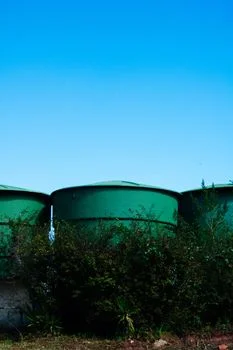
Decentralized Wastewater Treatment Systems (DEWATS) represent a proven, energy-efficient solution for hospital wastewater treatment in Dar es Salaam, particularly in areas lacking sewer access, as demonstrated by the CCBRT maternity hospital implementation. The typical DEWATS process flow for hospital black and grey water begins with a primary treatment stage, often a biogas digester/settler, designed to handle up to 90 m³/day of influent. This initial unit achieves significant suspended solids removal and initiates anaerobic digestion.
Following primary treatment, the wastewater flows through a series of anaerobic and aerobic biological processes. An Anaerobic Baffled Reactor (ABR) provides a hydraulic retention time (HRT) of 24–48 hours, facilitating further organic matter breakdown. This is succeeded by an Anaerobic Filter (AF), which enhances COD and BOD removal. The effluent then moves to a Constructed Wetland (CW), offering natural filtration and nutrient removal, before a final Oxidation Channel (OC) polishes the water, with smaller systems like the 10 m³/day unit at CCBRT also employing these stages. This multi-stage biological treatment achieves a high level of purification: COD removal typically ranges from 85–90%, BOD removal from 90–95%, and pathogen reduction can reach up to 99% (HydropureWater field data, 2025), meeting or exceeding many EPA benchmarks for hospital effluent quality.
A significant advantage of DEWATS, particularly for hospital wastewater treatment in Dar es Salaam, is its capacity for biogas production. A 90 m³ system can generate approximately 12 m³/day of biogas, with a methane content of around 60%. This translates to an energy equivalence of roughly 72 kWh/day, offering substantial cost savings by reducing reliance on diesel generators or grid electricity (e.g., up to $7,000/year based on local tariffs, HydropureWater analysis, 2025). The system operates without any external energy input for its core biological processes, further reducing operational costs. However, DEWATS requires a considerable footprint, typically 200–300 m² for a 100 m³/day system, which can be a constraint for urban hospitals with limited space. Operational and maintenance (O&M) requirements are minimal, primarily involving desludging every 2–3 years, a significant improvement over monthly septic tank desludging. While highly effective, DEWATS may not be suitable for hospitals exceeding 200 beds due to scaling challenges and requires trained operators for biogas safety. Post-treatment may also be necessary for comprehensive pharmaceutical removal. HydropureWater offers robust compact hospital wastewater treatment system options designed for these applications.
| Parameter | DEWATS System (100 m³/day) | Unit |
|---|---|---|
| Influent Flow Rate | 100 | m³/day |
| Biogas Digester/Settler HRT | 24-48 | hours |
| ABR HRT | 24-48 | hours |
| COD Removal | 85-90 | % |
| BOD Removal | 90-95 | % |
| Pathogen Reduction | 99 | % |
| Biogas Production | 12 | m³/day |
| Biogas Methane Content | ~60 | % |
| Energy Equivalence | ~72 | kWh/day |
| Footprint | 200-300 | m² |
| Desludging Frequency | 2-3 | years |
| External Energy Input | None | kWh/m³ |
MBR Systems: High-Efficiency Treatment for Space-Constrained Hospitals
Membrane Bioreactor (MBR) systems offer a high-efficiency solution for hospital wastewater treatment, particularly advantageous for urban healthcare facilities in Dar es Salaam, such as Mnazi Mmoja hospital, where space is a significant constraint. The MBR process typically begins with preliminary screening to remove large solids, followed by an equalization tank to buffer flow and concentration fluctuations. The wastewater then enters an anoxic tank for denitrification, before proceeding to an aerobic MBR tank where biological degradation occurs alongside membrane filtration. The core of the system is the PVDF membrane, usually with a pore size of 0.1 μm, which physically separates treated water from activated sludge, eliminating the need for secondary clarifiers.
MBR systems achieve superior treatment efficiency compared to conventional methods. COD removal typically reaches 95–98%, and BOD removal is consistently 98–99.9%. Crucially for healthcare settings, pathogen reduction is exceptional, achieving 99.99% (log 4+) removal, significantly reducing the risk of waterborne disease transmission. MBR technology demonstrates an impressive capability for pharmaceutical removal, often achieving 80–90% reduction for various antibiotics and other complex organic compounds (HydropureWater research, 2025). One of the most compelling benefits of an MBR system for hospital effluent is its compact footprint, typically 60–80% smaller than conventional DEWATS or activated sludge systems, making it ideal for densely populated urban environments.
While MBR systems offer advanced treatment, they are more energy-intensive than DEWATS, with consumption ranging from 0.8–1.2 kWh/m³. For a 100 m³/day system, this translates to an annual energy cost of approximately $4,500–$6,500 (based on average Dar es Salaam electricity tariffs, HydropureWater analysis, 2025). Operational and maintenance (O&M) involves regular membrane cleaning every 3–6 months to prevent fouling, using chemical solutions, and membrane replacement every 5–8 years, which can incur a cost of $50–$100 per m² of membrane area. For a hypothetical 150-bed hospital in Dar es Salaam generating 50 m³/day of wastewater, the estimated CAPEX for an MBR system could be around $150,000, with annual OPEX (including energy, chemicals, and membrane depreciation) approximated at $15,000–$20,000.
Chemical Dosing Systems: Low-CAPEX Option for Small Clinics and Dispensaries
For smaller healthcare facilities in Dar es Salaam, such as the Kurasini dispensary, where budget constraints are paramount and wastewater volumes are modest, chemical dosing systems offer a low-CAPEX solution for essential wastewater treatment. The process typically begins with screening to remove gross solids, followed by an equalization tank to balance influent flow and concentration. The core treatment involves coagulation and flocculation, where chemicals like Polyaluminium Chloride (PAC) or ferric chloride are dosed to destabilize suspended solids and form larger flocs. These flocs are then removed via sedimentation, often in a lamella clarifier or conventional settling tank. Finally, disinfection, commonly using a chlorine dioxide generator for hospital wastewater, ensures pathogen reduction before discharge.
While chemical dosing systems are cost-effective, their treatment efficiency is generally lower than biological alternatives. COD removal typically ranges from 70–80%, and BOD removal from 80–85%. Pathogen reduction can achieve approximately 99% (log 2), which is sufficient for basic disinfection but falls short of the higher log reductions offered by MBR. The primary advantage lies in its capital expenditure: a chemical dosing system for a 10–50 m³/day facility can range from $10,000–$30,000, significantly lower than the $100,000+ required for a 100 m³/day DEWATS system.
Operational expenditure (OPEX) for chemical dosing systems is primarily driven by chemical costs, which can range from $0.20–$0.50/m³ depending on influent quality and chemical prices. Additionally, sludge generation is a notable limitation, typically producing 0.3–0.5 kg of chemical sludge per cubic meter of treated wastewater, incurring ongoing sludge disposal costs (e.g., $50–$100/ton, HydropureWater estimate, 2025). Labor for chemical dosing adjustments, pH monitoring, and sludge handling also contributes to OPEX. For a 20 m³/day system, annual OPEX could be around $3,000–$6,000, which, while higher per cubic meter than DEWATS, is significantly lower than MBR for small volumes. Other limitations include the hazards associated with chemical storage and handling, and the system's sensitivity to influent variability, often requiring pH adjustment. These systems are best suited for clinics with fewer than 50 beds, as temporary solutions, or as pre-treatment stages for larger, more complex systems. HydropureWater also provides automatic chemical dosing system solutions to optimize performance and safety.
DEWATS vs. MBR vs. Chemical Dosing: Decision Matrix for Dar es Salaam Hospitals
Selecting the optimal hospital wastewater treatment system in Dar es Salaam requires a comprehensive evaluation of engineering specifications, capital and operational costs, footprint, and compliance capabilities. Each technology—DEWATS, MBR, and chemical dosing—presents distinct advantages and limitations tailored to different hospital sizes, budgets, and site constraints. A direct comparison highlights these trade-offs, providing a clear decision framework for hospital facility managers, municipal engineers, and environmental consultants.
| Parameter | DEWATS | MBR | Chemical Dosing |
|---|---|---|---|
| System Type | Biological, Anaerobic/Aerobic | Biological, Membrane Filtration | Physico-Chemical |
| CAPEX (per m³/day, illustrative) | $1,000 - $1,200 | $2,500 - $3,000 | $500 - $800 |
| OPEX (per m³, illustrative) | $0.10 - $0.15 | $0.40 - $0.60 | $0.30 - $0.50 |
| Footprint (m²/100 m³/day) | 200 - 300 | 80 - 120 | 50 - 80 |
| COD Removal (%) | 85 - 90 | 95 - 98 | 70 - 80 |
| Pathogen Reduction (log) | 2 (99%) | 4+ (99.99%) | 2 (99%) |
| Biogas Production | Yes (e.g., 12 m³/day for 100 m³/day) | No | No |
| Sludge Generation (kg/m³) | Low (0.1-0.2) | Moderate (0.2-0.3) | High (0.3-0.5) |
| Energy Use (kWh/m³) | 0 (for core process) | 0.8 - 1.2 | 0.1 - 0.2 |
| Compliance with TZS 860:2015 | Yes (with proper design/O&M) | Yes (highly compliant) | Yes (with proper design/O&M) |
For a 200-bed hospital in a flood-prone area of Dar es Salaam with sufficient land, DEWATS is ideal due to its low operational costs, energy independence, and biogas recovery. For a 50-bed clinic or a hospital with limited urban space, MBR is a superior choice, offering a compact footprint and exceptional effluent quality. Conversely, for a small dispensary with a budget of $20,000, chemical dosing is often the most viable and cost-effective option for immediate wastewater treatment needs. To assess long-term viability, a simple 10-year Total Cost of Ownership (TCO) calculation can be performed: TCO = CAPEX + (OPEX per m³ × Average Daily Flow × 365 days × 10 years). For example, a 100 m³/day system's 10-year TCO might be: DEWATS ~ $100,000 + ($0.10 × 100 × 365 × 10) = $465,000; MBR ~ $250,000 + ($0.50 × 100 × 365 × 10) = $1,100,000; Chemical Dosing (hypothetical 100 m³/day) ~ $40,000 + ($0.40 × 100 × 365 × 10) = $1,500,000. These figures illustrate the significant long-term cost differences. All three systems, when properly designed and operated, can meet TZS 860:2015 standards, but MBR often exceeds WHO guidelines and can approach EU Urban Waste Water Directive 91/271/EEC benchmarks, which is crucial for international donor-funded projects.
Compliance Checklist: Meeting Tanzanian and International Standards
Ensuring hospital wastewater treatment systems in Dar es Salaam meet local and international standards is non-negotiable for public health and regulatory adherence. Tanzanian standards, specifically TZS 860:2015, set clear effluent discharge limits: Biological Oxygen Demand (BOD) must be less than 30 mg/L, Chemical Oxygen Demand (COD) less than 50 mg/L, Total Suspended Solids (TSS) less than 30 mg/L, and fecal coliforms below 1,000 CFU/100 mL, with a pH range of 6–9. Non-compliance can result in substantial penalties, including fines and operational shutdowns, directly impacting healthcare service delivery. For a more detailed engineering guide for hospital effluent treatment, refer to our comprehensive resource on hospital effluent treatment plant.
Beyond national regulations, WHO guidelines for hospital effluent recommend additional considerations, particularly for pharmaceutical residues and heavy metals, which may require advanced post-treatment stages even for DEWATS or MBR systems. For projects seeking international funding or adhering to global best practices, benchmarks like the EU Urban Waste Water Directive 91/271/EEC provide a robust framework for comparison. A robust sampling protocol is critical for demonstrating compliance: weekly sampling for pathogens and monthly sampling for BOD/COD is recommended at key points (influent, effluent, and intermediate treatment stages). All samples must be analyzed by accredited laboratories in Dar es Salaam to ensure data integrity.
Comprehensive documentation is also essential, including daily logs of flow rates and chemical dosing, detailed maintenance records (e.g., membrane cleaning, desludging frequency), and third-party audit reports, especially vital for donor-funded initiatives. Common pitfalls to avoid include underestimating influent variability, particularly from laundry or laboratory discharges, neglecting proper sludge disposal regulations (a critical aspect of wastewater treatment compliance in Sub-Saharan Africa), and failing to adequately train staff on system operation and maintenance procedures.
Frequently Asked Questions
Hospital facility managers and project leads frequently ask specific questions regarding the design, costing, and compliance of wastewater treatment systems in Dar es Salaam. Here are some of the most common inquiries:
Q: What is the average CAPEX for a 100 m³/day hospital wastewater treatment plant in Dar es Salaam?
A: The CAPEX varies significantly by technology. For a 100 m³/day system, DEWATS may range from $100,000-$120,000, while an MBR system could be $250,000-$300,000. Chemical dosing is typically not scaled to 100 m³/day but would be around $40,000-$50,000 for a comparable capacity, though with lower treatment efficacy.
Q: How can hospitals ensure compliance with TZS 860:2015 standards for fecal coliforms?
A: Achieving fecal coliforms below 1,000 CFU/100 mL typically requires effective disinfection as a final treatment step. MBR systems offer excellent pathogen removal intrinsically, while DEWATS and chemical dosing systems rely heavily on robust disinfection units, such as chlorine dioxide generators or UV systems, after biological or physical-chemical treatment.
Q: What are the main operational cost drivers for hospital wastewater treatment in Dar es Salaam?
A: For MBR systems, energy consumption (0.8-1.2 kWh/m³) and membrane replacement are significant. For chemical dosing, chemical reagents and sludge disposal fees are primary drivers. DEWATS systems have the lowest OPEX due to minimal energy input and infrequent desludging (every 2-3 years).
Q: Is biogas production feasible and cost-effective for hospitals in Dar es Salaam?
A: Yes, biogas production from DEWATS is highly feasible and cost-effective for hospitals generating sufficient blackwater. A 100 m³/day DEWATS system can produce approximately 12 m³/day of biogas, equivalent to 72 kWh/day, reducing reliance on expensive grid electricity or diesel generators and offering significant annual savings.
Q: What are the specific challenges of wastewater treatment in Dar es Salaam's flood-prone areas?
A: Flood-prone areas require systems designed to withstand inundation, with robust civil engineering and elevated components. Decentralized systems like DEWATS are often preferred due to their resilience and independence from centralized sewer infrastructure, preventing overflows and contamination during heavy rains.