Why Semiconductor Organic Wastewater Treatment Demands Hybrid Engineering
Semiconductor organic wastewater contains complex nitrogenous compounds like tetramethylammonium hydroxide (TMAH) that require a minimum of 99% removal to meet stringent global discharge standards. In 2025, semiconductor organic wastewater treatment requires hybrid systems combining advanced oxidation processes (AOP), moving bed biofilm reactors (MBBR), and reverse osmosis (RO) to achieve 95%+ contaminant removal and water recovery. For example, UV/hydrogen peroxide AOP degrades toxic TMAH (90%+ removal), while MBBR stabilizes organic and nitrogen compounds (COD removal 85-95%). Integrated RO systems enable zero-liquid-discharge (ZLD) compliance with 90%+ water reuse, reducing freshwater consumption by 30-50% in fabs.
The composition of semiconductor organic wastewater is uniquely challenging, typically featuring TMAH concentrations between 50-500 mg/L, organic solvents such as isopropyl alcohol (IPA) and acetone, and chemical mechanical polishing (CMP) chemicals containing silica and ammonia. Conventional biological treatment often fails because TMAH is biocidal at high concentrations, inhibiting the growth of nitrifying bacteria and destabilizing flocculation. CMP chemicals introduce fine suspended solids that can foul downstream membrane systems if not properly pre-treated.
Regulatory drivers are tightening globally, with discharge limits for TMAH reaching <1 mg/L in the EU and <5 mg/L in China, alongside ammonia limits of <10 mg/L and COD <100 mg/L. For a 300 mm fab generating 150 m³/h of organic wastewater with TMAH at 300 mg/L, a single-stage process is insufficient; it requires a 99.7% removal efficiency to meet compliance. This necessitates a multi-barrier engineering approach where each stage prepares the wastewater for the next, ensuring system stability and effluent quality.
Advanced Oxidation Processes (AOP) for Semiconductor Organic Wastewater: Engineering Specs and Removal Efficiencies
Advanced oxidation processes (AOP) utilize hydroxyl radicals (•OH) with an oxidation potential of 2.80V to break down refractory organic molecules that biological systems cannot process directly. In semiconductor applications, AOP serves as the critical primary treatment to degrade TMAH and other toxic solvents into biodegradable intermediates. UV/hydrogen peroxide (UV/H₂O₂) systems are the industry standard, typically operating at a UV dose of 500-1000 mJ/cm² and an H₂O₂ dosage of 100-300 mg/L. This configuration achieves 90%+ TMAH removal and 80%+ COD reduction, though residual peroxide must be quenched using sodium bisulfite or granular activated carbon (GAC) to protect downstream biological stages.
Ozone-based AOP offers an alternative for high-flow systems, where ozone doses of 5 mg/L can achieve 95%+ TMAH removal. While ozone systems have a higher initial CAPEX, they often provide lower OPEX in large-scale operations due to reduced chemical logistics. Electrochemical oxidation using boron-doped diamond (BDD) or Ti/RuO₂ electrodes is also gaining traction for concentrated streams, operating at current densities of 10-50 mA/cm² to achieve 85-95% TMAH removal. Effective chemical dosing for AOP and pH adjustment is vital to maintain the narrow pH range (usually 3.0 to 4.0 for Fenton-like reactions or neutral for UV/H₂O₂) required for radical generation.
| AOP Technology | TMAH Removal Efficiency | Energy Consumption (kWh/m³) | CAPEX (Relative) | OPEX (Relative) |
|---|---|---|---|---|
| UV/Hydrogen Peroxide | 90-95% | 0.8 - 1.5 | Medium | High (Chemicals) |
| Ozone/O₃-UV | 95-98% | 0.5 - 1.2 | High | Medium |
| Electrochemical (BDD) | 85-95% | 2.0 - 5.0 | Very High | Low |
| Fenton's Reagent | 80-90% | 0.2 - 0.4 | Low | High (Sludge) |
Biological Treatment with MBBR: Process Design for Stable Organic and Nitrogen Removal
Moving bed biofilm reactors (MBBR) utilize suspended polyethylene carriers to maintain a high biomass concentration, enabling stable COD and ammonia removal in high-strength industrial streams. Unlike traditional activated sludge, MBBR is highly resilient to the toxic shocks common in semiconductor manufacturing. The process design typically involves biofilm carriers with a 30-50% fill ratio, providing a high protected surface area for specialized microorganisms. Aeration requirements are generally 0.5-1.0 m³ air/m³ wastewater, depending on the COD load, with a hydraulic retention time (HRT) ranging from 8 to 24 hours.
For post-AOP semiconductor wastewater, MBBR systems achieve COD removal of 85-95% and ammonia removal exceeding 90%. The specialized biofilm handles the residual organic nitrogen from degraded TMAH effectively. Operating parameters must be strictly controlled: pH should be maintained between 7.0 and 8.5, and temperatures between 20-35°C. Nutrient dosing is often required since semiconductor wastewater is typically nutrient-imbalanced, following a BOD:N:P ratio of 100:5:1. In a recent case example, a 200 m³/h MBBR system with 40% carrier fill achieved 92% COD removal at 300 mg/L influent, providing a stable effluent for membrane polishing. For fabs with limited footprint, MBR systems for semiconductor organic wastewater can be used to combine biological treatment and ultrafiltration in a single tank.
Reverse Osmosis and Membrane Capacitive Deionization (MCDI) for Zero-Liquid-Discharge Compliance
Reverse osmosis (RO) and membrane capacitive deionization (MCDI) provide the final polishing required for water reuse, with MCDI specifically targeting monovalent ions like TMA+ at energy consumption levels as low as 0.2 kWh/m³. RO remains the primary technology for overall Total Dissolved Solids (TDS) and TOC removal, utilizing polyamide thin-film composite membranes to achieve 75-90% water recovery. RO systems in fabs are designed for high rejection of TMAH (90%+) and are often the first step in water reuse strategies for semiconductor fabs.
MCDI offers a distinct advantage for semiconductor organic wastewater because it preferentially removes monovalent ions like tetramethylammonium (TMA+). Unlike RO, MCDI does not require high-pressure pumps and is less susceptible to scaling from silica, which is prevalent in CMP wastewater. MCDI can achieve 90%+ water recovery with significantly lower energy (0.2-0.5 kWh/m³) compared to RO. Integrating RO systems for semiconductor water reuse with MCDI allows fabs to achieve higher total recovery rates, pushing systems toward zero-liquid-discharge (ZLD) by minimizing brine volume.
| Parameter | Reverse Osmosis (RO) | Membrane Capacitive Deionization (MCDI) |
|---|---|---|
| Primary Removal Target | TDS, TOC, Divalent Ions | Monovalent Ions (TMA+, Cl-) |
| Water Recovery Rate | 75 - 85% | 80 - 92% |
| Energy Use (kWh/m³) | 0.8 - 1.5 | 0.2 - 0.5 |
| Chemical Cleaning | Frequent (CIP required) | Minimal (Self-cleaning) |
| Footprint | Moderate | Compact |
Hybrid Process Design: Step-by-Step Engineering for Semiconductor Organic Wastewater

A hybrid treatment architecture for semiconductor wastewater integrates chemical, biological, and membrane stages to achieve a multi-barrier protection system against fluctuating influent loads. This "turnkey" approach ensures that no single point of failure results in a regulatory excursion. The following four-step framework outlines the standard engineering flow for a modern fab.
- Step 1: Pretreatment: Raw wastewater enters an equalization tank sized for 8-12 hours HRT to buffer spikes in TMAH or solvent concentration. pH adjustment is performed here to reach a target of 6.5-7.5. For CMP-heavy streams, dissolved air flotation (DAF) may be used to remove suspended silica and metal oxides.
- Step 2: Advanced Oxidation (AOP): The equalized stream is treated with UV/H₂O₂. Engineering specs for 90% TMAH removal require a UV dose of 800 mJ/cm² and an H₂O₂ dose of 200 mg/L. This stage breaks the C-N bonds in TMAH, converting it into smaller, biodegradable organic acids and ammonia.
- Step 3: Biological Stabilization (MBBR): The AOP effluent is fed into an MBBR. With a 24-hour HRT and 40% carrier fill, the biofilm degrades the remaining TOC and nitrifies the ammonia. This stage is crucial for meeting COD discharge limits.
- Step 4: Membrane Polishing (RO/MCDI): The final stage involves RO for 85% recovery or MCDI for 90% recovery. The resulting permeate quality typically shows TMAH <1 mg/L and TOC <5 mg/L, making it suitable for cooling tower makeup or feed for ultrapure water (UPW) systems.
For more complex facilities, a zero-liquid-discharge (ZLD) system design can be appended to Step 4, utilizing evaporators or crystallizers to eliminate the final brine stream.
Cost Breakdown and ROI: 2025 Semiconductor Wastewater Treatment Economics
The total cost of ownership (TCO) for a 100 m³/h semiconductor organic wastewater treatment plant is primarily driven by energy consumption in the AOP and membrane stages, accounting for 40-60% of annual OPEX. CAPEX for a complete hybrid system ranges from $1.5M to $3.5M, depending on the complexity of the influent and the required water recovery rate. AOP systems (UV or Ozone) typically represent the largest equipment investment, followed by the RO/MCDI membrane units.
ROI is driven by three main factors: water reuse savings, discharge fee avoidance, and regulatory risk mitigation. In regions with high water scarcity, reusing 90% of organic wastewater can save a fab between $1.50 and $3.00 per cubic meter in freshwater procurement costs. Additionally, avoiding discharge penalties for TMAH or ammonia can save hundreds of thousands of dollars annually. When calculating TCO, engineers must also factor in membrane replacement costs (typically 5-10% of CAPEX annually) and chemical consumption for AOP and pH control.
| Cost Component | Hybrid System (AOP+MBBR+RO) | Hybrid System (AOP+MBBR+MCDI) |
|---|---|---|
| CAPEX (100 m³/h) | $1.8M - $2.5M | $2.0M - $3.0M |
| Energy OPEX ($/m³) | $0.45 - $0.70 | $0.30 - $0.55 |
| Chemical OPEX ($/m³) | $0.15 - $0.25 | $0.10 - $0.20 |
| 5-Year TCO | $3.5M - $4.5M | $3.2M - $4.2M |
| ROI Period | 2.5 - 3.5 Years | 2.0 - 3.0 Years |
Equipment Selection Framework: How to Choose the Right System for Your Fab
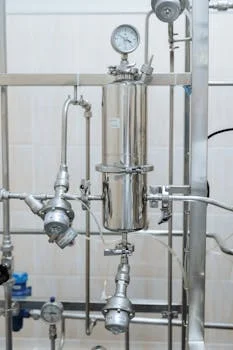
Selecting the optimal treatment equipment for a semiconductor fab depends on the specific ratio of refractory TOC to biodegradable COD and the required water recovery percentage. For low-flow fabs (<50 m³/h), compact, skid-mounted AOP + MBBR systems are generally the most cost-effective. These systems prioritize footprint and ease of operation, often utilizing MCDI for final polishing due to its lower maintenance requirements. Engineers should refer to detailed TMAH treatment engineering specs to size these modular units correctly.
High-flow fabs (>200 m³/h) require a more robust, site-built approach. Ozone-based AOP is often preferred here for its scalability, paired with large-scale MBBR tanks and multi-stage RO for maximum water recovery. The decision tree for selection follows a logical path:
- Is TMAH > 100 mg/L? If yes, AOP is mandatory before biological treatment.
- Is Water Recovery > 80% required? If yes, integrate RO or MCDI.
- Is Silica present from CMP? If yes, include DAF and chemical coagulation in pretreatment.
- Is space limited? If yes, choose MBR over MBBR and UV/H₂O₂ over Ozone.
Frequently Asked Questions
What is the most cost-effective process for TMAH removal?
The most cost-effective approach for high-concentration TMAH is a hybrid AOP + MBBR system. AOP (UV/H₂O₂) breaks down the TMAH molecule into biodegradable components, which the MBBR then removes at a much lower cost than chemical oxidation alone. For ZLD requirements, adding MCDI is often more energy-efficient than RO.
How much does a 100 m³/h semiconductor wastewater treatment system cost?
A full hybrid system (AOP, MBBR, and RO) typically involves a CAPEX of $1.5M to $3M. OPEX generally ranges from $0.50 to $1.20 per cubic meter, depending heavily on chemical dosing and local energy costs.
Can RO systems handle semiconductor wastewater with high silica?
Yes, but they require intensive pretreatment. Silica scaling is a major risk for RO membranes. Pretreatment using dissolved air flotation and specialized antiscalants is necessary to maintain flux and membrane longevity.
What are the discharge limits for TMAH in the EU and China?
In the EU, limits are increasingly set at <1 mg/L for sensitive watersheds. In China, the standard for semiconductor industrial parks is typically <5 mg/L, though local local "Grade A" standards may be stricter.
How do I reduce energy consumption in semiconductor wastewater treatment?
Energy can be reduced by using MCDI for brine minimization instead of high-pressure RO stages. Additionally, optimizing aeration in the MBBR using high-efficiency diffusers and dissolved oxygen (DO) sensors can reduce biological treatment energy by 20-30%.