NSW Municipal Sewage Treatment Plant EPA Licence: Thresholds and Rules
A NSW municipal sewage treatment plant EPA licence is required under the Protection of the Environment Operations Act 1997 once capacity exceeds 2,500 persons equivalent or 750 kL/day. The NSW EPA then regulates discharges to water through conditions written into that licence. Common planning benchmarks are BOD below 20 mg/L, TSS below 30 mg/L, and ammonia below 1 mg/L.
Schedule 1 of the POEO Act 1997 lists the scheduled activities regulated by environment protection licences, and sewage treatment works sit inside that list. According to the NSW EPA, these licences protect the environment, including human health, and address air, noise, waste and land issues as well as discharges to waters. In practice, each EPL defines concentration limits, monitoring points, and reporting duties for the premises.
Site licences can be tighter than the planning set. MidCoast Council's Stroud STP (EPL 13042) lists a BOD 90th-percentile limit of 10 mg/L and a 100th-percentile ammonia limit of 2.0 mg/L at its discharge point. Smaller plants under the Local Government Act 1993 often face extra council rules on nitrogen and phosphorus in inland rivers. Healthcare catchments also overlap municipal pathogen controls; see NSW hospital wastewater treatment compliance requirements where hospital and municipal duties meet.
The NSW EPA's load-based licensing scheme sets limits on pollutant loads from licensed premises and links licence fees to pollutant emissions. Assessable pollutants are listed under the Protection of the Environment Operations (General) Regulation 2022. Each licensee must submit an annual return at the end of every 12-month licence fee period, which is why continuous analysers pay for themselves at licensed works. Plants that cut BOD, nitrogen or suspended solids loads therefore lower both fees and reporting pressure.
What Are the NSW EPL Discharge Limits for BOD, Ammonia and TSS?
Coastal and inland projects screen against BOD < 20 mg/L, TSS < 30 mg/L, and NH3 < 1 mg/L before site-specific limits are issued. Sensitive catchments tighten each parameter, as the table below shows. Faecal coliform medians then drive the disinfection train, because a licence median of < 100 cfu/100mL demands reliable UV or chlorine dioxide performance.
| Parameter | NSW EPA Standard (General) | Sensitive Catchment Limit | Averaging Period |
|---|---|---|---|
| Biochemical Oxygen Demand (BOD) | < 20 mg/L | < 10 mg/L | 90th Percentile |
| Total Suspended Solids (TSS) | < 30 mg/L | < 15 mg/L | 90th Percentile |
| Ammonia (NH3-N) | < 1 mg/L | < 0.5 mg/L | Maximum |
| Total Phosphorus (TP) | < 1.0 mg/L | < 0.3 mg/L | Annual Average |
| Faecal Coliforms | < 100 cfu/100mL | < 10 cfu/100mL | Median |
Percentile basis matters as much as the numbers. A 90th-percentile BOD limit tolerates occasional wet-weather excursions, while a 100th-percentile ammonia limit leaves no excursion room at all. Designers should read each EPL column against the monitoring frequency written into the licence, not against generic state averages.
How Should PFAS Biosolids Management Work at NSW Sewage Plants?
Licensed NSW plants must now monitor treated effluent for PFAS four times per year on a quarterly basis and report results to the EPA. The driver is the NSW EPA's Landfill and Sewage Treatment Plant PFAS Monitoring Chemical Control Order, which commences on 1 October 2026. Earlier guidance used the PFAS National Environmental Management Plan (NEMP) 2.0 (2020), and the 2025–2026 revision sets NEMP 3.0/3.1 as the current national guide (HEPA / DCCEEW, 2026). The NSW EPA states that the monitoring requirements align with PFAS NEMP 3.0.
Sampling and analysis must follow Chapter 18 of NEMP version 3.0, which carries the national guidance for PFAS monitoring programs. Sydney Water GIPA response data already flagged PFAS in biosolids as a disposal bottleneck, so plants now need monitoring ports, separate management plans, and leachate-secure storage. For broader Australian rules beyond NSW EPLs, compare municipal wastewater treatment plant requirements and the national municipal sewage treatment plant compliance guide for Australia.
New plants and major upgrades still need an environmental impact assessment and public consultation. Common audit failures remain weak odour control and incomplete sludge plans. Odour complaints near residential boundaries often push biofilters and chemical scrubbers directly into the licence conditions.
Engineering Specs for NSW Plants: Flow, Removal and Footprint
Municipal influent across New South Wales typically sits in a medium-to-high strength band: BOD 200–400 mg/L and TSS 250–450 mg/L. Meeting the planning discharge set above usually means 92–97% BOD removal and 85–92% TSS removal under design temperature. Winter mixed liquor near 10°C in southern NSW slows nitrification; northern summer mixed liquor above 25°C raises aeration demand and can worsen sludge settleability in conventional plants. Nitrifying CAS plants usually hold SRT above 12 days through winter to keep effluent ammonia below 1 mg/L.
Land is the binding constraint on many coastal sites. Conventional activated sludge (CAS) usually needs 0.5–1.0 hectares per 1,000 m³/day because of secondary clarifiers. MBR membrane bioreactor systems for municipal sewage treatment can cut that to 0.2–0.4 hectares by removing separate clarifiers. Where commercial districts push fats, oils, and grease (FOG) into the sewer, DAF systems for high-efficiency FOG and TSS removal provide compact primary treatment at roughly 0.1–0.3 hectares per unit of capacity.
| Engineering Parameter | Conventional Activated Sludge | Membrane Bioreactor (MBR) | Dissolved Air Flotation (DAF) |
|---|---|---|---|
| BOD Removal Efficiency | 85 - 95% | 98 - 99% | 30 - 50% (Primary) |
| TSS Removal Efficiency | 85 - 92% | > 99% | 90 - 95% |
| Hydraulic Retention Time (HRT) | 6 - 12 Hours | 4 - 8 Hours | 20 - 40 Minutes |
| Sludge Retention Time (SRT) | 10 - 20 Days | 25 - 50 Days | N/A |
| Footprint (per 1,000 m³/d) | 5,000 - 10,000 m² | 2,000 - 4,000 m² | 1,000 - 3,000 m² |
Hydraulic design must cover Peak Wet Weather Flow (PWWF), often 3–5 times Average Dry Weather Flow (ADWF) in NSW catchments with combined or infiltrating sewers. Primary sedimentation is usually sized for 1.5–2.5 hours retention. Sequencing batch reactors (SBR) need clear aeration, settle, and decant windows in one tank. For FOG-heavy industrial contributions, use the detailed engineering guide to DAF systems before locking primary treatment sizing.
MBR vs CAS for a Municipal Sewage Plant in NSW
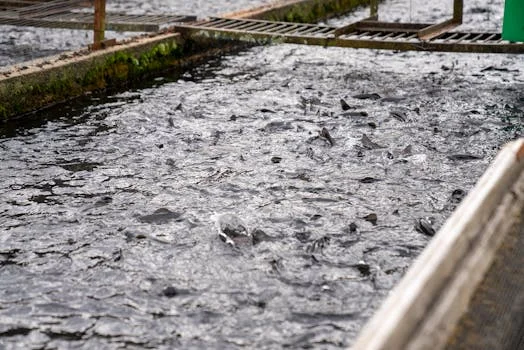
Membrane bioreactor (MBR) trains suit NSW coastal plants that need reuse-quality effluent and a physical pathogen barrier. Typical MBR mixed liquor runs at 8,000–12,000 mg/L MLSS versus 3,000–5,000 mg/L for CAS, which is why the footprint shrinks. Energy for membrane scouring and higher head usually lands near 0.5–0.7 kWh/m³ treated. Pathogen removal can reach about 99% for bacteria and viruses when membranes and disinfection are both in service.
Conventional activated sludge remains the default for large inland works with cheaper land and tighter energy budgets. CAS CAPEX is often 30–40% lower than MBR at the same average dry-weather capacity. The recurring NSW risk is seasonal sludge bulking that pushes secondary TSS over the EPL percentile. Dissolved air flotation is rarely a standalone municipal process, working instead as pre-treatment where FOG loads are high in food precincts across Western Sydney or the Riverina.
For a state-to-state contrast, weigh an industrial water treatment plant south australia scope against the Western Australia municipal sewage treatment engineering guide before shortlisting vendors.
| Criteria | Conventional (CAS) | MBR System | DAF (Pre-treatment) |
|---|---|---|---|
| Effluent Quality | Secondary (Standard) | Tertiary (Reuse Quality) | Primary/Pre-treated |
| Energy Use | 0.3 - 0.4 kWh/m³ | 0.5 - 0.8 kWh/m³ | 0.1 - 0.2 kWh/m³ |
| Operational Complexity | Moderate | High (Requires PLC) | Moderate |
| Maintenance Frequency | Low | High (Membrane Cleaning) | Moderate |
| Pathogen Removal | Low (Requires UV/Cl) | Very High (Physical Barrier) | Moderate |
Procurement teams should price Clean-In-Place (CIP) chemicals, membrane replacement, and PLC support for MBR, not only civil works. DAF needs routine checks on saturators and micro-bubble generation. Most regional councils we support still prefer CAS when land is available and nutrient limits are moderate, then add chemical phosphorus trimming only where the EPL forces it.
What Does a Municipal Sewage Plant Cost in NSW?
Capital expenditure for a 1,000 m³/day sewage plant in New South Wales currently averages about $1.2 million for conventional trains and $1.8 million for MBR-based facilities. Local labour and materials run roughly 20% above the national average, so NSW quotes sit higher than many interstate peers. For deeper budgeting, see the national analysis of municipal wastewater treatment plant cost drivers and international cost benchmarks for municipal wastewater treatment, which show NSW carrying heavier monitoring and licensing overhead.
Operating expenditure is usually dominated by energy (about 40%) and labour (about 30%). Regional grid electricity is often around 15% higher than metropolitan NSW tariffs, so blower and pump efficiency matter. Sludge disposal costs have risen by about 30% where PFAS handling restricts agricultural biosolids reuse. Modular off-site fabrication can cut on-site labour and trim CAPEX by up to 15% on package plants.
| Cost Component | CAS (Annual) | MBR (Annual) | NSW Multiplier Factor |
|---|---|---|---|
| Energy Consumption | $45,000 - $60,000 | $75,000 - $110,000 | 1.15x (Regional Grid) |
| Labor & Operations | $80,000 - $100,000 | $110,000 - $140,000 | 1.20x (NSW Awards) |
| Chemicals & Consumables | $15,000 - $25,000 | $30,000 - $45,000 | 1.05x (Logistics) |
| Sludge Disposal | $20,000 - $35,000 | $15,000 - $25,000* | 1.30x (PFAS Handling) |
| Maintenance/Spares | $12,000 - $20,000 | $40,000 - $60,000 | 1.10x (Specialized) |
*MBR typically produces less sludge volume due to longer SRT.
A five-year total cost of ownership often favours MBR when reuse offsets potable water purchases. Park irrigation with recycled effluent can save a council about $50,000 per year in water procurement at typical NSW retail rates. High-efficiency turbo blowers commonly cut aeration energy by 10–15% on both CAS and MBR trains. Plant CAPEX in New South Wales should always be checked against wet-weather hydraulic peaks, not ADWF alone.
Municipal Sewage Plant Equipment Checklist for Australia
Mechanical reliability decides whether an EPL stays green. Inlet works usually start with rotary mechanical bar screens that remove 6–10 mm solids before pumps and membranes. Primary clarification with lamella packs or circular scrapers can remove up to about 70% of TSS when sludge withdrawal is automated. After biology, sludge dewatering systems for municipal biosolids management such as plate and frame presses target 25–35% dry solids to cut haulage.
Final disinfection uses UV or chlorine dioxide generators for municipal effluent disinfection to hold faecal coliforms inside the licence median. Biological stages need PLC control of aeration and recycle, with the same signals feeding EPL reporting. Where reuse is planned, turbidity and UV dose logging close the compliance loop between process and permit.
- Inlet Works: Rotary mechanical bar screens (GX Series) for coarse and fine screening.
- Grit Removal: Vortex grit chambers with automated grit washers.
- Primary Clarification: Lamella clarifiers or circular sedimentation tanks with scraper bridges.
- Secondary Treatment: MBR modules or CAS fine-bubble aeration diffusers.
- Sludge Handling: Polymer dosing stations and plate and frame filter presses.
- Tertiary Disinfection: Chlorine dioxide generators or UV reactors.
- Odour Control: Activated carbon filters or bio-scrubbers for inlet and sludge areas.
- Monitoring: Online analyzers for NH3, NO3, PO4, and Turbidity.
NSW-specific extras include PFAS sampling ports and covered biosolids bunkers that stop leachate runoff. Odour complaints drive many EPA inspections near residential boundaries, so carbon filters or bio-scrubbers at headworks and sludge areas are often written into the EPL. Before civil design freezes, confirm the full permit path with what permits a wastewater treatment plant needs.
Which equipment suppliers fit municipal plants?
Equipment suppliers for municipal plants should be scored on process duty, NSW spare-parts lead time, and proven EPL compliance support. For constrained regional sites, an Underground Package Sewage Treatment Plant (WSZ Series) can shorten civil works while still pairing with upstream screening and downstream disinfection. Ask vendors for MLSS, HRT, and energy data at your minimum monthly average temperature, plus CIP chemical use if membranes are proposed.
Decision Framework: Selecting Technology for an NSW Municipality
Sydney Water's Malabar upgrade shows how coastal NSW projects trade ocean-discharge limits against extreme site footprint. If the end use is irrigation or industrial reuse, MBR is usually the safer process choice. If the budget is tight and land is cheap, CAS with tertiary polishing still wins on CAPEX. PFAS disposal cost now also pushes buyers toward trains that produce lower biosolids volume, favouring longer-SRT MBR configurations.
| Selection Criteria | Weight | CAS Score (1-10) | MBR Score (1-10) | SBR Score (1-10) |
|---|---|---|---|---|
| EPA Compliance (Nutrients) | 25% | 7 | 10 | 8 |
| CAPEX (Initial Budget) | 20% | 9 | 5 | 7 |
| Footprint Constraints | 15% | 4 | 10 | 7 |
| Energy Efficiency | 15% | 8 | 5 | 7 |
| Biosolids Management | 15% | 6 | 9 | 7 |
| Operational Simplicity | 10% | 8 | 4 | 6 |
Coastal ocean outfalls often favour MBR because stronger pathogen removal can shrink disinfection and outfall risk. Inland agricultural regions usually prioritise phosphorus control and wet-weather reliability, which keeps SBR or CAS with chemical precipitation in play. Run a site-specific mass balance or pilot before awarding process design.
Selection checklist: confirm EPL percentile limits; map ADWF and PWWF; fix reuse versus discharge; price regional energy; include PFAS haulage; verify odour controls; lock spare-parts lead times.
Who this is for: council engineers, EPC contractors, and procurement leads sizing or upgrading sewage works in New South Wales. Who should look elsewhere: semiconductor UPW or data-centre cooling teams need different unit processes than this municipal guide. Next step: send your ADWF, EPL limits, and site footprint for a process options check via our request a municipal plant quote form.
Frequently Asked Questions
What are the current NSW EPA requirements for PFAS in municipal sewage?
NSW plants must manage PFAS in effluent and biosolids under the current national PFAS NEMP plus the monitoring order from 1 October 2026. Earlier guidance used NEMP 2.0 (2020), while the 2025–2026 revision sets NEMP 3.0/3.1 with updated investigation values and risk-based biosolids reuse criteria (HEPA / DCCEEW, 2026). Licensed plants must sample treated effluent four times per year on a quarterly basis and report results to the EPA.
How does the NSW climate affect activated sludge design?
NSW temperature swings force aeration volume and sludge age to be set on the coldest month, not the annual average. Nitrification slows sharply below about 12°C, which threatens ammonia EPL limits in highland and southern plants. Designers size SRT and blower capacity using the minimum monthly average wastewater temperature. MBR trains cope better because high MLSS keeps nitrifiers in the system through winter.
What is the typical lifespan of MBR membranes in municipal service?
Well-maintained PVDF municipal membranes typically last 8–12 years in NSW plants. Life depends on fine screening that removes hair and fibre, plus disciplined CIP with citric acid or sodium hypochlorite. Automated CIP and stable transmembrane pressure trends extend life further. Poor grit removal or aggressive chemical overdosing shortens membranes and brings early replacement cost.
Can small regional councils in NSW afford MBR technology?
Packaged MBR units can be affordable when land purchase and reuse value are counted in the NPV. Prefabricated modules can cut on-site construction cost by up to about 30% versus full wet civil CAS works. Water-stressed western councils often recover value through irrigation reuse that offsets potable supply. Compare 10-year energy, membrane replacement, and PFAS sludge haulage before rejecting MBR on CAPEX alone.
Do all NSW plants share the same BOD and TSS licence numbers?
No, the BOD < 20 mg/L and TSS < 30 mg/L figures are common planning benchmarks, not a single statewide standard. Each EPL sets percentile limits for named discharge points. Stroud STP's EPL 13042, for example, uses a BOD 90th-percentile limit of 10 mg/L and a TSS 90th-percentile limit of 15 mg/L. Always design to the issued licence, then keep the general table only for early option screening.
Which NSW plants need an EPA licence under the POEO Act?
Sewage treatment plants above 2,500 persons equivalent or 750 kL/day must hold an environment protection licence, whichever measure is the greater. Schedule 1 of the POEO Act 1997 lists the scheduled activities that trigger licensing. The licence then sets concentration limits, monitoring points, and reporting duties for the premises. Applications usually run alongside the environmental impact assessment for new works.
What PFAS monitoring must licensed NSW sewage plants complete?
Licensed plants must monitor treated effluent for PFAS four times per year on a quarterly basis and report results to the EPA. The requirement comes from the Chemical Control Order commencing 1 October 2026. Sampling and analysis must follow Chapter 18 of PFAS NEMP version 3.0. Biosolids monitoring frequencies then depend on the reuse pathway chosen.
How do NSW licence fees reflect pollutant loads?
NSW links licence fees to pollutant emissions through the load-based licensing scheme, which also caps pollutant loads from licensed premises. Assessable pollutants are listed under the Protection of the Environment Operations (General) Regulation 2022. Each licensee submits an annual return at the end of the 12-month licence fee period. Plants that reduce BOD, nitrogen or suspended solids loads therefore lower both fees and compliance pressure.