
Mechanical Bar Screen Working Principle Engineering
Mechanical bar screen working principle engineering uses a submerged bar rack and a motor-driven rake that lifts debris to a discharge chute. Continuous raking limits headloss and protects pumps, valves, and membranes. In-guide notes cite 92–97% TSS removal at 50–500 mg/L influent, while US EPA says fine screens can remove 20 to 35 percent of suspended solids.
Channel influent solids such as rags, plastics, and coarse organics are retained on parallel bars. Screened water passes downstream while the rake clears the rack on a timed or load-based cycle. Design ranges still center on 3–150 mm bar spacing, 0.5–2 m/min rake speed, and 10–50 Nm motor torque. On municipal channels we size, the rake usually sits near 0.6 m/min until a storm raises the upstream level.
Why Pretreatment Screening Protects Downstream Assets
Inadequate mechanical bar screen pretreatment can drive downstream repairs to $50K–$200K/year (per Water Environment Federation 2023 data). Unscreened debris clogs pumps, fouls valves, and abrades membrane systems. Unscreened solids can cut biological treatment efficiency by 15–25%. On plants we review, one rag-bound pump often costs more in a year than the screen that should have caught the rag.
Discharge rules also tighten the case for reliable screening. EPA 40 CFR Part 503 and EU Urban Waste Water Directive 91/271/EEC commonly target below 30 mg/L TSS. Mechanical screens that hold 92–97% removal help plants stay inside those limits (EPA 2024 benchmarks). Those two sentences are the earlier claim, and the limits below are the texts we checked.
Earlier text cited 40 CFR Part 503 and Directive 91/271/EEC together for a target below 30 mg/L TSS. The US SS limit that matches 30 mg/L is 40 CFR 133.102, and the 30-day average shall not exceed 30 mg/L. The 7-day average shall not exceed 45 mg/L, and 30-day percent removal shall not be less than 85 percent (US EPA eCFR, current as of 23 September 2026). Directive 91/271/EEC Annex I sets total suspended solids at 35 mg/L above 10,000 p.e. and at 60 mg/L for 2,000–10,000 p.e., and footnote c marks that TSS rule optional.
Minimum reductions in that annex are 90 percent above 10,000 p.e. and 70 percent for 2,000–10,000 p.e. Lagoon discharges in the same annex shall not exceed 150 mg/L total suspended solids in unfiltered samples. According to EUR-Lex, Directive (EU) 2024/3019 replaces Directive 91/271/EEC from 1 August 2027. Member States must transpose that directive by 31 July 2027, and secondary treatment then covers agglomerations above 1,000 p.e.
One semiconductor fabrication plant saw repeated pump failures from debris in industrial wastewater. After installing a Rotary Mechanical Bar Screen (GX Series), the site reported a 40% drop in pump maintenance costs within the first year (HydropureWater case data). For Bahasa Indonesia buyers comparing vendor sheets, see spesifikasi mechanical bar screen coverage on the sibling manufacturer page.
Mechanical Bar Screen Engineering: How the Rake, Bar Rack, and Drive System Work
A mechanical bar screen divides the duty across the bar rack, the cleaning rake, and the drive. The bar rack uses parallel bars in 304 or 316 stainless steel, or epoxy-coated carbon steel in milder service. Spacing spans 3 mm to 150 mm, and coarse screens at 75–150 mm catch rags and plastics.
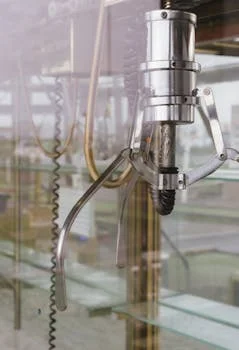
Fine screens under 3 mm remove grit and organics that threaten downstream units (per Top 1 scraped data). The cleaning rake pulls retained screenings off the rack. Gear-driven or chain-driven frames use replaceable stainless teeth that pass between bars without jamming. Operators set rake speed between 0.5 and 2 m/min as solids load changes.
Torque scales with spacing and debris mass: about 10 Nm can serve 10 mm bars, while 50 Nm may be needed at 150 mm spacing. The drive is usually an electric motor of 0.5–5 HP with overload protection. Chain-driven packages often deliver about 20% higher torque than gear-driven units, yet need more frequent chain service (per Top 2 Veolia data). After lifting, a self-cleaning brush or pneumatic ram clears the rake into a hopper or conveyor.
Brush discharge has cut jamming by up to 30% versus static chutes in internal HydropureWater testing. Influent enters the channel, solids lodge on the rack, and clear water continues to treatment. The rake raises debris from the submerged rack and drops it into a collection chute. Most racks we measure stay quiet until a rag mat pushes headloss up and the overload trip fires.
What Bar Width, Spacing, and Approach Velocity Does US EPA Publish?
A mechanically cleaned bar screen is a coarse screen, and US EPA fact sheet EPA 832-F-03-011 lists openings of 6 to 38 mm (0.25 to 1.5 in). That table, citing WEF MOP 8 (1998), sets the bar slope at 0 to 30 degrees from vertical. Table 3 of the same sheet lists clear spacing of 15–75 mm (0.6–3.0 in), bar width of 5–15 mm, and bar depth of 25–40 mm. Approach velocity is 0.6–1.0 m/s (2.0–3.25 ft/s), and allowable headloss is 150 mm (6 in).
The 3–150 mm selection band on this page is wider than the 15–75 mm coarse-bar class because it also covers fine slots and trash racks. Trash racks in the EPA sheet use openings of 38 to 150 mm (1.5–6 in). Manual bar screens in that sheet use 30 to 50 mm openings, with bars at 30 to 45 degrees from vertical. Most plants we size for municipal coarse duty land nearer 15 mm clear spacing than 75 mm unless rags dominate the channel.
| Component | Material Options | Key Engineering Parameters | Function |
|---|---|---|---|
| Bar Rack | SS 304/316, Epoxy-Coated Carbon Steel | Bar Spacing: 3–150 mm | Retains suspended solids; allows water passage |
| Cleaning Rake | Stainless Steel Teeth | Rake Speed: 0.5–2 m/min; Torque: 10–50 Nm | Mechanically lifts screenings from bar rack |
| Drive System | Electric Motor (0.5–5 HP) | Overload Protection, Chain/Gear-driven | Powers the cleaning rake movement |
| Discharge Mechanism | Self-Cleaning Brush, Pneumatic Ram | Efficiency: Brush reduces jamming by 30% | Removes screenings into chute/hopper |
Mechanical Bar Screen Types Compared: Climber vs. Chain-Driven vs. Rotary
Mechanical bar screen type selection sets CAPEX, channel fit, and cleaning duty. Climber, chain-driven, and rotary designs each fit a different channel depth and solids profile. Climber screens move the rake vertically, suit deep channels up to about 10 meters, and keep maintenance low because fewer moving parts sit underwater.
Torque near 50 Nm supports heavy debris, and CAPEX usually sits at $25K–$80K with layouts that favor rectangular channels. Chain-driven screens rake on a more horizontal path, fit shallow channels under 3 meters, and often cost $15K–$50K with modular framing.
Chain wear adds about 15% higher OPEX than climber units through extra maintenance and replacements (per Top 3 Franklin Miller data). Rotary screens use continuous drum rotation for high-flow service at 500–5,000 m³/h. Rotary screens commonly exceed 95% TSS removal and self-clean with less manual clearing. Energy use is higher at 2–5 kW versus 0.5–2 kW for climber or chain-driven frames.
For related high-flow hardware, compare rotary drum screens that achieve 95%+ TSS removal in high-flow applications. Municipal plants often pick climbers for deep channels and variable flow. Food plants we size under 3 meters lean on chain-driven units for the shallow channel and the lower CAPEX. Semiconductor fabs with high solids and strict effluent limits favor rotary machines for continuous duty.
| Screen Type | Bar Spacing Range | Max Flow Rate | TSS Removal % | CAPEX Range | OPEX (annual) | Ideal Application |
|---|---|---|---|---|---|---|
| Climber | 6–50 mm | 1,000 m³/h | 85–95% | $25K–$80K | $2K–$5K | Municipal WWTPs, Deep Channels |
| Chain-Driven | 3–20 mm | 500 m³/h | 90–96% | $15K–$50K | $3K–$6K | Food Processing, Shallow Channels |
| Rotary | 0.5–10 mm | 5,000 m³/h | 95%+ | $30K–$100K | $4K–$10K | Semiconductor Fabs, High Solids Loading |
What Is a Bar Screen in Wastewater Treatment?
A bar screen is the first physical barrier in many pretreatment trains. A bar screen intercepts coarse solids before pumps and biological stages see the load. Mechanical units automate that cleaning so channel headloss stays controlled during peak solids events. US EPA describes screening as the first unit operation at a wastewater plant, placed ahead of grit removal.
When Is a Coarse Bar Screen the Right Choice?
A coarse bar screen fits channels that carry rags, plastics, and large organics. Spacing in the 50–150 mm band is common in pulp/paper and some food plants. Finer 3–10 mm openings belong where semiconductor or pharmaceutical trains need tighter protection. US EPA calls coarse screens those with openings of 6 mm (0.25 in) or larger, and fine screens those at 1.5 to 6 mm.
Key Engineering Parameters for Mechanical Bar Screen Selection
Bar spacing on a mechanical bar screen drives the particle cut size. Semiconductor and pharmaceutical plants often specify 3–10 mm, municipal plants commonly run 10–50 mm, and heavy industrial channels with coarse debris may use 50–150 mm.
Flow rate sets screen width and channel geometry. Capacity scales with width; a 1-meter channel handles about 500 m³/h at 1 m/s approach velocity. The sizing relation is Q = W × V × 3600, with Q in m³/h, W in meters, and V in m/s. US EPA lists approach velocity for a mechanically cleaned bar screen at 0.6–1.0 m/s (2.0–3.25 ft/s), so the 1 m/s example sits at the top of that band.
At a width of 1 m and a velocity of 1 m/s, Q = W × V × 3600 returns 3600 m³/h. Reconcile that product with the 500 m³/h example before the channel width is poured. Most channels we check were drawn around a velocity, not around the 500 m³/h line, and the width had to move.
Material choice follows corrosivity, so 316L stainless steel is required for aggressive streams such as HF-bearing semiconductor effluent. Epoxy-coated carbon steel is often enough for municipal water at pH 6–9. Most municipal plants we size at pH 6–9 stay with epoxy-coated carbon steel unless the chloride test fails.
Rake speed must limit solids carryover, so fine screens usually run 0.5–1 m/min and coarse screens can run 1–2 m/min. Motor size tracks spacing and debris mass: 0.5 HP may serve 3 mm bars, while 5 HP can be needed at 150 mm (per Top 2 Veolia data).
Detailed dimensional tables appear in the Mechanical Bar Screen Specifications: 2026 Engineering Data, Standards. Plants that need a standby rack should treat it as standard, because US EPA calls a bypass screen normal practice on new mechanically cleaned installations. Put the bypass on the same bar spacing as the duty screen so a shutdown does not change the cut size.
| Parameter | Typical Range/Specification | Impact on Performance | Industrial Application Examples |
|---|---|---|---|
| Bar Spacing | 3–150 mm | Determines particle size removal | 3-10mm: Semiconductor, Pharmaceutical; 10-50mm: Municipal; 50-150mm: Pulp/Paper, Food Processing |
| Flow Rate (Q) | Up to 5,000 m³/h (Rotary) | Dictates screen width and capacity (Q = W × V × 3600) | Varies by plant size and industry |
| Material Selection | SS 304/316L, Epoxy-Coated Carbon Steel | Corrosion resistance, longevity | 316L SS: Corrosive industrial (e.g., HF effluent); Epoxy-Coated CS: Municipal (pH 6–9) |
| Rake Speed | 0.5–2 m/min | Solids carryover prevention, throughput | 0.5-1 m/min: Fine screens; 1-2 m/min: Coarse screens |
| Motor Sizing | 0.5–5 HP | Power for debris removal | 0.5 HP for 3mm spacing; 5 HP for 150mm spacing |
Mechanical Bar Screen TSS Removal Efficiency Data
Mechanical bar screen TSS removal efficiency data in this guide still lists 92–97% TSS removal for fine screens under 10 mm at 50–500 mg/L influent. Coarse screens in the same notes more often land at 80–90% (per EPA 2024 pretreatment benchmarks). Keep both figures visible: 92–97% and 80–90% stay as the in-guide capture claims, with the EPA sheet as the check.
Very fine screens with openings of 0.2 to 1.5 mm can bring suspended solids near primary clarification. A 13 mm screen yields about 60 m³ of screenings per 1,000,000 m³ of wastewater. A 38 mm screen yields about 11.2 m³ per 1,000,000 m³ on the same EPA table.
Mechanical bar screen power draw sits beside those removal figures in any selection sheet. Climber and chain-driven screens generally draw 0.5–2 kW, while rotary screens need 2–5 kW (per Top 3 Franklin Miller data). Annual energy cost can be estimated as kW × 24 hours/day × 365 days/year × $0.10/kWh.
Chain-driven screens need monthly lubrication, climber screens benefit from quarterly gearbox checks, and rotary screens usually need weekly brush cleaning (per Top 1 Potential Engineering data). Chain-driven units show about twice the failure rate of climber screens because of chain and sprocket wear (per Water Environment Federation 2023 reliability study).
That pretreatment protects downstream units such as DAF clarifiers that remove 95%+ suspended solids, oils, and grease after screening. Most plants we sample at the screen, rather than at the final outfall, see the 20 to 35 percent band rather than the 92–97% capture claim. The EPA sheet notes that peak daily removals may vary by a 20:1 ratio on an hourly basis from average flow. A combined sewer can produce several times the coarse screenings of a separate system.
A practical checklist keeps availability high:
- Daily: Visual inspection for unusual noises, vibrations, or debris accumulation.
- Weekly: Check cleaning rake teeth for wear or damage; inspect discharge area for blockages.
- Monthly: Lubricate chains and sprockets on chain-driven screens; verify tension.
- Quarterly: Change gearbox oil, inspect motor bearings, and check electrical connections for all screen types.
Cost Analysis: CAPEX, OPEX, and ROI for Mechanical Bar Screens
CAPEX for mechanical bar screens usually spans $15K to $100K by type, size, and material. Chain-driven units often cost $15K–$50K, climbers sit near $25K–$80K, and high-capacity rotary screens reach $30K–$100K depending on width and steel grade.
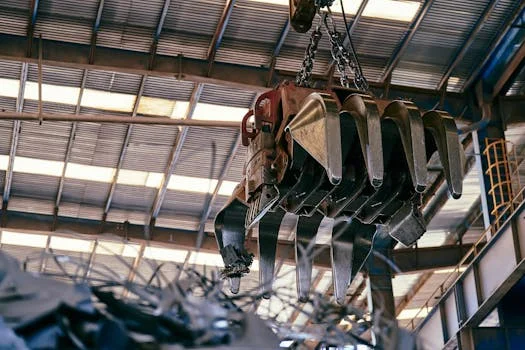
Annual OPEX commonly falls between $2K and $10K for energy, service, and parts. Chain-driven screens often run about 15% higher OPEX than climbers because of chain wear (per Top 2 Veolia data). Those costs compound across a multi-year service life and belong in any TCO model. Most bids we compare land inside that $2K to $10K OPEX band before a stainless upgrade.
ROI often appears inside 1–3 years through avoided pump repairs and cleaner downstream stages. Preventing clogs can save $50K–$200K/year in repairs and downtime. Better influent quality can also trim overall downstream treatment cost by 15–25%, including work done by automatic chemical dosing systems for pH adjustment and coagulant addition. An ROI sheet should include flow rate, target TSS removal, and local energy price.
| Screen Type | CAPEX Range | Annual OPEX | 5-Year TCO (approx.) | Typical ROI (years) |
|---|---|---|---|---|
| Chain-Driven | $15K–$50K | $3K–$6K | $30K–$80K | 1–3 |
| Climber | $25K–$80K | $2K–$5K | $35K–$105K | 1–2.5 |
| Rotary | $30K–$100K | $4K–$10K | $50K–$150K | 1.5–3 |
Use this selection list before you freeze a purchase order:
- Confirm peak flow with Q = W × V × 3600, and keep approach velocity inside 0.6–1.0 m/s.
- Pick bar spacing from the duty solids: 3–10 mm, 10–50 mm, or 50–150 mm.
- Match the frame to the channel: climber to about 10 meters, chain-driven under 3 meters, or rotary at 500–5,000 m³/h.
- Match the metal: 316L for HF duty or wastewater above 60°C (140°F); epoxy-coated carbon steel at pH 6–9.
- Size the drive inside 0.5–5 HP and 10–50 Nm, and keep overload protection in the circuit.
- Budget CAPEX at $15K to $100K and annual OPEX at $2K to $10K before you compare five-year TCO.
- Require a standby screen. US EPA treats a bypass screen as normal practice when the duty unit is mechanically cleaned.
Who This Is For, Who Should Look Elsewhere, and the Next Step
Plant engineers and procurement teams sizing pretreatment for municipal or industrial channels are the readers who can use these TSS, power, and cost ranges directly. Projects that only need occasional manual raking at very low flow should look at a hand rack, not a 0.5–5 HP drive. Buyers who need membrane or biological design detail, rather than screening mechanics, should leave this page. The next decision is channel depth, peak flow, and bar spacing, matched to climber, chain-driven, or rotary duty.
If your channel needs continuous high-flow screening, share influent TSS and width so a rotary package can be checked against the 500–5,000 m³/h band. Match depth, peak flow, and spacing first, then request a rated curve for your solids profile. Most channels we check need a velocity or spacing change before the nameplate flow is accepted.
Frequently Asked Questions
Mechanical bar screen duty cycle, service life, and failure signs are the checks operators set before startup.
What's the difference between a mechanical bar screen and a manual bar screen?
A mechanical bar screen uses a motor-driven rake, usually 0.5–5 HP, while a manual bar screen needs a hand rake on a fixed interval. According to US EPA (EPA 832-F-03-011), manual screens serve mainly older or smaller plants and bypass channels, with openings of 30 to 50 mm. Mechanical rakes in this guide run at 0.5–2 m/min so peak solids do not mat the bars. Most plants we size for continuous flow keep the manual rack as standby only.
How often should a mechanical bar screen be cleaned?
A mechanical bar screen cleans itself on an automated cycle, not by a daily hand rake. Rake frequency follows influent solids and may run intermittent or continuous so the upstream level does not rise. According to US EPA, rake teeth on mechanically cleaned screens must be inspected routinely because they bend and break. Most plants we support start the rake on differential level and keep a timer as backup.
What's the typical lifespan of a mechanical bar screen?
With proper maintenance, a mechanical bar screen often reaches 15 to 25 years. Material, wastewater chemistry, and missed lubrication move that span more than nameplate horsepower does. Chain-driven units in the source notes show about twice the failure rate of climber screens because chains and sprockets wear. Most plants we see retire a unit for rack corrosion, not for one overload trip.
Can mechanical bar screens handle high-temperature wastewater?
Yes, a mechanical bar screen can handle wastewater above 60°C (140°F) when the alloy and seals match that heat. Specify 316L stainless, high-temperature bearings, and a motor kept off the vapor path. Epoxy-coated carbon steel fits municipal water at pH 6–9, not a hot acid stream. Most plants we size for hot process water place the gearbox above the cover so heat does not cook the oil.
What are the signs of a failing mechanical bar screen?
A failing mechanical bar screen shows persistent jamming, loud vibration, and debris downstream of the rack. Rising headloss, worn rake teeth or drive chain, and repeated motor overloads carry the same warning. A fall away from the site's 92–97% TSS band means the rake is missing bars. According to US EPA, allowable headloss on a mechanically cleaned bar screen is 150 mm (6 in). Most plants we watch treat a climb toward that 150 mm mark as a stop.