Semiconductor fabs generate wastewater with fluoride up to 2,000 mg/L and copper at 50–500 mg/L from CMP. Streams also carry hydrogen peroxide at 1–10% in SPM/Piranha mixtures and solvents such as IPA and TMAH. Chip fab wastewater treatment pairs UV-oxidation (up to 95% COD removal), electrochemical copper recovery (99% removal, no sludge), and Macro-Porous Polymer Extraction (99% IPA removal). The sections below cover engineering specs, cost bands, and a selection sequence for segregated fab waste streams.
What chip fab wastewater treatment must achieve
Semiconductor process wastewater must remove fluoride, copper, peroxide, solvents, and solids to permit limits. Typical targets are fluoride below 10 mg/L, copper below 0.5–1 mg/L after metal recovery, H₂O₂ below 1 mg/L before membranes, and TSS below 10 mg/L after DAF. Cooling and scrubber reclaim often targets 50–70% intake with segregated drains.
Semiconductor tools produce chemically variable streams with sharp concentration spikes. Chemical Mechanical Polishing (CMP) loads dissolved copper and abrasive silica. Etching introduces high-strength hydrofluoric acid (HF). Sulfuric Peroxide Mixtures (SPM or Piranha) leave residual hydrogen peroxide and low pH. Isopropyl Alcohol (IPA) and Tetramethylammonium hydroxide (TMAH) raise COD and often need oxidation or solvent recovery rather than simple neutralization.
In the United States, EPA 40 CFR Part 469 Subpart A covers semiconductor process discharges, excluding sputtering, vapor deposition, and electroplating. According to current eCFR BAT text, fluoride is limited to 32.0 mg/L for any 1 day and 17.4 mg/L as a 30-day average. TTO is limited to 1.37 mg/L, and pH is typically held between 6.0 and 9.0. Earlier summaries often cited copper below 1 mg/L and fluoride below 10 mg/L as Part 469 categorical limits. Those tighter numbers are common in local permits and hubs such as Taiwan EPA practice, not the federal fluoride table. The EU Industrial Emissions Directive 2010/75/EU drives site-specific BAT conclusions rather than one copper number.
A typical semiconductor fab consumes between 2 and 4 million gallons of water per day. Design packages often aim to reclaim about 70% of that water for cooling towers, scrubbers, or UPW feed under SEMI S23-0719 energy and utility conservation guidance. Measured recycling rates at Singapore wafer fabrication plants ranged from 23% to 65%, with an industry average of 45% on 2018 reported data (PUB, 2022). Modern RO systems for fluoride and silica removal in semiconductor wastewater sit at the center of those reclaim trains once silica scaling risk is controlled.
Contaminant-Specific Treatment Technologies: Engineering Specs and Performance Data
Effective treatment requires source segregation before blending. Fluoride removal typically uses calcium hydroxide or calcium chloride precipitation. At pH 8.0 to 9.0, calcium fluoride (CaF₂) forms and delivers 90–95% removal. Facilities that must hold fluoride below 10 mg/L add membrane polishing or activated alumina. Reverse Osmosis (RO) or Nanofiltration (NF) can reach 98%+ fluoride rejection when influent silica stays below about 200 mg/L to limit scaling.
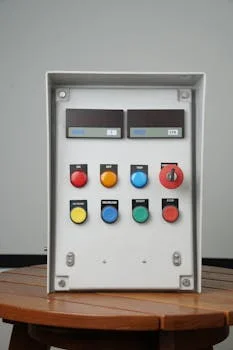
Copper removal from CMP wastewater has shifted from sludge-heavy precipitation toward electrochemical recovery. These systems remove 99% of dissolved copper as pure metal sheet and avoid hazardous sludge disposal. Ion exchange (IX) can reach 95% removal but needs frequent regeneration, with operating costs of $0.50 to $1.20 per 1,000 gallons when chelates are present. For pH control and reagent delivery, precision chemical dosing for pH adjustment and antiscalant addition keeps reaction kinetics stable and protects membranes.
Hydrogen peroxide (H₂O₂) must be destroyed before biological units or RO. Catalytic decomposition with manganese dioxide (MnO₂) or ferrous iron (Fe²⁺) cuts H₂O₂ to less than 1 mg/L. Residual organics often go to UV-oxidation at 500–1,000 mJ/cm² and 254 nm, which can reach up to 90% COD removal. Macro-Porous Polymer Extraction (MPPE) technologies achieve 99% removal of IPA and TMAH and can return solvent value that offsets OPEX.
| Contaminant | Primary Technology | Removal Efficiency | Key Process Parameters | Effluent Quality |
|---|---|---|---|---|
| Fluoride (HF) | Chemical Precipitation | 90–95% | pH 8.5, Ca:F ratio 1.1:1 | <15 mg/L |
| Copper (CMP) | Electrochemical Recovery | 99% | Current density 50–150 A/m² | <0.5 mg/L |
| Solvents (IPA) | MPPS / Recovery | 99% | Steam stripping/sorption | <1 mg/L |
| H₂O₂ (SPM) | Catalytic Decomposition | >99% | Retention time 15–30 min | <1 mg/L |
| Suspended Solids | DAF / Sedimentation | 90–98% | Coagulant dose 10–50 mg/L | <10 mg/L TSS |
Technology Comparison: AOP vs. Electrochemical vs. MPPS vs. DAF for Chip Fab Wastewater
Technology selection balances CAPEX, OPEX, and the contaminant map. Advanced Oxidation Processes (AOP) such as UV/H₂O₂ or Ozone/H₂O₂ destroy recalcitrant organics and chelates at about 95% COD removal. Their OPEX runs $1.50–$3.00 per 1,000 gallons because of energy and reagent demand. Electrochemical systems cost about $0.30–$0.80 per 1,000 gallons for ionic metals and recover saleable metal, but they do not treat non-polar organics.
Macro-Porous Polymer Extraction (MPPS) is a high-CAPEX path for solvent-laden drains. A 100 GPM package may cost about $150,000, while recovered IPA valued at $0.50–$2.00 per gallon can shorten payback. For solids, DAF systems for suspended solids and oil removal in chip fab wastewater remain the usual pretreatment. DAF CAPEX often falls between $20,000 and $100,000 and protects RO from TSS fouling, though DAF does not destroy dissolved chemicals.
| Technology | Best Application | CAPEX ($/GPM) | OPEX ($/1k Gal) | Footprint | Sludge Generation |
|---|---|---|---|---|---|
| AOP (UV/H₂O₂) | Organics / Chelates | $30k – $100k | $1.50 – $3.00 | Medium | Zero |
| Electrochemical | Dissolved Metals | $20k – $80k | $0.30 – $0.80 | Small | Zero (Metal Recovery) |
| MPPS | Solvent Recovery | $50k – $200k | $0.50 – $1.20 | Large | Zero (Solvent Recovery) |
| DAF | TSS / Silica | $10k – $30k | $0.10 – $0.40 | Large | High |
Case Study: 600 GPM Hydrofluoric Acid Wastewater Treatment Plant for a U.S. Fab

A major U.S. semiconductor manufacturer installed a modular 600 GPM plant for high-strength hydrofluoric acid drains. Influent held about 1,200 mg/L fluoride, 300 mg/L silica, and pH 2.3. Silica scaling risk threatened the reclaim RO. The design goal was EPA 40 CFR Part 469 compliance plus cooling-tower makeup recovery under local permit conditions that were tighter than the federal fluoride table alone.
The train used calcium hydroxide precipitation, sedimentation for solids, then a Reverse Osmosis (RO) system for bulk ion removal. To limit silica scale, precision chemical dosing for wastewater treatment held antiscalant at 5 mg/L and pH near 8.5. Final ion-exchange polishing kept effluent fluoride consistently below 10 mg/L.
The plant reached 85% water recovery, with effluent silica below 50 mg/L and fluoride below 10 mg/L. Total CAPEX was $3.2 million, with OPEX at $0.75 per 1,000 gallons. Calcium fluoride sludge disposal ran about $200 per ton in year one. The site then added a sludge dewatering for semiconductor wastewater treatment step, cutting sludge volume by 60% and lowering hauling fees.
Cost Breakdown and ROI for Semiconductor Fab Wastewater Systems
Semiconductor wastewater projects are judged on total cost of ownership, not permit cost alone. AOP packages typically run $30,000 to $100,000 per GPM of capacity. Electrochemical systems often sit between $20,000 and $80,000 per GPM. Electrochemical OPEX stays under $0.80 per 1,000 gallons in many metal streams, while AOP can exceed $3.00 per 1,000 gallons at high reagent doses.
Municipal water and sewer charges for industrial users often range from $5 to $15 per 1,000 gallons. Reclaiming 70% of wastewater at a 200 GPM facility can save more than $500,000 per year in water and discharge fees. Recovering IPA or TMAH can add $0.50 to $2.00 per gallon of solvent returned. A 200 GPM case with 70% water reuse and 90% IPA recovery typically shows about 3.2 years payback when both water and solvent credits are counted.
| ROI Component | Typical Value / Input | Annual Savings Potential |
|---|---|---|
| Water Reuse Rate | 70% of 200 GPM | $380,000 – $750,000 |
| Solvent Recovery (IPA) | 90% recovery of 1,000 mg/L stream | $120,000 – $250,000 |
| Metal Recovery (Copper) | 99% recovery as pure metal | $15,000 – $40,000 |
| Sludge Disposal Reduction | Dewatering to 30% solids | $40,000 – $90,000 |
| Total Estimated Savings | -- | $555,000 – $1,130,000 |
How do UPW systems affect long-term fab costs?
Ultrapure water (UPW) polish loops drive long-term utility cost because every reclaim gallon that returns to UPW feed must meet resistivity, TOC, and ionic specs. Secondary RO plus EDI or mixed-bed polish is usually required before UPW make-up. Materials and layout choices for UPW distribution also set multi-year OPEX through leachables, dead legs, and replacement cycles, so treat UPW quality targets as a cost driver when sizing reclaim.
Step-by-Step Decision Framework for Selecting Treatment Equipment
Use this six-step sequence to lock scope before CAPEX freeze for chip fab wastewater treatment projects:
- Characterize Waste Streams: Sample flow, fluoride, copper, H₂O₂, IPA, TMAH, pH, and temperature. Align sampling with EPA 469 monitoring practice and SEMI S23-0719 utility data needs.
- Map Contaminants to Technologies: Match each stream to precipitation, electrochemical recovery, AOP, MPPS, DAF, or IX. Keep CMP copper separate from HF drains wherever drains allow.
- Evaluate Water Reuse Goals: Set effluent quality by end use. Return to UPW needs high-efficiency industrial RO systems achieve 99.5% contaminant removal plus EDI or mixed-bed polish.
- Calculate CAPEX/OPEX and ROI: Build a TCO model with local energy, reagents, sludge disposal, and water/sewer tariffs.
- Pilot Test Top Technologies: Run 3–6 month pilots. Track removal efficiency, kWh per 1,000 gallons, and fouling or resin exhaustion rates.
- Select Vendor and Design for Modularity: Prefer vendors with semiconductor references and modular skids that allow 20–30% capacity growth.
What references cover chip fab plant wastewater?
Primary references for semiconductor plant wastewater include EPA 40 CFR Part 469 Subpart A for U.S. categorical limits, SEMI utility and reuse guides such as S23 and F98 for design framing, and national water-agency practice notes for measured reclaim rates. Peer-reviewed treatment papers help with unit-process kinetics, but permit writers still control final copper and fluoride numbers through local discharge authorizations.
Selection checklist: (1) confirmed drain segregation map, (2) silica control plan before RO, (3) H₂O₂ destruction before membranes, (4) sludge handling cost in the TCO, (5) reclaim quality vs. cooling vs. UPW end use, (6) modular hydraulic headroom of 20–30%, (7) pilot data covering at least one full tool-recipe swing.
Who this is for: fab facilities engineers, EPC process leads, and procurement teams sizing fluoride, CMP copper, or solvent trains. Who should look elsewhere: teams seeking only municipal sewage biology packages or data-center closed-loop cooling chemistry without semiconductor wet-bench drains. Next step: share influent analyses and reuse targets so a process train can be scoped against the tables above.
Frequently Asked Questions
What are the most common contaminants in chip fab wastewater?
The primary contaminants are dissolved copper at 50–500 mg/L from CMP and fluoride at 500–2,000 mg/L from etching. Streams also carry hydrogen peroxide at 1–10% from SPM mixtures and solvents such as IPA and TMAH. Silica abrasives from CMP raise TSS and membrane fouling risk. Segregated trains usually outperform a single blended plant when these loads arrive in spikes.
How do I choose between AOP and electrochemical treatment for copper removal?
Electrochemical systems are preferred when copper exceeds about 100 mg/L because they recover pure metal and generate zero metal hydroxide sludge. AOP fits streams where copper is bound in organic chelates that plating alone cannot break. Expect AOP OPEX near $1.50–$3.00 per 1,000 gallons, versus roughly $0.30–$0.80 per 1,000 gallons for electrochemical metal recovery under typical CMP conditions.
What is the typical payback period for a semiconductor wastewater system?
Most integrated reclaim packages pay back in 2 to 5 years when water tariffs and solvent recovery are counted. A representative 200 GPM system with 70% water reuse and 90% IPA recovery often lands near 3.2 years. Sites with cheap municipal water and no solvent value stretch longer unless sludge disposal or copper recovery dominates savings.
Can I reuse treated fab wastewater in my ultrapure water (UPW) system?
Yes, but only after secondary polishing beyond primary wastewater treatment. Effluent usually needs another RO pass plus Electrodeionization (EDI) or mixed-bed ion exchange to approach UPW feed quality, including TOC below 1 ppb and resistivity above 18.2 MΩ·cm. Cooling-tower or scrubber reuse is a lower-risk first reclaim step for most fabs.
What are the regulatory limits for semiconductor wastewater discharge?
According to current eCFR BAT text for EPA 40 CFR Part 469 Subpart A, fluoride is limited to 32.0 mg/L for any 1 day and 17.4 mg/L as a 30-day average. TTO is limited to 1.37 mg/L. Earlier summaries often quoted copper below 1 mg/L and fluoride below 10 mg/L as Part 469 limits. Those tighter values remain common in local permits and hubs such as Taiwan EPA practice.