Davao wastewater treatment plant cost in 2026 still clusters around ₱1.2M ($22K) for a 5 m³/day package STP and ₱50M+ ($900K+) for a 200 m³/day MBR train. Local compliance with DENR AO 2021-19 plus Davao City Ordinance 0361 commonly adds 15–25% to CAPEX when ammonia, FOG, or pathogen limits tighten beyond a basic national design. Industrial ROI timelines average 3–5 years when reuse and sludge reduction offset 30–40% of OPEX. Technology choice, Toril/Bunawan site works, and CENRO permitting pace remain the three largest budget swingers.
Plant engineers, EPC contractors, and procurement managers in Davao need numbers they can put in a bid pack, not brochure language. An aging system that fails a CENRO audit can trigger ₱50K–₱200K fines per violation and force emergency retrofit spend that dwarfs a planned upgrade. Most plants we size for light industry in the city run at the lower end of the CAPEX band until effluent data or land constraints force a jump to DAF or MBR.
Why Davao Treatment Costs Run Above National Averages
Davao wastewater plant projects typically cost 15–25% more than national averages because Ordinance 0361 and soft-ground industrial corridors push designs toward compact multi-stage trains. DENR AO 2021-19 sets the national effluent baseline, while city permits often add ammonia, FOG, or pathogen targets that require extra unit processes. High groundwater in Toril and Bunawan further raises civil and equipment density costs.
Textile plants are often designed toward ammonia below 10 mg/L when the permit demands it. That usually means extra nitrification or polishing stages and higher civil works spend (per 2024 CENRO audit data cited in prior local project reviews). For a 100 m³/day plant, specialized foundations and compact equipment integration commonly add ₱5M–₱10M versus an open-field layout.
Unannounced CENRO audits also push owners toward redundancy. Spare blowers, dual chemical dosing, or standby clarification can raise redundancy costs by 20–30%. A 2023 food plant near the Davao River spent ₱8M on a high-efficiency DAF system for FOG-heavy industrial effluents specifically to hold zero-E. coli discharge risk under control.
Residential and mixed-use estates face a parallel cost path. According to Edge Davao (June 2025), DCWD’s Indangan septage plant was 93% complete. Sanitation fees were set near ₱3.43 per cubic meter of billed water, with a multi-year residential price cap near ₱6,000. Private desludging still runs around ₱7,000 per service. That public fee is not a substitute for an on-site industrial STP. It is still a useful monthly benchmark when a 500-plus-unit compound compares STP OPEX with city septage service.
Davao Wastewater Treatment Plant Cost Breakdown
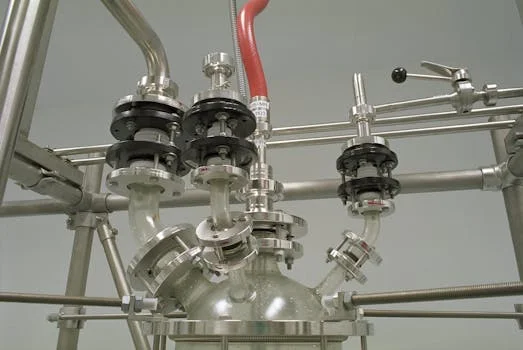
CAPEX for a Davao plant typically lands between ₱24,000 and ₱60,000 per m³/day of design capacity, conditioned on technology and train complexity. Package STPs for 5–50 m³/day usually price at ₱24,000–₱30,000 per m³/day. They suit light commercial loads with steady influent. A compact underground STP for Davao’s space-constrained sites fits many estate or canteen applications when BOD stays modest.
DAF trains for FOG-heavy industry often fall in the ₱35,000–₱50,000 per m³/day band. An MBR system for near-reuse-quality effluent in Davao commonly bids at ₱40,000–₱60,000 per m³/day (2025 contractor ranges for 5–500 m³/day). MBR CAPEX runs about 40% higher than simpler biological packages because of membranes and controls. Many owners still see roughly 30% lower life-cycle OPEX from less sludge and tighter effluent (per 2024 Water Environment Federation benchmarks).
Modular, factory-built skids can cut CAPEX 10–15% through shorter site labor. Davao permitting for unfamiliar module certifications can still add 6–12 months (per DCWD 2023 bidding-document patterns). Hidden soft costs inflate budgets another 10–20% before steel is erected.
- Soil testing: ₱50K–₱150K where water tables are high.
- Environmental Impact Assessment (EIA): ₱200K–₱500K for ECC support.
- CENRO permitting fees: ₱100K–₱300K for local clearances and monitoring.
For a broader Mindanao cost frame, compare this Davao build sheet with our Wastewater Treatment Plant Cost in Mindanao engineering breakdown. Industry-specific trains and checklists are in the companion Industrial Wastewater Treatment in Davao guide.
| Capacity (m³/day) | Technology Type | Estimated CAPEX (₱ Million) | Estimated CAPEX ($ USD) | Typical OPEX (₱/m³) |
|---|---|---|---|---|
| 5 | Package STP | 1.2 - 1.5 | 22K - 27K | 80 - 120 |
| 20 | Package STP | 4.8 - 6.0 | 87K - 109K | 70 - 110 |
| 50 | DAF System | 8.0 - 12.0 | 145K - 218K | 90 - 140 |
| 50 | MBR System | 10.0 - 15.0 | 182K - 273K | 60 - 100 |
| 100 | DAF System | 18.0 - 25.0 | 327K - 455K | 80 - 130 |
| 100 | MBR System | 25.0 - 35.0 | 455K - 636K | 50 - 90 |
| 200 | MBR System | 40.0 - 50.0+ | 727K - 909K+ | 45 - 85 |
MBR vs. DAF vs. SBR: Which Technology Fits Your Davao Project?
Membrane Bioreactors (MBR), Dissolved Air Flotation (DAF), and Sequencing Batch Reactors (SBR) fit different Davao influent profiles, footprints, and reuse goals. DAF is the usual first stage for food, meat, and kitchen waste with high FOG. See the engineering deep dive on DAF systems for process calculations. MBR combines biology with membrane filtration for near-reuse effluent on tight Toril or Bunawan lots. The detailed comparison of MBR and extended aeration costs shows where the CAPEX premium pays back. SBR keeps equalization, aeration, and settling in one tank when production schedules swing week to week.
| Parameter | MBR System | DAF System | SBR System |
|---|---|---|---|
| Primary Application | High-quality effluent, water reuse, space-constrained sites | FOG, suspended solids removal (pre-treatment) | Variable flows, moderate effluent quality |
| Influent Suitability | Medium-to-high strength BOD/COD, low FOG | High FOG, TSS, low-to-medium BOD/COD | Variable BOD/COD, TSS |
| Effluent Quality (BOD) | <5 mg/L (near-reuse quality) | <50 mg/L (post-DAF, pre-biological) | <30 mg/L |
| Footprint Requirement | Very compact (60% less space than SBR) | Compact (for primary treatment) | Larger (requires equalization basin) |
| Energy Consumption (kWh/m³) | 0.8 – 1.2 | 0.3 – 0.5 | 0.4 – 0.6 |
| Maintenance Complexity | Moderate-to-high (membrane cleaning, aeration) | Low-to-moderate (skimming, pump) | Moderate (aeration, decanter) |
| CAPEX (Relative) | Highest | Moderate (for primary stage) | Moderate |
| OPEX (Relative) | Lowest (due to sludge reduction, reuse potential) | Moderate-to-high (chemical, sludge disposal) | Moderate |
MBR effluent often sits below 5 mg/L BOD when membranes and biology are sized for reuse duty (per 2024 EPA technology fact sheets cited in prior design notes). Post-DAF BOD near 50 mg/L is a pre-biological target, not a final discharge claim. SBR trains commonly hold BOD below 30 mg/L under stable aeration control. Footprint savings of about 60% versus SBR matter on expensive industrial land. Energy at 0.8–1.2 kWh/m³ for MBR exceeds DAF at 0.3–0.5 kWh/m³ and SBR at 0.4–0.6 kWh/m³ (per 2025 Water Research Foundation ranges). Sludge haul and reuse credits often close that gap. DAF maintenance costs typically run about 30% lower than MBR where FOG loads dominate (per 2023 Davao City Water District maintenance-log patterns).
How Does Sludge Thickening Cut Disposal Costs?
Sludge thickening and dewatering cut Davao disposal spend by shrinking haul volume before landfill tipping fees apply. Raising cake solids toward 20% with a plate and frame filter press can cut disposal volume by up to 40% versus thin liquid sludge (per 2024 Davao City landfill tipping-fee practice). For a plant already spending heavily on tankers, that volume cut is often the fastest OPEX lever after power and chemicals.
A simple cost-savings check uses monthly sludge volume (m³), the solids-fraction gain, and tipping fee per m³. Doubling solids concentration roughly halves the wet volume you pay to move, before polymer and press power are netted out.Pair thickening with water reuse through a reverse osmosis (RO) water purification system when the business case needs both lower discharge fees and lower fresh-water purchase.
ROI Math and Ballpark Plant Cost from Equipment
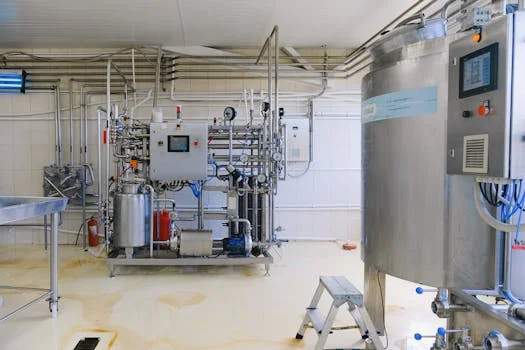
Payback for a Davao wastewater plant is usually driven by reuse credits and sludge savings, not by compliance alone. Recycling about 50% of treated effluent can save ₱150–₱300/m³ against fresh-water purchase where DCWD industrial tariffs apply (per DCWD 2025 tariff data). A working formula remains: Payback Period = (CAPEX – Incentives) / (Annual OPEX Savings + Revenue from Reuse). A ₱10M MBR train that frees ₱2M per year in combined sludge, chemical, and reuse savings pays back in about 5 years before avoided fines are counted.
Ballpark installed cost is often estimated by multiplying major equipment cost by 1.5–2.0. That factor covers civil works, piping, electrics, and commissioning on ordinary soils in many Davao turnkey bids. Soft ground or deep dewatering pushes the multiplier toward the high end. Earlier DENR Green Technology Program notes referenced 10% CAPEX rebates for reuse-ready systems (2025 funding update). Confirm current windows before you bank the credit. A 2024 textile case that paired SBR with RO cut payback from about 7 years to roughly 4 years once reuse volume stabilized.
Monthly OPEX for a multi-building estate can be framed the same way. Take design flow in m³/day, multiply by 30 days, then by the ₱/m³ band in the capacity table. A compound near 500 dwelling units should still confirm actual water use and peaking before locking tank volume. Compare that modeled monthly figure with DCWD’s billed-water sanitation fee when central septage service is an option.
Selection checklist before you freeze the bid:
- Influent BOD/COD, FOG, ammonia, and peak-to-average flow ratio from 7-day sampling.
- Receiving-water class and written CENRO effluent limits, not only national tables.
- Available footprint and groundwater depth at Toril, Bunawan, or other corridors.
- Reuse target (% of flow) and required turbidity/pathogen quality.
- Sludge haul distance and tipping fee used in the OPEX model.
- Permitting path: new ECC versus upgrade, with 6–12 month new-build allowance.
- Equipment-to-installed multiplier (1.5–2.0) plus 10–20% soft-cost contingency.
Davao Permitting Checklist: Avoiding Costly Delays
Davao CENRO permitting for a new wastewater treatment plant typically runs 6–12 months; upgrades more often clear in 3–6 months (per 2024 audit-report timelines). Core documents include an EIA at ₱200K–₱500K, soil testing at ₱50K–₱150K, PRC-stamped engineering drawings, land proof, barangay clearance, business permit, and an NWRB water permit when abstraction or direct discharge applies. Incomplete ammonia or pathogen demonstrations caused about half of textile rejections in 2023 local review summaries. A ₱20K pre-application meeting with CENRO still pays for itself when it prevents a redesign cycle.
Who this is for: industrial owners in Davao who must meet DENR AO 2021-19 and Ordinance 0361, plus estate managers comparing on-site STP OPEX with DCWD septage fees. Who should look elsewhere: drinking-water-only buyers or projects outside Mindanao without Davao permit exposure. Next step: gather 7-day influent data and effluent limits, then request a sized Davao treatment quotation with CAPEX/OPEX split before civil design locks in.
Frequently Asked Questions
What are the penalties for non-compliance with Davao City Ordinance 0361?
Fines for Ordinance 0361 violations typically range from ₱50K to ₱200K per offense under CENRO practice. Repeat failures can escalate to temporary shutdown orders and further legal exposure. Budget for continuous monitoring, not only capital equipment, because unannounced audits are common (per 2024 CENRO enforcement data).
How much does a 100 m³/day wastewater treatment plant cost in Davao?
A turnkey 100 m³/day MBR system in Davao commonly bids between ₱25M and ₱35M installed. A DAF-centered train at the same capacity more often lands at ₱18M–₱25M as primary FOG and solids removal. Exact CAPEX still moves with civil depth, membrane brand, and reuse polishing scope (based on 2025 Davao contractor quote bands).
Can I use a package STP for an industrial facility in Davao?
A package STP is acceptable only when effluent continuously meets DENR AO 2021-19 and Ordinance 0361 limits. That often means BOD held below 50 mg/L where the permit states that value. Most industrial wastes with high FOG, color, or ammonia need DAF, SBR, or MBR instead of a domestic-style package plant (per 2023 DCWD guideline practice).
What are the operating costs for a wastewater treatment plant in Davao?
OPEX in Davao generally falls between ₱50 and ₱150 per m³ treated. The band depends on technology, power tariff, chemicals, and sludge haul distance. MBR trains often sit near ₱50–₱90/m³ when sludge mass drops and reuse offsets fresh-water purchase (per 2024 Water Environment Federation benchmark ranges).
How long does it take to build a wastewater treatment plant in Davao?
Turnkey new builds in Davao typically need 12–18 months from detailed design through commissioning when permits are already moving. Modular gear assembles faster on site, yet full schedules often stretch to 18–24 months because module approvals take longer. Start CENRO pre-application work before fabrication to protect the critical path (per 2023 DCWD project timeline patterns).