Jordan industrial plants face MoEnv discharge limits under JS 893/2024, including BOD < 30 mg/L and COD < 100 mg/L in sensitive zones, plus acute water scarcity that forces high recovery. Decentralized plants of 10–2,000 m³/day now dominate factory sites. Dissolved Air Flotation (DAF) units remove 92–97% of TSS and FOG from food and textile effluent. This guide sets out Jordan-specific specs, compliance checks, and cost models for industrial wastewater treatment in Jordan so teams can meet JVA and JFDA rules and size CAPEX with clear payback assumptions.
Why Jordan Plants Face Stricter Discharge Limits in 2025
MoEnv JS 893/2024 sets Jordan factory limits at BOD < 30 mg/L, COD < 100 mg/L, and TSS < 30 mg/L in sensitive zones. Decentralized DAF and MBR trains of 10–2,000 m³/day are the common layout. Tanker haul near JOD 5.00/m³ and tariffs of JOD 3.50/m³ push onsite recovery.
Jordan’s scarcity remains acute: 92% of the land receives less than 200 mm of annual rainfall (MWI 2016). Industrial water demand grows by about 3% each year (World Bank 2023). Facilities near the Jordan Valley therefore sit under the tightest recovery and salinity controls in the national framework.
Financial exposure has moved from a side risk to a core operating threat. A 2023 MoEnv audit of 15 textile factories in Amman and Sahab found 60% outside COD limits, with fines up to JOD 50,000 per violation. Textile and chemical exporters also face EU Green Deal reporting pressure that can block market access when water management is unverified.
Decentralized treatment is now the norm. About 70% of industrial WWTPs run below 500 m³/day (GIZ 2024). Modular DAF and MBR trains cut tanker haul that can cost up to JOD 5.00/m³ in remote zones. Onsite treatment also offsets industrial municipal tariffs currently near JOD 3.50/m³. Most plants we size for Sahab and Zarqa estates run at the lower end of the 10–500 m³/day band unless a shared estate line is available.
MoEnv, JVA, and JFDA Compliance Checklist for Factory Discharge
The Ministry of Environment (MoEnv) is the primary industrial discharge regulator and enforces JS 893/2024 to protect groundwater and public sewers. The Jordan Valley Authority (JVA) adds salinity and reuse limits for any flow that may enter the Jordan Valley, with TDS often held below 1,500 mg/L. For food and pharma sites, the Jordan Food and Drug Administration (JFDA) requires residual chlorine < 0.5 mg/L and no detectable E. coli when treated water returns to cleaning or non-process uses.
A new industrial WWTP permit usually takes 6 to 12 months. Any system above 100 m³/day needs a full Environmental Impact Assessment (EIA). Permit files often fail when sludge disposal routes are missing; MoEnv expects documented chemical and biological sludge paths. The Reuse for Industry, Agriculture and Landscaping (RIAL) program can subsidize up to 30% of CAPEX when reuse and salinity targets are met.
| Agency | Key Parameter | Industrial Limit (JS 893/2024) | Testing Frequency |
|---|---|---|---|
| MoEnv | COD (Chemical Oxygen Demand) | < 100 mg/L (Sensitive Zones) | Monthly |
| MoEnv | BOD (Biochemical Oxygen Demand) | < 30 mg/L | Monthly |
| MoEnv | TSS (Total Suspended Solids) | < 30 mg/L | Bi-Weekly |
| JVA | Electrical Conductivity (Salinity) | < 1,000 µS/cm (Irrigation zones) | Weekly |
| JFDA | Pathogens (E. coli) | < 1 CFU/100 mL (Food/Pharma) | Daily (per batch) |
| MoEnv | Oil & Grease (FOG) | < 10 mg/L | Monthly |
Before you freeze P&IDs, run this selection checklist against the MoEnv file and the estate connection letter:
- Confirm whether the outfall sits in a sensitive zone or a JVA irrigation catchment.
- Map peak and average flow; size for the peak hour, not the monthly mean.
- List FOG, color, heavy metals, and salinity as separate treatment duties.
- Document sludge haul contracts before the EIA submission.
- State the reuse target (%) and the receiving use (process, washdown, irrigation).
- Budget certified operators if discharge exceeds 100 m³/day.
- Check RIAL subsidy eligibility against the water-balance report.
Sampling cadence in the table is a minimum, not a design ceiling. Food plants with batch CIP spikes often add COD grab samples on the worst shift of the week. Pharma wash-water lines that return to cleaning loops usually keep the JFDA E. coli check on every release batch even when MoEnv only asks for monthly BOD.
Engineering Specs for Industrial Wastewater Treatment in Jordan: DAF vs. MBR vs. Chemical Dosing
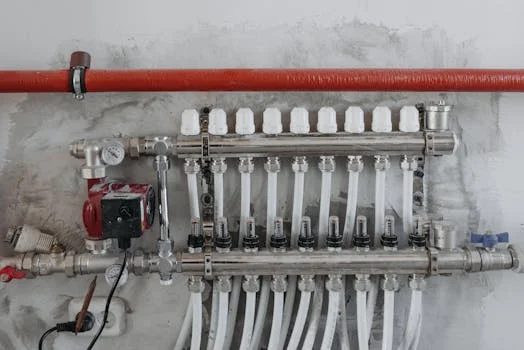
Dissolved Air Flotation (DAF) systems achieve up to 97% TSS removal in food processing by floating solids on 10–80 µm micro-bubbles. For Jordanian slaughterhouses and dairy lines, high-efficiency DAF systems for Jordan’s food processing and textile industries are the usual FOG pre-treatment step. Units of 4–300 m³/h often cut FOG from >500 mg/L to <10 mg/L before biology. Engineers can review a detailed engineering breakdown of DAF systems for Jordan’s food processing wastewater when they need float-tank and recycle-pump sizing detail.
Footprint-limited sites—pharma plants in Amman or textile mills in Al-Hassan—favor MBR. MBR systems for space-constrained pharmaceutical and textile facilities in Jordan use about 60% less land than conventional activated sludge. With 0.1 µm pores they deliver 99.9% pathogen removal and reuse-ready clarity. If MBR filtrate still fails salinity or TDS gates, study how reverse osmosis systems can further treat MBR effluent for reuse in Jordan’s pharmaceutical sector as the next step toward Zero Liquid Discharge (ZLD). Compact civil works can also pair with an Underground Package Sewage Treatment Plant (WSZ Series) when sanitary and light industrial streams share a buried train.
Chemical dosing remains the backbone of pH control and metal precipitation for electroplating and chemical plants in Zarqa. PLC-controlled chemical dosing for pH adjustment and heavy metal precipitation in Jordan meters PAC and PAM at 0.1 L/h precision. Tight dosing limits TDS creep that would otherwise breach JVA irrigation standards. On estates with mixed domestic and process loads, the same PLC skid often feeds both the DAF coag/floc line and a packaged Underground Package Sewage Treatment Plant (WSZ Series) polishing stage.
| System Type | Capacity Range | TSS Removal | FOG Removal | Pathogen Removal | Footprint |
|---|---|---|---|---|---|
| DAF | 4–300 m³/h | 92–97% | 80–90% | Low | Medium |
| MBR (DF Series) | 10–2,000 m³/day | > 99% | Moderate | > 99.9% | Small (Modular) |
| Chemical Dosing | 0.1–10 L/h | N/A (Pre-treat) | N/A | N/A | Very Small |
Field tip from Amman dairy and Sahab dyehouse startups: lock DAF air-saturator pressure and polymer make-down before you debate MBR flux. Most FOG and color upsets we see start in the pre-treatment skid, not in the membrane tank. Once FOG stays below 10 mg/L and pH holds within ±0.3 units, MBR CIP intervals usually settle into the vendor curve.
Cost Breakdown: CAPEX, OPEX, and ROI Models for Jordan Plants
Industrial water tariffs average JOD 3.50/m³, so high-recovery trains have a clear cash case. 2025 budgets must also include industrial power near JOD 0.12/kWh and import logistics for specialty reagents. For a 100 m³/day works, DAF CAPEX typically spans JOD 80,000 to JOD 250,000, depending on automation level and SS grade needed for saline groundwater.
OPEX is driven by energy and chemicals. MBR trains draw 1.5–2.5 kWh/m³ versus DAF at 0.8–1.2 kWh/m³, yet both can pay back through fine avoidance and lower freshwater buys. A textile plant reusing 80% of a 200 m³/day stream can save over JOD 150,000 per year on water purchase alone. With RIAL covering up to 30% of CAPEX, payback for advanced trains is often under three years on Jordan sites we review.
| System | CAPEX (JOD) | Annual OPEX (JOD) | Annual Savings (JOD) | Payback Period |
|---|---|---|---|---|
| DAF (100 m³/day) | JOD 95,000 | JOD 12,000 | JOD 45,000 | ~2.1 Years |
| MBR (100 m³/day) | JOD 180,000 | JOD 22,000 | JOD 90,000 | ~2.0 Years |
| Chemical Dosing Skid | JOD 25,000 | JOD 8,000 | JOD 15,000 (Fine Avoidance) | ~1.7 Years |
Main cost drivers to freeze early are stainless grade (SS304 vs SS316L), membrane life, peak FOG coagulant dose, and sludge haul distance. Estate rules on partial discharge versus full reuse matter equally. Changing any one item usually moves payback by more than six months on a 100 m³/day plant.
Procurement teams should also separate currency risk from process risk. Imported membrane cassettes and PLC hardware often quote in USD or EUR, while local civil and installation bid in JOD. A 10% FX move on the imported share can erase the apparent gap between a JOD 95,000 DAF package and a lightly optioned MBR line if the comparison sheet ignores exchange terms.
Supplier Decision Framework for Wastewater Equipment in Jordan
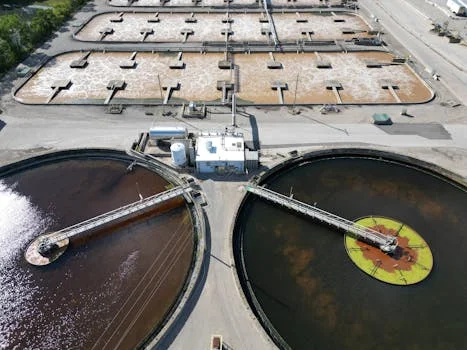
Lead times for industrial wastewater equipment in Jordan run 4 to 8 weeks from local stock and up to 24 weeks for specialized imports. Buyers must weigh engineering depth against local service. High salinity and temperature swings in Aqaba and the Jordan Valley call for corrosion-resistant builds such as SS316L or selected polymers. A supplier without a service desk in Amman or Aqaba is a real risk for MBR plants that need membrane CIP and replacement support.
Facility managers should favor partners who can run on-site pilots. Seasonal organic swings in food plants routinely break catalogue designs during peak kill or canning weeks. Require operator training in the contract: MoEnv rules expect certified operators on any site discharging more than 100 m³/day, with discharge logs kept current.
| Evaluation Criterion | Weight (%) | Requirement for Jordan Market |
|---|---|---|
| Compliance Expertise | 35% | Proven track record with MoEnv/JVA permits. |
| Local Service Support | 25% | Service center in Amman/Aqaba; <24hr response time. |
| Technical Specs | 20% | Corrosion-resistant materials; PLC automation. |
| Financing/Subsidies | 10% | Assistance with RIAL program applications. |
| Pilot Testing | 10% | Ability to run on-site trials before full CAPEX. |
Ask for a written spare-parts list covering twelve months of PAC/PAM, diffuser stones or membrane CIP chemicals, and one set of critical instruments. Remote desert sites lose more operating days to logistics than to process chemistry when the vendor only stocks Amman.
Who This Is For, Who Should Look Elsewhere, and Next Step
Plant engineers, EPC leads, and procurement managers sizing factory WWTPs in Amman, Sahab, Zarqa, Al-Hassan, or Aqaba under JS 893/2024 are the primary readers. Municipal planners seeking city-scale activated-sludge expansions will find little here. Buyers who only need a septic tank for sanitary flow under 10 m³/day should look elsewhere. Sites that already hold a MoEnv permit and only need spare membranes or dosing pumps can skip to the equipment datasheets.
For a Jordan-specific mass balance and equipment shortlist, share influent COD/BOD/TSS/FOG, peak m³/day, and the reuse target. Send those data through a request for Jordan industrial wastewater treatment quote so the train matches MoEnv and JVA limits before CAPEX locks.
Frequently Asked Questions
What are the penalties for non-compliance with Jordan industrial wastewater standards?
Penalties under the Environmental Protection Law and JS 893/2024 range from JOD 10,000 to JOD 50,000 per violation for non-compliant discharge. Repeat offenses or severe harm, such as Jordan Valley contamination, can trigger MoEnv cease-and-desist orders that stop production until a compliant plant is commissioned. Budget both the fine risk and the downtime cost when comparing low-CAPEX options that miss COD or FOG limits.
Can treated industrial wastewater be reused for irrigation in Jordan?
Yes, when effluent meets Category A or Category B rules in JS 893, including TDS < 1,500 mg/L, no detectable pathogens, and heavy-metal caps such as chromium and nickel. JVA irrigation zones also watch electrical conductivity, often below 1,000 µS/cm. For a global high-recovery comparison, see how Australia’s industrial wastewater regulations compare to Jordan’s standards.
How does Jordan water scarcity change WWTP design choices?
Scarcity pushes a recovery-first layout: MBR plus RO trains are sized so up to 90% of process water can return to the factory. That cut in municipal draw also buffers summer rationing. Designers therefore prioritize salinity control and membrane resilience over the lowest first-cost settler-only schemes that cannot support reuse.
What pretreatment is most common for textile wastewater in Jordan?
Textile plants typically combine DAF for solids and FOG with chemical dosing for color and pH control. Many dyes inhibit biology and foul MBR membranes, so DAF protection upstream is standard practice in Sahab and Al-Hassan mills. Color removal chemistry must be tuned so residual coagulants do not push TDS past JVA irrigation limits.
How do I apply for the RIAL subsidy on wastewater equipment?
Applications go through the Ministry of Water and Irrigation (MWI) with MoEnv coordination. Submit a feasibility study, a water-balance showing reuse percentage, and a certified design from an approved supplier. Subsidies commonly cover up to 30% of equipment CAPEX when salinity and reuse gates are met in the file.