A drinking water treatment plant is an engineered facility that converts raw water from rivers, lakes, or aquifers into potable water meeting EPA, WHO, and local health standards. Typical plants achieve 99.9% pathogen removal and reduce turbidity from 3,000 mg/L to below 0.3 NTU through a multi-stage process: coagulation (alum dosing 10-50 mg/L), flocculation (G-value 20-70 s⁻¹), sedimentation (surface loading 1-3 m/h), filtration (dual-media beds at 5-15 m/h), and disinfection (chlorine 1-4 mg/L or ozone 0.5-2 mg/L). Advanced systems integrate membrane bioreactors (MBR) or dissolved air flotation (DAF) for challenging influents, with capital costs ranging from $0.5M for compact units (10 m³/h) to $50M for large municipal plants (50,000 m³/day).
How Drinking Water Treatment Plants Solve Real-World Water Quality Challenges
Drinking water treatment plants are critical infrastructure, converting contaminated raw water into safe, potable supply for communities and industries. Consider a hypothetical city drawing water from a major river, where seasonal rains elevate turbidity to 1,200 NTU and agricultural runoff introduces E. coli at 1,000 CFU/100mL. Without treatment, this water poses severe public health risks, including gastrointestinal diseases and long-term exposure to chemical contaminants. The treatment plant acts as the primary defense, employing a systematic process starting with coagulation, followed by sedimentation, filtration, and culminating in disinfection. This multi-barrier approach ensures robust contaminant removal, achieving turbidity levels below 0.3 NTU and pathogen removal exceeding 99.99% (4-log inactivation for viruses and 3-log for Giardia cysts), consistently meeting stringent EPA Surface Water Treatment Rule (SWTR) requirements. For instance, the North Texas Municipal Water District utilizes a robust ozone + chlorine disinfection strategy to ensure public health, while advanced facilities leverage technologies like Veolia’s ZeeWeed membranes for enhanced pathogen removal and system reliability.
Core Process Steps in a Drinking Water Treatment Plant: Engineering Parameters and Design Considerations
Each stage in a drinking water treatment plant is meticulously engineered with specific parameters to ensure efficient contaminant removal and compliance with potable water standards. Understanding these technical specifications is crucial for effective plant design and equipment selection.
Screening and Pretreatment
The initial physical treatment removes large debris that could damage pumps or interfere with downstream processes. Bar screens, typically with spacing ranging from 6-50 mm, are essential for removing branches, plastics, and other coarse solids. For higher flow rates, rotary mechanical bar screens (such as HydropureWater's GX Series Rotary Mechanical Bar Screen) can handle capacities from 1-300 m³/h. Grit removal, particularly important for surface water sources, uses grit chambers or aerated grit tanks to settle inorganic particles (sand, silt) with specific gravities greater than water, preventing abrasion of mechanical equipment and accumulation in basins.
Coagulation
Coagulation destabilizes suspended particles, color, and natural organic matter (NOM) in the raw water, preparing them for removal. This process involves rapid mixing of a chemical coagulant, such as aluminum sulfate (alum) or ferric chloride. Alum dosing typically ranges from 10-50 mg/L, depending on raw water turbidity and alkalinity, with an optimal pH range of 5.5-7.0 for alum. The rapid mix phase is critical, requiring a high G-value (velocity gradient) of 700-1,000 s⁻¹ for 30-60 seconds to ensure uniform dispersion of the coagulant throughout the water volume. Alternative coagulants like polyaluminum chloride (PAC) or polymers may be used, with dosing ranges varying based on product specifics and water characteristics. Automated chemical dosing systems, such as HydropureWater's PLC-controlled chemical dosing for coagulation and pH adjustment, ensure precise and efficient chemical application.
Flocculation
Following coagulation, flocculation gently aggregates the destabilized particles into larger, heavier flocs that can be easily settled. This stage involves slower mixing for an extended period, typically 20-40 minutes, with a G-value of 20-70 s⁻¹. Paddle tip speeds of 0.15-0.6 m/s are commonly employed in mechanical flocculators. Tapered flocculation, where the G-value decreases in successive chambers, optimizes floc growth by preventing shear forces from breaking up larger flocs, leading to superior settling characteristics.
Sedimentation
Sedimentation is the gravity-driven separation of the formed flocs from the water. Conventional sedimentation basins are designed with surface loading rates (overflow rates) of 1-3 m/h. The sludge blanket, composed of settled flocs, typically maintains a depth of 1-2 m at the bottom of the basin, requiring regular removal. High-rate settlers, such as lamella clarifiers, utilize inclined plates or tubes (with angles typically 55-60°) to increase the effective settling area, significantly reducing footprint and improving efficiency compared to conventional designs. HydropureWater's high-efficiency DAF system for algae and suspended solids removal can also function as a high-rate clarifier, particularly effective for low-density flocs or algae-laden water.
Filtration
Filtration removes residual suspended solids, turbidity, and microorganisms that did not settle during sedimentation. Rapid sand filters are most common, often utilizing dual-media beds (anthracite over sand) or multi-media beds (garnet, sand, anthracite) to achieve efficient particle capture. Filtration rates typically range from 5-15 m/h. Backwash cycles, essential for cleaning the filter media, are performed every 24-72 hours, depending on influent turbidity and head loss accumulation. While slow sand filters offer excellent pathogen removal without chemicals, their large footprint and low filtration rates (0.1-0.3 m/h) make them less suitable for large municipal applications compared to rapid sand filtration.
Disinfection
Disinfection is the final critical step, inactivating remaining pathogens to ensure the water is safe for consumption. Chlorine is the most common disinfectant, applied to achieve a residual of 1-4 mg/L in the distribution system. Contact time (CT value) is crucial for effective inactivation; for example, a CT value of 450 mg·min/L is required for 3-log Giardia inactivation under EPA SWTR guidelines. Ozone is a powerful alternative, with typical dosing of 0.5-2 mg/L, achieving rapid 4-log virus inactivation and effective taste/odor control without forming significant disinfection byproducts. UV disinfection, applied at a dose of 40 mJ/cm², offers chemical-free inactivation of a broad spectrum of pathogens, including Cryptosporidium, but requires pre-filtered water for optimal performance. HydropureWater offers solutions like the on-site chlorine dioxide generator for water disinfection for enhanced pathogen control.
| Process Step | Key Parameter | Typical Range/Value | Design Consideration |
|---|---|---|---|
| Screening | Bar screen spacing | 6-50 mm | Prevents damage to pumps, removes large debris |
| Coagulation | Alum Dosing | 10-50 mg/L | Rapid mix G-value: 700-1,000 s⁻¹ for 30-60s |
| Flocculation | G-value | 20-70 s⁻¹ | Retention time: 20-40 min, tapered flocculation |
| Sedimentation | Surface Loading Rate | 1-3 m/h | Sludge blanket depth: 1-2 m, lamella clarifiers for high-rate |
| Filtration | Filtration Rate | 5-15 m/h | Dual-media (anthracite/sand), backwash frequency 24-72h |
| Disinfection | Chlorine Residual | 1-4 mg/L | CT value for specific pathogen inactivation (e.g., 450 mg·min/L for Giardia) |
Treatment Technology Comparison: Matching Process to Water Source and Contaminant Profile
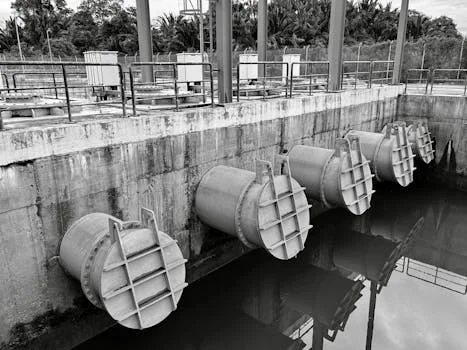
Selecting the optimal drinking water treatment train hinges on a thorough analysis of the raw water source characteristics and the specific contaminants present. Surface water sources, such as rivers and lakes, typically present high turbidity, variable pathogen loads (bacteria, viruses, protozoa), and natural organic matter (NOM). In contrast, groundwater sources generally exhibit lower turbidity and pathogen counts but may contain elevated levels of dissolved minerals (hardness, iron, manganese) or specific inorganic contaminants like arsenic or fluoride. For highly turbid or algae-laden surface waters, high-efficiency DAF system for algae and suspended solids removal (HydropureWater) proves highly effective, achieving 92-97% TSS removal and superior algae separation, often outperforming conventional sedimentation. For sites with severe space constraints or requiring exceptional pathogen removal, membrane bioreactors (MBR) offer a compact solution, filtering down to <1 μm, as seen in HydropureWater's MBR Series for rural water supply applications. Advanced oxidation processes like ozone are invaluable for taste and odor control, as well as breaking down complex organic molecules.
| Water Source | Contaminant Type | Recommended Treatment Train | Removal Efficiency | Capital Cost ($/m³/day) | O&M Cost ($/m³) |
|---|---|---|---|---|---|
| Surface Water (River/Lake, low-moderate turbidity) | Turbidity, Pathogens, NOM | Coagulation-Flocculation-Sedimentation-Filtration-Chlorination | Turbidity <0.3 NTU, 3-log Giardia, 4-log Virus | 1,000 - 3,000 | 0.15 - 0.35 |
| Surface Water (Algae-laden, high turbidity) | Algae, High TSS, Pathogens | DAF-Filtration-Chlorination (or Ozone) | 92-97% TSS, high algae removal, >4-log Pathogen | 1,500 - 4,000 | 0.20 - 0.40 |
| Groundwater (Low turbidity, high minerals) | Hardness, Iron, Manganese, Arsenic | Aeration-Filtration (for Fe/Mn), Ion Exchange/RO (for hardness/As) | >90% Fe/Mn, >95% Hardness/As | 800 - 5,000 (depending on RO) | 0.10 - 0.60 |
| Industrial Process Water | Specific Organics, Heavy Metals, High TDS | Customized Pretreatment-MBR-RO-UV/AOP | Tailored to specific contaminants, >99% TDS (RO) | 2,500 - 10,000+ | 0.30 - 1.00+ |
| Surface Water (Space-constrained, high quality) | Turbidity, Pathogens, NOM | MBR-Disinfection | Turbidity <0.1 NTU, >6-log Pathogen | 3,000 - 6,000 | 0.25 - 0.50 |
Regulatory Compliance: EPA, WHO, and Local Standards for Drinking Water Treatment
Adherence to stringent regulatory standards is non-negotiable for all drinking water treatment plants, ensuring public health and safety. The EPA Surface Water Treatment Rule (SWTR) mandates that filtered water must achieve a turbidity level of less than 0.3 NTU in 95% of monthly samples, with no single sample exceeding 1 NTU. it requires a minimum of 3-log (99.9%) inactivation or removal of Giardia cysts and 4-log (99.99%) inactivation or removal of viruses. The WHO Guidelines for Drinking-water Quality establish international benchmarks, including zero E. coli per 100mL, arsenic concentrations below 10 μg/L, and lead below 10 μg/L, emphasizing health-based targets. Disinfection Byproducts (DBPs), formed when disinfectants react with natural organic matter, are also tightly regulated by the EPA Stage 2 DBP Rule, which limits total trihalomethanes (TTHMs) to 80 μg/L and haloacetic acids (HAA5) to 60 μg/L; utilizing ozone as a primary disinfectant can significantly reduce DBP formation. Locally, standards such as China GB 5749-2006 stipulate a turbidity limit of less than 1 NTU, while the EU Drinking Water Directive 98/83/EC sets strict limits for pesticides at <0.1 μg/L. Continuous compliance monitoring is facilitated by advanced instrumentation, including online turbidimeters with 0.01 NTU resolution and chlorine residual analyzers with 0.1 mg/L accuracy, providing real-time data for operational adjustments.
Designing a Drinking Water Treatment Plant: Decision Framework for Engineers and Procurement Managers
A systematic decision framework is essential for designing a drinking water treatment plant that is technically robust, financially viable, and compliant with all regulations. This structured approach helps engineers and procurement managers navigate complex choices.
- Step 1: Water Source Analysis
Conduct comprehensive raw water quality testing, including turbidity, pH, alkalinity, total suspended solids (TSS), dissolved solids (TDS), specific pathogens (E. coli, Giardia, Cryptosporidium), heavy metals (arsenic, lead), and organic contaminants (TOC, pesticides). This initial data drives all subsequent design decisions. - Step 2: Treatment Train Selection
Utilize the treatment technology comparison matrix (as presented previously) to match the appropriate process steps (e.g., coagulation, DAF, MBR, RO) to the identified contaminant profile and water source characteristics. For example, a compact water purification system for surface water treatment like HydropureWater's JY Series Integrated Water Purification System might be selected for rural communities with moderate turbidity. - Step 3: Capacity Sizing
Determine the required plant capacity based on average daily demand, peak flow rates (often 1.5× average daily demand to account for seasonal variations or future growth), and necessary redundancy (e.g., N+1 pump configuration, multiple filter trains) to ensure continuous operation during maintenance or unexpected outages. - Step 4: Equipment Specification
Detail technical specifications for each piece of equipment, including flow rates, pressure ratings, removal efficiencies, and material compatibility (e.g., stainless steel for corrosive environments, PVC for cost-effective applications). Consider energy efficiency (e.g., IE3/IE4 motors for pumps) and automation capabilities. - Step 5: Cost Estimation
Develop a detailed cost breakdown encompassing capital expenditure (CapEx) for equipment, civil works, and installation (ranging from $0.5M for compact units to $50M for large municipal plants), as well as operational and maintenance (O&M) costs ($0.10–$0.50/m³). Calculate the Return on Investment (ROI) by considering water sales revenue, operational savings, and potential grants. A sample spreadsheet template can aid in these calculations, factoring in energy (30-50% of O&M) and chemical costs (20-40% of O&M). For example, a 1,000 m³/day plant might have a CapEx of ~$2M with O&M costs around $0.25/m³. - Step 6: Compliance Validation
Implement pilot testing for complex or novel treatment trains to validate performance and optimize parameters before full-scale deployment. Ensure all equipment and processes meet relevant third-party certifications, such as NSF/ANSI 61 for water treatment chemicals and components, and UL for electrical systems, to guarantee safety and reliability.
| Decision Factor | Key Considerations | Impact on Design/Procurement |
|---|---|---|
| Water Source Quality | Turbidity, pathogens, organics, minerals, pH | Determines pre-treatment, coagulation chemistry, filtration type, disinfection strategy |
| Required Capacity | Average daily demand, peak flow rates, future growth, redundancy | Sizing of all unit operations, pump capacities, storage volumes |
| Effluent Standards | EPA, WHO, local regulations (turbidity, pathogens, DBPs, specific contaminants) | Defines removal targets, influences selection of advanced treatment (e.g., membranes, AOPs) |
| Site Constraints | Available footprint, elevation changes, proximity to power/roads | Influences compact designs (MBR), gravity-fed vs. pumped systems |
| Capital Cost | Equipment, civil works, installation, engineering | Budget allocation, technology choice (conventional vs. advanced), phased implementation |
| O&M Cost | Energy, chemicals, labor, consumables, maintenance | Long-term financial sustainability, automation level, chemical type selection |
Emerging Technologies and Future Trends in Drinking Water Treatment
The drinking water treatment sector is continuously evolving, driven by new contaminant challenges, stricter regulations, and the demand for more sustainable solutions. Membrane technologies continue to advance, offering superior filtration capabilities; for example, HydropureWater's MBR membrane bioreactor modules feature 0.1 μm pore sizes, providing exceptional pathogen removal and enabling up to a 60% smaller physical footprint compared to conventional systems. Ultrafiltration (UF) membranes, with pore sizes down to 0.01 μm, are increasingly favored for their lower energy consumption and robust barrier against suspended solids and microorganisms. Advanced oxidation processes (AOPs) like UV/H₂O₂ or ozone/peroxide combinations are gaining traction for effectively removing trace organic contaminants, such as pharmaceuticals and endocrine disruptors, and for enhanced taste and odor control. The integration of smart water systems, utilizing IoT sensors for real-time monitoring of critical parameters like turbidity, pH, and chlorine residual, coupled with AI-driven analytics, enables predictive maintenance and optimized plant operations, minimizing downtime and chemical usage. Decentralized treatment solutions, including containerized systems (e.g., HydropureWater's JY Series for 10–200 m³/h capacities in rural areas) and mobile units, are becoming vital for rapid deployment in remote locations or emergency response scenarios. resource recovery, such as energy generation from sludge via anaerobic digestion and phosphorus recovery for fertilizer, represents a significant trend towards circular economy principles in water management.
Frequently Asked Questions
Addressing common queries helps clarify the complexities of drinking water treatment plant design and operation.
What is the difference between a drinking water treatment plant and a wastewater treatment plant?
Drinking water plants treat raw water from natural sources (rivers, lakes, aquifers) to make it safe for human consumption, focusing on pathogen removal, turbidity reduction, and aesthetic quality. Wastewater treatment plants treat used water from homes and industries to remove pollutants (BOD/COD, nutrients, solids) before safe discharge or reuse, prioritizing environmental protection.
How much does a drinking water treatment plant cost?
Capital costs for drinking water treatment plants typically range from $0.5M for compact systems (e.g., 10 m³/h capacity) to over $50M for large municipal plants (e.g., 50,000 m³/day). Operational and maintenance (O&M) costs average $0.10–$0.50 per cubic meter of treated water, with energy (30–50% of O&M) and chemicals (20–40% of O&M) being the major cost drivers. For instance, a 1,000 m³/day plant might cost around $2M in capital and $0.25/m³ for O&M.
What are the most common disinfection methods, and how do they compare?
The most common methods are chlorination (1–4 mg/L residual, CT value ~450 mg·min/L for Giardia inactivation), ozonation (0.5–2 mg/L dose, 4-log virus inactivation), and UV irradiation (40 mJ/cm² dose). Chlorine is cost-effective and provides residual protection but can form disinfection byproducts (DBPs). Ozone is a powerful disinfectant and oxidant, reducing DBPs, but requires on-site generation and has no residual. UV is chemical-free and effective against Cryptosporidium but requires clear water and provides no residual.
What are the key parameters to monitor in a drinking water treatment plant?
Critical parameters include turbidity (target <0.3 NTU), pH (optimal 6.5–8.5), chlorine residual (1–4 mg/L in distribution), E. coli (0 CFU/100mL), and disinfection byproducts (TTHMs <80 μg/L, HAA5 <60 μg/L). Online sensors are highly recommended for continuous monitoring of turbidity, pH, and chlorine residual to ensure real-time process control and compliance.
How do I select the right filtration media for my plant?
Selection depends on influent water quality, desired effluent quality, and operational factors. Dual-media filters (anthracite over sand) are common for general use, effective for turbidity up to 50 NTU at 5–15 m/h. Multi-media filters (e.g., garnet, sand, anthracite) offer enhanced particle removal for higher turbidity. Membrane filtration (e.g., ultrafiltration with 0.1 μm pore size) provides superior pathogen removal and consistently low turbidity, suitable for challenging influents or stringent standards.