Hanoi’s 2025 Hospital Wastewater Compliance Deadline: What You Need to Know
Hanoi’s 2025 hospital wastewater treatment mandate requires 100% of facilities to meet Vietnam’s QCVN 28:2010/BTNMT standards, with 70% of existing systems currently non-compliant. The $155M World Bank project targets 150 hospitals, prioritizing systems with COD removal ≥90%, BOD removal ≥95%, and 99.9% pathogen kill rates. Advanced biological treatment (e.g., MBR) and chemical disinfection (e.g., chlorine dioxide) are the most cost-effective solutions for Hanoi’s high organic loads and space constraints.
The regulatory landscape in Vietnam has shifted significantly with the enforcement of the Vietnam Environmental Protection Law 2020. This legislation mandates that all medical facilities, including public hospitals, private clinics, and specialized institutes, must treat wastewater to specific thresholds before discharge into municipal sewers or the environment. According to a 2023 Ministry of Health audit, a staggering 70% of hospitals in the Hanoi metropolitan area utilize systems that fail to meet the "Column A" requirements of QCVN 28:2010/BTNMT. This gap has prompted the $155 million World Bank-funded initiative to modernize infrastructure across 150 key healthcare sites.
For facility managers, the risks of inaction are no longer just environmental; they are financial and operational. Penalties for non-compliance can reach up to VND 1 billion (approximately $42,000) per violation. In extreme cases of persistent non-compliance, the Hanoi Department of Natural Resources and Environment (DONRE) has the authority to issue operational shutdowns. These standards align closely with international hospital wastewater treatment standards in Southeast Asia, ensuring that Hanoi’s medical infrastructure moves toward global benchmarks for pathogen control and organic load reduction.
The 2025 deadline is a hard cutoff. By the end of next year, hospitals must demonstrate not only the installation of treatment hardware but also the consistent achievement of effluent quality parameters. This requires a transition from legacy primary treatment (septic tanks) to secondary and tertiary processes capable of handling the complex cocktail of pharmaceuticals, disinfectants, and radioactive isotopes found in modern medical waste streams.
Engineering Specifications for Hospital Wastewater Treatment in Hanoi
Engineering a compliant system in Hanoi requires a deep understanding of local influent characteristics, which are often influenced by high patient density and aging internal plumbing. Data from the 2024 Hanoi Department of Health indicates that raw medical wastewater in the city typically exhibits high variability in organic strength and microbial concentration. Designing for these peaks is essential to prevent system bypass or biological shock.
The primary technical challenge for Hanoi hospitals is the limited physical footprint available for equipment. With an average hospital density of 3-5 beds per square meter, wastewater treatment systems must be compact, often requiring a footprint of no more than 0.5 to 1.5 m² per bed. To meet QCVN 28:2010/BTNMT, the system must achieve a 99.9% pathogen kill rate, specifically targeting Salmonella, Shigella, and Vibrio cholerae.
Sludge management is another critical specification. Under Vietnam Circular 36/2015/TT-BTNMT, sludge generated from medical wastewater treatment is classified as hazardous waste if it contains specific pathogens or heavy metals. Engineering specs must include dewatering stages that achieve 20-30% solids content to minimize the volume—and cost—of disposal at licensed medical waste facilities.
| Parameter | Typical Influent (Hanoi) | QCVN 28:2010/BTNMT (Column A) | Required Removal Efficiency |
|---|---|---|---|
| Chemical Oxygen Demand (COD) | 300–800 mg/L | ≤ 100 mg/L | ≥ 90% |
| Biochemical Oxygen Demand (BOD5) | 150–400 mg/L | ≤ 30 mg/L | ≥ 95% |
| Total Suspended Solids (TSS) | 200–500 mg/L | ≤ 50 mg/L | ≥ 90% |
| Total Coliforms | 10^6–10^8 MPN/100mL | ≤ 3,000 MPN/100mL | 99.99% |
| Ammonia (as N) | 20–50 mg/L | ≤ 15 mg/L | ≥ 70% |
Disinfection must be robust. While traditional chlorine dosing is common, the trend for 2025 is shifting toward chlorine dioxide disinfection for Hanoi hospitals because it does not produce carcinogenic trihalomethanes (THMs) and remains effective across a wider pH range. This is particularly relevant for hospitals with fluctuating influent chemistry due to laboratory and radiology department discharges.
Treatment Technologies Compared: MBR vs. DAF vs. Chemical Disinfection for Hanoi Hospitals
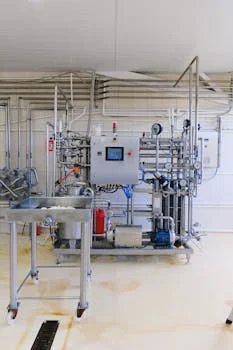
Selecting the appropriate technology depends on three factors: available space, budget, and the specific departments within the hospital (e.g., infectious disease vs. general surgery). In Hanoi’s urban core, where expansion is impossible, the Membrane Bioreactor (MBR) has become the gold standard.
Membrane Bioreactor (MBR): This technology combines biological degradation with membrane filtration. MBR systems for hospital wastewater in Hanoi eliminate the need for secondary clarifiers, reducing the footprint by up to 60% compared to traditional activated sludge. HydropureWater benchmarks for 2024 show MBR systems achieving COD removal rates of 92-97%, making them ideal for meeting the strictest Column A standards.
Dissolved Air Flotation (DAF): While less common for total treatment, DAF systems are highly effective as a pretreatment stage for hospitals with high Fats, Oils, and Grease (FOG) from large canteen operations or high TSS from laundry facilities. DAF can remove 95-98% of FOG, protecting downstream biological processes from fouling.
Chemical Disinfection: For smaller clinics or as a final polishing step, chlorine dioxide generators for hospital wastewater disinfection offer a high pathogen kill rate with minimal residual toxicity. Unlike ozone, which has high capital costs, or UV, which can be hindered by turbidity, chlorine dioxide provides a residual effect that prevents bacterial regrowth in discharge pipes.
| Technology | Footprint (m²/m³/day) | Energy Use (kWh/m³) | CAPEX ($/m³/day) | Best Use Case |
|---|---|---|---|---|
| MBR | 0.3–0.5 | 0.8–1.2 | $1,200–$1,800 | Urban hospitals with strict space limits |
| DAF | 0.8–1.2 | 0.3–0.5 | $800–$1,500 | Pretreatment for canteens/laundries |
| Chlorine Dioxide | 0.1–0.2 | 0.1–0.2 | $500–$1,200 | Tertiary disinfection/pathogen control |
| Hybrid (MBR+ClO2) | 0.4–0.6 | 0.9–1.4 | $1,700–$2,500 | Infectious disease & high-risk wards |
For high-risk facilities, such as those handling infectious diseases, a hybrid approach is recommended. This involves a compact hospital wastewater treatment for Hanoi clinics that integrates biological oxidation with a final chlorine dioxide polish to ensure total sterilization of the effluent.
Cost Breakdown: Hospital Wastewater Treatment Systems in Hanoi (2025)
Budgeting for 2025 requires a granular look at both initial investment (CAPEX) and long-term operational expenses (OPEX). Based on 2024 Hanoi Department of Health tenders, the CAPEX for a 50-200 bed hospital system typically ranges from $50,000 to $200,000, depending on the level of automation and the technology selected.
Operational costs are primarily driven by energy consumption and chemical reagents. In an MBR system, aeration and membrane scouring account for approximately 40% of the OPEX. However, these costs are often offset by the reduction in sludge disposal fees and the avoidance of environmental fines. advanced systems can facilitate water reuse for non-potable applications like landscape irrigation or toilet flushing, leading to a 20-30% reduction in municipal water bills.
| Cost Component | Percentage of OPEX | Annual Estimate (100-bed) | Optimization Strategy |
|---|---|---|---|
| Energy | 30–40% | $3,500–$5,500 | VFD-controlled blowers |
| Chemicals | 20–30% | $2,000–$4,000 | Precision dosing pumps |
| Maintenance | 15–25% | $1,500–$3,000 | Quarterly membrane cleaning |
| Labor | 10–15% | $1,000–$2,000 | Remote monitoring integration |
Financial assistance is available to help hospitals bridge the funding gap. The Vietnam Environmental Protection Fund (VEPF) offers loans with preferential interest rates of 3-5%, significantly lower than commercial bank rates. Additionally, public hospitals can apply for World Bank grants that cover up to 70% of the CAPEX for systems that meet specific sustainability criteria. For a more detailed analysis of provincial budgeting, facility managers should consult the latest guide on Vietnam wastewater treatment plant costs and funding options.
A case study of a 100-bed hospital in Hanoi's Hoan Kiem district demonstrated the ROI of modernization. By replacing a failing septic system with an integrated MBR and chlorine dioxide unit, the facility reduced its OPEX by 25% through lower sludge volumes and automated chemical dosing, while achieving 100% compliance with QCVN 28:2010/BTNMT (HydropureWater field data, 2025).
Supplier Checklist: How to Evaluate Hospital Wastewater Treatment Vendors in Hanoi
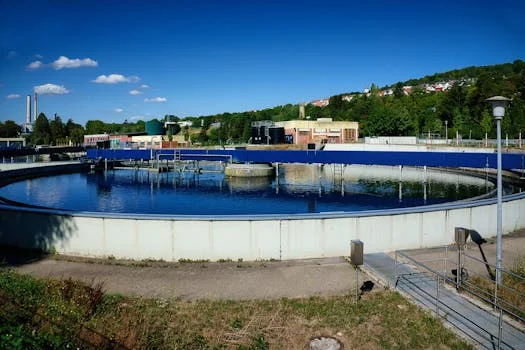
The surge in demand for compliance solutions has led to an influx of vendors in the Hanoi market. To ensure long-term system performance and regulatory peace of mind, procurement officers should use the following checklist to vet potential partners.
- Compliance Certifications: Does the vendor provide equipment certified to ISO 9001 and ISO 14001? More importantly, can they provide third-party lab results from a Vietnam-certified laboratory (VILAS) proving their equipment meets QCVN 28:2010/BTNMT Column A standards?
- Local Service Presence: Hospital wastewater systems cannot afford extended downtime. Ensure the vendor has a service center in or near Hanoi with Vietnamese-speaking technicians and a local inventory of critical spare parts (e.g., membranes, dosing pumps, sensors).
- Warranty Terms: Standard equipment warranties should be at least 2 years. For MBR systems, look for vendors offering a 5 to 10-year pro-rated warranty on membranes, as these are the most significant recurring CAPEX item.
- Training and Support: Does the vendor offer a formal operator certification program? The system is only as good as the person running it. Preference should be given to suppliers who offer remote monitoring capabilities, allowing their engineers to troubleshoot issues from a central hub.
- Reference Projects: Request a list of at least three hospital installations within Vietnam. Contact these facilities to verify the system’s reliability, the vendor’s responsiveness to service calls, and the actual vs. predicted OPEX.
Frequently Asked Questions
What are the penalties for non-compliance with Hanoi’s 2025 wastewater standards?
Under the Vietnam Environmental Protection Law 2020, hospitals failing to meet QCVN 28:2010/BTNMT standards can face administrative fines up to VND 1 billion ($42,000). Persistent violators risk operational suspension and public disclosure of their environmental violations by the Hanoi Department of Health.
How much space is needed for a hospital wastewater treatment system in Hanoi?
Space requirements typically range from 0.5 to 1.5 m² per bed. In space-constrained urban areas of Hanoi, MBR systems are the most efficient, often requiring less than 0.5 m² per bed due to their integrated biological and filtration stages.
What is the most cost-effective treatment method for a 100-bed hospital in Hanoi?
For most 100-bed hospitals, a combination of MBR and chlorine dioxide disinfection is the most cost-effective over a 10-year lifecycle. While the initial CAPEX is higher than traditional systems, the lower OPEX, reduced sludge volume, and guaranteed compliance provide the best ROI.
Are there government grants available for hospital wastewater treatment in Hanoi?
Yes, public hospitals in Hanoi may qualify for World Bank grants covering up to 70% of the equipment costs. Private facilities can access low-interest loans (3-5%) through the Vietnam Environmental Protection Fund (VEPF) for projects targeting 2025 compliance.
How often should hospital wastewater treatment systems be maintained in Hanoi’s climate?
Mechanical components like pumps and blowers require monthly inspections. Membrane systems should undergo chemical cleaning (CIP) quarterly. A full system audit, including effluent testing and sensor calibration, should be conducted annually to ensure continued compliance with DONRE regulations.
Further Reading
Explore these in-depth articles on related wastewater treatment topics: